

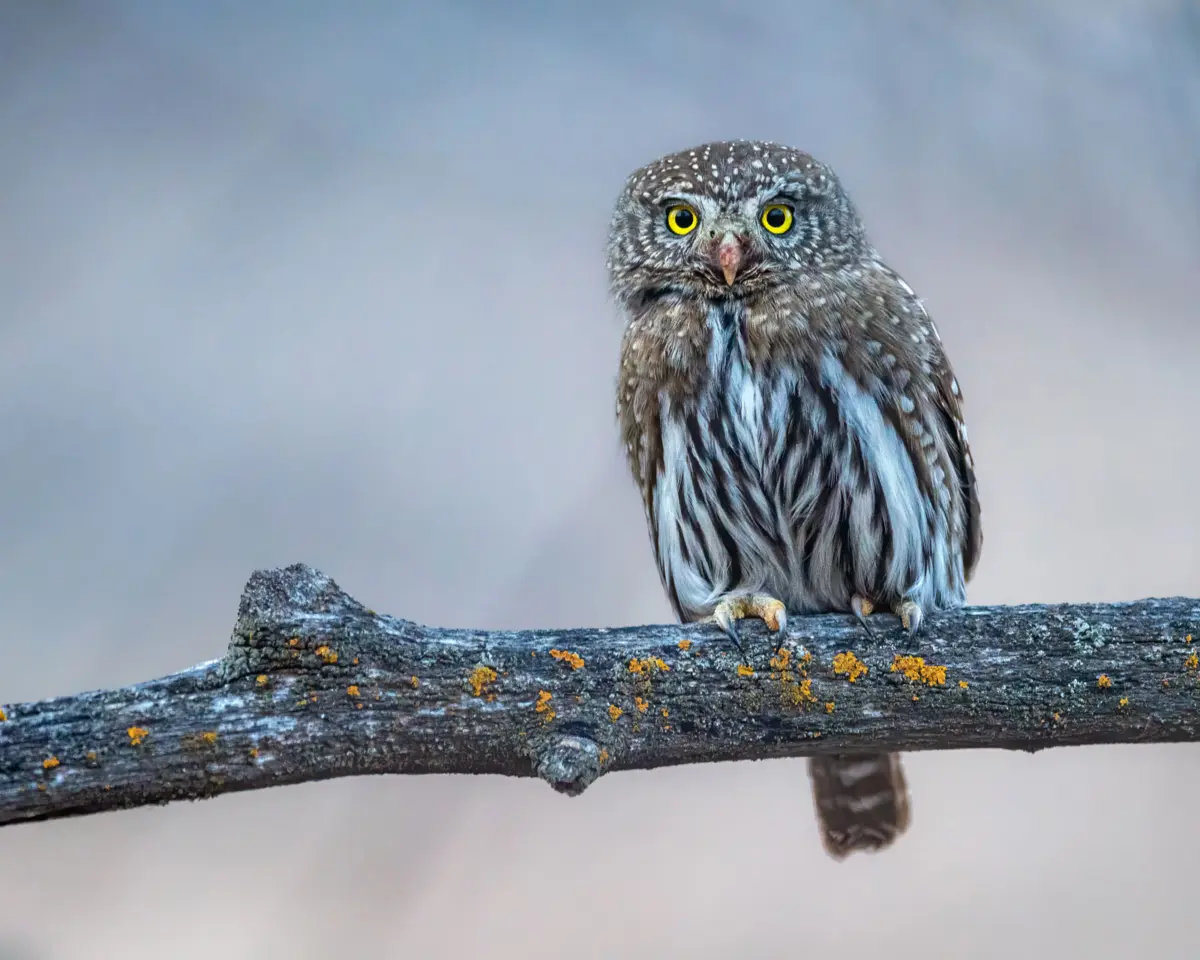
Few creatures in the natural world evoke the same sense of mystery, grace, and quiet reverence as owls. With their piercing forward-facing eyes, silent flight, and enigmatic nocturnal habits, these master predators have captivated human imagination for millennia. Owl photography allows us to freeze these captivating characteristics in time, showcasing their haunting beauty. However, capturing professional-grade images of these sensitive birds demands far more than an expensive camera body and a long lens; it requires patience, fieldcraft, and a deep, respectful understanding of avian ecology.
Main Facts: The Intersection of Ecology and Optics
Owl photography is widely considered one of the most challenging sub-genres of wildlife and bird photography. Unlike songbirds or waterfowl, which are frequently active in broad daylight and open environments, most owl species are strictly nocturnal or crepuscular (active during twilight).

- Global Distribution: Owls inhabit nearly every ecosystem on Earth, ranging from dense boreal forests and arid deserts to arctic tundras, alpine canyons, wetlands, and even densely populated urban environments.
- Optical Challenges: Because peak owl activity occurs during dawn, dusk, or deep night, photographers are routinely forced to shoot in low-light environments, requiring fast glass (lenses with wide maximum apertures) and high ISO performance.
- Ethical Imperatives: Owls are easily stressed by human presence, particularly during their daytime resting hours. Ethical field practices—such as maintaining a respectful distance, avoiding baiting, and using long telephoto focal lengths—are non-negotiable for professional conservation and wildlife photography.
Chronology: The Field Lifecycle of Finding and Photographing Owls
Successfully photographing an owl is rarely an instantaneous reward; it is the culmination of meticulous research, environmental scouting, and disciplined field execution.

Phase 1: Pre-Expedition Research (Weeks Prior)
The journey begins long before stepping into the field. Photographers must first identify which owl species reside in their target region. Utilizing local birding databases, field guides, and online mapping tools, photographers should research local species abundance, seasonal migration patterns, and behavioral traits. For instance, while the Great Horned Owl is common across North and Central America, its mottled plumage makes it virtually invisible against tree bark. Similarly, Tawny Owls across Europe are notoriously secretive, relying heavily on acoustic tracking rather than visual searching.

Phase 2: Acoustic Scouting at Sunset (Days 1–3)
Because most owls are nocturnal, the most effective way to locate them is by listening rather than looking. Photographers should head into potential habitats—such as forest edges, river corridors, or rural parklands—at sunset or shortly thereafter. By listening for territorial calls, hoots, and screeches, photographers can pinpoint an owl’s general location. Over time, practitioners train their eyes to recognize unnatural tree silhouettes against the fading evening sky, typically focusing on larger branches halfway up the tree trunk rather than the exposed canopy.

Phase 3: Daytime Roosting and Observation (Daytime)
Once an owl’s general hunting territory is identified, field researchers return during daylight hours. Because owls frequently utilize the same roosting trees for weeks if food is plentiful, spotting signs such as "whitewash" (fecal droppings on branches and ground) or regurgitated owl pellets will reveal their precise daytime hiding spots. During this phase, ethical restraint is paramount: photographers must observe from a distance (75 to 100 feet minimum) using long glass rather than standing directly underneath the roost, which forces the bird to flush and abandon its territory.

Phase 4: Capturing the Action at Dusk (Twilight to Night)
As daylight fades, owls transition from resting to hunting, moving outward toward the edges of the canopy or scanning open fields. This is the prime operational window for dynamic imagery, ranging from environmental portraits to high-speed flight tracking.

Supporting Data & Technical Equipment Specifications
Achieving sharp, publication-quality images in low-light, high-magnification scenarios requires specialized gear configurations.

Lens Selection and Focal Lengths
Because ethical wildlife photography dictates maintaining a comfortable distance of 75 to 100 feet from perched owls, a telephoto lens ranging from 300mm to 600mm is standard industry practice.

- Eye-Level Perspective: Because owls often roost high above the ground, using a long telephoto lens from a distance compresses perspective, creating an intimate, eye-level look rather than shooting upward at a steep, unflattering angle.
- Aperture Requirements: Lenses featuring maximum apertures of f/2.8 to f/5.6 are vital for gathering maximum ambient light during dawn and dusk. Setting the lens to its widest aperture maximizes shutter speed in low-light conditions, though photographers can stop down slightly for a deeper depth of field if sunlight permits.
Support Systems: Tripods vs. Monopods
Handholding a massive 600mm telephoto lens for hours leads rapidly to fatigue and missed opportunities.

- Tripods allow the camera to remain locked in position, keeping the lens "at the ready" for subtle head tilts or behavioral shifts during long static periods. However, tripods can hinder rapid movement when an owl suddenly launches into flight. Many professional wildlife photographers utilize a sturdy tripod for perching shots, detaching the setup or switching to a monopod the moment behavioral cues indicate an imminent takeoff.
- Remote Shutter Releases: For ultra-low-light situations requiring slow shutter speeds, cable or wireless remote releases eliminate micro-vibrations caused by manual shutter actuation on tripod-mounted systems.
Official Responses & Conservation Ethics in Wildlife Photography
As wildlife photography surges in popularity, environmental agencies, ornithological societies, and ethical bodies have issued strict guidelines regarding human interaction with raptors.

- The Dangers of Baiting: The practice of using live mice, commercially purchased rodents, or audio playback (call-playback devices) to lure owls into the open is universally condemned by professional wildlife organizations. Baiting habituates owls to human proximity, making them vulnerable to vehicle collisions, domestic predators, and illegal capture. Furthermore, audio playback causes unnecessary territorial stress during critical breeding seasons.
- The Flushing Rule: According to wildlife conservation groups, if an owl alters its posture, opens its eyes wide in alarm, clicks its beak, or flushes from its perch, the photographer has breached its comfort zone. Professionals are expected to immediately back away, prioritizing the animal’s welfare over securing a frame.
- Habitat Protection: Respecting seasonal closures in nesting areas—such as those established for Burrowing Owls, Short-Eared Owls, and Northern Spotted Owls—is legally mandated in many jurisdictions to protect fragile breeding populations.
Implications: The Psychological and Journalistic Value of Owl Imagery
Beyond the technical mastery required to capture them, successful owl photographs hold profound implications for modern conservation and environmental education.

Owls serve as vital apex predators within their respective food webs, acting as bio-indicators of ecosystem health. When photographers capture stunning, behaviorally accurate imagery—such as the expansive wingspan of a Great Grey Owl dropping into deep snow, or the comical, long legs of a Short-Eared Owl revealed mid-flight—they bridge the gap between abstract ecological data and public empathy.

By presenting these elusive raptors with dignity, patience, and strict adherence to ethical fieldcraft, photographers not only elevate the standard of nature imagery but also foster a broader cultural appreciation for the fragile, wild spaces these magnificent birds call home.
