

August 27, 2026
By The Fitness & Wellness Desk
For decades, the fitness industry has propagated a narrow, aesthetic-driven definition of the "core." Pop culture and infomercials have conditioned generations to associate abdominal strength with visible rectus abdominis muscles—the coveted "six-pack"—or advanced gymnastics feats like Crow Pose (Bakasana). However, sports scientists, physical therapists, and advanced movement educators are shifting the narrative.
True core strength is not about vanity or isolated muscle isolation; it is the cornerstone of functional longevity. A robust core provides the necessary stability, spinal support, and force-transfer capabilities required to navigate the physical demands of daily life. Whether you are lifting groceries, catching a falling toddler, or steadying yourself on an icy patch of pavement, your core is the invisible engine driving safe, fluid human movement.
Nowhere is this holistic re-evaluation of core training more evident than on the yoga mat. While certain poses are explicitly marketed as abdominal burners, movement specialists argue that practitioners can engage—and exponentially strengthen—their core muscles in any yoga pose or transition. The secret lies not in inventing harder exercises, but in fundamentally altering how practitioners approach alignment, leverage, and muscular engagement.
The Chronology of Core Evolution: From Crunches to Kinetic Integration
To understand the modern yoga approach to core stability, it helps to examine how fitness paradigms have shifted over the last half-century.
- The 1980s–1990s (The Crunch Era): Fitness culture was dominated by high-repetition spinal flexion exercises like sit-ups and crunches. The primary goal was spot-reducing belly fat and hardening the superficial abdominal wall. Little attention was paid to the transverse abdominis, obliques, or deep pelvic stabilizers.
- The Early 2000s (The Functional Core Revolution): Influenced by physical therapy and Pilates, the fitness world discovered "core stability." Pioneers began emphasizing the deep stabilizers—the transversus abdominis, multifidus, diaphragm, and pelvic floor. Planks and isometric holds replaced crunches as the gold standard of abdominal training.
- The 2010s (The Yoga & Pilates Boom): Practitioners increasingly turned to disciplines like yoga for core health, recognizing that isometric holds combined with balance and flexibility created resilient bodies. However, instruction remained largely surface-level, often relying on vague cues like "engage your core" or "draw your navel to your spine."
- Present Day (Kinetic Chain and Micro-Adjustments): Modern movement science recognizes that the core does not work in isolation; it acts as a bridge between the upper and lower bodies. Contemporary yoga methodology focuses on vector forces, minimizing contact points, and mindful transitions. Instructors now teach practitioners how to hack standard poses—from Tabletop to Triangle—to turn everyday yoga sequences into dynamic stability workouts.
Supporting Data: Why Functional Core Strength Matters
The physiological argument for integrated core training is backed by extensive biomechanical research regarding injury prevention and kinetic energy transfer.
- Spinal Health and Low Back Pain: According to orthopedic data, approximately 80% of adults experience low back pain at some point in their lives. Clinical studies consistently show that training the deep spinal and pelvic stabilizers (such as the transversus abdominis and erector spinae) drastically reduces the incidence and severity of lumbar discomfort compared to isolated superficial ab work.
- Force Transfer Mechanics: Biomechanical analyses of human locomotion demonstrate that the core acts as the central hub for energy transfer. When throwing, twisting, or stepping, up to 70% of kinetic energy is generated in the lower body and transferred through the torso to the upper body. A weak core leaks this energy, decreasing athletic efficiency and increasing joint strain.
- Balance and Fall Prevention: Proprioceptive decline is a leading cause of injury in aging populations. Studies on balance-oriented movement practices reveal that reducing contact points with the ground—a core tenet of modern yoga alignment—stimulates neuromuscular pathways, enhancing dynamic balance and decreasing fall risks by up to 30%.
Official Perspectives and Expert Insight
Physical therapists and senior yoga educators emphasize that the conventional vocabulary of yoga instruction has historically missed the mark when it comes to structural integrity.
"When we tell students to simply ‘engage your core’ or ‘pull your belly button in,’ we leave them guessing," explains Rachel Land, a prominent yoga educator specializing in functional anatomy. "The nervous system doesn’t understand abstract anatomical commands nearly as well as it understands spatial intent. If you change the vector of force—such as pretending to wrinkle your mat or hovering your hand—the core fires automatically, without the practitioner having to overthink it."
Sports medicine physicians echo this sentiment. Dr. Aris Thorne, a specialist in non-surgical sports orthopedics, notes that injuries frequently occur not from a lack of raw strength, but from poor motor control during transitions.
"People don’t usually throw their backs out while holding a static plank," Dr. Thorne points out. "They injure themselves stepping out of a car, tripping on a curb, or reaching awkwardly for an object on a top shelf. Training the body to maintain core integrity while moving—the exact focus of modern movement-integrated yoga—is the ultimate form of injury prevention."
Five Essential Strategies to Supercharge Your Core in Any Yoga Pose
You do not need an exclusive "Ab Sculpt" class to build a resilient mid-body. By applying five biomechanical principles to your existing yoga practice, you can transform ordinary postures into profound core conditioners.
1. Change How You Engage: The "Internal Draw"
In poses like Tabletop (hands and knees), it is easy to let gravity and passive joint stacking do the work, leaving your arms and legs to bear the brunt of the load.
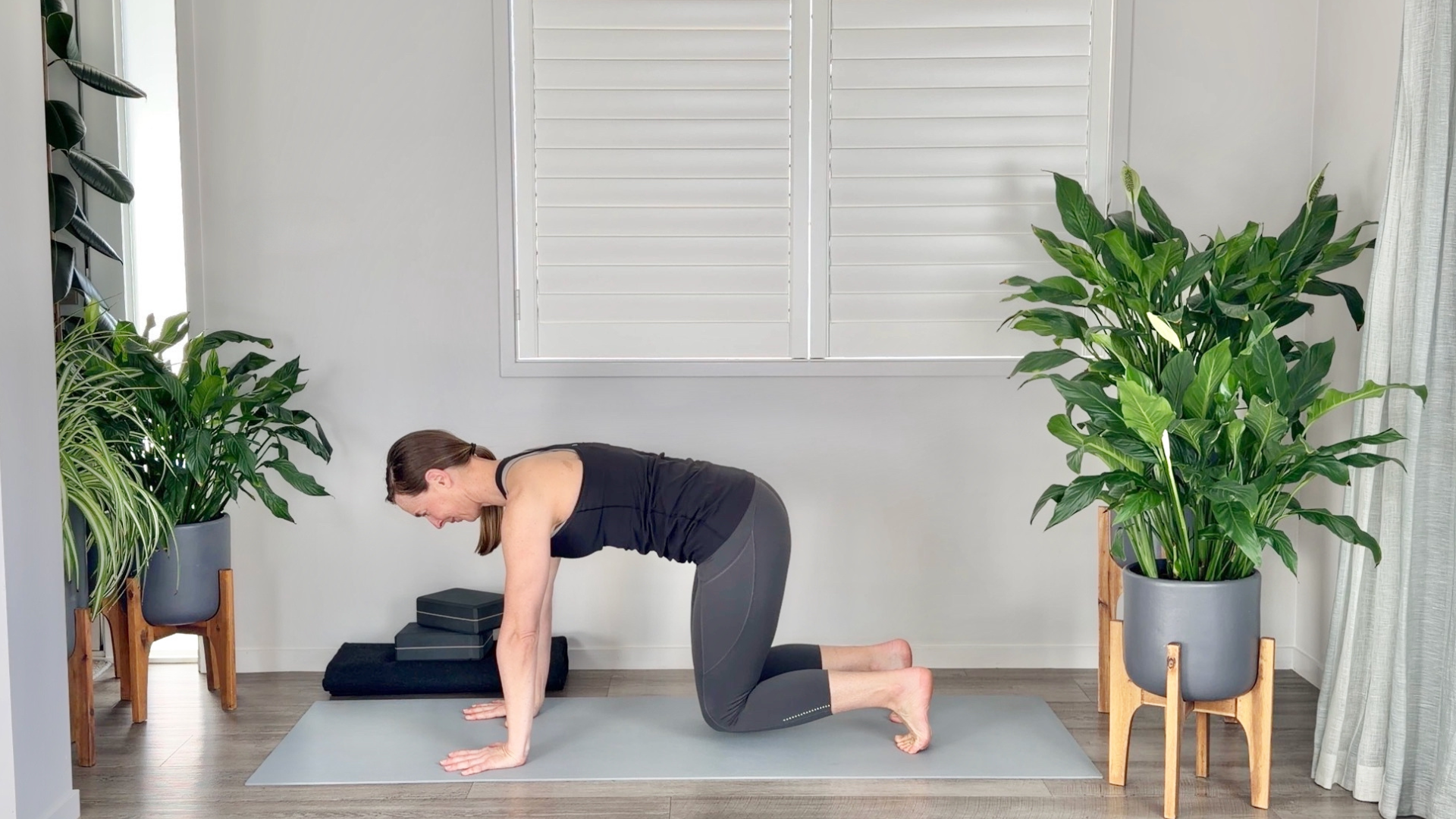
- The Technique: Imagine dragging your hands and your knees toward each other without actually letting them move. You will not see any visible shift, but internally, your front abdominals, latissimus dorsi, and hip flexors will instantly fire up.
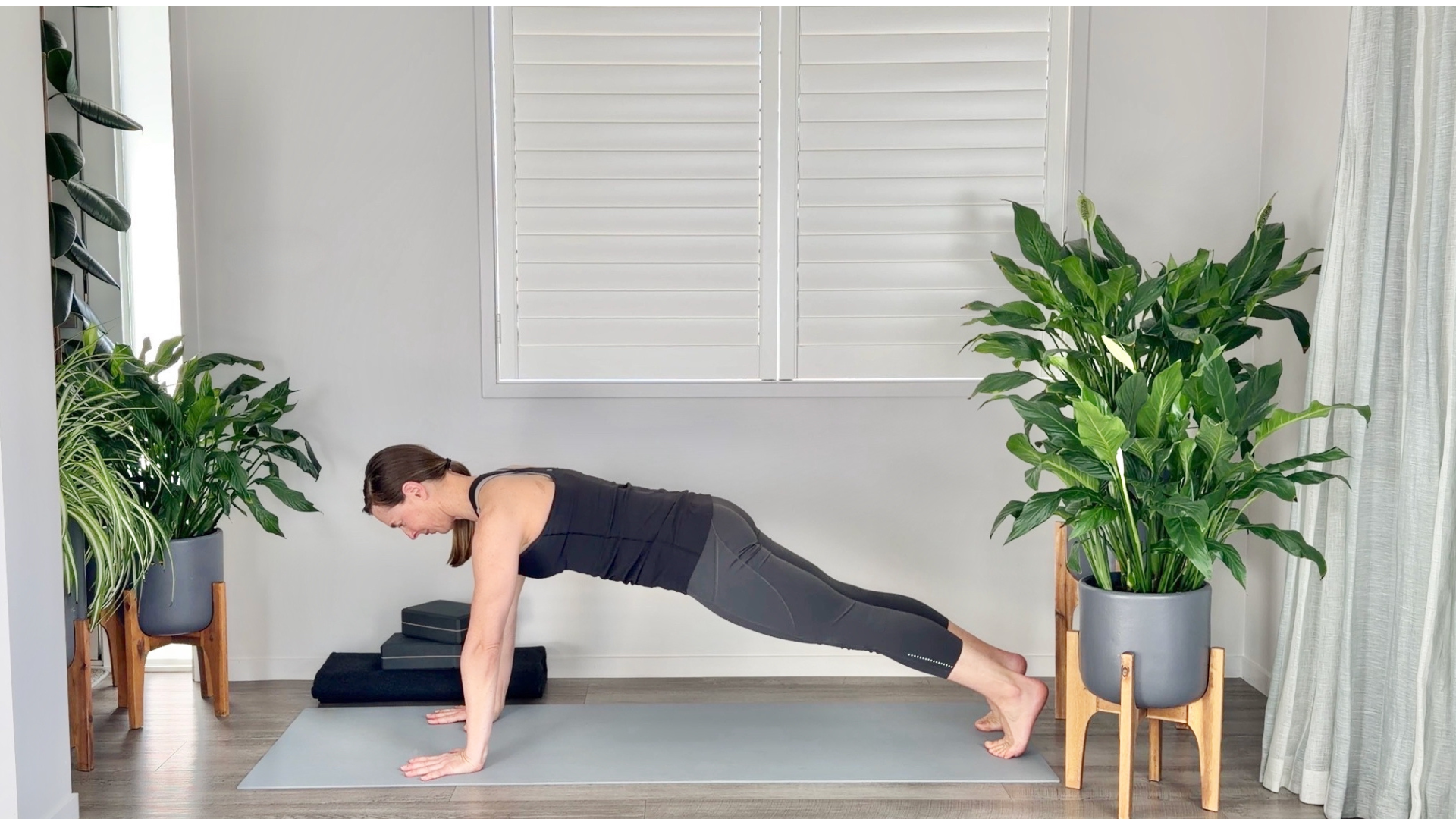
- Application: Apply this principle of isometric opposition to High Plank, Chaturanga Dandasana, Downward-Facing Dog, and even standing balances like High Lunge and Warrior 1, where squeezing your feet toward the midline activates your glutes and hip flexors.
2. Minimize Your Contact with the Mat
The larger your footprint on the yoga mat, the less muscular effort is required to maintain your posture. Conversely, reducing your points of contact forces your core and stabilizing muscles to work overtime.
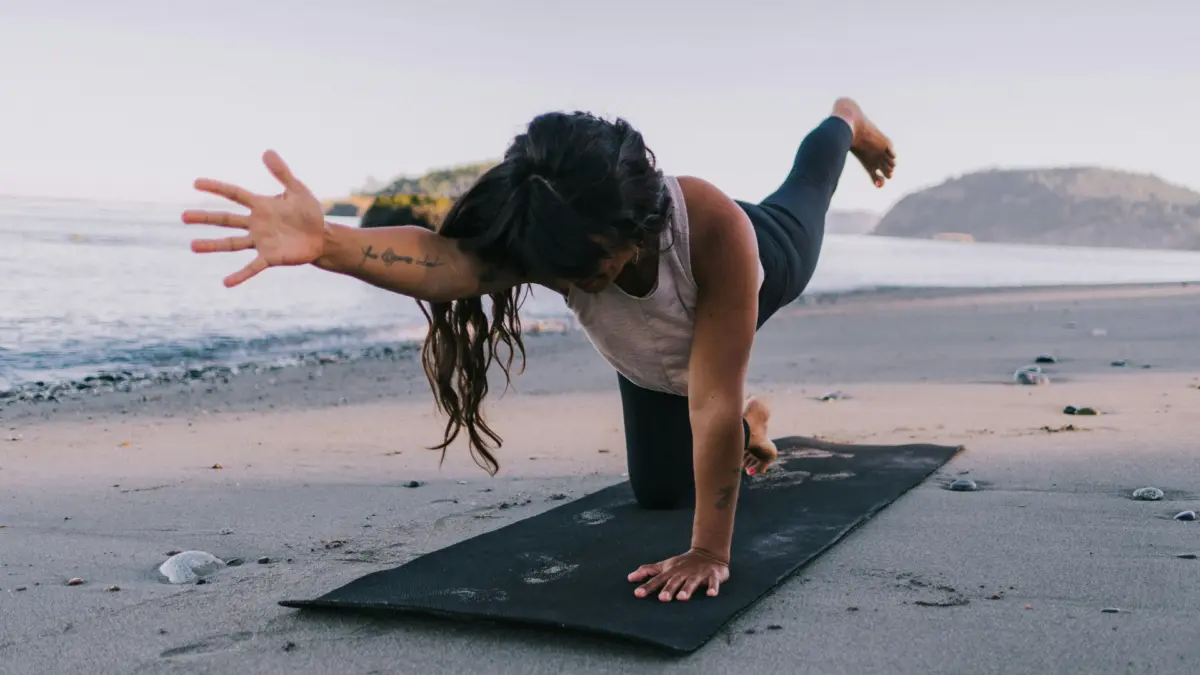
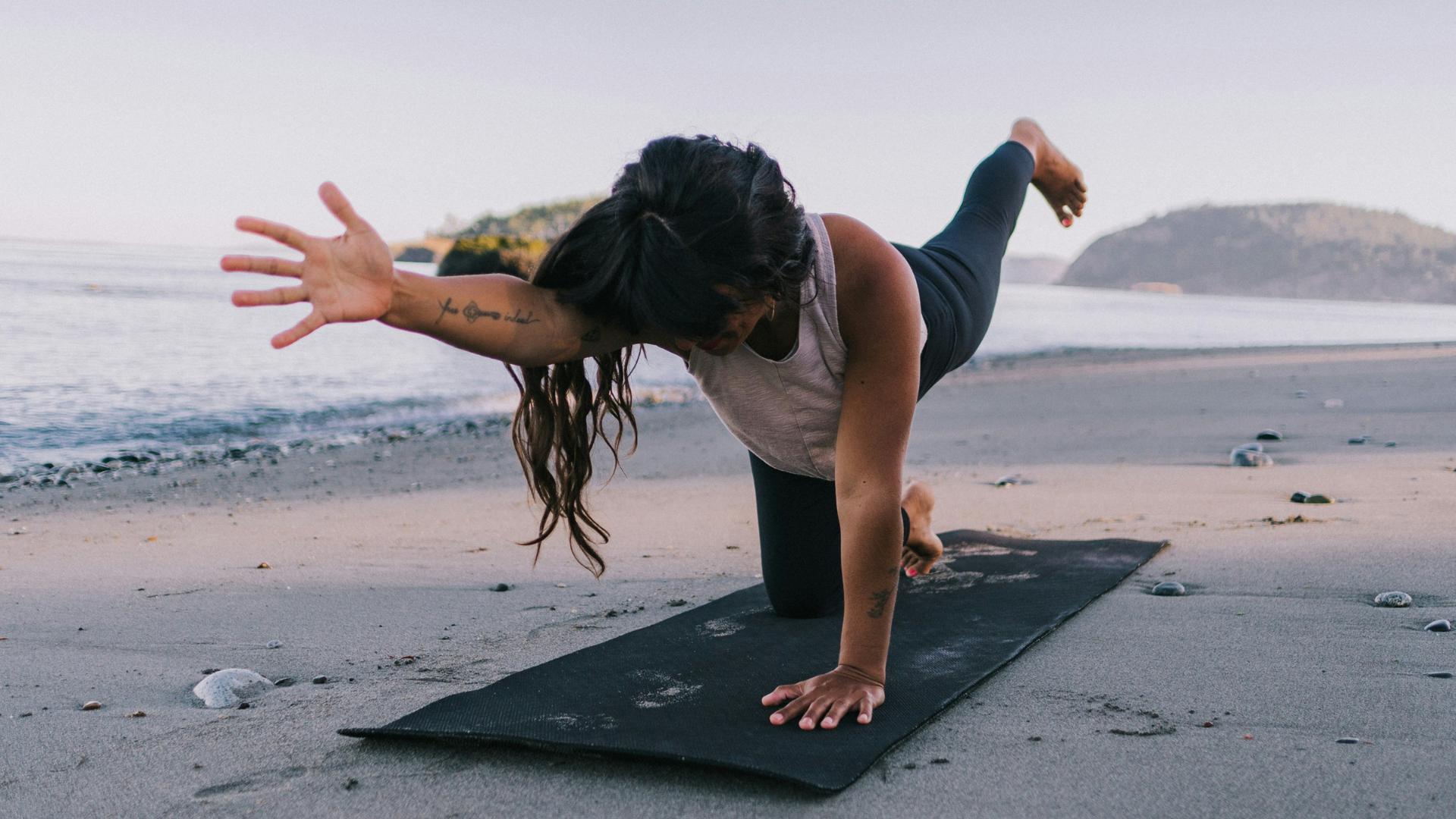
- The Technique: In Tabletop, lift your knees an inch off the mat to enter Hovering Tabletop (or Bear Pose), or lift opposite limbs in Bird Dog.
- Application: In standing postures, try shifting your weight forward from a flat footprint to the balls of your feet, or lift one foot entirely to test your deep core stabilizers.
3. Hover Your Hands
Leaning heavily onto blocks, props, or the floor relieves your deep core and spinal muscles of their natural load-bearing duties.
- The Technique: In poses like Halfway Lift, rather than resting your hands on your shins or yoga blocks, float your hands off your support or extend your arms alongside your torso. This forces your spinal extensors and glutes to hold your upper body’s weight.
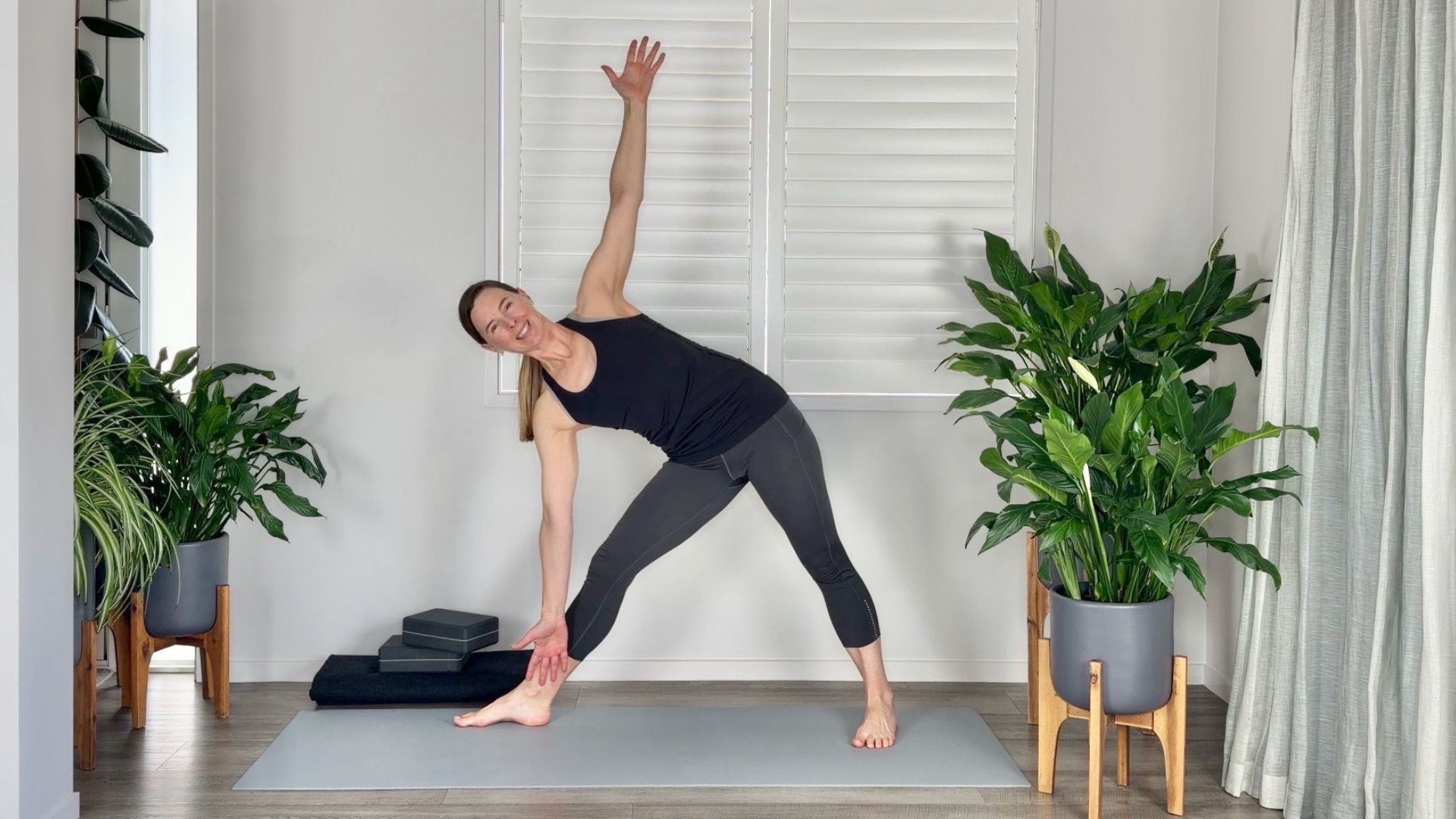
- Application: In lateral postures like Extended Triangle (Utthita Trikonasana) and Half Moon Pose (Ardha Chandrasana), hover your bottom hand entirely just above the floor or block. In twists, keep your lead elbow floating away from your front knee rather than resting on it, engaging your obliques.
4. Extend Your Reach
Physics dictates that the further you move a mass away from your center of gravity (your midline), the heavier it becomes and the harder your core must work to stabilize it.
- The Technique: Think of carrying a heavy grocery bag close to your chest versus holding it out at arm’s length.
- Application: Take your standing balances to the next level by reaching your arms straight overhead in Warrior 3 (Virabhadrasana III) or an Arrowhead lunge. The added leverage dramatically increases the demand on your spinal erectors, lower back, and standing-leg glutes.
5. Move With Deliberate Control
Momentum is the enemy of core strength. Swinging your limbs or using brute force to transition between postures bypasses the neuromuscular engagement necessary for true stability.
- The Technique: Move at a deliberate, measured pace. When transitioning from Downward-Facing Dog to a low lunge, step forward slowly and consciously rather than swinging your leg through using momentum.
- Application: Emphasize slow, controlled descents and ascents in every vinyasa transition. A slow transition demands continuous recruitment from your hip flexors and deep abdominals.
Implications: A Sustainable Future for Physical Fitness
As fitness trends cycle through high-intensity fads and specialized routines, the evolution of yoga-based core training points toward a broader cultural shift: the prioritization of function over form.
The implications of this shift are profound for everyday practitioners. By discarding the obsession with superficial muscle definition and embracing kinetic integration, individuals of all ages and fitness levels can build bodies that are not only resilient and injury-resistant, but capable of gracefully handling the unpredictable physical challenges of daily life.
Ultimately, a strong core is not about what you look like when you stand still on a mat; it is about how safely, powerfully, and easily you move through the world.
