

Introduction: A Fragile Frontier Shattered
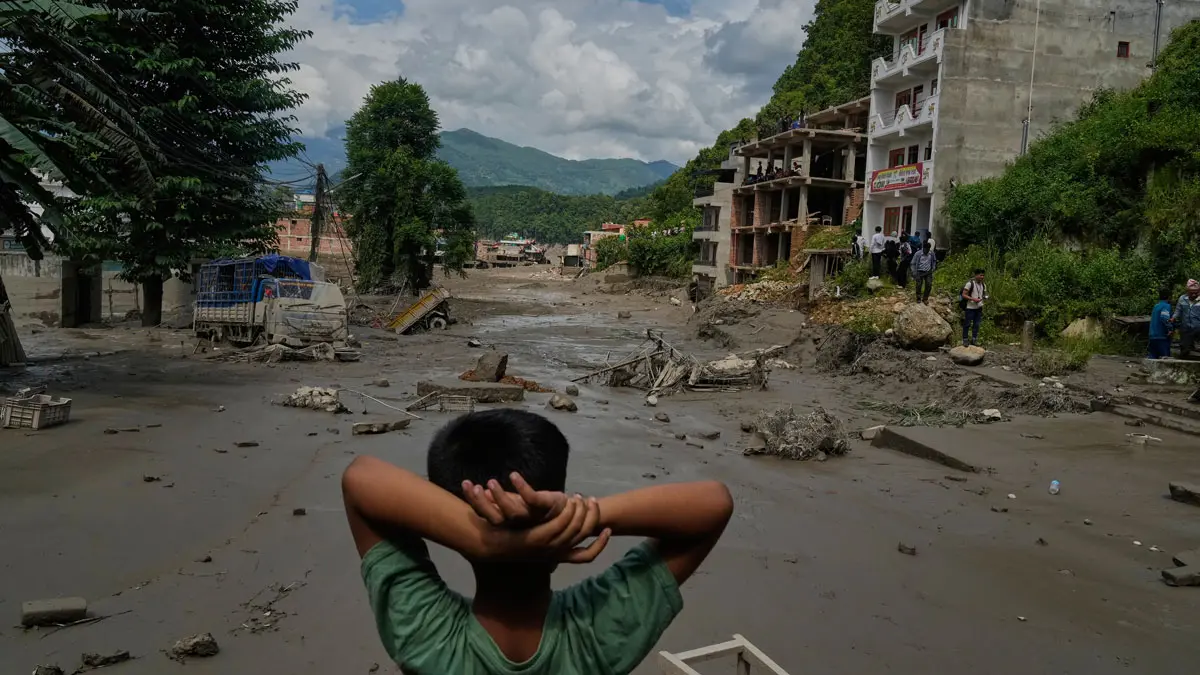
On the crisp, clear morning of August 26, the high-altitude tranquility of the Himalayas was violently shattered. A catastrophic glacial collapse high above Kyirong, situated on the Tibetan side of the border, unleashed an immense wall of water, mud, and debris. This torrential wave tore relentlessly down the steep mountain topography, carving a path of total destruction through the Rasuwa and Nuwakot districts of Nepal.
Engulfing entire villages, obliterating ancient bridges, and sweeping away critical hydropower infrastructure, the deluge surged down the Bhote Koshi River before bleeding into the swollen torrent of the Trishuli. For a region deeply interconnected by geography, culture, and spirituality, the disaster has left a profound scar.
As rescue workers battle treacherous terrain and unstable conditions, the human and structural toll continues to mount. Beyond the immediate devastation, the disaster has reignited urgent global conversations regarding climate vulnerability in high-altitude glacial zones, prompting an outpouring of grief, solidarity, and calls for humanitarian action from spiritual leaders and international organizations alike.
Main Facts: The Scope of the Disaster
The statistics emerging from the disaster zones in Tibet and Nepal paint a grim picture of loss and displacement. According to data provided by Nepal’s National Disaster Risk Reduction and Management Authority (NDRRMA), the human cost has escalated rapidly in the days following the initial collapse.
- Casualties and Missing Persons: In Nepal alone, more than 350 people have been confirmed dead, while over 800 individuals remain unaccounted for. Across the border in Tibet, authorities have confirmed at least three fatalities, with hundreds more still missing.
- The Pilgrimage Tragedy: Among the missing are a significant number of pilgrims. These travelers were journeying toward Mount Kailash and Lake Mansarovar—locations held as deeply sacred grounds by Hindus, Buddhists, Jains, and Bönpo adherents alike. The timing and geography of the flood placed these spiritual travelers directly in harm’s way.
- Infrastructure Collapse: The economic and physical lifeline of the affected valleys has been heavily compromised. Vital transportation links, including critical bridges connecting remote mountain communities, have been swept away. Furthermore, major hydropower stations along the river corridors have suffered catastrophic structural damage, plunging parts of the region into prolonged power outages and threatening future regional energy security.
- Geographic Reach: The destructive energy of the glacial outburst did not respect international boundaries. Originating in Kyirong, Tibet, the cascade traveled swiftly down into Nepal’s northern frontiers, heavily impacting the Rasuwa and Nuwakot districts—areas historically cherished not only as residential hubs and trade routes, but also as vital centers for Himalayan cultural preservation.
Chronology of Events: How the Tragedy Unfolded
Reconstructing the timeline of the disaster highlights the terrifying speed with which glacial outburst floods—often referred to as Glacial Lake Outburst Floods (GLOFs)—can unfold in the high Himalayas.
Pre-Dawn and Morning of August 26
- The Collapse: Sometime in the early morning hours, structural integrity failed at a high-altitude glacial formation above Kyirong, Tibet. Millions of cubic meters of trapped water, ice, and debris broke free, initiating a catastrophic descent.
- The Border Crossing: Propelled by gravity down steep ravines, the wall of water crossed the international frontier into Nepal within hours, striking remote settlements in the upper Rasuwa district before dawn had fully broken.
Late Morning and Afternoon of August 26
- Inundation of Rasuwa and Nuwakot: The raging torrent raced down the Bhote Koshi River basin. Local warning systems, where present, offered mere minutes of lead time. Villages situated near the riverbanks were rapidly overtaken by mudflows and rising waters. Bridges connecting valley communities were sheared off their foundations, effectively cutting off rescue access by road.
- Hydropower Facilities Impacted: As the floodwaters pressed further downstream into the Trishuli river system, hydroelectric installations sustained heavy direct impacts, forcing emergency shutdowns and amplifying the crisis through widespread electrical failures.
August 27 and Beyond: The Search and Rescue Phase
- Emergency Mobilization: Nepali authorities, alongside local volunteers and international aid coordination bodies, began the arduous task of accessing cut-off valleys. Aerial reconnaissance captured footage of widespread devastation across the Rasuwa valley, highlighting the immense scale of landscape alteration.
- International Aid Integration: Relief funds were rapidly authorized by organizations such as the International Federation of Red Cross and Red Crescent Societies (IFRC), while medical logistics networks began coordinating supply chains with the Nepalese Ministry of Health to prevent secondary public health crises.
Supporting Data and Humanitarian Response
The sheer scale of the disaster has overwhelmed local emergency services, necessitating a coordinated international humanitarian response. Relief agencies have established operational footprints on the ground to provide search-and-rescue support, emergency medical care, and temporary shelter for the thousands displaced.
Active Relief Organizations on the Ground
Authorities and humanitarian monitors have highlighted several key organizations actively working to alleviate suffering in the disaster zones:
- Nepal Red Cross Society (NRCS): Operating in conjunction with the International Federation of Red Cross and Red Crescent Societies (IFRC), the NRCS has unlocked emergency disaster relief funds to deploy volunteers, distribute non-food items, and assist in triage operations. (Information available via ifrc.org).
- GlobalGiving’s Nepal Flood Relief Fund: GlobalGiving has established a dedicated channel to direct financial resources straight to vetted local grassroots organizations. These funds are immediately applied toward active search-and-rescue operations, emergency medical interventions, and the provision of temporary shelter materials. (Information available via globalgiving.org).
- Direct Relief: Having maintained a supportive presence within Nepal’s health infrastructure since 2009, Direct Relief is actively coordinating large-scale shipments of emergency medical aid in direct partnership with Nepal’s Ministry of Health. (Information available via directrelief.org).
A Critical Caution Against Post-Disaster Scams
In the wake of high-profile natural disasters, fraudulent entities often attempt to exploit public goodwill. Nepali authorities and international aid coordinators have issued strict warnings advising donors to channel their contributions exclusively through officially registered, verified organizations. The public is strongly discouraged from sending funds to unverified personal accounts or unvetted social media fundraisers, which frequently bypass accountability standards.
Official Responses and Spiritual Reflections
The tragedy has elicited profound grief and solidarity from global leaders, spiritual figures, and communities intimately tied to the Himalayan region. For many practitioners of Eastern traditions, the valleys of Rasuwa and Nuwakot are far more than coordinates on a map; they are sacred landscapes integral to spiritual lineage and heritage.
Statements from Spiritual Leaders
- The Dalai Lama: In a formal statement released on Thursday, the Tibetan spiritual leader expressed deep sorrow over the catastrophe. "I am saddened to learn of the devastating floods in the Rasuwa region of Nepal and Kyirong in Tibet, resulting in loss of life and heavy structural damage," the Dalai Lama stated. "I pray for all those who have lost their lives, and offer my sympathy and heartfelt condolences to the bereaved and to all those affected by this tragedy." Significantly, he also pointed to broader environmental shifts as a potential underlying catalyst for the disaster.
- Tenzin Wangyal Rinpoche: The prominent Bönpo master shared a message of solace and spiritual guidance with his global student community: "May those who have passed rest in peace. May the injured recover swiftly. May grieving families find strength and comfort, and may all those offering help be guided by compassion and wisdom."
Official Government and Institutional Updates
Governments and disaster management agencies continue to monitor the situation closely. Official, real-time data regarding casualty updates, relief distribution, and infrastructure repair statuses can be tracked directly through the portal of Nepal’s National Disaster Risk Reduction and Management Authority at ndrrma.gov.np. Furthermore, visual documentation of the valley’s transformation can be viewed via broadcast archives provided by outlets such as Euronews, which has published aerial footage of the impacted Rasuwa terrain captured by the Nepal Red Cross.
Implications: Climate Change and the Vulnerability of the Third Pole
While immediate rescue operations remain the absolute priority, scientists, environmentalists, and policymakers are increasingly turning their attention to the systemic causes underlying the disaster. Often referred to as the "Third Pole," the Hindu Kush Himalaya region contains the largest volume of ice outside of the polar caps.
The Growing Threat of Glacial Hazards
Global temperature anomalies are accelerating the melting rates of Himalayan glaciers. As these ice masses retreat, they frequently leave behind unstable moraine dams containing vast, rapidly filling glacial lakes. When these natural dams fail—whether triggered by seismic activity, heavy monsoon surges, or internal pressure—the resulting GLOFs possess catastrophic destructive capacity.
The Kyirong-Rasuwa disaster serves as a stark, tragic reminder that climate change is not a distant, abstract threat; it is an active, immediate force reshaping mountainous regions and threatening millions of lives downstream. The destruction of multi-megawatt hydropower installations also signals a severe vulnerability in green energy infrastructure built along dynamic, high-altitude river systems.
A Call for Regional Resilience and Global Action
Moving forward, experts emphasize the urgent need for enhanced cross-border early-warning systems, improved hydrological monitoring of high-altitude glacial lakes, and resilient infrastructure planning. Without proactive adaptation strategies, events of this magnitude threaten to become increasingly frequent, permanently altering the demographic, economic, and environmental landscape of the Himalayan arc.
For those touched by the beauty, culture, and profound spiritual heritage of Nepal and Tibet over the decades, the current crisis is a poignant call to action. As relief efforts press forward, the global community is reminded of both the fragility of human civilization against the raw power of nature and the enduring necessity of compassionate solidarity in times of unprecedented grief.
