

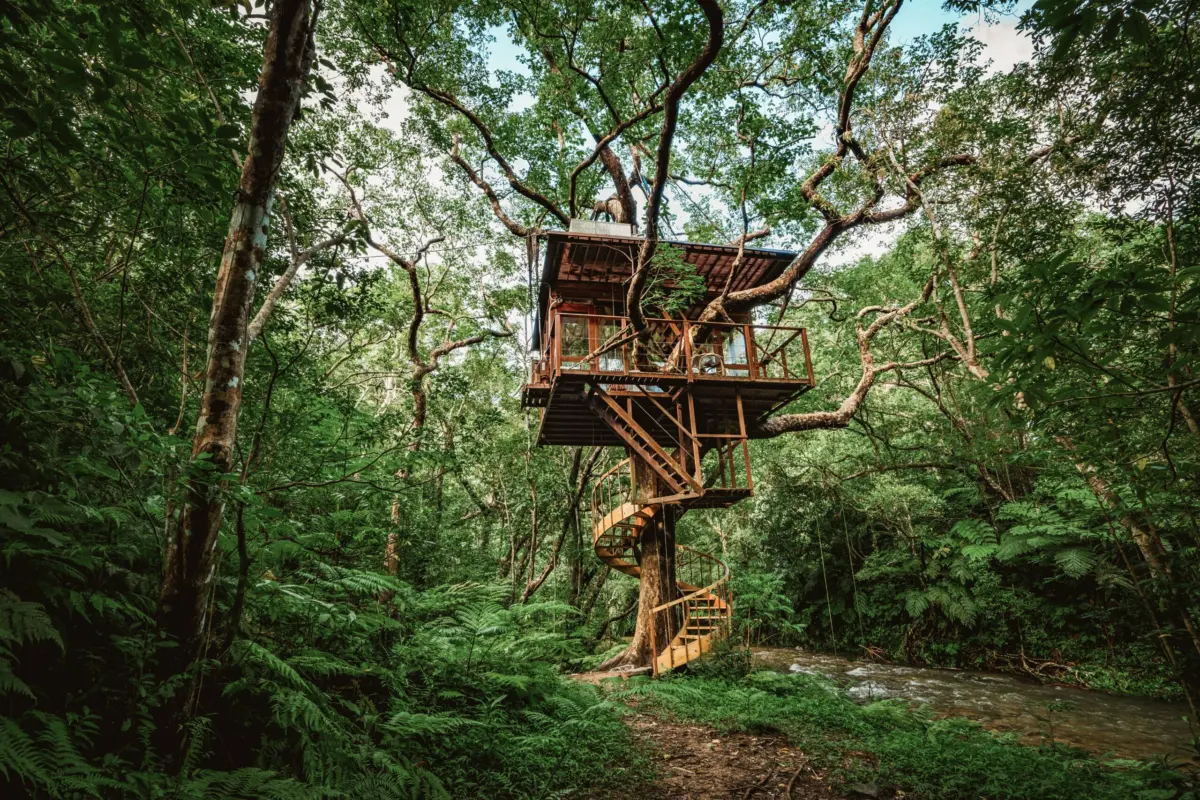
Global — Sometimes a vacation calls for checking into a five-star urban high-rise or a sprawling beach resort where you never have to lift a finger. But a growing counter-movement in travel is trading room service and marble lobbies for rustling leaves, panoramic forest views, and architectural marvels suspended high above the ground. The modern treehouse rental market has officially evolved far beyond the rustic, plywood-and-nail forts of childhood. Today’s elevated escapes combine cutting-edge design, high-end amenities, and complete immersion in nature, offering travelers a sophisticated way to "touch grass" without sacrificing comfort.
From Appalachian chalets and sleek A-frames in the Pacific Northwest to gravity-defying glass structures in rural Japan, these sky-high retreats have captured the imagination of travelers seeking to clear their mental clutter. Featuring wood-burning hot tubs, outdoor rain showers, sprawling multi-level decks, and vast floor-to-ceiling windows, these architectural gems offer a masterclass in blending indoor luxury with the great outdoors.
Main Facts: The Evolution of Treetop Hospitality
The demand for alternative, nature-centric accommodations has experienced a dramatic surge over the last half-decade. Driven by a collective cultural fatigue with hyper-connectivity and urban congestion, travelers are actively seeking spaces where Wi-Fi is optional, and the ambient soundtrack is provided by wind through the pines.
Unlike traditional camping or rustic cabin rentals, luxury treehouses bridge the gap between rugged adventure and high design. Contemporary architects and structural engineers are increasingly utilizing sustainable materials, kinetic suspension systems, and floor-to-ceiling glass to create habitable spaces that integrate seamlessly into living ecosystems. These properties are no longer just novelties; they are destination resorts in their own right, commanding nightly rates that rival—and often exceed—luxury boutique hotels.
Chronology: From Backyard Novelty to Architectural Phenomenon
- Early 2000s: Treehouses begin appearing on vacation rental platforms, largely marketed as niche, eccentric novelties for budget travelers or families looking for a playful weekend.
- Mid-2010s: Architecture and design media begin highlighting custom-built, high-design cabins in the trees, shifting public perception of what an elevated home can be. Influencers and design enthusiasts propel aesthetic cabins into mainstream travel aspirations.
- 2020–2022: The post-pandemic travel boom accelerates demand for isolated, private, and nature-immersed accommodations. "Off-grid" and outdoor-focused stays see record-breaking booking rates.
- Present Day: Treehouse rentals mature into a sophisticated asset class within the global hospitality market, featuring engineered marvels with solar power, EV charging, bespoke interiors, and resort-level amenities.
Supporting Data: Global Spotlights and Architectural Wonders
A cross-section of the world’s most sought-after treehouse rentals highlights the diversity of engineering, interior design, and local geography shaping this travel trend.
Asia & Oceania
- Spiral Treehouse (Nago, Japan): A true engineering marvel, this structure’s entire weight is suspended from the branches of a living Akagi tree, requiring zero ground-support columns. Accessed via a spiral staircase, the 133-square-foot room merges seamlessly with the surrounding canopy. Guests also have access to the neighboring AeroHouse, equipped with a king bed, full kitchen, and a soaking tub framed by floor-to-ceiling glass. (From $1,196/night)
- Dreamy Tropical Tree House (Nago, Japan): Perched 15 feet above the jungle floor, this handmade bamboo treehouse features a wraparound lanai and a trapdoor entrance. Powered by solar energy and rainwater collection systems, it balances a remote jungle experience with modern comforts like a kitchenette and jalousie windows in the bathroom. (From $370/night)
Europe
- Secluded Forest Retreat (Western Isles, United Kingdom): Raised on timber supports, this modern cabin style features pale wood finishes, a central wood-burning stove, and a freestanding soaking tub positioned directly against a picture window overlooking the beach and forest. (From $943/night)
- Tallkotten (Värnamo, Sweden): Completely off-grid with no electricity or running water, this Swedish retreat offers a masterclass in minimalist polish. Pale wood and a dark slatted ceiling frame an enormous window looking out over the Småland forest. Essentials like provided drinking water, a gas stove, and cozy candlelight keep the focus firmly on the natural surroundings. (From $338/night)
United States
- Luxury Tree House X Magical Romantic Forest (Fredericksburg, Texas): Part of the larger Onera resort, this ultramodern treehouse features a unique safety netting built into the dining room ceiling. Guests enjoy access to resort amenities like an outdoor pool and sauna after a day of touring local Hill Country wineries. (From $776/night)
- The Forestry House (Rest, South Carolina): Designed for deep relaxation, this property features wood-paneled ceilings, green kitchen cabinetry, an outdoor shower, and a private deck framing sweeping mountain views. (From $361/night)
- Secluded In-Town Treehouse (Atlanta, Georgia): Built around a 165-year-old shortleaf pine and connected by rope bridges, this whimsical urban escape is organized around a "mind, body, and spirit" layout, complete with luxury linens and an expansive hammock. (From $271/night)
- Willow Treehouse (Willow, New York): Designed by Antony Gibbon and built by William Johnson, this Catskills modern retreat overlooks a private swimmable pond and features massive glass walls and a wood-burning hot tub. (From $456/night)
- TreefLoft at Base Camp (Perryville, Missouri): A design-forward space featuring a skylight with a remote solar shade above the bed, a rain shower for two, an indoor-outdoor coffee bar, and an outdoor hot tub flanked by towering red cedars. (From $587/night)
- Luxury Treehouse with Views of the Sierras (Visalia, California): Located just steps from a 300-acre almond farm, this design-forward stay offers mountain views, a Casper mattress, a cozy fireplace, and frequent wildlife sightings. (From $268/night)
- The Treeframe Cabin (Index, Washington): An elegant A-frame featuring wraparound pine walls, a two-person stargazing hot tub, a fireplace, and massive skylights for constellation viewing from the living room. (From $654/night)
- Oceanview Treehouse (Aptos, California): Combining midcentury design with three distinct decks, this California coastal escape offers sweeping ocean views and immediate access to The Forest of Nisene Marks State Park. (From $684/night)
- The Stone and Timber Treehouse (Concord, North Carolina): Nestled on 40 acres of farmland, this one-bedroom retreat offers a private deck, firepit, and access to an exclusive farm coffee-roasting experience. (From $200/night)
- The Highland Treehouse (Sugarcreek, Ohio): Sitting 20 feet in the air, this elevated A-frame overlooks a private pond and elk farm. A spiral staircase leads to a glass-walled room offering 360-degree views of the surrounding treetops. (From $530/night)
Official Responses and Industry Perspectives
Hospitality analysts note that the rise of high-end treehouse rentals reflects a broader shift in consumer values. According to sustainable tourism advocates, travelers are increasingly willing to pay a premium for low-impact, high-aesthetic architectural experiences that respect local ecosystems.
"Guests are no longer satisfied with generic hotel rooms when traveling to natural destinations," notes a prominent hospitality design consultant. "They want the architecture to converse with the environment. When you suspend a bedroom in the canopy or wrap a living space in structural glass, you aren’t just giving people a place to sleep—you are shifting their perspective on how they inhabit the landscape."
Furthermore, property owners emphasize that maintaining these structures requires rigorous engineering and environmental stewardship. Many hosts utilize advanced load-distribution techniques, such as floating bracket systems, to ensure that the host trees continue to grow and thrive without being choked or structurally compromised by the structures built around them.
Implications: The Future of Experiential Travel
As the luxury treehouse market matures, the implications for the broader travel and real estate industries are significant.
- Redefining Luxury: Traditional markers of luxury—such as valet parking, room service, and sprawling hotel lobbies—are increasingly being replaced by experiential luxuries: absolute privacy, architectural uniqueness, unpolluted night skies, and profound quiet.
- Sustainable Tourism Growth: Because many treehouses are built on sensitive terrain, they often pioneer low-impact building methods, off-grid solar technology, and rainwater harvesting systems. This sets a precedent for eco-friendly building practices across the wider hospitality sector.
- The Rise of "Disconnect" Travel: As artificial intelligence and constant digital connectivity penetrate daily work life, the demand for intentional off-grid or low-tech sanctuaries will likely accelerate, transforming treehouses from a seasonal trend into a permanent pillar of modern wellness travel.
