

By Rod Meade Sperry
As the Uganda Buddhist Centre (UBC) marks its monumental 20th anniversary this year, a global coalition of Buddhist teachers, practitioners, and dedicated supporters has mobilized to achieve a critical milestone. This advocacy group has organized an emergency fundraising campaign to help the center secure a vital 13-acre parcel of land.
For the UBC, this acquisition is much more than a mere real estate transaction; it represents a foundational safeguard for the institution’s future, a permanent ecological shield for a fragile wetland on the shores of Lake Victoria, and an opportunity to establish the first dedicated Dhamma retreat center of its kind on the African continent.
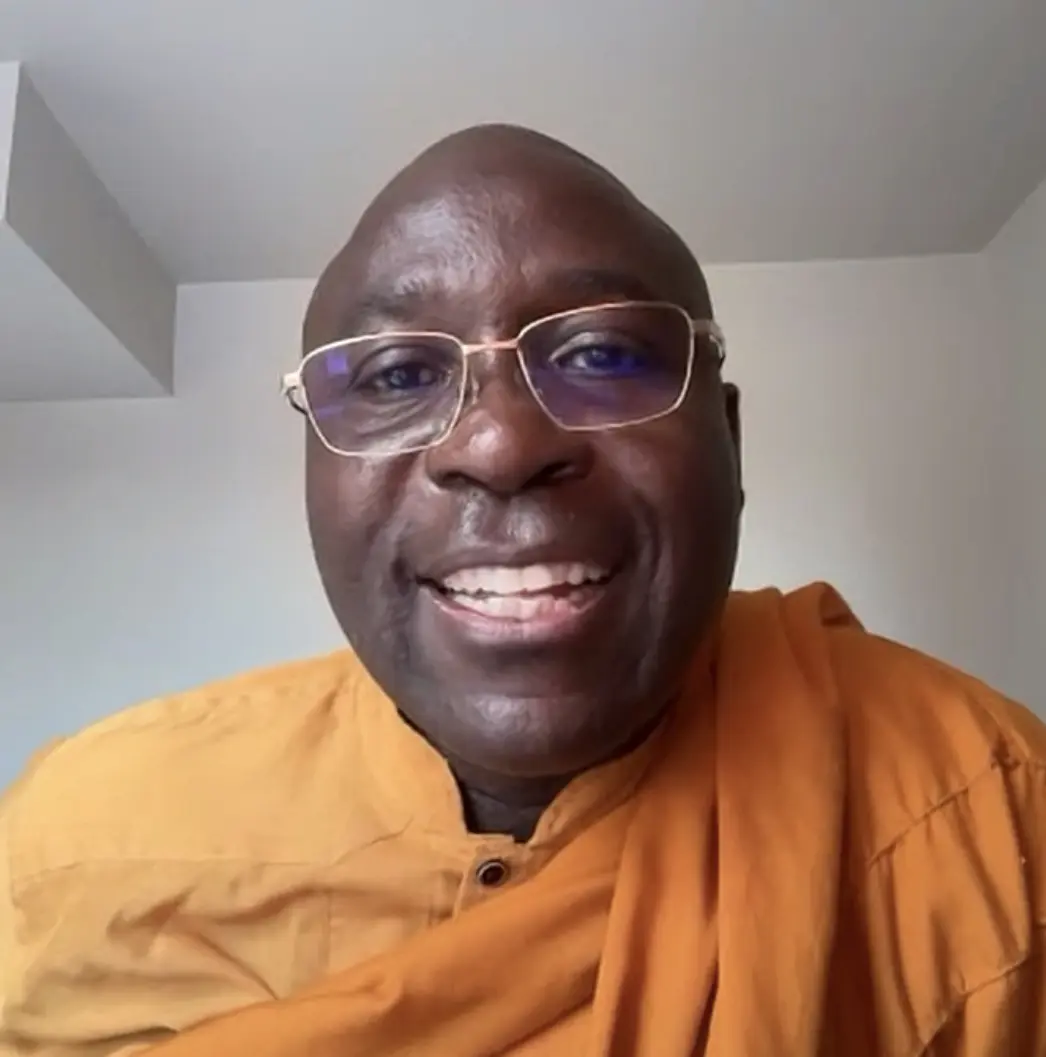
Because of monastic vows that prohibit personal fundraising, the abbot and founder of the UBC, Venerable Bhante Buddharakkhita, cannot solicit funds directly. Instead, a grassroots network of international Dharma friends has stepped forward to champion the cause, moved deeply by his decades of tireless teaching, community development, and the unique, healing paradigm of Buddhism he has cultivated in East Africa.
Main Facts: The Land Acquisition and Ecological Stakes
At the center of this urgent mobilization is a 13-acre stretch of pristine wetland located directly adjacent to the existing UBC campus in Bulega-Garuga, near Entebbe. The property sits on the shores of Lake Nalubaale—historically and internationally known as Lake Victoria—which serves as the majestic source of the Nile River.
Securing this land carries a dual purpose:
- Educational and Spiritual Expansion: The UBC plans to transform the site into Africa’s premier retreat center built exclusively for the practice and sharing of the Buddha’s teachings.
- Environmental Conservation: By acquiring the deed, the UBC will permanently protect the sensitive wetland ecosystem from commercial exploitation, industrial degradation, and localized pollution.
The Threat of Commercial Development
The campaign organizers have underscored the ticking clock regarding the property’s availability. If the Buddhist community fails to secure the land, it faces imminent commercial or institutional purchase. Proposals for the site have included private resort developments and a military installation.
Environmental analysts and community leaders warn that either option would spell ecological disaster for the area. Heavy construction, increased human traffic, and commercial waste would introduce severe noise, light, and chemical pollution into the sensitive watershed. This degradation directly threatens the food and water security of local schools, a nearby orphanage, and surrounding rural villages that rely entirely on the pristine nature of the wetland for survival.
Chronology: From Kampala to California, and Back to the Nile
The trajectory of the Uganda Buddhist Centre is inextricably linked to the remarkable personal and spiritual journey of its founder, Bhante Buddharakkhita. Understanding the urgency of the current campaign requires examining the timeline of resilience, migration, and spiritual awakening that built the UBC from the ground up.
Early Life and Spiritual Awakening (1966–1990)
Born Steven Kaboggoza in Uganda into a devout Roman Catholic family, Bhante Buddharakkhita grew up amidst the rich cultural heritage of East Africa, navigating a childhood shaped by regional instability and deep-seated community traditions.
In 1990, while pursuing business studies in India, his life shifted onto an entirely unexpected path. Living in a student hostel, he befriended two Thai Buddhist monks. Their presence, deportment, and teachings sparked a profound curiosity about the Dharma. This initial exposure was cemented during his first meeting with His Holiness the Dalai Lama. Recalling that encounter years later, Bhante Buddharakkhita often tells supporters, "I’m hooked now."
Ordination and Rigorous Training in the West (2002–2005)
For over a decade, Steven immersed himself in Buddhist philosophy while maintaining his secular responsibilities. By 2002, his calling to the monastic life crystallized. He traveled to the United States, where he was ordained by the esteemed Sayadaw U Silananda at the Tathagata Meditation Center in San Jose, California. This milestone made him one of the very first African Buddhist monks in modern history.
Following his ordination, he spent eight intensive years training under the guidance of Venerable Bhante Henepola Gunaratana—author of the widely acclaimed spiritual classic Mindfulness in Plain English—at the Bhavana Society in West Virginia. Under Bhante Gunaratana’s mentorship, the young monk deepened his mastery of Vipassana (insight) meditation, scriptural study, and monastic discipline.
Returning to Uganda and Founding the UBC (2005)
Armed with a profound understanding of the Pali Canon and a vision for bringing the Buddha’s teachings to his homeland, Bhante Buddharakkhita returned to Uganda in 2005. His homecoming was far from easy. In a region where Christianity and Islam are the dominant faiths, Buddhism was an unfamiliar and sometimes misunderstood tradition.
Early in his ministry, he faced suspicion and outright hostility from local communities unfamiliar with his robes and shaved head. In one harrowing incident, he was targeted by a gunman, narrowly escaping a bullet. Rather than retreating, this brush with violence reinforced his commitment to peace, compassion, and interfaith dialogue. He coined the concept of "Afro-Dhamma"—a seamless integration of traditional Buddhist meditative practices with indigenous African communal values, resilience, and holistic healing.
Two Decades of Growth (2005–2025)
What began as a modest meditation space has blossomed over the last 20 years into a sprawling, multi-faceted sanctuary of peace and community welfare. The UBC is no longer just a place for silent meditation; it has become a vital civic and educational anchor in the Entebbe region.
The campus now encompasses:
- The Buddhist Peace School, serving preschool and primary-level students.
- The African Buddhist High School, offering secular education infused with ethical mindfulness.
- Essential public infrastructure, including clean water systems.
- Community medical outreach services that cater to underprivileged families irrespective of religious background.
Supporting Data: Financial Breakdown and Deadlines
The ambition of creating Africa’s first dedicated Dhamma retreat center comes with a substantial financial requirement. The total asking price for the 13-acre wetland property is $1.75 million, with total campaign goals set at $2 million to account for closing costs, initial ecological restoration, and legal frameworks.
Current Financial Status
As of this writing, dedicated global supporters have raised $781,888. This total includes a remarkable $760,000 in conditional pledges from anonymous donors who have stepped forward to catalyze public giving.
Critical Funding Deadlines
Campaign organizers emphasize that time is running out. The acquisition is bound by a strict two-tier payment schedule:
- First Milestone (September 15): Half of the total funds must be secured to place a binding deposit on the property.
- Final Milestone (November 15): The remaining balance of $875,000—along with associated legal fees, taxes, and initial boundary-marking costs—must be paid in full to finalize the purchase.
Organizers have issued a call for what they term "stretch gifts." Recognizing that contributors span vastly different economic realities, the campaign welcomes donations of any size, noting that contributions ranging from $100 to $100,000 are equally vital to crossing the finish line. Donors wishing to utilize complex financial instruments, such as donor-advised funds (DAFs) or ACH transfers, are encouraged to coordinate directly through the official GoFundMe campaign page.
Official Responses and Perspectives
The campaign has drawn vocal support from international Buddhist leaders, environmental advocates, and community beneficiaries who view the land purchase as a generational opportunity.
"Bhante Buddharakkhita represents a rare bridge between ancient Asian monastic traditions and the vibrant soul of Africa," notes a statement from the international organizing committee. "To secure this land is to secure a permanent home for wisdom, compassion, and ecological stewardship on a continent that has historically been overlooked by mainstream global Buddhist institutions."
Local educators and village elders near Bulega-Garuga have also voiced strong support, pointing to the UBC’s proven track record over the past two decades. Unlike speculative resort developers or military planners—whose footprints would disrupt local fisheries and agriculture—the UBC has pledged to maintain the wetland as an educational eco-sanctuary.
Bhante Buddharakkhita himself remains characteristically serene amidst the high-stakes negotiations. In recent video addresses to the global community, he has emphasized that the project is not merely about acquiring dirt and water, but about creating an enduring refuge where human beings of all backgrounds can heal their hearts, quiet their minds, and learn to live in harmony with the natural world.
Implications: A Global Blueprint for Engaged Buddhism
The successful acquisition of the Lake Nalubaale wetland carries profound implications that extend far beyond the borders of Uganda.
1. A New Paradigm for Engaged Buddhism in Africa
For decades, the globalization of Buddhism was primarily characterized by Western interest in Asian teachers or Asian immigration to Western nations. The work of Bhante Buddharakkhita and the UBC flips this script, demonstrating that Buddhism can take deep, indigenous root in African soil. By formalizing the continent’s first dedicated retreat center, the UBC provides a permanent institutional hub for African monastics and lay practitioners, ensuring that "Afro-Dhamma" can be studied, practiced, and propagated for generations to come.
2. The Intersection of Environmentalism and Spirituality
In an era defined by climate change, habitat destruction, and ecological anxiety, the UBC’s campaign offers a powerful model of Eco-Buddhism in action. Protecting 13 acres of critical wetland on the banks of the Nile is not a passive philosophical stance; it is active, boots-on-the-ground environmental defense. By keeping industrial polluters and military installations out of the watershed, the Buddhist community is actively practicing the first precept—protecting all forms of life—on a landscape scale.
3. Strengthening International Sangha Bonds
The mobilization of donors across North America, Europe, Asia, and Africa highlights the borderless nature of the global Sangha (community of practitioners). In supporting an African-led initiative to preserve an African ecosystem, the global Buddhist community is participating in a reciprocal act of generosity (dana) that breaks down traditional geographical silos.
How You Can Help
As the September and November deadlines loom, the organizing group invites members of the worldwide dharma community to participate in this historic endeavor. Whether through a modest one-time contribution or a significant organizational gift, supporters have a narrow window to ensure that the Uganda Buddhist Centre can protect its ecosystem, expand its educational mission, and establish a permanent beacon of peace at the very source of the Nile.
To learn more, view updates, or make a contribution through secure channels, visit the official Uganda Buddhist Centre Expansion GoFundMe Campaign.
