

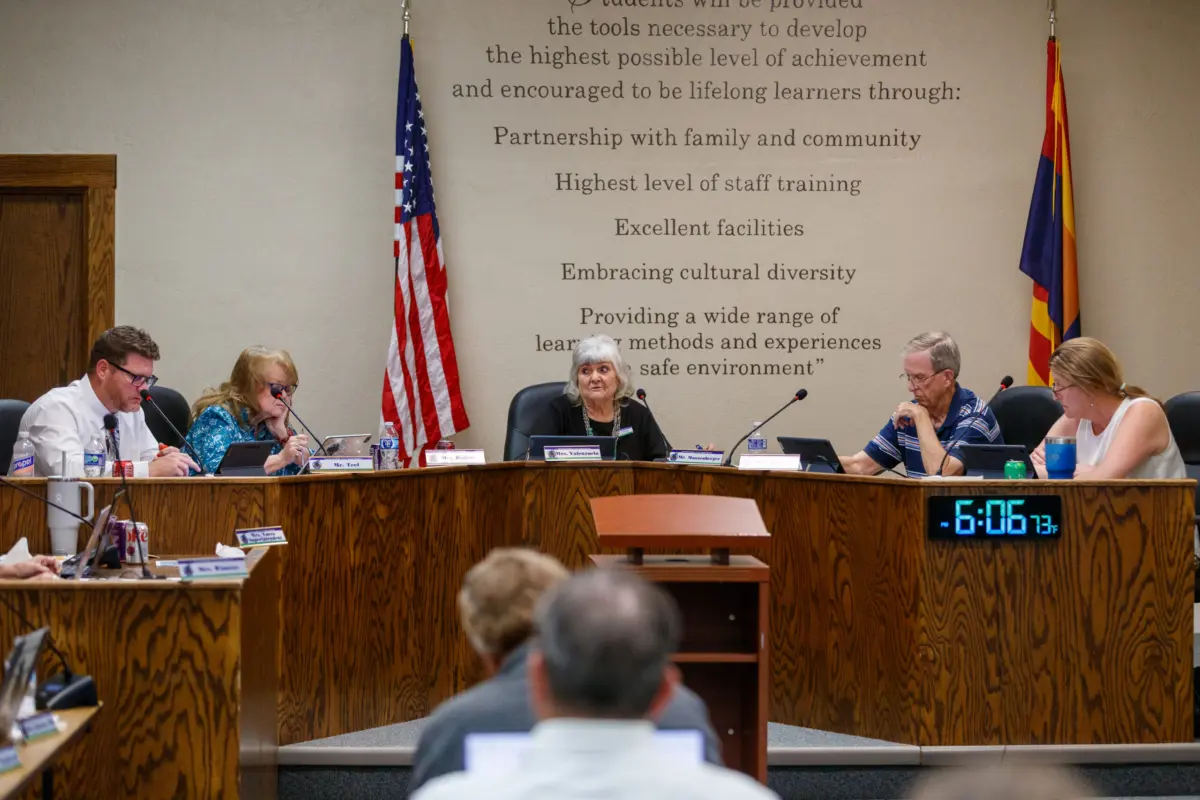
COTTONWOOD, Arizona — The Cottonwood-Oak Creek School District (COCSD) Governing Board has initiated a multifaceted strategy to address long-term capital infrastructure needs, stabilize district operational finances, and modernize student behavioral management. During its August 5 meeting, the governing board finalized plans for a public information campaign surrounding a crucial $30 million bond initiative, analyzed better-than-expected preliminary student enrollment figures, and adopted a new evidence-based student discipline framework.
As the district heads into the new academic year, administrative leaders are prioritizing community engagement, fiscal transparency, and systemic educational reform to navigate post-pandemic operational challenges.
Main Facts of the COCSD Governing Board Decisions
The August 5 meeting of the COCSD Governing Board established several critical policy and financial pathways for the district. The primary developments include:
- Proposition 409 Capital Bond: The board confirmed that the district’s proposed $30 million capital bond will appear on the November general election ballot as Proposition 409. This measure, if approved by voters, will fund critical infrastructure upgrades across district properties, including air conditioning systems, security enhancements, transportation facilities, and water and sewage infrastructure.
- Public Advocacy Restrictions and Outreach: Under Arizona state law, public school districts are prohibited from using public funds to influence the outcome of an election. Consequently, Superintendent Jessica Vocca announced a dual-track information campaign. The district will host informational town halls to present objective facts, while "Partners in Education"—an independent, external advocacy group—will manage campaign signs and promotional "palm cards" advocating for the bond’s passage.
- Favorable Enrollment Trajectory: District Chief Finance Officer Tammy Janssen reported that early student registration numbers are significantly higher than initially projected. While the district’s budget was built on an anticipated loss of approximately 30 students, current registration figures indicate a decline of only 19 students. This variance represents a positive fiscal outlook, as state funding in Arizona is directly tied to student enrollment.
- Adoption of PBIS Discipline Framework: The board officially approved the integration of the Positive Behavioral Interventions and Supports (PBIS) system into the district’s student discipline policy. Designed to operate alongside traditional disciplinary measures, PBIS focuses on proactive behavioral instruction rather than purely punitive responses.
Chronology of Key Events and Milestones
The district’s administrative and financial planning operates on a strict timeline dictated by the academic calendar, state auditing requirements, and the upcoming electoral cycle. The critical milestones for the district over the next several months include:
August 5: Board Meeting and Policy Approval
The COCSD Governing Board officially approved the implementation of the PBIS system and received the updated financial and enrollment report from CFO Tammy Janssen.
August 13: First Public Informational Event
Superintendent Jessica Vocca will launch the district’s public outreach efforts with an address to the Rotary Club of the Verde Valley. The presentation is scheduled from 12:10 p.m. to 1:00 p.m. at the Calavera restaurant, located at 717 S. Main St. in Cottonwood. This event marks the first of several planned forums designed to educate community members on the specifics of Proposition 409.
Mid-to-Late August: The 10-Day Enrollment Recount
Following the opening days of the school year, district administrators will monitor attendance closely. After the first 10 days of instruction, the district will conduct its initial formal enrollment recount to eliminate "ghost enrollment"—instances where students are registered but fail to attend or have relocated.
Late August: First Annual Audit
A team of budgeted state auditors is scheduled to conduct a one-day fiscal review of the district’s accounts to ensure compliance with state accounting standards and verify early-season enrollment calculations.
September: Preliminary Budget Adjustments
The administration is permitted to present early budget revisions to the Governing Board in September, reflecting verified post-10-day enrollment numbers.
November: Proposition 409 Ballot Vote
Voters residing within the Cottonwood-Oak Creek School District boundaries will decide the fate of the $30 million capital bond on Election Day.
December: Traditional Budget Revision Window
If Proposition 409 passes, or if enrollment figures deviate from current trends during the state-mandated 100-day count period, the district will execute its primary budget revisions during its December meeting.
January: Secondary Audit
Auditors will return for a second, more comprehensive review of the district’s mid-year financial statements and student attendance records.
Supporting Data and Financial Analysis
The $30 Million Capital Bond (Proposition 409)
If approved, the $30 million bond will be issued in installments. Capital bonds in Arizona school districts are strictly regulated and can only be used for "soft capital" (such as technology and textbooks) and "hard capital" (such as facility construction and renovations). They cannot be used to pay for teacher salaries or daily operational expenses.
The district has identified several urgent areas of need:
- HVAC Systems: Replacing aging air conditioning units across multiple campuses to ensure classroom safety and climate control during extreme Arizona summer heat.
- Security Infrastructure: Upgrading perimeter fencing, digital surveillance systems, and controlled campus entry points.
- Transportation Infrastructure: Upgrades to the district’s "bus barn" and maintenance facilities to support the safe operation of the student transportation fleet.
- Utility Systems: Overhauling essential water and sewage systems that have neared the end of their operational lifespans.
Enrollment and State Funding Metrics
In Arizona, public school districts are funded through a statutory formula primarily based on Average Daily Membership (ADM) during the first 100 days of the school year.
[Projected Enrollment Decline: -30 Students]
                       vs.
[Current Enrollment Decline: -19 Students]
                       =
[Net Gain vs. Budget Projection: +11 Students]
A mitigation of student loss directly preserves classroom funding. If the district maintains this higher-than-expected enrollment through the 100-day count, the administration will be able to retain funding that would have otherwise been cut in the December budget revision.
Official Responses and Administrative Perspectives
District leadership emphasized that both the financial measures and the new disciplinary policies are designed to build a more resilient and supportive educational environment.
Superintendent Jessica Vocca on Community Outreach
Superintendent Vocca stressed the importance of clear, transparent communication regarding Proposition 409, noting that community understanding is vital for the bond’s success.
"We are working hard to ensure that every voter has access to factual, objective information about what this bond will fund," Vocca stated. She highlighted the role of the community-led group Partners in Education, which will handle the advocacy side of the campaign. "They are working on getting signs up and also distributing palm cards so that the community understands the physical needs of our schools."
CFO Tammy Janssen on Fiscal Health and Enrollment Volatility
CFO Tammy Janssen expressed cautious optimism regarding the district’s financial trajectory, while reminding the board of the volatility inherent in early-season enrollment figures.
"Enrollment continues to be our largest factor affecting district funding," Janssen explained to the board. "We are looking at possibly being down about 19 students, but who knows what’s going to happen in the next ten days. We projected to be down about 30 students, so we’re well under that at this point."
Janssen added that the first ten days of school are notoriously unpredictable. "Usually, there is a drop in the first ten days; students could be counted if they are enrolled but have moved or don’t show up. After that ten-day mark, enrollment is recounted, and we will have a much clearer picture when I present a comprehensive update to the Governing Board in September."
Dr. Trish Alley on the PBIS Discipline Paradigm
Student Support Services Director Trish Alley, Ph.D., addressed the board to clarify the philosophical shift represented by the Positive Behavioral Interventions and Supports (PBIS) system, seeking to dispel common misconceptions among educators and parents.
"When we talk about PBIS, there is a misunderstanding quite often, especially with teachers, feeling like positive behavior supports feels like we’re going to get rid of discipline and we’re going to give kids stickers and treats every time they do something good," Dr. Alley explained.
"Really, it is teaching kids what they’re doing right. And what happens, especially in a developing mind, is that if you’re always, always telling a child what they’re doing wrong, that’s what’s always on their mind," she continued.
Dr. Alley emphasized that the introduction of PBIS does not mean the elimination of consequences for misconduct. Instead, the district is developing a standardized point matrix to guide administrators. "Discipline won’t go away. The district will create a point matrix to help principals decide what to do with children, whether they need to be suspended or have a similar discipline response."
Implications for the Community, Staff, and Students
The decisions finalized during the August 5 board meeting carry significant long-term implications for all stakeholders within the Cottonwood-Oak Creek School District.
Long-Term Facilities Stability
If Proposition 409 passes, the district will secure a stable funding stream dedicated entirely to capital improvements. This will prevent the district from having to divert funds from its Maintenance and Operations (M&O) budget—which pays for teacher salaries, classroom materials, and elective programs—to cover emergency facility repairs, such as failing HVAC units or plumbing crises. Conversely, if the bond fails, the district will face difficult choices regarding how to fund critical infrastructure repairs without compromising classroom instruction.
Strategic Budget Flexibility
The positive variance in student enrollment provides the district with unexpected fiscal breathing room. Should enrollment hold steady near the current -19 figure rather than the projected -30, COCSD will retain tens of thousands of dollars in state funding. This financial cushion will assist the district in navigating inflationary pressures on operational goods and services.
School Culture and Behavioral Health
The implementation of PBIS represents a systemic shift in how COCSD schools manage student behavior. By establishing a standardized point matrix, the district aims to reduce subjective disciplinary decisions, thereby creating a more equitable environment. For teachers, the system promises to reduce classroom disruptions by proactively teaching behavioral expectations. For parents, the district plans to facilitate detailed discussions during upcoming Parent-Teacher Conferences to ensure that the home and school environments are aligned under the new behavioral framework.
