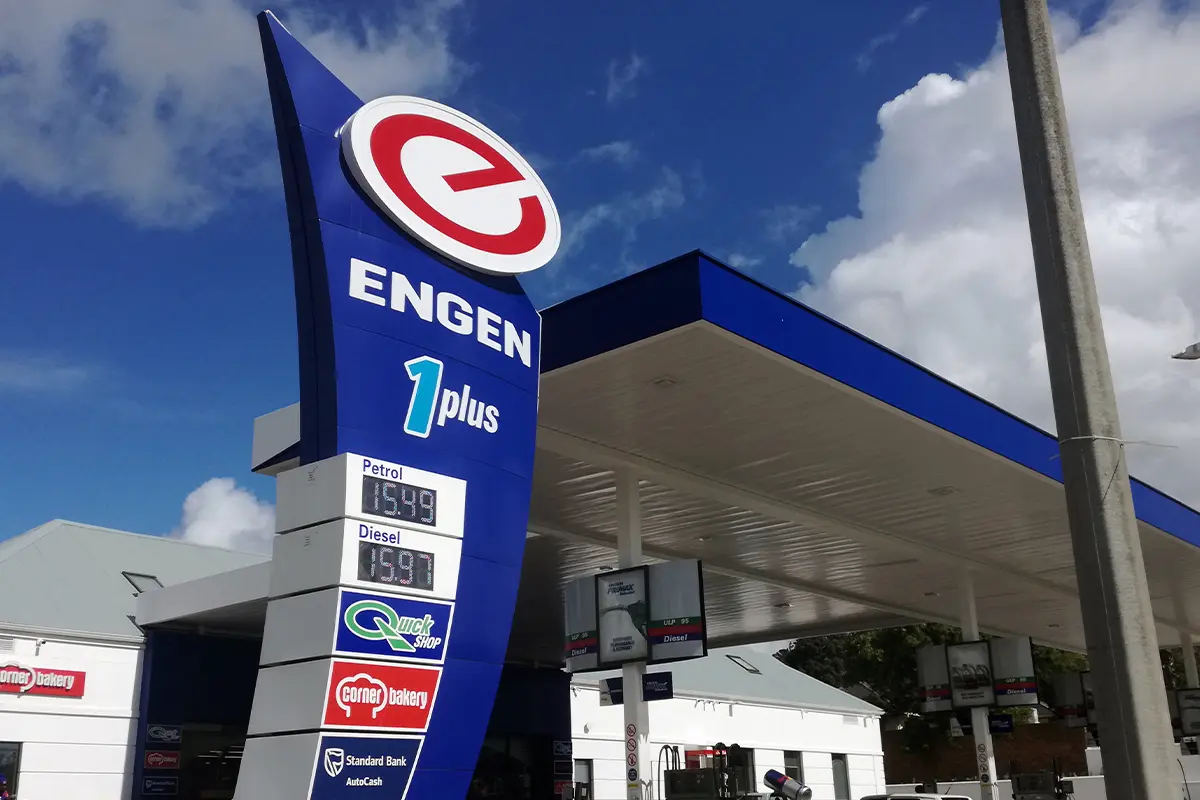
While Europe and North America have largely patterned their electric vehicle (EV) charging infrastructure around high-powered, grid-tied plugs designed for private passenger automobiles, the African continent is pioneering an entirely distinct paradigm. Across major metropolitan hubs and transport corridors—from Nairobi and Kigali to Johannesburg and Cotonou—the traditional roadside petrol station is undergoing a profound metamorphosis.
Rather than simply importing Western models, African energy retailers, tech startups, and multinational fuel majors are solving two distinct regional realities simultaneously: the economic dominance of commercial two- and three-wheeled vehicles, and the necessity of bypassing weak, overburdened, or fossil-heavy centralized electrical grids.
This transformation relies on two core innovations:
Automated Battery Swapping: Tailored specifically for high-mileage commercial fleets like motorcycle taxis (boda-bodas) and auto-rickshaws, allowing drivers to swap depleted batteries for fully charged ones in under two minutes.
Off-Grid Solar Microgrids: Utilizing dedicated photovoltaic arrays paired with large-scale stationary battery storage systems to operate independently of unstable national utility grids.
According to recent data from the United Nations Economic Commission for Africa (UNECA), the continent’s charging infrastructure market is experiencing exponential growth, projected to surge eightfold from $31.93 million in 2022 to $256.53 million by 2030. This decentralized, leapfrog transition mirrors the continent’s mobile telecommunications revolution two decades ago, which bypassed copper landlines entirely in favor of cellular networks.
Chronology of the Transition
The evolution of the African energy retail forecourt has accelerated rapidly over the past several years, driven by a convergence of private-sector agility, academic research, and changing consumer habits.
The Early 2000s–2010s (The Mobile Precedent): Africa establishes a global precedent for technological leapfrogging by scaling mobile money platforms (such as M-Pesa) and cellular networks ahead of traditional banking and landline infrastructure, setting the stage for decentralized energy adoption.
The Late 2010s (Rise of E-Mobility Startups): Pioneers like Ampersand in East Africa introduce electric motorcycles and early battery-swapping models, proving the economic viability of electric two-wheelers for commercial drivers operating on razor-thin profit margins.
2022–2024 (Mainstream Integration): Legacy petroleum distributors—including Vivo Energy (Shell licensee), TotalEnergies, and Rubis Energy—begin opening their forecourts to clean mobility providers, integrating charging and swapping bays into traditional fuel stations.
2025 (Commercial Scalability): Data demonstrates explosive growth. In South Africa, energy dispensed on Rubicon’s charging network surges by 142% year-over-year to reach 625 MWh. Commercial electric fleet operators across the country prove a concrete 27% cost advantage over internal combustion engine (ICE) counterparts.
2026 (Off-Grid Corridors and Continental Policy): Landmark studies—such as research published in Nature Energy by ETH Zurich and partners, alongside UNECA’s 2026 Economic Report on Africa—validate that off-grid solar EV charging can achieve cost parity with fossil fuels long before 2040, prompting widespread infrastructure deployment across multiple regional tiers.
Supporting Data and Market Metrics
The empirical data underpinning Africa’s e-mobility transition highlights a market structure vastly different from Western economies.
Fleet Demographics and Economics
A multi-market analysis conducted by McKinsey & Company for the Shell Foundation projects that electric two-wheelers will account for more than 80% of all EV sales across key Sub-Saharan markets through 2040. This dominance is anchored in low daily charging requirements, rapid fleet turnover, and unmatched lifetime cost competitiveness. To scale this segment, the study estimates that between $3.5 billion and $8.9 billion in financing will be required across vehicle manufacturing, charging infrastructure, and asset financing.
Infrastructure Gaps and Growth
UNECA’s 2026 report, Growth through Innovation: Harnessing Data and Frontier Technologies for Africa’s Economic Transformation, outlines the current scale of the market:
A continental fleet exceeding 400,000 electric vehicles is currently serviced by fewer than 1,000 public charging stations spread across 26 countries.
Despite this deficit, the infrastructure market is scaling rapidly, tracking toward a $256.53 million valuation by 2030.
The market is divided into distinct regional tiers: North African nations (such as Morocco) and South Africa focus on high-power highway corridors for passenger cars, while East African nations (such as Kenya and Rwanda) prioritize urban battery-swapping networks for commercial fleets.
Academic Findings
Research published in Nature Energy—led by scientists at ETH Zurich, the Paul Scherrer Institute, Makerere University, the University of Port Harcourt, and Stellenbosch University—analyzed transport electrification across 52 African nations and more than 2,000 geographic locations. The findings confirm that battery electric vehicles paired directly with off-grid solar PV and local storage can achieve total cost parity with internal combustion engines well ahead of 2040, challenging long-held assumptions about grid dependency.
Official Responses and Expert Perspectives
Industry leaders, researchers, and policymakers have increasingly voiced optimism regarding the speed and viability of the continent’s clean transport transformation.
Bessie Noll, a senior researcher in the Energy and Technology Policy Group at ETH Zurich and lead author of the Nature Energy study, challenged traditional energy forecasting models:
"Many models have assumed that combustion engine vehicles will continue to dominate in Africa through mid-century. Our findings show that, under certain conditions, e-mobility is feasible sooner than many people think."
Noll further emphasized that the technology itself is already field-tested and proven, noting that capital access remains the primary gating item: "If financing costs can be reduced, the transition will accelerate dramatically."
Energy infrastructure developers are already putting these off-grid theories into practice. In South Africa, where state utility Eskom has wrestled with chronic generation shortfalls and coal dependency, infrastructure developer Zero Carbon Charge is bypassing the national grid entirely. The company is constructing a nationwide highway network of off-grid, ultra-fast charging plazas along major transport routes like the N1, N2, and N3 highways. These stations operate as autonomous microgrids powered by on-site solar arrays and industrial battery storage, shielding motorists from rolling blackouts while delivering 100% renewable electricity at speeds up to 300 kilowatts.
Meanwhile, traditional oil majors are actively pivoting their business models. In Kenya—where the national grid already draws over 90% of its power from clean geothermal, wind, and hydro resources—French energy major Rubis Energy has partnered with electric bus manufacturer BasiGo. Together, they are deploying DC fast-charging infrastructure across a network of more than 300 stations. At high-traffic locations like the Rubis Sabaki station along the Nairobi-Mombasa corridor, 100-kilowatt chargers with dual-standard connectors enable everything from passenger cars to commercial delivery vans and public transit buses to recharge in under an hour.
Implications for the Future of Mobility and Energy
The physical and operational evolution of the African petrol station carries profound implications for the global energy landscape.
Decentralization Over Centralization: By proving that transport networks can electrify without relying on massive, centralized utility upgrades, Africa is offering a blueprint for resilience that other developing regions—and even rural parts of developed nations—can emulate.
Diversification of Energy Retail: Traditional fuel retailers are no longer merely vendors of imported petroleum products. By leasing space to automated battery lockers, hosting solar microgrids, and offering convenience goods to commercial drivers during rapid two-minute swaps, forecourts are transforming into diversified digital and green energy hubs.
Financial and Operational Efficiency: As detailed in transport infrastructure studies by researchers such as Daniel Simwaba and Abubaker Qutieshat, battery swapping completely eliminates charging downtime for commercial operators, reduces upfront vehicle ownership costs, and shields mobility networks from the price volatility of national electricity grids.
Ultimately, the transformation of the roadside filling station across Nairobi, Johannesburg, Kigali, and beyond demonstrates that the global clean energy transition does not require a rigid, one-size-fits-all playbook. By merging decentralized renewable generation, stationary energy storage, and lightning-fast battery exchange, African innovators are constructing a resilient, highly adaptable transportation network from the ground up—redefining what a petrol station can, and should, be in the 21st century.