

By the In5D Editorial Desk
Have you ever looked around at the frantic pace of modern society—the endless grind of the corporate ladder, the superficial metrics of digital connectivity, and the rigid dogmas of traditional institutions—and asked yourself, "What on Earth am I doing here?"
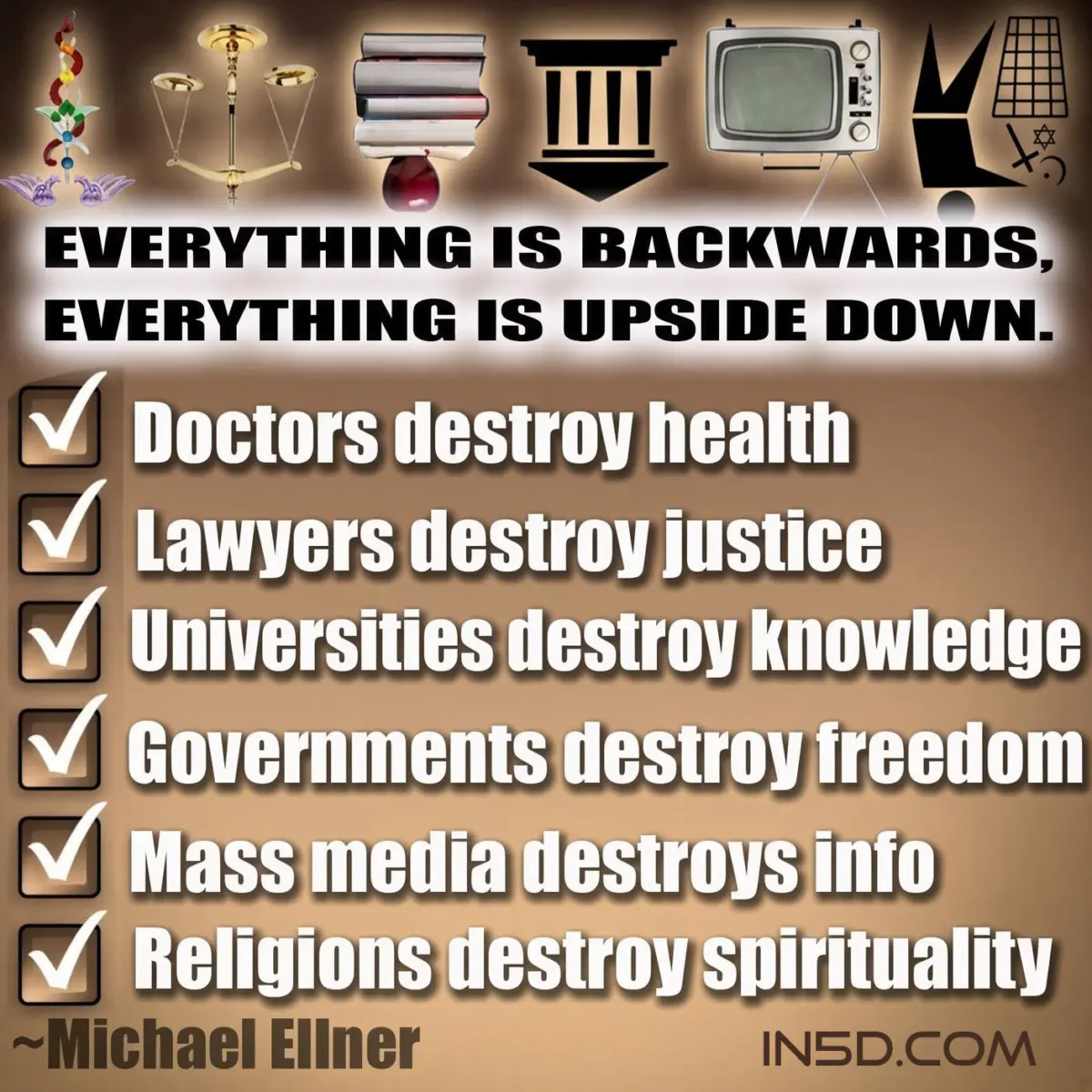
For millions of people worldwide, this question is not merely a fleeting existential thought. It is a persistent, lifelong hum of quiet desperation. It is the deep, haunting conviction that Earth is not one’s true home. Even as children, many intuitive and highly sensitive individuals recall looking at the behavior of the surrounding world and wondering how everyone else seemed so effortlessly adjusted to a system that felt fundamentally upside down and backwards.
In a culture that prioritizes conformity, consumerism, and institutional compliance, feeling entirely out of place is often treated as a psychological defect to be corrected through therapy or pharmaceutical intervention. However, an expanding global counter-culture of metaphysical thinkers, spiritual researchers, and consciousness explorers suggests a radically different interpretation: the pervasive feeling of not belonging may not be a malfunction of the mind, but rather a profound indicator of spiritual awakening.
Chronology of an Awakening: From Childhood Disillusionment to Cosmic Inquiry
The trajectory of the modern seeker typically follows a distinct, recognizable timeline. For many, the realization that "something is fundamentally wrong with the script" begins very early in life.
Phase 1: Early Disillusionment
The cracks in consensus reality often appear during childhood. Whether it is questioning the fear-based doctrines taught in Sunday school, resisting rote memorization in rigid educational systems, or simply staring out the classroom window with an inexplicable longing for the horizon, the nascent seeker recognizes an underlying dissonance. While peers readily accept the social structures presented to them, the future seeker experiences a visceral resistance.
Phase 2: The Search for Explanations
As these individuals age, the friction between their internal values and external societal expectations intensifies. This phase is marked by deep questioning of traditional milestones:
- Why does human society measure worth by monetary accumulation rather than spiritual contribution?
- Why does global technology hyper-connect humanity while plunging millions into profound isolation?
- Why do ancient and modern institutions—spanning politics, organized religion, and formal education—frequently divide populations rather than unite them?
Phase 3: Unlocking the Past and the Stars
For many, a catalyst occurs that redefines their entire worldview. Through meditative practices, spontaneous spiritual breakthroughs, or experiential tools like past-life regression audio programs, individuals begin piecing together alternate narratives of their soul’s history.

Consider the personal account of In5D founder Gregg Prescott, who utilized a guided self-hypnosis regression to uncover a profound past-life memory. During the era of the Spanish Inquisition, Prescott experienced a life as a Mayan elder in a tropical paradise resembling modern-day Belize. Forced by colonizers to convert to Christianity under threat of death, his past-life persona pretended to comply merely to preserve sacred tribal traditions and Mayan glyphs for the younger generation.
The profound irony of that revelation—discovering he holds 25% Spanish ancestry in his current biological lineage—highlighted a multi-layered existential paradox: on a higher level of consciousness, he had metaphorically "invaded himself." Experiences like this transform the individual’s perspective, shifting the core question from "Why am I stuck in this chaotic world?" to "Why did I intentionally choose to incarnate here?"
Supporting Data and Metaphysical Frameworks
To understand why a significant percentage of the global population feels like an alien in their own skin, researchers of consciousness have turned to various psychological and metaphysical frameworks. While mainstream science attributes these feelings to introversion, neurodivergence, or cultural alienation, metaphysical philosophies offer structural explanations that resonate deeply with millions.
1. The Psychology of the Non-Conformist
From a purely secular standpoint, feeling alienated is a well-documented phenomenon among creative, highly introspective, and gifted individuals. Psychometric frameworks such as the Myers-Briggs Type Indicator (MBTI) frequently show that intuitive-feeling types (such as INFPs) experience higher rates of social alienation because their internal ethical frameworks clash sharply with hyper-pragmatic, materialistic societal norms. When an individual possesses natural cognitive or extrasensory sensitivities—such as vivid precognitive dreams, deep empathic resonance, or early-onset philosophical inquiry—mainstream culture often invalidates these gifts, forcing the individual into a lifelong state of masking their true nature.
2. The Paradigm of Volunteer and Starseed Souls
In the realm of metaphysical philosophy, popularized by pioneering hypnotherapists like the late Dolores Cannon, the concept of "Volunteer Souls" or "Starseeds" has gained massive traction. According to this framework, millions of souls currently inhabiting human bodies originated not from Earth’s terrestrial evolutionary cycle, but from distant star systems—such as the Pleiades, Arcturus, Sirius, Andromeda, and Lyra.
These volunteer souls allegedly incarnated into dense, third- and fourth-dimensional realities to assist humanity through its current global transition into a higher vibrational paradigm (often termed 5D Earth or the New Earth). Because their vibrational frequency is inherently attuned to states of unconditional love, unity, and advanced wisdom, descending into the dense, polarized reality of Earth creates an enduring, underlying sensation of homesickness—a yearning for a place they cannot physically map, but deeply remember at a cellular level.
3. The Old Soul Archetype
Closely related to the Starseed hypothesis is the concept of the "Old Soul." Characterized by an intrinsic wisdom, a preference for deep solitude over superficial socialization, and an uncanny maturity observed even in early childhood, old souls have experienced numerous incarnations across vast spans of time. Their internal database of experience makes it exceptionally difficult for them to take human societal constructs—such as status symbols, geopolitical rivalries, and institutional dogmas—seriously.
Official and Institutional Responses
Mainstream scientific and theological institutions view metaphysical explanations of cosmic origins and past-life memories through a lens of skepticism, categorizing them as psychological coping mechanisms, fantasy-prone personalities, or manifestations of dissociative states.

- The Psychological Community: Clinical psychologists suggest that feelings of profound alienation stem from childhood trauma, social anxiety, or neurodivergence (such as Autism Spectrum conditions or ADHD), where individuals genuinely struggle to decode unspoken social norms. Therapy is typically directed toward developing behavioral coping strategies to help the individual adapt to the existing social fabric.
- The Theological Establishment: Organized religious institutions maintain that human existence is bound strictly to terrestrial creation and divine judgment within specific doctrinal parameters. Concepts of starseeds, galactic origins, and volunteer souls are typically dismissed as modern secular mythologies or spiritual delusions that distract from orthodox faith.
Despite institutional dismissal, the sheer volume of individuals engaging with these concepts indicates a cultural shift. Millions are quietly discarding orthodox narratives in favor of self-authored spiritual frameworks that validate their inner experiences.
Implications: The Power of Not Fitting In
What are the practical and philosophical implications of realizing that you were never meant to "fit into" a broken system?
1. The Catalyst for Authentic Creation
History demonstrates that societal progress is rarely driven by those who comfortably conform. The visionaries, paradigm-shifters, scientists, and spiritual leaders who fundamentally altered the course of human civilization were invariably those who looked at accepted dogmas and declared them insufficient. Discomfort is the ultimate catalyst for innovation; the pain of not belonging forces the individual to turn inward, strip away false societal identities, and unearth their authentic voice.
2. The Spontaneous Gathering of the Tribe
A recurring phenomenon reported by those undergoing spiritual awakening is the profound isolation that precedes connection. Seekers often spend years believing they are entirely alone in their perceptions, only to experience synchronistic encounters where they meet kindred spirits. Conversations that immediately transcend small talk into deep metaphysical philosophy validate their experiences. As the old saying in the awakening community goes: You weren’t alone; you were just scattered. Finding your soul group acts as a profound energetic recharge, transforming isolation into a collaborative mission.
3. Redefining "Home"
Ultimately, the persistent ache of homesickness experienced by starseeds, lightworkers, and old souls may point toward a profound realization: home is not a geographical coordinate in the Orion constellation or the Pleiades cluster. Home is a state of consciousness—an internal frequency of absolute unity, unconditional love, and connection to Source/Creator.
If this realization holds true, the purpose of incarnating into a chaotic, polarized world is not to escape it in frustration, but to anchor that higher frequency right here in the physical realm. For those who have spent a lifetime feeling like they do not belong, the ultimate takeaway is clear: stop trying to squeeze your infinite consciousness into finite boxes designed by a hyper-conforming society. Your inability to fit in is proof that you were born to help build something entirely new.
