

Main Facts
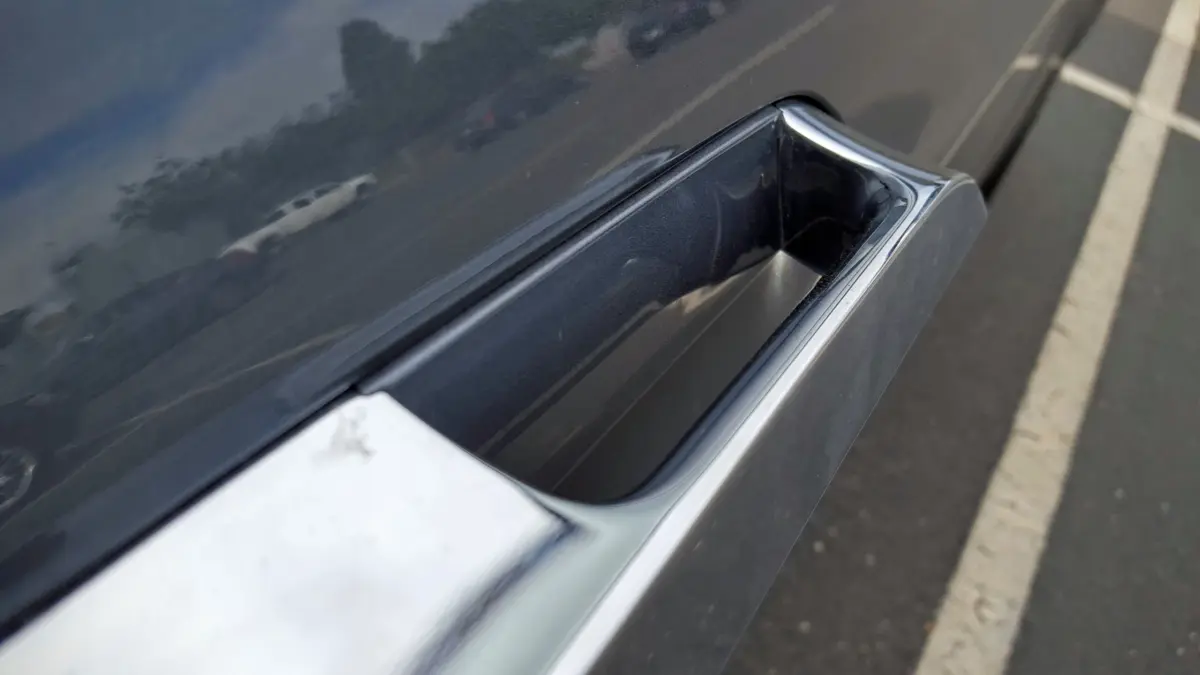
In a sweeping regulatory crackdown that underscores the growing tension between rapid technological innovation and passenger safety, Chinese authorities have mandated massive vehicle recalls affecting a staggering 4.3 million automobiles. Spearheaded by the State Administration of Market Regulation (SAMR), the enforcement action targets a sleek, modern automotive trend that has steadily infiltrated the global market: retractable electric door handles.
Tesla, which popularized the aesthetic and functional shift toward flush, electronic door mechanisms under the direction of Elon Musk, finds itself at the epicenter of the controversy. Of the 4.3 million vehicles impacted by the door-handle directive, approximately 3 million are Teslas. The remaining vehicles belong to eight major Chinese domestic automakers, including Geely, Dongfeng, Xiaomi, Chery, Beijing Automotive (BAIC), First Auto Works (FAW), Leapmotor, and Xpeng.
Simultaneously, Tesla faces a separate, massive recall in China involving 2.74 million vehicles. This secondary action targets a bizarre yet telling vulnerability in the company’s driver-monitoring systems (DMS): drivers utilizing clever physical trickery—specifically, mounting doll heads in front of interior cabin cameras—to deceive the vehicle into believing an attentive human is behind the wheel.
Together, these parallel regulatory interventions highlight fundamental questions regarding modern automotive design, the over-reliance on software-dependent mechanics, and the persistent ingenuity of human workarounds against safety automation.
Chronology
The path toward this historic regulatory collision began decades before the modern electric vehicle (EV) boom, yet its modern urgency was forged in recent tragedy.
- Late 1940s – Early 1950s: Automotive customizers and "hotrodders" in the United States pioneer the "de-chroming" trend, substituting mechanical door handles with rudimentary electric buttons for a cleaner exterior aesthetic.
- 2010s: Tesla modernizes and industrializes this styling cue with the introduction of the Model S, embedding flush-mounted, motorized door handles across its subsequent model lineup. Other global manufacturers, particularly in Europe and China, quickly adopt the electric door handle fever.
- March 2025: A severe accident occurs in southwestern China when a Dongfeng electric vehicle slides into a fence and catches fire following a collision with a truck. Though the driver manages to escape initially, the electronic doors lock shut behind him, trapping passengers inside. Bystanders eventually intervene, but not before the occupants suffer severe burn injuries. The incident remains largely localized until it goes viral online months later.
- Early February 2026: Reacting to rising public outcry and mounting safety concerns regarding post-collision electrical failures, Chinese regulators officially announce a ban on fully retractable door handles for all new vehicles starting the following year.
- August 2026: Chinese regulators formally issue sweeping recall mandates. The action requires nine automakers—most notably Tesla—to address the inherent dangers of power-dependent door handles across 4.3 million cars, while a separate directive targets Tesla’s driver-monitoring software loopholes.
Supporting Data
The scale of the regulatory intervention reflects China’s commanding position in the global EV landscape, where new energy vehicles (NEVs)—comprising battery-electric vehicles (BEVs) and plug-in hybrids—accounted for roughly 60% of all new car sales in recent months.

However, this rapid transition has laid bare critical structural vulnerabilities associated with software-driven hardware:
- The 12-Volt Dependency: Every modern automobile, including high-tech EVs, relies on a foundational 12-volt auxiliary battery to power low-voltage systems, computer initializations, interior lighting, and door actuators. In high-speed collisions, this 12-volt power source or its physical wiring harnesses can easily be severed or short-circuited.
- The Window Intersect Glitch: In vehicles like Teslas, the side window glass must drop slightly upon opening to clear the roof frame and weather-stripping seals. If the 12-volt system fails post-crash, the window motors cannot lower the glass, physically wedging the doors shut even if mechanical latch releases are activated.
- The Rear-Door Access Maze: While front-door occupants in Teslas have accessible mechanical releases built into the armrests, rear-seat passengers face a daunting labyrinth of emergency procedures. Escaping from the back seat requires removing a black rubber mat at the base of the door pocket, prying open a small plastic cover, and blindly hunting for a hidden mechanical pull cable.
- The "Doll’s Head" Loophole: Tesla’s second major recall in China targets 2.74 million vehicles whose driver-monitoring systems previously relied on steering-wheel torque sensors and rudimentary cabin-camera checks. The discovery that drivers could completely bypass safety warnings by placing a doll’s head in front of the lens exposed severe gaps in early AI-assisted oversight.
Official Responses
Automotive experts, international regulators, and industry analysts have offered stark assessments of the unfolding crisis.
David Zhang, dean of vehicle technology research at the Jiangxi New Energy Technology Institute, noted that the unprecedented magnitude of the recall demonstrates China’s absolute resolve in setting strict, uncompromising safety standards for the burgeoning electric vehicle market. "Automotive quality and safety issues have been improved through repeated updates," Zhang observed, signaling that regulatory tolerance for experimental consumer electronics in safety-critical roles is rapidly evaporating.
Faced with the Chinese government’s directives, automakers have been forced to implement sweeping remedial measures. Because Tesla cannot fix hardware safety architecture via an over-the-air (OTA) software patch alone, the company must physically distribute and install warning labels on the interior of affected vehicles in China to educate occupants on emergency exits. Additionally, Tesla is deploying a software patch designed to automatically drop all cabin windows during a collision—though safety analysts quickly point out that this fix remains entirely dependent on the survival of the vehicle’s 12-volt architecture.
For the driver-monitoring recall, Tesla is rolling out an advanced software update for Model 3 and Model Y vehicles. This update shifts the burden of attention tracking to high-precision eye-movement algorithms via the interior cabin camera, rendering simple physical decoys like doll heads ineffective.
Meanwhile, international ripples are already forming. In the United States, the National Highway Traffic Safety Administration (NHTSA) has reportedly begun drafting preliminary regulations concerning electronic door handles, signaling that Western regulators are closely tracking developments originating from Asian markets.

Implications
The dual recalls in China serve as a watershed moment for the global automotive industry, exposing the hidden liabilities of form-over-function design philosophies.
For years, Silicon Valley-style disruption championed the removal of physical tactile controls in favor of minimalist, touch-sensitive, and software-gated interfaces. Flush door handles and minimalist cabins offer undeniable aerodynamic and aesthetic advantages, reducing drag coefficients and contributing to minor efficiency gains in range. Yet, as the events in China starkly illustrate, optimizing an automobile for the wind tunnel should never compromise its primary baseline function: serving as a safe capsule capable of immediate evacuation during life-threatening emergencies.
The systemic risks extend far beyond Tesla. By dragging eight domestic Chinese manufacturers—including giants like Geely, Xiaomi, and Xpeng—into the regulatory spotlight, authorities have sent a clear message that national champions will not receive a pass on fundamental consumer safety. The era of treating automobiles as mere consumer electronics, where safety failures can be casually patched "post-launch" with a software update, is facing stiff institutional resistance.
Ultimately, these developments force a sobering reckoning for the EV revolution. As autonomous features expand and physical controls vanish into touchscreens and motorized flush assemblies, automakers must reconcile digital innovation with the raw, unpredictable realities of mechanical failure and human behavior. For Tesla owners navigating the anxieties of hidden rear-door emergency releases, or regulatory bodies racing to draft new safety codes, the lesson is stark: in the theater of automotive safety, simplicity and reliability will always trump technological cleverness.
