

Main Facts
The cultural and metaphysical landscape of the late 1960s was profoundly shaped by the intersection of pop culture, esoteric philosophy, and celestial mechanics. At the heart of this convergence sits one of the most enduring anthems of the counterculture era: "Aquarius/Let the Sunshine In (The Flesh Failures)." Released by the vocal group The 5th Dimension, the medley dominated the Billboard Hot 100 chart for six consecutive weeks in 1969, becoming a global phenomenon.
Beyond its musical success, the track sparked widespread public interest in the Age of Aquarius, an astrological epoch frequently associated with a collective shift toward heightened spiritual awareness, human brotherhood, and global harmony. A fascinating piece of historical trivia connects the group’s moniker to this metaphysical concept: the band’s name, "The 5th Dimension," shares an intriguing semantic link with the "5th-dimensional" vibratory shift that modern esoteric philosophies associate with humanity’s spiritual evolution.

While pop culture immortalized the transition from the Age of Pisces to Aquarius through musical theater and radio waves, the exact timing of this astrological shift remains a subject of intense debate among astronomers, astrologers, and esoteric scholars. Ranging from early 20th-century alignments to projections spanning centuries into the future, the dawning of Aquarius represents a complex overlap of celestial observation, mythological symbolism, and psychological transformation.
Chronology of an Era: From the Hi-Fi’s to Global Stardom
The journey of The 5th Dimension to the top of the music charts is rooted in the vibrant vocal ensemble scene of the early 1960s. The group’s evolutionary timeline traces a path through shifting musical styles, changing nomenclature, and pivotal industry mentorships.

Early Beginnings: The Hi-Fi’s and The Versatiles
- Early 1960s: Original members Lamonte McLemore and Marilyn McCoo establish a musical foundation by performing in a Los Angeles-based vocal group known as The Hi-Fi’s.
- 1966: After expanding their lineup to include Florence LaRue, Billy Davis Jr., and Ron Townson, the ensemble rebrands itself as The Versatiles. The name reflects their diverse musical range, spanning pop, soul, and jazz vocal arrangements.
The Birth of "The 5th Dimension"
- Mid-1966: Recognizing that the name "The Versatiles" felt dated in the rapidly evolving landscape of 1960s popular music, producer Johnny Rivers encourages the group to adopt a more contemporary identity.
- Late 1966: Member Ron Townson and his wife, Bobette, initially propose the name "The 3rd Dimension," inspired by the contemporary boom of 3D media in film and popular culture. Because the ensemble consists of five vocalists, the name is swiftly modified to The 5th Dimension.
Chart Dominance and Cultural Legacy
- 1967–1968: The group achieves mainstream success with a string of hit singles penned by songwriters like Jimmy Webb, cementing their reputation as sophisticated interpreters of contemporary pop.
- 1969: The release of their iconic medley—amalgamating James Rado and Gerome Ragni’s composition from the hit Broadway musical Hair—propels The 5th Dimension to international acclaim. The single holds the number-one spot on the Billboard charts for six weeks, anchoring the zeitgeist of the late-sixties peace movement.
Supporting Data: Astrological Mechanics and Historical Alignments
Determining the precise onset of the Age of Aquarius requires an understanding of astronomical phenomena, specifically the precession of the equinoxes. Because the Earth’s axis exhibits a slow, cyclical wobble—completing a full circle approximately every 25,900 years—the background constellation behind the vernal equinox shifts backward through the zodiac at a rate of roughly one sign every 2,160 years.
Conflicting Astrological Projections
Astrologers and astronomers disagree on when the vernal equinox officially crossed the threshold from Pisces into Aquarius:

- Traditional Classical Astrologers: Many traditionalists project that the Age of Aquarius will not begin until approximately 2300 CE, when the spring equinox reaches the final boundary stars of the constellation Aquarius.
- Modern Astrological Consensus: Alternative calculations place the transition anywhere from 1910 to 2410, depending on the baseline stellar coordinates utilized.
- Gnostic and Rare Alignment Models: Proponents of esoteric calendars, such as Gnostic movement founder Samael Aun Weor, assert that the epoch officially commenced on February 4, 1962. This date featured a remarkably rare conjunction: the Sun, Moon, Mercury, Venus, Mars, Jupiter, and Saturn were all clustered within the constellation of Aquarius, accompanied by a solar and lunar eclipse. Such a congregation of celestial bodies occurs only once every 2,160 years.
Mythological and Etymological Roots of Aquarius
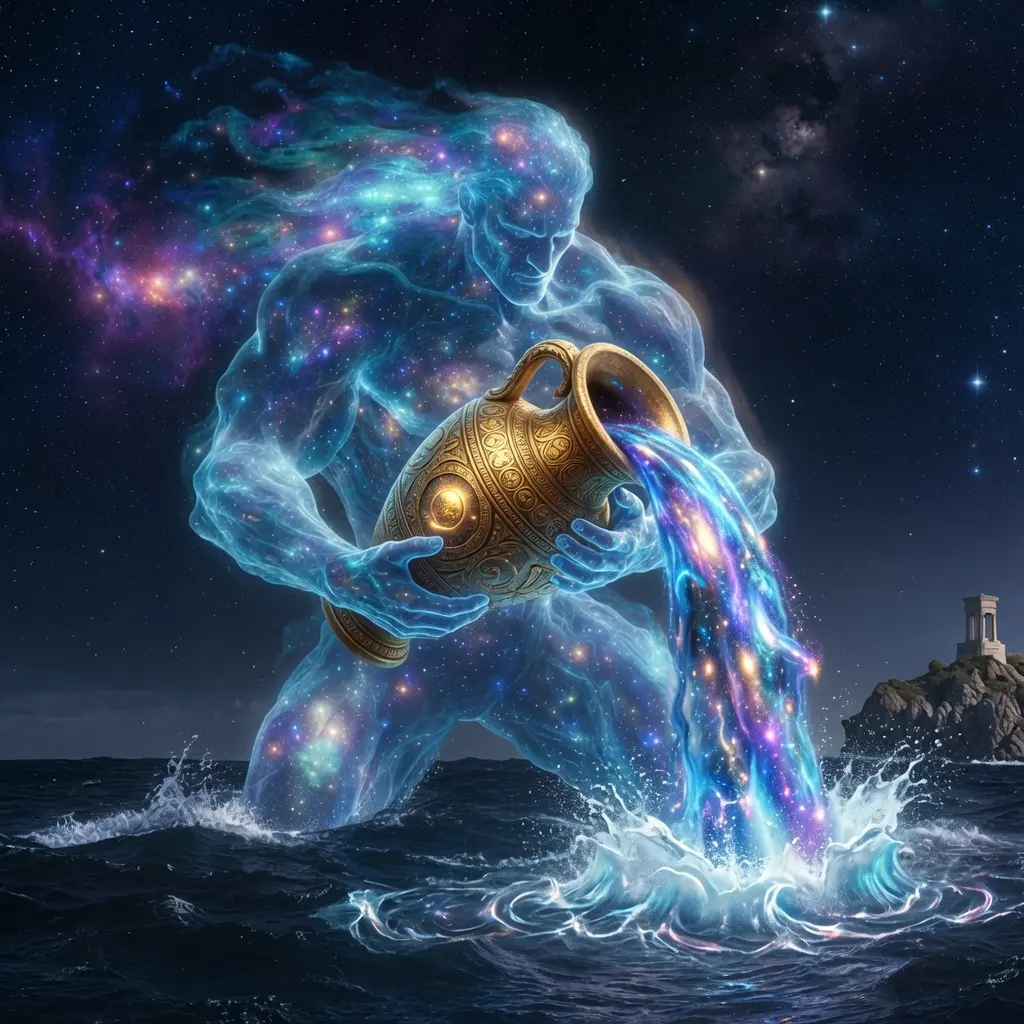
- The Water Bearer as an Air Sign: Despite its name, Aquarius is categorized as an air sign. In ancient Greek mythology, the symbol is linked to Ouranos (Uranus), the original sky god who controlled atmospheric phenomena, winds, and rain. Hellenistic astrologers associated Aquarius with air due to its symbolic connection to shifting winds and its geometric trine aspect with fellow air signs Gemini and Libra.
- Planetary Rulership: Originally governed solely by Saturn in traditional astrology, Aquarius gained Uranus as a modern co-ruler following the planet’s discovery in 1781.
- Etymological Origin: The term Aquarius derives from the Latin aquārius ("pertaining to water" or "water carrier"), which itself is a translation of the ancient Greek Hydrokhoos ("the water-pourer").
Official Responses and Creator Perspectives
Decades after the release of Hair and the chart-topping success of The 5th Dimension’s recording, the original creators and performers reflected on the lasting cultural and humanitarian impact of the Aquarian message.
Gerome Ragni on Generational Hopes
Co-creator Gerome Ragni reflected candidly on the idealistic energy of the late 1960s, noting the burden placed on subsequent generations:

“’68 was a moment of great hope and possibilities. To some extent, my generation blew it. So we watch it now with a renewed sense of hope and a sense of what we didn’t accomplish. So it becomes hopeful again.”
James Rado on the Human Condition
Fellow creator James Rado emphasized that the foundational message of peace, love, and international unity remains profoundly relevant in an era of ongoing global conflict:

“The world’s at war today and I think that’s very bad. That’s the main issue, I think, the human condition and our whole relationship with other nations, other peoples and ourselves.”
Ron Townson on Music as a Universal Language
Addressing critics who questioned the crossover appeal of the ensemble’s vocal styling, original 5th Dimension member Ron Townson articulated a philosophy of artistic universalism:

“You can always get to any race, creed or religion with music. I know some people accuse us of singing white, but it makes me laugh. It is based on ignorance. People sing styles; they don’t sing colors.”
Implications: The Psychological and Societal Transition
While popular culture often paints the Age of Aquarius as an imminent "Golden Age" defined by effortless peace, prosperity, and automatic spiritual elevation, esoteric and philosophical frameworks suggest a far more rigorous path forward.

The Doctrine of Synthesis and Scientific Religion
From a Gnostic and occult perspective, the Aquarian archetype is deeply revolutionary. Ruled by Uranus, Aquarius is viewed as the harbinger of the Doctrine of Synthesis—a philosophical framework intended to reconcile historical divisions between exoteric religion, dogmatic belief systems, and empirical science. Proponents argue that as the new age unfolds, humanity will increasingly recognize that physical matter and spiritual energy are expressions of a single universal source, leading to interdisciplinary breakthroughs across physics, astronomy, and medicine.
Inner Transformation Over Utopian Expectations
Esoteric scholars caution against passive, utopian interpretations of the New Age. True societal transformation cannot occur while collective and individual psychological defects—such as greed, nationalistic aggression, prejudice, and internal disharmony—remain unaddressed within the human psyche.

According to this view, external peace is merely a reflection of internal mastery. Before a collective Golden Age can manifest in the physical world, individuals must engage in the rigorous inner work of dismantling negative emotional patterns and dissolving the ego. Ultimately, the true promise of the Age of Aquarius lies not in passive celestial alignments, but in the conscious, daily effort of humanity to cultivate inner harmony, self-awareness, and universal fraternity.
