

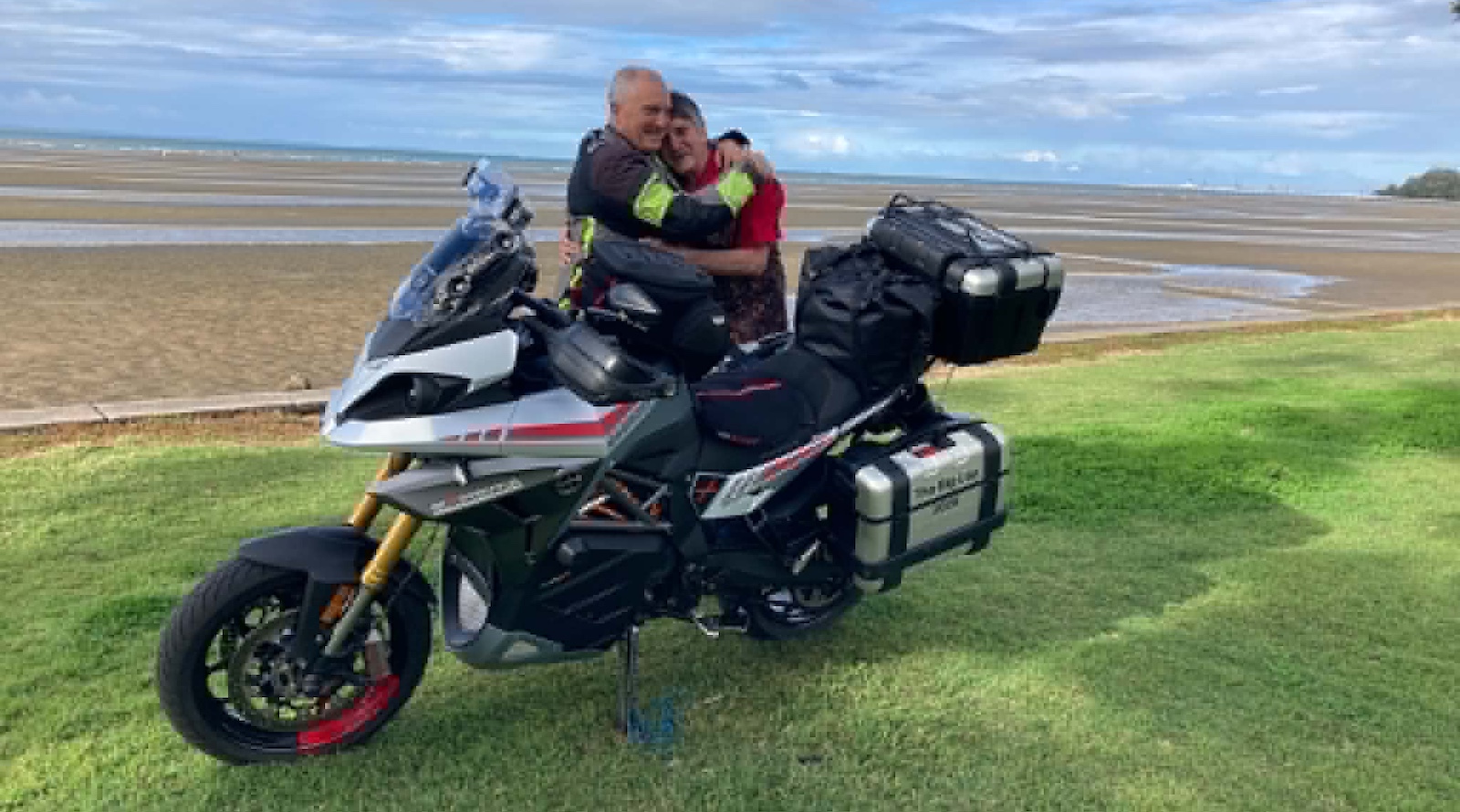
When Ed Darmanin rolled his electric motorcycle out of Sydney on June 24, his blueprint was straightforward: tackle an anti-clockwise 18,000-kilometre circumnavigation of Australia on a single electric motorcycle without a support vehicle. What he did not budget for was a cracked subframe outside Biloela, a Chargefox charging unit that inexplicably dropped out five times in a row in Warnum, a string of sluggish 50kW fast chargers throttling back to a paltry 8kW due to searing ambient heat, or an obstinate bull standing dead-center on the Stuart Highway refusing to yield to silent electric torque.
Yet, nearly two months and more than 9,000 kilometres later, Darmanin is past Broome, and his monumental journey is running precisely to plan—which is to say, virtually nothing has gone according to script, proving that adaptability is the ultimate superpower of modern electric touring.
Main Facts: The Ride, the Machine, and the Mission
Darmanin’s grueling expedition across the Australian continent is more than a personal endurance test; it is a live, high-stakes stress test of electric vehicle (EV) infrastructure, battery thermal management, and long-range electric touring capabilities in some of the most unforgiving terrain on Earth.
- The Route: An anti-clockwise "Big Lap" spanning approximately 18,000 kilometres, starting and finishing in Sydney.
- The Vehicle: An Energica Experia electric adventure motorcycle, modified and heavily relied upon through corrugated dirt tracks, humid tropical climates, and scorching outback heat.
- The Format: Solo execution for significant portions, supplemented by intermittent legs with family members (such as his son Evan in the Gulf Country and his wife Sally joining in Broome).
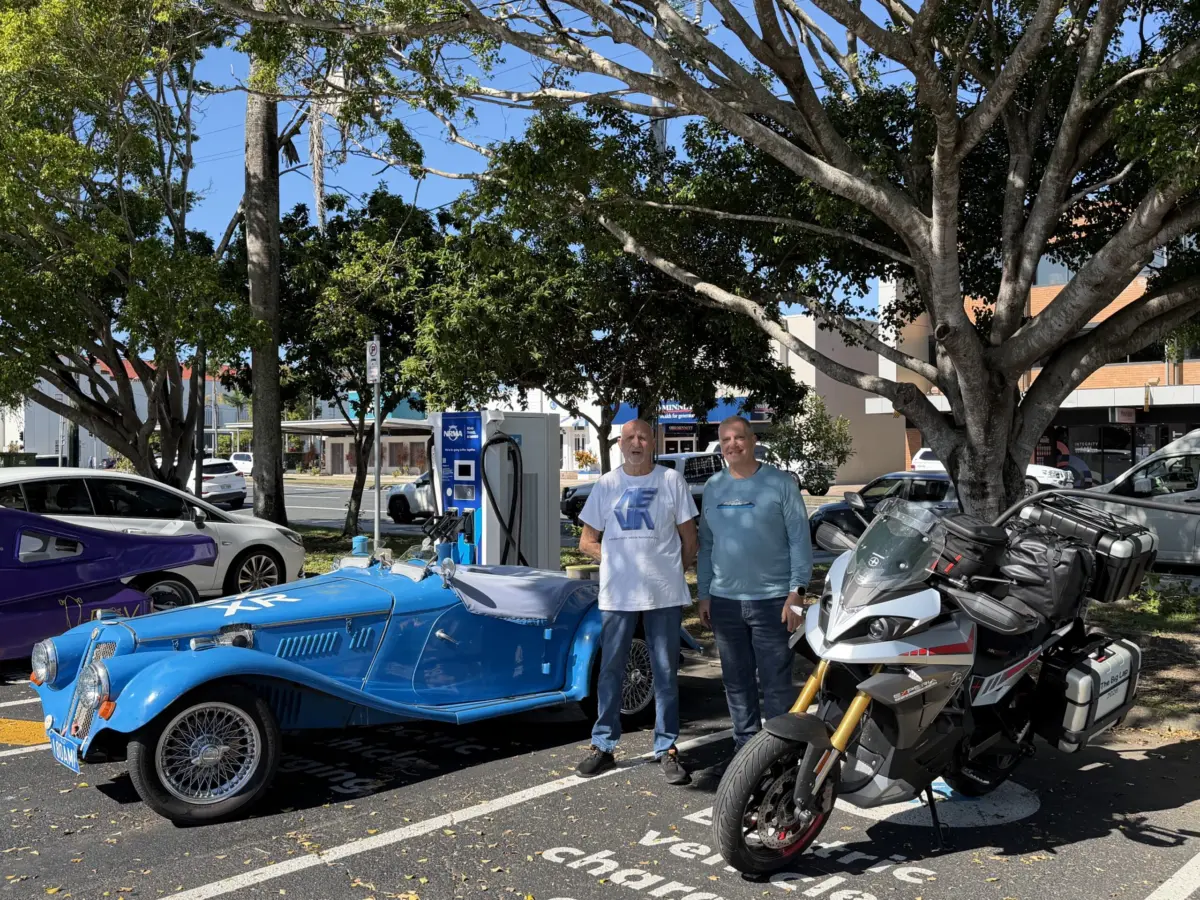
- The Milestone: Crossing paths in Mackay with Glenn George, the visionary who completed the first-ever electric vehicle circumnavigation of Australia back in 2011 using a converted 1950s MG.
The journey has unexpectedly morphed into a global media phenomenon. Accumulating nearly 500,000 views across digital and social platforms, Darmanin’s daily dispatches have drawn coverage from Australian radio to international motorcycle publications in Europe and Hungary.

Chronology of an Epic: From Sydney to the Kimberley
Phase 1: The East Coast and Early Adversity
The initial leg from Sydney northward along the Australian east coast offered relatively smooth sailing. The charging infrastructure between Sydney and Cairns proved remarkably robust, featuring predictable fast chargers and manageable distances. However, the first major trial arrived barely 1,300 kilometres into the journey at Biloela, Queensland.
A routine pre-check revealed a fatigue break in the top rail of the bike’s rear subframe—a potential trip-ending disaster. Turning adversity into momentum, Darmanin engineered a temporary fix to make a scheduled talk in Yeppoon. The following day, local Coast Guard volunteers Arthur Hunt and Phil Nash stepped in, transforming their facility into a makeshift workshop. They stripped the rear end, sent the subframe to a local welder, and reinforced it with solid steel bar lining both rails. By evening, the bike was structurally stronger than when it rolled off the assembly line in Sydney—a modification that would subsequently endure thousands of kilometres of bone-jarring corrugations and heavy pillion loads.

Shortly after, in Mackay, Arthur Hunt orchestrated a historic meeting. Waiting at a charging station was Glenn George, who completed his own historic EV lap of Australia in 2011 at age 67—the exact age Darmanin will turn upon completing this voyage. Joined by EV enthusiast Trevor Richards, the trio shared lunch and decades of electric mobility wisdom by the side of a modern charger.
Phase 2: The Gulf Country and AC Realities
Heading inland from Cairns to Mount Isa via Normanton, Section 3 presented a massive infrastructural shift: 1,200 kilometres completely devoid of DC fast chargers.

Every single charge relied on AC infrastructure—caravan park power points, hotel wall sockets, and a 15-amp feed at a Georgetown caravan park where Darmanin and his son Evan played nine holes of golf while the bike replenished its energy reserves. Mid-section, an unexpected variable emerged: changing the front drive sprocket had subtly altered the trip computer’s distance calculations, hiding a 0.5 kWh/100km buffer. In the remote Gulf Country, such hidden margins can mean the difference between making it to the next plug or being stranded.
Phase 3: The Northern Territory and Thermal Management
As Darmanin pushed through the Northern Territory, outback heat and high-speed transit introduced new variables. Cruising at 130 km/h toward Katherine rapidly depleted the battery. Worse still, ambient temperatures soaring past 35°C, combined with high-intensity charging, pushed the battery pack into thermal protection mode.

At Adelaide River, the motorcycle’s safety management system deliberately throttled charging speeds to protect the cells, stretching a single charge stop to over an hour. It was a masterclass in understanding how extreme weather impacts chemical energy storage systems.
Phase 4: The Kimberley and Improvised Power
Entering Western Australia and tackling the Kimberley solo brought wild infrastructure contrasts. At Warnum, a Chargefox fast charger cut out repeatedly across five consecutive attempts—stalling at 42%, 50%, 70%, 80%, and finally reaching 95%—while automated phone support misdiagnosed the issue as a credit card error. Crowd-sourced data on PlugShare confirmed concurrent hardware failures for other motorists.

Resourcefulness triumphed. Being a licensed electrician, Darmanin fabricated a custom adapter to tap directly into a 3-phase socket at Fitzroy Crossing, parking his bike right next to the fuel bowser. In Timber Creek and Willare Bridge, hotel verandas and standard power outlets stood in for dedicated charging bays.
Supporting Data: Infrastructure Innovations in the Outback
Darmanin’s journey highlights a quiet revolution taking place in remote Australian energy networks. Two standout charging hubs represent the absolute cutting edge of off-grid EV infrastructure:

- Victoria River (Northern Territory): An NRMA off-grid solar canopy featuring dual DC chargers and four CCS2 plugs, operating entirely independent of the local roadhouse grid. The facility utilizes a modular solar array paired with battery storage and a backup diesel generator that reportedly runs less than one percent of the time. It serves as a scalable blueprint for powering remote transport corridors globally.
- Ngumban Cliff (Kimberley, WA): Situated along a grueling stretch with zero civilization for 100 to 200 kilometres in either direction, this ground-mounted solar array and fast charger runs on harvested solar energy stored in on-site batteries, backed by a standby generator. A simple 30-second selfie video filmed here by Darmanin rocketed to 64,000 views, igniting organic online discussions regarding the viability of renewable-powered remote transport.
Official and Community Responses
While institutional players like charging networks and local councils played their part, the most striking response to Darmanin’s journey has come from the grassroots global EV community.
When online detractors questioned the viability and practicality of electric motorcycles in the Australian interior, a self-sustaining digital ecosystem activated. Engineers, long-distance touring veterans, and everyday EV owners frequently intervened in comment sections to defend the technology, crunch technical data, and correct misinformation before Darmanin even logged online to see the debate.

Media entities worldwide—from the Australian Broadcasting Corporation (ABC Radio) and CQ Today to European outlets like The Pack News and Hungarian motorcycle periodicals—have seized on the narrative, recognizing the ride not merely as a stunt, but as a legitimate frontier test for electric mobility.
Implications: The Future of Long-Distance Electric Touring
Ed Darmanin’s ongoing journey past Broome—now reunited with his wife Sally for the Western Australian coastal leg, the Nullarbor Plain, and the final 5,000 kilometres home—carries profound implications for the transport sector.

- Technological Validation: Modern electric adventure motorcycles like the Energica Experia are proving structurally and operationally capable of handling punishing terrain, provided riders adapt to thermal constraints and variable charging speeds.
- The Maturing Grid: While legacy DC fast-charging networks occasionally suffer from reliability hiccups in remote zones, off-grid renewable hubs like those at Victoria River and Ngumban Cliff demonstrate that geography is no longer an insurmountable barrier to electrification.
- Cultural Shifts: The viral engagement surrounding the trip signals a deep public appetite for transition narratives. Real-world vulnerability—such as filming an offline charger on a scorching highway and mapping out a solution—builds far more trust in clean technology than polished corporate marketing ever could.
As Darmanin rolls onward toward Sydney, his expedition leaves behind an indelible mark on the landscape of modern transport. It is no longer a theoretical debate about whether electric vehicles can conquer the harshest environments on Earth. It is a proven reality, written in 9,000 kilometres of Australian dust, solar power, and human ingenuity.
