

The modern wellness movement has long blurred the lines between high-end commercial recovery spaces and residential architecture. In 2020, Plunge disrupted the home-recovery market by pioneering accessible, at-home cold plunges, fundamentally shifting how consumers approach post-workout recovery and cold-water therapy.
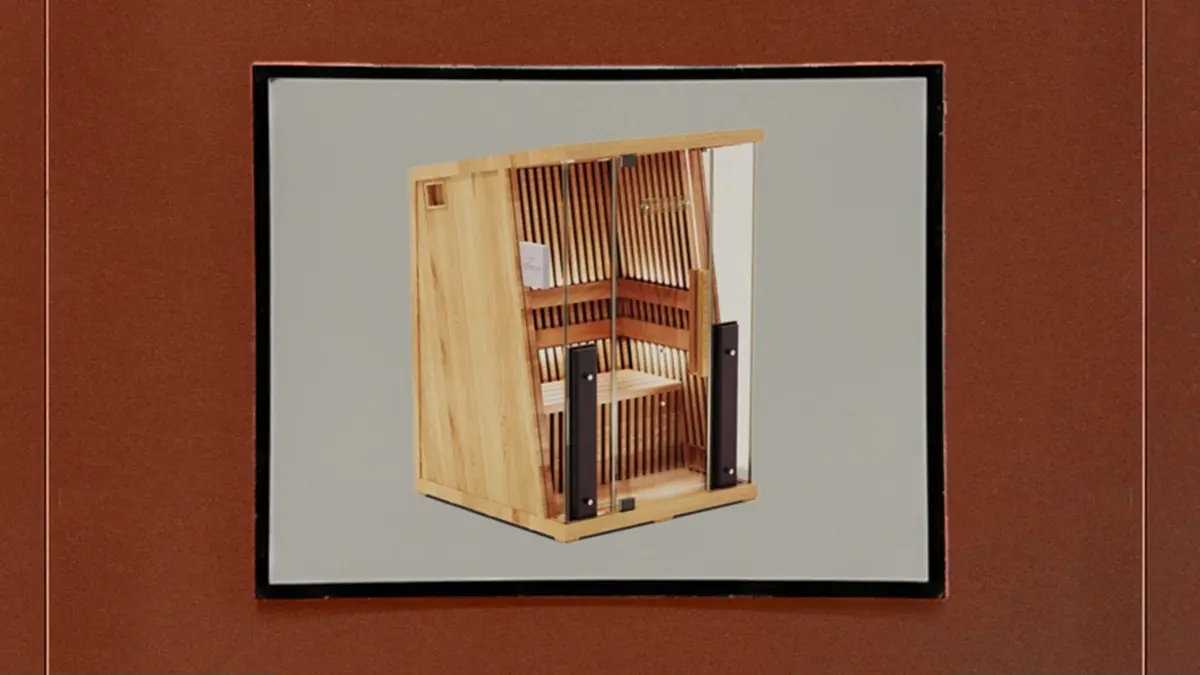
After establishing a foothold in sub-zero immersion, the company pivoted toward the opposite end of the thermal spectrum. Following the introduction of its traditional Scandinavian-style wood sauna, Plunge debuted its latest flagship offering: the Plunge Infrared Sauna. Designed as an angular, Canadian-hemlock-and-glass cabin built for two, this indoor wellness appliance aims to bring the therapeutic benefits of far-infrared heat directly into the residential footprint.
Despite the inherent spatial limitations of a two-bedroom New York City apartment, an evaluation unit was delivered for testing. Below is an exhaustive, data-driven look at the realities of living with a 540-pound luxury indoor sauna—covering everything from delivery hurdles and electrical requirements to heating performance, maintenance, and projected utility costs.
1. Main Facts: Specifications and Upfront Costs
For wellness enthusiasts considering an upgrade to their daily routine, understanding the financial and physical footprint of the Plunge Infrared Sauna is the critical first step.
- The Core Product: The Standard two-person model (available in both 120V and 240V configurations) retails for $7,690.
- Dimensions: Standing at just over 6 feet, 8 inches tall and 4 feet, 5 inches wide, the cabin possesses a substantial architectural presence.
- Materials: Constructed from clear Canadian hemlock paired with a full-size tempered glass front door and angled side panels.
- Heating Technology: Far-infrared heating panels designed to gently warm the body from within, mimicking direct sunlight without UV exposure.
- Integrated Tech: Nakamichi ceiling-mounted Bluetooth speakers, customizable chromotherapy (color-therapy) lighting, and a dedicated smartphone application for remote scheduling and temperature control.
- Total Investment Breakdown:
- Base Retail Price: $7,690
- Standard Curbside Delivery: $250
- Professional Assembly (via partner Pure Install): $880
- Stair-Carry Fee (applicable for uneven entryways/steps): $125
- Total Estimated Cost: Approximately $8,945 (before local taxes and potential electrical modifications).
2. Chronology: From Ordering to Assembly
Installing a heavy wellness cabin in an urban or suburban home requires a well-orchestrated timeline. The journey from unboxing to the first sweat session highlights both the strengths and friction points of the consumer experience.

Pre-Delivery Preparation
Before placing an order, prospective buyers must evaluate structural and electrical readiness. While individual panels can pass through a standard interior doorway, the fully assembled cabin cannot. Consequently, precise measurements of the access route, ceiling height, footprint, door swing, and surrounding walking space are mandatory.
Electrically, the Standard model requires careful planning. Operating on a dedicated 20-amp circuit utilizing a NEMA 5-20 outlet, it cannot simply be plugged into a standard household socket used for lamps or phone chargers. Buyers must verify that their chosen room features the correct circuit and breaker layout prior to delivery, treating the purchase with the same logistical care as a major kitchen appliance.
Delivery and Logistics
Curbside delivery lives up to its name: a massive, flat-packed shipment is dropped at the edge of the property, leaving the heavy lifting to the buyer. Weighing 540 pounds total, the components are dense and awkward. Moving the boxes indoors requires at least two capable adults; attempting a solo move is strongly discouraged.
DIY Assembly vs. Professional Installation
While Plunge offers professional assembly through its installation partner, scheduling constraints can test a buyer’s patience. During testing, weekend and same-day installation slots were unavailable, and appointment windows spanned several hours, limiting scheduling flexibility.
Opting for self-assembly transformed the project into an advanced, "IKEA-level" undertaking. Using the provided hand tools and Plunge’s step-by-step app guide, two adults completed the build in roughly 90 minutes to two hours.

- The Process: Electrical connections are clearly labeled, and panels fit together logically.
- The Challenge: The most grueling aspect involves carrying heavy wood-and-glass panels into position and holding them steady during alignment. While technically straightforward, the process is unforgiving of rushed alignments or misjudged panel weights. Homes with tight corridors, delicate flooring, or multiple staircases are far better suited for professional installation.
3. Supporting Data: Performance, Comfort, and Living With It
Once assembled, how does the Plunge Infrared Sauna perform under regular, real-world conditions?
Heating Performance and Infrared Experience
Operating in a room maintained at 68°F, the Standard model takes approximately 45 minutes to fully preheat—a process easily automated via the companion smartphone app. While the digital controls allow users to dial the thermostat up to 175°F, the cabin internally stabilizes at a maximum of around 156°F.
Far-infrared heat differs radically from the aggressive, convection-driven heat of traditional rock-and-water saunas (which frequently exceed 180°F). Instead of feeling blasted by hot air, users experience a gentle warmth akin to standing in direct, comforting sunlight. The heat penetrates deeply and gradually, inducing a heavy sweat and an elevated heart rate without the suffocating, lung-searing intensity common in traditional Finnish saunas.
Ergonomics and Spatial Comfort
Accommodating two adults requires careful spatial engineering. Testing with two individuals—one 6’5" and the other 5’9"—confirmed that the cabin comfortably supports two users for a standard 30-minute session. Because the benches are well-proportioned, occupants do not sit uncomfortably shoulder-to-shoulder, preserving personal space during a heavy sweat.
A standout ergonomic feature is the slightly reclined wooden backrest, which prevents the neck and back fatigue associated with sitting completely upright for half an hour. Furthermore, the expansive glass front visually opens up the interior, effectively banishing feelings of claustrophobia.

App Integration and Smart Features
The companion app is arguably the linchpin of the user experience. By enabling remote scheduling—such as programming the sauna to automatically begin preheating at 7:00 PM for a 7:45 PM session—it eliminates the friction of waiting for a unit to warm up.
Connectivity proved remarkably reliable during the testing period. Temperature adjustments, lighting toggles, and scheduled routines executed without failure. On the audio front, the ceiling-mounted Nakamichi speakers deliver exceptional sound quality. However, users should note a minor quirk: the Bluetooth pairing system audibly announces "Paired" at a high volume upon connection, which can momentarily disrupt a peaceful pre-session headspace.
Maintenance Requirements
After a month of consistent, multi-weekly use, the interior retained a clean, aromatic Canadian hemlock scent with zero signs of structural loosening, staining, or warping. Because soft pale woods are susceptible to scuffs and sweat absorption, proactive measures—such as laying towels across benches and backrests and removing them post-session—are essential. Routine maintenance otherwise remains minimal, though finding an all-natural, hemlock-safe cleaning solution for periodic deep cleans requires some sourcing.
Energy Consumption and Utility Impact
A common hesitation regarding home wellness devices is their impact on monthly utility bills. Operating the Plunge Infrared Sauna roughly four times a week for an hour per session adds an estimated $22 per month to an electricity bill based on average New York City utility rates. For a high-end luxury appliance, this ongoing operating cost is remarkably modest.
4. Official Responses and Industry Context
While Plunge has built its reputation on the extreme contrasts of wellness—pairing freezing cold plunges with intense thermal heat—the release of the infrared sauna addresses a specific demand in the consumer market: low-maintenance, aesthetically elevated indoor recovery spaces.

Industry analysts note that residential wellness cabins have evolved from utilitarian basement boxes into high-design furniture pieces meant to complement home gyms, primary bathrooms, and dedicated meditation spaces. Plunge’s design philosophy explicitly targets this trend. By incorporating angular architecture, natural hemlock, and architectural glass, the brand has positioned its sauna not merely as a health tool, but as a lifestyle object that enhances interior design.
5. Implications: The Verdict on Home Infrared Therapy
After a month of rigorous, four-times-weekly testing, the ultimate endorsement of the Plunge Infrared Sauna is behavioral: the user continued to integrate it into their routine multiple times a week without fatigue.
The Advantages
- Design & Aesthetics: The angular silhouette, hemlock construction, and glass facade elevate the visual appeal of any room, outclassing generic wooden box competitors.
- Gentle, Effective Heat: Provides a deeply penetrating, sweat-inducing thermal experience without the overwhelming air temperatures of traditional saunas.
- Seamless Automation: App integration and scheduling remove the friction of preheating, turning therapy into a frictionless habit.
- Low Operating Costs: Adding only ~$22 a month to utility bills makes frequent usage financially sustainable.
The Drawbacks and Commitments
- High Barrier to Entry: Approaching $9,000 for delivery and professional assembly, the unit is a major capital investment.
- Spatial and Electrical Rigidity: Weighing 540 pounds and requiring a dedicated 20-amp circuit (NEMA 5-20), it is fundamentally unsuited for renters, frequent movers, or spaces lacking proper electrical infrastructure.
- Glass Maintenance: The expansive glass door requires frequent wiping to remove fingerprints and smudges.
Final Conclusion
The Plunge Infrared Sauna is not designed for the casual wellness dabbler. It demands a permanent physical footprint, careful electrical pre-planning, and a significant financial commitment. However, for dedicated wellness enthusiasts seeking a premium, beautifully engineered home sauna experience—minus the headaches of a messy home renovation—the Plunge delivers on its high-end promise. Backed by a robust warranty (five years on cabinetry and heaters, two on electronics, and one on glass and power supplies), it bridges the gap between commercial luxury and residential convenience with style.
