

The transition of the global heavy-duty transport sector to fully electric propulsion faces a stubborn reality: battery weight, high costs, and lagging infrastructure create formidable barriers for long-haul trucking companies. Even advanced heavy-duty battery-electric vehicles (BEVs), such as the Tesla Semi, encounter operational ceilings when hauling fully loaded trailers up steep inclines, such as the Eisenhower Tunnel in the Rocky Mountains.
Recognizing that pure battery-electric solutions are not yet universally viable for every commercial application, automotive tier-one supplier Mahle has unveiled a two-pronged technological intervention. Slated for formal introduction at the upcoming IAA Transportation trade show in Hannover, Germany, Mahle’s new internal combustion range extender system and its next-generation magnet-free electric drive motor are engineered to untether commercial fleet electrification from the sluggish pace of public charging infrastructure deployment.
Main Facts
The core of Mahle’s new strategy focuses on two critical hardware innovations designed to optimize efficiency, lower upfront costs, and eliminate heavy reliance on scarce raw materials:
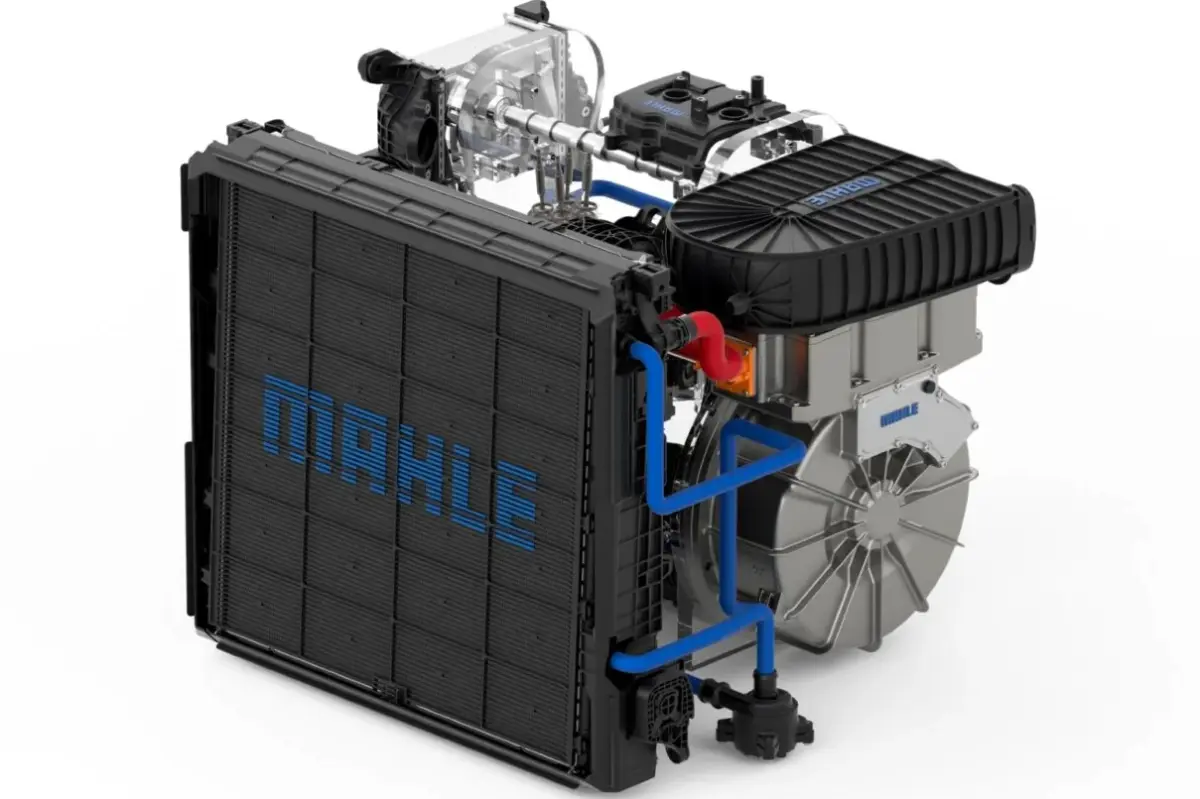
- The Range Extender System: A compact internal combustion engine driving an advanced high-voltage generator that delivers a continuous output of 110 kilowatts (kW) and up to 130 kW of peak power.
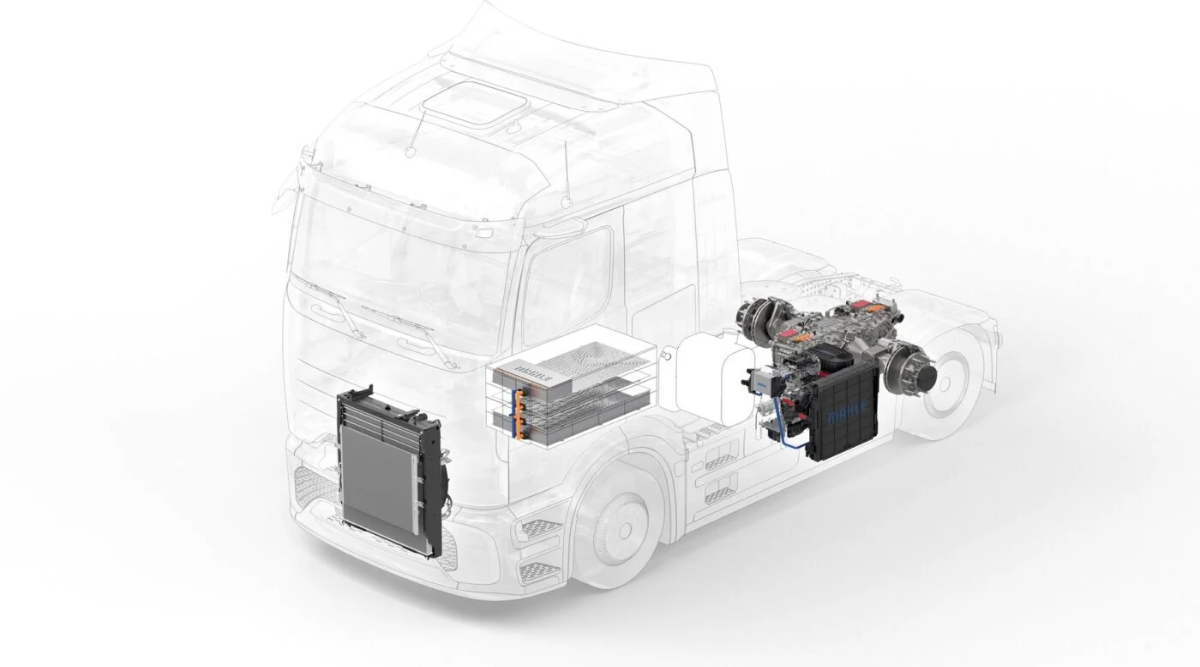
- Weight Savings & Integration: The entire range extender unit is engineered to fit directly into standard commercial battery compartments. By replacing roughly one-third of the vehicle’s massive battery pack, the system slashes total vehicle weight by approximately 600 kilograms (kg)—including a 400 kg reduction on the rear axle alone.
- Extended Range: A truck equipped with Mahle’s system achieves a total driving range exceeding 800 kilometers (approx. 500 miles), splitting the workload evenly: 400 km from the battery and 400 km from the range extender.
- Emissions Profile: Operating on standard liquid fuels, the system reduces carbon dioxide emissions by roughly 80 percent compared to a traditional diesel semi. When paired with renewable drop-in fuels like HVO100 bio-diesel, carbon emissions drop effectively to zero.
- Magnet-Free Contactless Transmitter (MCT) Motor: Mahle is also introducing a heavy-commercial drive axle motor completely free of permanent magnets, bypassing the need for environmentally sensitive rare earth elements while achieving a peak output of 370 kW and over 900 Nm of torque.
Chronology: The Long Evolution of Range Extenders in Electric Mobility
The concept of deploying a secondary internal combustion engine or turbine to extend the operational boundaries of an electric vehicle is far from new. It represents a continuous engineering journey that dates back to the dawn of modern commercial EV manufacturing.
- Early Passenger Car Experiments: In the early 2010s, early adopters experienced range extension primarily through compact passenger cars. The original BMW i3 REx utilized a tiny, motorcycle-derived gasoline engine to maintain battery charge. However, it faced regulatory hurdles and performance criticisms, particularly in North America where software limits restricted activation until the main battery reached a critically low state of charge.
- The Plug-In Hybrid Success: General Motors refined the concept with the Chevrolet Volt, a plug-in hybrid electric vehicle (PHEV) featuring an internal combustion engine dedicated to electricity generation after an initial 55-mile all-electric range. For many daily commuters, the internal combustion engine was called upon so infrequently that owners reported buying as little as 10 gallons of gasoline annually.
- Heavy-Duty and Turbine Experiments: In the commercial sector, early visionaries attempted similar feats. Ian Wright, a co-founder of Tesla who departed early in the company’s evolution, established Wrightspeed to focus on heavy-duty truck and bus electrification. Wright developed an innovative, ultra-efficient gas turbine designed to act as a range-extending generator. Though technologically brilliant, the startup struggled to scale commercially.
- Recent Retrofit Solutions: The race to simplify range-extender integration has accelerated recently. Horse Powertrain—a joint venture between Renault and Geely—unveiled its C15 compact engine and generator unit. Designed specifically for retrofitting existing BEV platforms, the C15 integrates an engine, generator, and inverter into a unified assembly small enough to drop into a standard battery bay with minimal chassis modification.
- Mahle’s Commercial Breakthrough (2026): Moving past light-duty experimentation, Mahle’s upcoming showcase at IAA Transportation targets the heavy-commercial sector directly, offering OEMs a modular, factory-ready solution designed from the ground up for heavy payloads and long-haul logistics.
Supporting Data and Technical Specifications
The engineering rationale behind Mahle’s developments relies heavily on power density, thermal management, and drivetrain efficiency.
The High-Voltage Generator and Cooling Architecture
Mahle’s range extender generator relies on a newly developed advanced oil cooling system, allowing it to achieve a power density exceeding 7 kW per kilogram. This high power-to-weight ratio ensures that the generator remains compact while delivering the continuous 110 kW necessary to sustain heavy-load transit.

To cope with extreme operating conditions, the system integrates a robust thermal management architecture featuring:
- 48 kW of high-temperature cooling capacity.
- 15 kW of low-temperature cooling capacity.
This robust thermal framework guarantees that the range extender can operate continuously under maximum load without triggering thermal throttling or reliability drops.
The MCT Motor Specifications
Complementing the range extender is Mahle’s Contactless Transmitter (MCT) motor, which avoids the use of permanent magnets entirely. By eliminating rare earth elements, each vehicle equipped with the MCT motor saves up to 3 kilograms of critical raw materials, mitigating both supply chain vulnerability and geopolitical procurement risks.

Performance metrics for the MCT motor underscore its industrial viability:
- Weight Reduction: Approximately 10 percent lighter than comparable permanently excited synchronous motors.
- Peak Power Output: 370 kW.
- Torque: Over 900 Nm at 3,900 rpm.
- Efficiency: Reaches roughly 95 percent efficiency under the VECTO test cycle, an official European Union simulation standard for heavy vehicle energy consumption.
Official Responses and Industry Perspectives
For tier-one suppliers like Mahle, commercial survival relies on marrying environmental compliance with the rigid financial realities of fleet operators.
“Time and energy are limited, valuable resources, especially in the road transport business. Only operators who work economically can survive,” stated Mahle CEO Arnd Franz. “With electrification products, Mahle can help make heavy trucks more efficient and flexible at the same time as reducing operating expenses. This is what we will be demonstrating to our customers, international vehicle manufacturers, and fleet operators at this year’s IAA Transportation.”

Dr. Marco Warth, Mahle’s vice president for research and advanced engineering, emphasized that the range extender acts as a strategic buffer against infrastructural shortcomings.
“Our range extender is a smart ‘emergency power unit’ that is activated at precisely the right moment and significantly increases the range available,” said Dr. Marco Warth. “Our range extender is the key to disconnecting the market ramp-up of battery electric trucks from the inadequate pace of infrastructure development. If the charging station is busy, or alternative routes are called for as a result of weather conditions or congestion, and infrastructure reaches its limits, other fleets can be stranded. An e-truck with range extender just carries on. Operational availability is maintained, even under peak conditions.”
Implications for the Logistics and EV Markets
Mahle’s hybrid approach carries profound implications for the global transition to zero-emission freight transport.

- Mitigating Infrastructure Bottlenecks: Public high-power megawatt charging corridors for heavy commercial trucks are expanding, but construction timelines consistently lag behind regulatory decarbonization mandates. By integrating a range extender, fleet operators can adopt electrified platforms immediately without fearing route disruption due to occupied charging stalls or grid capacity caps.
- Optimizing Payload Economics: Battery weight is the eternal enemy of commercial trucking payload capacity. Because heavy-duty battery packs add thousands of pounds to a vehicle, they directly cut into the weight of cargo a truck can legally carry. Mahle’s design replaces a third of the battery capacity with a lighter combustion generator, trimming 600 kg of total vehicle weight and increasing the payload potential for commercial operators.
- Decoupling from Rare Earth Supply Chains: The geopolitical sensitivity surrounding rare earth elements—such as neodymium and dysprosium—poses a constant risk to automotive supply chains. Mahle’s magnet-free MCT motor offers a scalable blueprint for powertrain manufacturers looking to insulate themselves from price volatility and trade restrictions.
While clean-tech purists may view internal combustion-backed range extenders as transitional anachronisms destined to fade as battery chemistries and grid capacities mature, commercial logistics realities demand pragmatic solutions today. By easing the financial, structural, and operational hurdles of heavy-duty electrification, Mahle’s innovations may prove to be the vital bridge needed to move the commercial trucking sector firmly into a lower-emission future.
