WASHINGTON — In a policy reversal that has triggered sharp rebukes from environmental lawyers, public health advocates, and agricultural communities, the U.S. Environmental Protection Agency (EPA) has officially scrapped a comprehensive risk assessment targeting the use of PFAS-contaminated sewage sludge as agricultural fertilizer.
The decision, finalized through a new agency guidance document published on June 29, effectively tosses out extensive scientific research compiled over the previous two years. The discarded regulatory review, drafted under the Biden administration in January 2025, would have laid the groundwork to phase out or severely restrict the widespread practice of spreading treated human and industrial waste—known commercially as "biosolids"—across American croplands.
Today, approximately 60% of all biosolids produced in the United States are applied to agricultural fields as a low-cost source of organic matter and nutrients. With the EPA’s sudden reversal, millions of acres of farmland will continue to receive fertilizer laden with per- and polyfluoroalkyl substances (PFAS)—notoriously resilient synthetic compounds that easily migrate into local water tables, livestock feed, and the broader human food supply.
1. Main Facts: The Policy Reversal and Its Immediate Impact
The core of the controversy lies in the EPA’s sharp pivot away from a rigorous scientific evaluation of toxicity toward a hands-off, voluntary framework.
The Scrapped Assessment: Initiated under the prior administration, a 272-page draft risk assessment synthesized decades of peer-reviewed data regarding the accumulation of PFAS in soil, crops, and groundwater via sewage sludge application. It pointed toward severe environmental and public health threats.
The New Guidance: Reversing course, the current administration released a brief, nine-page guidance document declaring that the previous draft was "flawed" and had caused "unwarranted public confusion."
The Scale of the Practice: Roughly 20 million acres of U.S. cropland are estimated to be contaminated with PFAS, much of it directly linked to decades of municipal biosolid applications.
The Regulatory Vacuum: Rather than imposing federal limits, testing requirements, or bans on contaminated sludge, the EPA’s new framework relies heavily on "voluntary recommendations," effectively shifting the burden of risk management onto individual farmers, local municipalities, and consumers.
2. Chronology of Events: From Initial Practice to Sudden Rollback
To understand the gravity of the EPA’s recent decision, it is necessary to examine how sewage sludge evolved from an urban waste-disposal problem into a nationwide agricultural cornerstone—and eventually, a public health crisis.
Early 1990s: The EPA formally sanctions the application of treated municipal and industrial sewage sludge (biosolids) onto agricultural land, promoting it as an environmentally progressive method of recycling waste and reducing the need for synthetic chemical fertilizers.
May 2003: Early warning signs emerge in media reports and lawsuits, linking sludge spread on fields to unexplained livestock illnesses and sudden deaths, particularly in areas used for growing animal feed.
May 2022: Investigative reporting by The Guardian reveals that an estimated 20 million acres of U.S. agricultural land may be tainted with industrial forever chemicals, driven largely by decades of permitted biosolid dumping.
Summer 2022: Reacting to mounting evidence of irreversible contamination, the State of Maine passes a historic, total ban on the spreading of biosolids on cropland, becoming a national bellwether for state-level resistance.
2024: Public Employees for Environmental Responsibility (PEER), acting on behalf of distressed Texas farmers, files a formal notice to sue federal regulators to force an end to the agricultural use of toxic biosolids. Meanwhile, Maryland follows Maine’s lead, enacting its own comprehensive ban on the practice.
January 2025: The EPA under President Biden publishes a comprehensive 272-page draft risk assessment. The document synthesizes long-term data on PFAS accumulation and signals an incoming regulatory reckoning for the biosolids industry.
June 29, 2026: In a sweeping policy reversal, the current EPA administration formally rescinds the January 2025 draft assessment. It publishes a nine-page guidance document minimizing the risks of PFAS-contaminated sludge and initiating what local news outlets describe as one of the largest deregulatory efforts regarding forever chemicals in the agency’s history.
3. Supporting Data: The Science of PFAS and Biosolids
To grasp why public health advocates are alarmed, one must understand the unique chemical properties of PFAS and how municipal wastewater treatment plants process them.
What Are Biosolids?
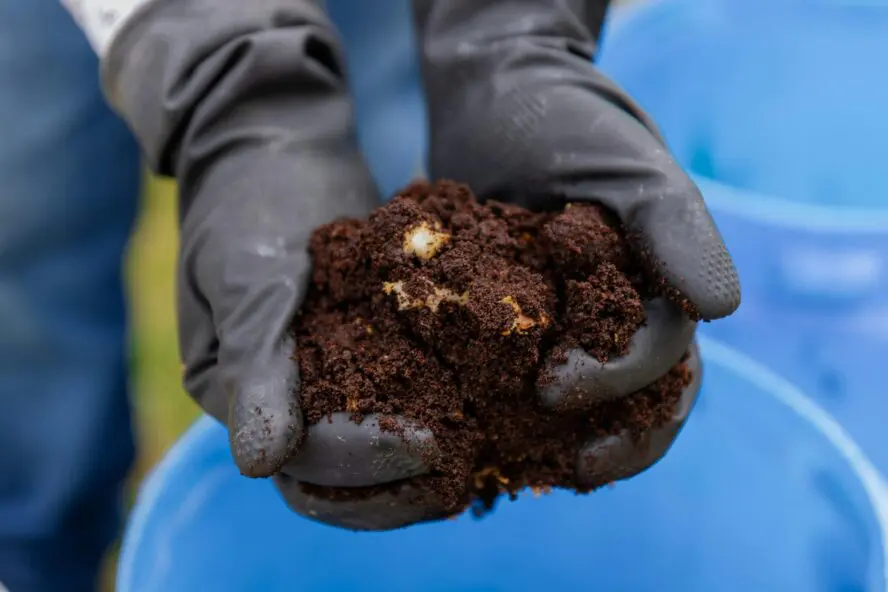
Biosolids are the semi-solid organic matter left over from municipal wastewater treatment plants. Because these treatment plants process a mixture of residential waste, stormwater runoff, and heavy industrial effluent, they capture a concentrated cocktail of synthetic chemicals.
When industries flush waste containing PFAS into public sewer systems, those chemicals do not break down during standard wastewater treatment. Instead, they concentrate in the solid sludge, which municipalities subsequently market and sell—or give away for free—to farmers looking to enrich their soil.
The Threat of Forever Chemicals
PFAS comprise a vast family of roughly 15,000 synthetic chemicals engineered for their resistance to heat, water, and oil. Because chemical bonds within the PFAS molecule are exceptionally strong, they do not degrade naturally in the environment, earning them the moniker "forever chemicals."
Bioaccumulation: Once introduced to soil via biosolids, PFAS are readily absorbed by the roots and leaves of crops, including corn, soybeans, and leafy greens. From there, they enter the food chain.
Health Consequences: Decades of toxicological research link chronic low-level exposure to PFAS with a frightening array of human health conditions, including:
Certain forms of cancer (particularly kidney and testicular cancer)
Elevated cholesterol and liver disease
Reproductive complications and lower birth weights
Suppressed immune system function, reducing vaccine efficacy in children
4. Official Responses: Clash Between Regulators and Advocates
The EPA’s sudden dismissal of its own research has drawn sharp condemnation from legal experts, environmental scientists, and advocacy groups who argue that the agency is prioritizing political convenience over scientific reality.
The EPA’s Defense
In its June 29 guidance document, the agency defended its about-face by arguing that the potential risks outlined in the 2025 draft assessment had been overstated. The agency stated that the prior document exhibited "a number of serious flaws" that created unnecessary panic among agricultural producers and the general public. Rather than enacting hard federal mandates, the agency maintains that localized monitoring and voluntary best-management practices are sufficient to handle any localized risks.
Condemnation from the Legal and Scientific Communities
Legal and environmental watchdogs have pulled no punches in criticizing the decision.
"It’s shocking for the EPA to take a scientific assessment and simply throw it out," said Laura Dumais, an attorney with Public Employees for Environmental Responsibility (PEER).
Dumais highlighted the absurdity of the agency’s new hands-off posture: "The EPA’s solution here is ‘do your own research — we’re not going to regulate anything, so if you think it’s dangerous then figure it out for yourself.’"
Jean Zhuang, a senior attorney with the Southern Environmental Law Center, echoed these concerns, noting that the Biden-era assessment represented a synthesis of decades of hard-earned environmental science.
"By abandoning that assessment, this administration is getting in the way of protecting people from toxic chemical contamination," Zhuang stated. "Instead of engaging with that science, EPA is trying to downplay the problem."
5. Broader Implications: What This Means for Farmers and Consumers
The EPA’s retreat on biosolids fertilizer carries profound, far-reaching implications for American agriculture, public health, and federalism.
The Burden Shifts to the States
With the federal government abdicating its regulatory responsibility, the battleground over PFAS-contaminated sludge has shifted entirely to state governments. Following the models set by Maine and Maryland, other agricultural states face immense pressure to take unilateral action to protect their local soil and water tables. However, without federal backing, states enacting bans often face fierce pushback from agribusiness lobbies and municipal authorities who rely on sludge-spreading as a cheap waste-disposal method.
Economic and Agricultural Fallout
Farmers caught in the crossfire face a nightmare scenario. Those who have historically used biosolids to cut down on fertilizer costs now risk having their land declared toxic, rendering their crops unsellable and their real estate devalued. Previous incidents in states like Maine showed that discovering PFAS contamination on a farm can instantly ruin generational livelihoods, destroying dairy herds, forcing farm closures, and plunging families into financial ruin.
Consumer Self-Defense
For the average consumer, the EPA’s pivot to "voluntary recommendations" means that grocery store safety nets will remain porous. With the federal government declining to set national thresholds for PFAS in agricultural sludge, consumers are left with few tools to verify whether the grains, vegetables, or animal products they consume were grown on land enriched with human and industrial waste.
As the deregulatory wave sweeps through federal environmental agencies, the question of how to handle the nation’s mounting toxic waste remains unresolved—leaving American soil, water, and food supplies to bear the hidden costs.