


The automotive world lost a titan on August 8 with the passing of Hiroshi Okuda, the former chairman and president of Toyota Motor Corporation, at the age of 93. Okuda’s legacy is defined by a singular, historic distinction: he was the first executive outside the founding Toyoda family to helm the world’s largest automaker in nearly three decades.
Yet, his true epitaph extends far beyond corporate governance. Okuda was the ruthless, forward-thinking pragmatist who dragged a remarkably reluctant manufacturing giant out of regional complacency and thrust it into the modern global era. Under his visionary yet demanding leadership, Toyota shook off decades of insular tradition, embraced bold innovation, and gambled its reputation on an unproven technology that would forever alter the trajectory of personal transport: the hybrid electric vehicle.
Main Facts: Breaking the Family Monopoly and Igniting a Green Revolution
When Okuda assumed the presidency of Toyota in 1995, succeeding Tatsuro Toyoda—who was forced to step down following sudden health complications—the appointment sent shockwaves through corporate Japan. For 28 years, the automaker’s leadership had been locked in a closed loop governed strictly by the founding Toyoda lineage. Okuda’s ascension broke that dynastic grip.
Equipped with deep financial acumen and sharp operational expertise, Okuda immediately recognized that Toyota’s historic success was breeding dangerous stagnation. While the company prided itself on legendary manufacturing efficiency and its famous "lean" philosophy, it was suffering from cultural hardening. Its domestic Japanese market was shrinking, its global footprint lagged behind its immense manufacturing capacity, and its leadership mistook process perfection for strategic vision.
Okuda’s response was swift and unsparing. He dismantled entrenched seniority-based promotion systems, elevated a younger generation of forward-thinking managers, and aggressively expanded Toyota’s physical footprint by building major manufacturing hubs in the United States, Europe, and China. In doing so, he transformed Toyota from a localized Japanese exporter into a true multinational industrial powerhouse.
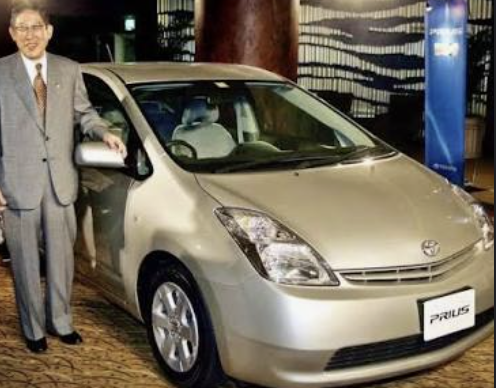
However, his most consequential gamble was not territorial; it was technological. Amid internal skepticism and a global automotive market utterly infatuated with large-displacement internal combustion engines, Okuda championed the "G21" project. His insistence on accelerating the development schedule directly birthed the Toyota Prius—a vehicle that debuted on the world stage in December 1997 and established a technological moat that competing automakers spent the next two decades desperately trying to cross.
Chronology: From Manila Debt Collector to Global Industry Reformer
To understand Okuda’s fearless management style, one must look at the crucible in which his corporate character was forged decades prior.
- 1955: Hiroshi Okuda joins Toyota Motor Corporation, beginning a long, arduous climb through the company’s strict corporate ladder.
- 1970s: Following an internal altercation with a superior, Okuda is effectively dispatched on a challenging assignment to the Philippines, working with Toyota Japan’s local partner, Delta Motors Corp. Often functioning under the guise of a debt collector during the tumultuous early years of Martial Law, this international deployment hardened his operational resolve and shaped his global outlook.
- 1995 (August): Following Tatsuro Toyoda’s hospitalization, Okuda is appointed president of Toyota Motor Corporation, shattering the 28-year family-succession streak.
- 1995 (September): Toyota rolls out a quieter, yet groundbreaking electric gamble: the RAV4 EV. Featuring advanced nickel-metal hydride batteries, the prototype claims first place in the FIA-sanctioned Scandinavian Electric Car Rally, proving Toyota’s mastery over pure battery-electric architecture.
- 1995–1996: Okuda challenges the internal "G21" hybrid engineering team with a legendary directive: rather than waiting for a conservative 1998 commercial release, they must ready the vehicle for production by late 1997 to coincide with global climate negotiations.
- 1996 (September): The RAV4 EV officially goes on sale in Japan, followed by its targeted release in California markets by 1998 to satisfy stringent zero-emission vehicle mandates.
- 1997 (December): Exactly as the landmark Kyoto Climate Conference concludes, the first mass-produced Toyota Prius rolls off production lines. Dismissed initially by skeptics as a glorified science experiment, it instantly positions Toyota at the absolute center of global sustainability discourse.
- 2003: Production of the pioneering first-generation RAV4 EV concludes after capturing a modest global footprint of approximately 1,900 units, demonstrating Okuda’s acute pragmatism regarding the state of global charging infrastructure.
- August 8: Hiroshi Okuda passes away at the age of 93, leaving behind an indelible blueprint for the modern automotive industry.
Supporting Data: The Numbers Behind the Legacy
Okuda’s leadership was characterized by bold quantitative targets and calculated deployment of advanced technologies. The metrics of his tenure reveal a leader driven by scale, efficiency, and market timing:
- The Prius Leap: By demanding a 1997 launch to coincide with the Kyoto Protocol, Okuda shaved a full year off standard automotive development timelines, catching global rivals entirely flat-footed and cementing the hybrid brand as a multi-million-unit global phenomenon.
- The RAV4 EV Footprint: Between its commercial launch in 1996 and the end of its run in 2003, the RAV4 EV achieved roughly 1,900 total global sales (with approximately 1,500 units concentrated in California). While modest, it successfully served as a real-world compliance pioneer and technology testbed.
- The 10-Million Target: Okuda’s aggressive push for worldwide scale introduced a corporate obsession with massive volume expansion. While this strategy successfully turned Toyota into a global titan, the breakneck growth ultimately strained quality controls, culminating in the major recall crises of 2010.
Official Responses and Industry Reflections
The passing of Hiroshi Okuda prompted an outpouring of reflections from automotive historians, industrial analysts, and company insiders who recognized his profound impact on global mobility.
Industry veterans frequently note that Okuda possessed a rare blend of manufacturing realism and intellectual audacity. While traditionalists within Toyota viewed experimental powertrains as costly, low-margin distractions, Okuda viewed complacency as the ultimate existential threat.

Even subsequent company leadership, including his successor Akio Toyoda—who spent years recalibrating Toyota’s focus toward driving dynamics and structural stabilization following the rapid expansion era—consistently acknowledged that Okuda’s willingness to shatter internal corporate orthodoxy saved the company from slow-moving obsolescence. Without Okuda’s disruption of Toyota’s conservative DNA, industry analysts agree, the automaker would not have possessed the financial muscle or technological readiness to navigate the 21st-century transition toward sustainable transportation.
Implications: The Enduring Echo of "Why Not 1997?"
The ripple effects of Okuda’s leadership continue to shape the contemporary automotive landscape. As the global transportation sector navigates its ongoing, complex pivot toward widespread electrification, hydrogen fuel cells, and advanced energy storage, the fundamental blueprint remains anchored in the decisions made during Okuda’s presidency.
Okuda understood a foundational truth of industrial strategy: that the greatest risk a dominant corporation can take is refusing to cannibalize its own successful past. By championing the Prius, he proved that mass-market consumers would embrace efficiency-driven electrification if packaging and reliability mirrored conventional vehicles. Simultaneously, his calculated handling of the RAV4 EV demonstrated a pragmatic understanding of infrastructure limitations—recognizing that pure battery-electric vehicles required mature grid support before achieving mainstream viability.
Though his aggressive pursuit of scale occasionally exposed the organization to the perils of rapid growth, his overarching legacy is secure. Hiroshi Okuda transformed Toyota from a cautious, provincial Japanese manufacturer into an audacious global powerhouse. Every hybrid vehicle on modern roadways, and every boardroom discussion centered on proactive climate compliance, serves as a continuing echo of his single, insistent management question: “Why not 1997?”
