

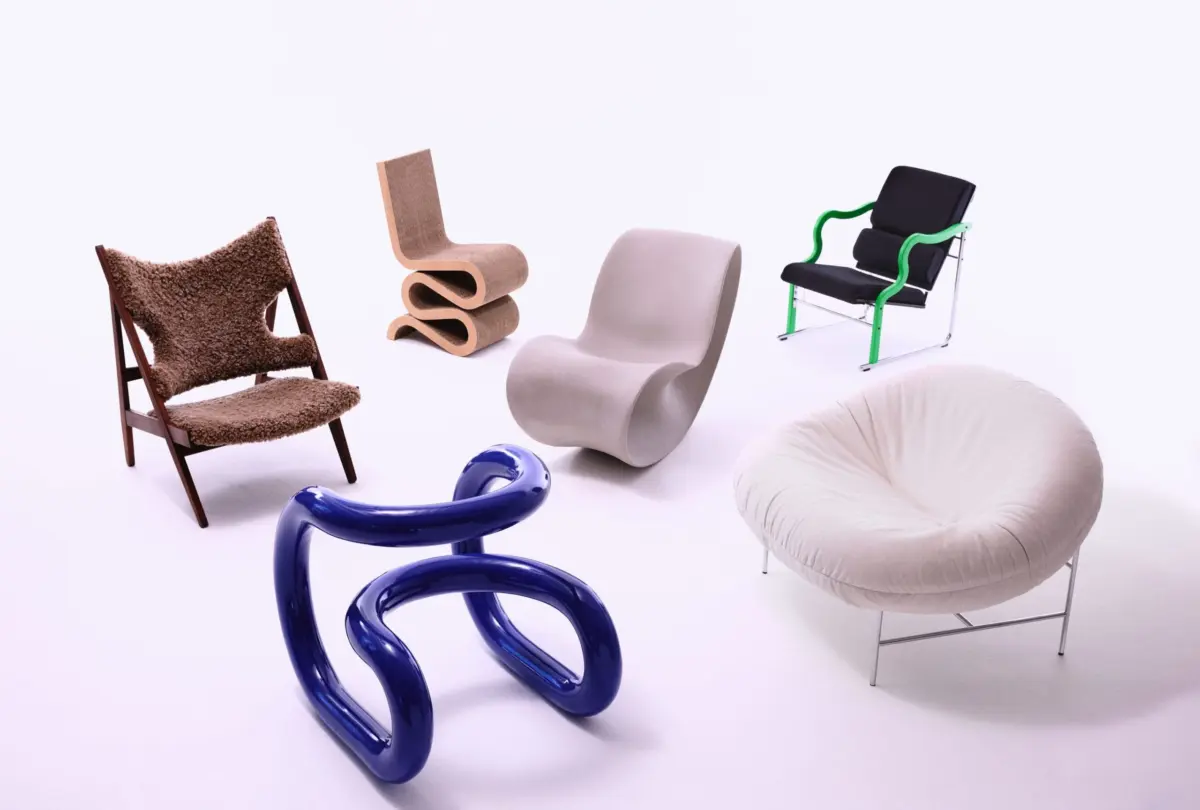
Main Facts: The Search for the Ultimate Accent Chair
When browsing online home retailers, the sheer volume of choices can be paralyzing. A quick search for "accent chairs" on major platforms yields over 50,000 competing results, ranging from fast-furniture novelties to high-end architectural statements. However, as interior design enthusiasts know all too well, staged product photography and digital renderings can hide a multitude of sins—such as an uncomfortably stiff cushion or an awkward ergonomic tilt discovered only after the boxes are unpacked.
Recognizing that real-world experience is the only true measure of a seat’s prowess, the editors and contributors at Architectural Digest embarked on a rigorous, multi-year evaluation process. The team rounded up 12 legendary accent chairs, bringing them into offices and homes to recline, assess, scrutinize, and grade them.
The resulting curated shortlist highlights pieces that transcend mere utility, functioning instead as sculptural conversation starters, ergonomic sanctuaries, and defining anchors for interior design schemes. From modern masterpieces to unexpected budget-friendly staples, these selections prove that the best accent chairs are so much more than just a place to sit.
Chronology: A History of Modern Seating
To understand why certain pieces have achieved immortal status in the design world, it is helpful to trace the chronological evolution of modern seating. The journey of the iconic accent chair spans nearly a century of material innovation, structural daring, and artistic experimentation.
- 1925 (The Bauhaus Era): Marcel Breuer looked to the frame of his bicycle for inspiration, inventing the tubular steel-framed Wassily Chair. It revolutionized how negative space and metal could be integrated into home furniture.
- 1929 (Art Deco & Modernism): Ludwig Mies van der Rohe and Lilly Reich designed the Barcelona Chair for the Spanish royal family, utilizing polished chrome and tufted leather to establish a timeless symbol of absolute sophistication.
- 1946 (Organic Modernism): Eero Saarinen conceived the Womb Chair at the request of architectural visionary Florence Knoll, who desperately wanted a chair that felt like a "basket full of pillows."
- 1956 (Midcentury Pinnacle): Charles and Ray Eames debuted the Eames Lounge Chair and Ottoman via Herman Miller, transforming the concept of a 19th-century club chair into an ergonomic, tilted masterpiece.
- 1958 (Danish Expressionism): Arne Jacobsen designed the Egg Chair for the SAS Royal Copenhagen Hotel, proving that bold silhouettes and high-back architecture could command a room.
- 1972–Present (Craft and Bent Wood): Hans J. Wegner introduced the CH25 Easy Chair with its woven paper cord, while IKEA launched Noboru Nakamura’s POÄNG Armchair in the late 1970s, democratizing ergonomic motion and elastic design.
- 1984–Present (Postmodernism and Avant-Garde): Terje Ekstrøm introduced the otherworldly Ekstrem Chair, while contemporary innovators like Willo Perron continue to push boundaries with ultra-plush, pop-culture-adjacent designs like the Bun Chair.
Supporting Data: The Evaluated Lineup and Pricing
The Architectural Digest testing process subjected each chair to months of daily wear and tear. Here is how the top-tier selections stack up regarding pricing, aesthetic intent, and hands-on performance:
1. Most Comfortable: Knoll Willo Perron Bun Chair
- Price: ~$5,151 (Design Within Reach)
- The Vibe: A natural, oversized evolution of the classic bean bag chair, featuring a pillow-like plush build paired with sleek chrome legs.
- The Verdict: Reviewer Lori Keong noted its immense popularity in the office, praising its ability to accommodate two people comfortably. While the white upholstery stains easily, the darker colorways offer a brilliant, cushy gaming or movie-watching experience.
2. A Sculptural Statement: Wiggle Side Chair by Frank Gehry for Vitra
- Price: ~$1,740 (Lumens / 2Modern)
- The Vibe: High design crafted entirely from layered corrugated cardboard.
- The Verdict: Commerce editor Audrey Lee observed that it instantly elevates any space, slotting seamlessly beside a library bookshelf or standing alone in an ultramodern environment.
3. Best for Reclined Relaxation: Audo Copenhagen Knitting Chair
- Price: ~$6,085 – $6,795 (Lumens / Audo)
- The Vibe: Midcentury modernism at its absolute best, featuring a low, relaxed construction available in minimalist leather or cozy sheepskin.
- The Verdict: Contributor Dan Howarth found it larger than expected, making it ideal for spacious midcentury or Japandi-style lofts.
4. Most Iconic: Herman Miller Eames Lounge Chair and Ottoman
- Price: ~$9,025 (Design Within Reach)
- The Vibe: Ergonomic, dramatically tilted swivel chair blending the warmth of molded plywood with luxurious leather.
- The Verdict: Tester Elise Portale praised it as an impossibility made real: a chair that remains comfortable no matter how you sit in it.
5. For the Minimalist: Knoll Wassily Chair
- Price: ~$3,778 (Design Within Reach; often found on sale near $3,022)
- The Vibe: Bicycle-inspired tubular steel framing with taut leather slings, creating heavy visual transparency.
- The Verdict: Erika Owen highlighted its strength as a conversation piece that uses negative space to prevent small rooms from feeling cluttered.
6. A Budget-Friendly Option: IKEA POÄNG Armchair
- Price: ~$189 (IKEA)
- The Vibe: Bent-wood frame with a high, curved back and gentle rocking flexibility.
- The Verdict: Zoe Sessums initially resisted its simplicity, only to discover its intentional design roots centered around "emotional richness" and soothing movement.
7. A Leather Lounger: Knoll MR Chaise
- Price: ~$5,206 – ~$6,508 (Design Within Reach)
- The Vibe: The "Birkin bag of chairs," featuring plush leather wrapped over a cantilevered chrome base.
- The Verdict: Rachel Fletcher noted its dreamy comfort, though warned that the cantilever rock could induce mild queasiness if you are trying to work on a laptop.
8. A Cocooning Pick: Knoll Womb Chair
- Price: ~$6,823 (Design Within Reach)
- The Vibe: An enveloping shell designed to let you sprawl, curl up, or sit cross-legged in total privacy.
- The Verdict: Collier Sutter emphasized that its comfort comes directly from its molded structural shell rather than an excess of stuffed cushions.
9. Best High Back: Egg Chair by Arne Jacobsen
- Price: ~$11,499 (Design Within Reach)
- The Vibe: A dramatic, sculptural wingback interpretation manufactured by Fritz Hansen.
- The Verdict: Collier Sutter praised its sturdy, unwavering support for hours of reading or quiet reflection.
10. The Architectural Classics: Knoll Barcelona Chair & Carl Hansen CH25 Easy Chair
- Barcelona Chair Price: ~$7,242 – ~$9,053
- CH25 Easy Chair Price: ~$6,240
- The Vibe: Polished chrome with tufted leather or woven paper cord.
- The Verdict: Both pieces prioritize structured ergonomics over sinking-in plushness, serving as functional art for daily rituals like reading the morning paper.
Official Guidelines: How the Selection Was Made
The curation of these icons was not left to arbitrary aesthetic whims. To earn a spot on the final list, each chair had to satisfy stringent editorial criteria established by the Architectural Digest testing panel:
- Cultural Staying Power: The chair must have left a definitive impact on the design world while retaining modern relevance. It must act as a cultural touchstone that is instantly recognizable and coveted on secondhand luxury retail sites.
- Rigorous Long-Term Testing: Reviewers lived and worked with the chairs for a minimum of one month. Every piece was subjected to real-world wear and tear in home and office environments.
- Graded Performance: Chairs were scored based on structural integrity, durability, tactile quality, and ergonomics. Only items achieving a high enough cumulative grade were cleared for recommendation.
- Spatial Impact: Beyond comfort, the editors evaluated how well each silhouette could anchor or elevate a room’s overarching design scheme.
Implications: The Evolution of Modern Living Spaces
The enduring fascination with high-design accent chairs points to a broader shift in how modern homeowners view interior space. In an era dominated by mass-produced, interchangeable furniture, investing in an iconic accent chair is an assertion of personal identity and a commitment to longevity.
As urban living spaces shrink and remote work blurs the boundaries between home and office, the demand for multifunctional, sculptural seating has skyrocketed. Consumers are increasingly willing to allocate significant portions of their budget to a single statement piece—whether it is a $189 IKEA POÄNG that introduces emotional comfort or an $11,499 Arne Jacobsen Egg Chair that commands absolute authority in a living room.
Ultimately, these evaluations remind us that furniture is not merely functional; it is a tactile medium for art, history, and human well-being. By testing these chairs in the crucible of daily life, design publications validate what craftspeople have known for decades: a truly great chair does not just fill a room—it completes it.
