

By Clayton Dalton
Main Facts
In the high-desert expanse of western New Mexico, an emergency department physician receives a six-year-old boy—let us call him Joseph—brought in by a local foster care agency. Hours earlier, Joseph’s mother, driving under the influence, lost control of her vehicle. The car veered off the road, rolling through red dirt and sagebrush. Joseph was ejected through an open window, miraculously escaping serious physical injury. He found his family unconscious, walked home for help, and later discovered that his relatives had either perished or been airlifted to Albuquerque for emergency trauma surgery.
Months later, driven by an acute calling to serve where the scale of human agony matches his training, this same physician traveled to Gaza as an emergency medical volunteer. Amid a landscape of total structural collapse, he encountered a civilian population enduring unprecedented bombardment, operating out of ruined hospitals, and surviving on the margins of life and death.
These two disparate geographies—the isolated trauma bay in New Mexico and the war-torn corridors of Al-Shifa Hospital in Gaza—are bridged by a singular, unyielding reality: human suffering does not occur in a vacuum. Drawing on Buddhist principles of dependent origination and the practice of "bearing witness," this narrative explores how the convergence of systemic causes, historical trauma, and profound empathy transforms the instinct of judgment into an opening for radical compassion.
Chronology
- Years Prior: A female patient in her forties is admitted to a New Mexico emergency room following a severe, alcohol-fueled car crash. Once sober, she reveals her history as a sex crimes detective—a career that left her haunted and drove her to alcoholism and a subsequent suicide attempt. The attending physician’s initial anger shifts to deep empathy as her broader life context is revealed.
- Weeks Prior to Deployment: Six-year-old Joseph is brought to the emergency department after being ejected from a rolled vehicle driven by his intoxicated mother. The physician looks through the glass door at the unharmed yet isolated child, pondering the invisible web of trauma and conditions that led to the crash.
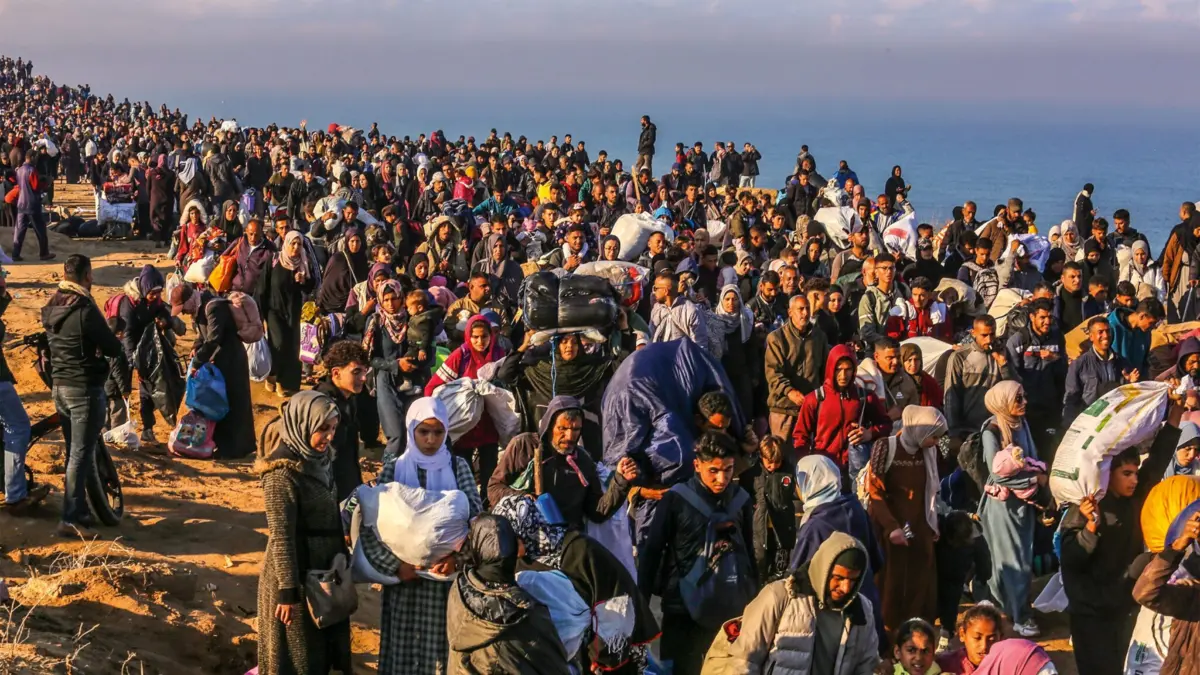
- January 2025: Driven by the imperative to act against a backdrop of historic suffering, the physician travels to Gaza as an emergency medical volunteer, witnessing widespread destruction and meeting doctors, nurses, and patients living amid total devastation.
- During the Gaza Mission: The physician encounters Abdullah, a man living in the lobby of a ruined hospital after an airstrike killed twenty members of his family, leaving him with only a four-year-old son who was evacuated to Tunisia. Despite having "no life" left, Abdullah offers a broad smile—not for himself, but to comfort others.
- Present Day: The synthesis of these experiences shapes a philosophy of active observation, urging individuals to bear witness to the suffering in their daily lives and recognize that no person is separate from the collective unfolding of the world.
Supporting Data and Context
The scale of destruction witnessed by medical professionals in conflict zones like Gaza exceeds historical comparisons of modern warfare. According to international humanitarian accounts and field observations:
- Bombardment Density: More ordnance has been dropped on the Gaza Strip—a narrow coastal enclave measuring approximately 25 miles long—than the combined tonnage dropped on London, Hamburg, and Dresden during the entirety of the Second World War.
- Infrastructure Collapse: In the northernmost sectors of Gaza, structural integrity has been reduced to zero, leaving vast, uninterrupted fields of debris rather than standing buildings.
- Global Supply Chains of Conflict: Munitions recovered unexploded from civilian sites, such as 250-pound guided ordnance examined by medical staff, bear manufacturing designations tracing their origin directly to defense contractors in the United States, illustrating the structural ties linking distant nations to localized humanitarian crises.
- Healthcare Strain: Medical personnel in Gaza operate out of tents and improvised spaces, frequently skipping meals to preserve rations for their children, while treating patients with severe blast injuries, mangled limbs, and exposed surgical hardware.
Official Responses and Humanitarian Realities
The international medical community and humanitarian agencies operating in active conflict zones face unprecedented operational challenges. Organizations such as the World Health Organization (WHO) and Médecins Sans Frontières (MSF) have repeatedly reported the systematic targeting and incapacitation of healthcare infrastructure, leaving physicians and nurses to function without reliable access to electricity, clean water, or specialized surgical supplies.
Local healthcare workers in Gaza have issued a singular, consistent plea to visiting international physicians: “Please, tell the world about us.” Stripped of their homes, families, and professional infrastructure, these medical professionals emphasize that their greatest immediate deprivation is not merely material, but existential—the terrifying sensation of being rendered invisible, forgotten, and isolated by the international community.
In response, traveling clinicians emphasize that the role of a medical volunteer in a war zone extends far beyond clinical triage. Bearing witness becomes an essential medical and moral intervention, validating the humanity of those caught within systems of violence beyond their control.
Implications: The Web of Interbeing and Causation
The Trap of Judgment
In emergency medicine, practitioners are routinely confronted with the raw, jagged edges of human recklessness: drunk driving, violent outbursts, and self-destructive acts. The immediate psychological reflex is often moral condemnation.
Yet, as the physician discovered with the former detective-turned-patient, judgment invariably dissolves when the hidden history of a person’s suffering is brought to light. Behind every reckless act lies a constellation of causes and conditions—unresolved trauma, systemic failure, and psychological agony. To see a person only through the lens of their worst mistake is to suffer from blindness to the laws of causation.
Dependent Origination and the Universal Tide
Rooted in Buddhist philosophy, the principle of dependent origination asserts that nothing arises independently. Every action, reaction, and tragedy is part of an infinite, interconnected web spanning space and time.
The author invokes an analogy of an estuary in Maine, where two seemingly calm bodies of water rush furiously through a narrow culvert due to an incoming tide. War zones and emergency rooms act similarly: they are narrow constrictions that reveal the immense, hidden currents of historical and systemic forces that flow quietly beneath the surface of everyday life.
Bearing Witness as Radical Practice
Drawing on the teachings of Zen masters Dogen, Bernie Glassman, and Roshi Joan Halifax, the narrative reframes engagement with suffering not as an act of charity, but as an act of recognition. Glassman’s doctrine of "bearing witness"—practiced formally at sites of historical atrocity like Auschwitz—teaches that by fully entering into the reality of pain, homelessness, illness, or war without flinching, natural compassion arises.
Crucially, this practice does not require international travel to a war zone. Bearing witness to the immediate frictions, griefs, and quiet tragedies of daily life is sufficient. As Thich Nhat Hanh’s concept of interbeing suggests, humanity is undivided; the violence in Gaza, the trauma in New Mexico, and the peace sought in quiet rooms are part of a single, continuous reality.
The Transcendent Gift of Abdullah
The encounter with Abdullah in the ruins of a Gazan hospital serves as the ultimate distillation of this ethos. Having lost twenty family members, his home, and direct contact with his surviving, injured child, Abdullah retained the capacity to smile—not out of delusion or self-delusion, but as an active, deliberate offering to lighten the burden of another human being.
Echoing the ancient poetry of Ryokan—who, having nothing left to give a thief, wished he could have gifted him the moon—Abdullah’s presence demonstrates that even amid absolute devastation, the human spirit can generate a resonance that echoes across the universe. His smile, carried outward by those who witnessed it, becomes part of the shared consciousness of all who read his story, proving that transformation begins not by escaping our circumstances, but by how we handle the unyielding reality of the present moment.
