

Main Facts
In the contemporary art landscape, where conceptual installations and digital mediums often dominate the conversation, a quiet revival of classical realism is taking place. At the forefront of this movement is 28-year-old Virginia-based oil painter Caroline Nelson. Recognized as one of the brightest emerging talents in the country, Nelson was recently featured in Southwest Art magazine’s prestigious "21 Under 31 | Young Artists to Watch, 2026" issue.
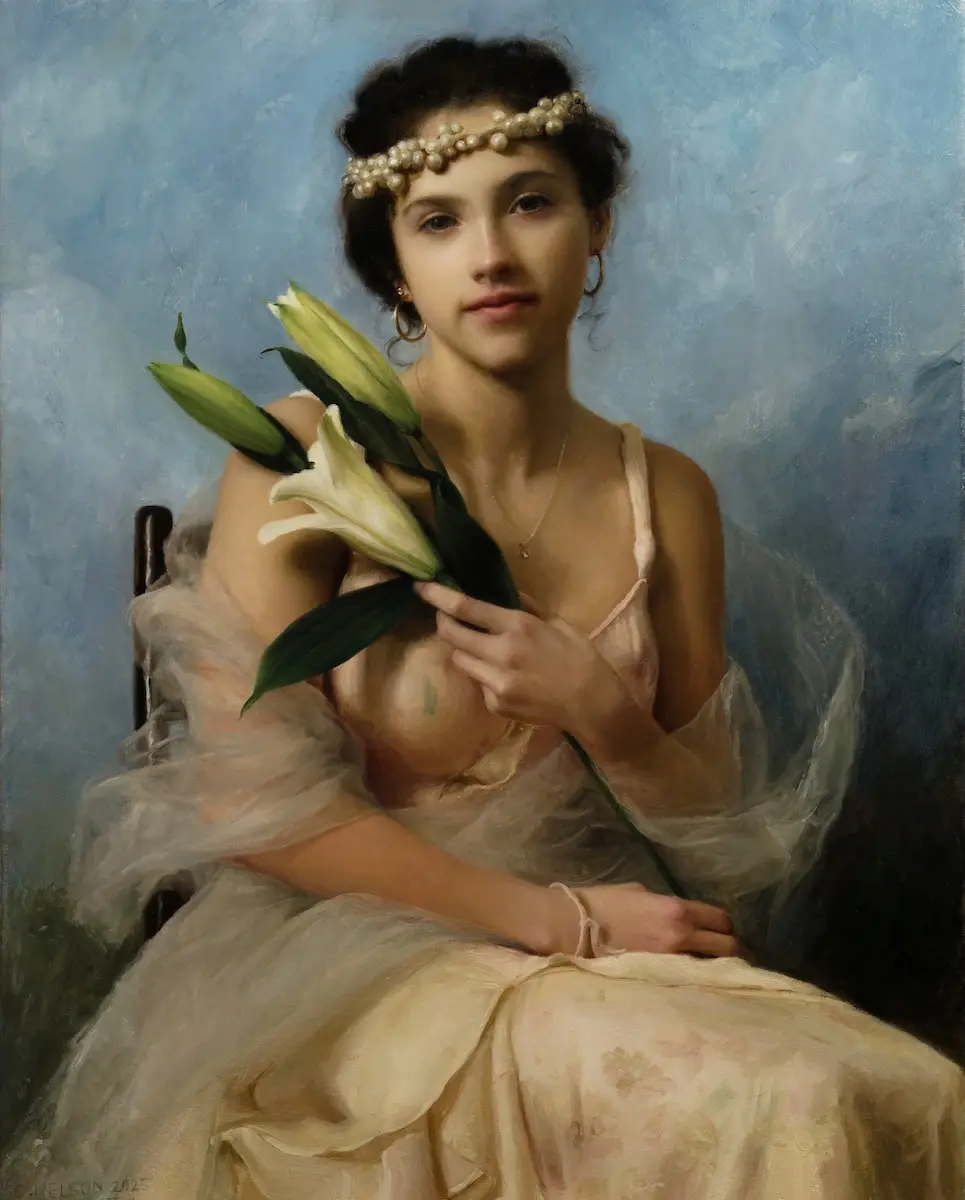
Working primarily in oil on linen, Nelson bridges the gap between 19th-century academic traditions and modern storytelling. Her acclaimed piece, Lilies of the Field (measuring 20 x 16 inches), exemplifies her mastery of light, form, and narrative subtlety. Represented by Arcadia Contemporary in New York City, Nelson’s original works command a price range between $3,000 and $20,000, attracting serious collectors and institutions eager to invest in the future of figurative painting.
Nelson’s artistic identity is deeply rooted in direct observation. Unlike many contemporary artists who rely heavily on digital photography or composite imagery, Nelson prefers painting exclusively from life. Her canvases breathe with a timeless quality, evoking an era of pastoral beauty, literary romance, and meticulous craftsmanship. Yet, she is far from a mere historical imitator; her application of classical techniques addresses modern longings for narrative depth, emotional resonance, and visual harmony.
Chronology
To understand Caroline Nelson’s rapid ascent in the art world, one must examine the rigorous timeline of her classical training and artistic development. Her journey is a testament to the fact that mastering traditional realism requires deliberate, immersive education.
Formative Years and Apprenticeship (2018–2020)
Nelson’s foundational breakthrough occurred during her intensive private training in classical realism under the direct tutelage of renowned artist Henry Wingate. From 2018 to 2020, Nelson underwent full-time instruction, focusing on the rigorous academic methods of sight-size drawing, color matching, and tonal harmony. Under Wingate’s guidance, she learned the discipline required to render the human form and still life with anatomical precision and atmospheric believability.
Professional Residency and Studio Work (2020–2022)
Following her mentorship with Wingate, Nelson expanded her professional footprint by serving as an intern artist at East Oaks Studio in Raleigh, North Carolina, from 2020 to 2022. This period allowed her to work alongside a community of dedicated realists, refine her palette, and establish her working methods. It was during these years at East Oaks Studio that Nelson transitioned from a student of realism to an independent professional artist capable of executing complex, narrative-driven compositions.
National Recognition and Market Breakthrough (2026)
By 2026, Nelson’s dedication yielded major industry milestones. Her inclusion in Southwest Art’s "21 Under 31" cohort cemented her status as a generational talent to watch. Furthermore, her gallery representation with Arcadia Contemporary in New York placed her work alongside some of the finest representational artists working today, expanding her collector base nationally and internationally.
Supporting Data
A closer look at Nelson’s artistic profile reveals the specific influences, technical strategies, and creative philosophies that drive her success.
Inspirations and Aesthetic Influences
Nelson’s visual vocabulary is shaped by a unique blend of historical art and period literature:

- Visual Art: She is profoundly influenced by 19th-century realist painters, with a particular reverence for French academic master William-Adolphe Bouguereau. When asked about her favorite masterworks to study, Nelson frequently returns to Bouguereau’s iconic painting The Song of the Angels.
- Literature and Film: Her romantic, atmospheric sensibilities are heavily inspired by L.M. Montgomery’s beloved Anne of Green Gables book series, as well as cinematic period adaptations such as Sense and Sensibility (1995) and Pride & Prejudice (2005).
Technical Practices and Studio Habits
- The Golden Rule of Values: When asked about the best artistic advice she has ever received, Nelson emphasizes the importance of squinting. By squinting at a canvas while working, she is able to keep values, chroma, and hue in check, ensuring the overall visual balance of the piece.
- Musical Atmosphere: Nelson’s studio environment is fueled by classical and cinematic compositions. Her favorite playlist features classical greats and contemporary film-score composers alike, including Claude Debussy, Pyotr Ilyich Tchaikovsky, Antonio Vivaldi, Dario Marianelli, Max Richter, Ennio Morricone, and Howard Shore.
- Future Technical Goals: Despite her advanced skill level, Nelson remains a dedicated student of her craft. She aims to develop a more nuanced, broader approach to brushwork, actively studying the loose-yet-controlled mark-making of masters like John Singer Sargent to create varied textures and atmospheric depth.
Personal Life and Balance
Outside of her studio in Virginia, Nelson maintains a grounded lifestyle that feeds her creative spirit. She enjoys spending time outdoors taking long walks, crafting intricate crepe paper flowers, cooking, and cherishing time with her husband and family.
Official Responses and Artistic Philosophy
While traditional press releases often rely on superficial marketing copy, Nelson’s own artistic statements and career choices offer profound insight into her philosophy. Through her portfolio, gallery representation, and interviews, a clear picture emerges of an artist deeply respectful of history yet acutely aware of her own contemporary agency.
In discussions regarding her market presence, representation with Arcadia Contemporary signifies a shared confidence in the commercial and cultural viability of high-realism painting. Galleries specializing in representational art have noted a surging demand among younger collectors who yearn for art that requires physical skill, narrative engagement, and emotional clarity—qualities that define Nelson’s output.
Furthermore, Nelson’s approach to her craft is defined by humility and continuous learning. Rather than resting on the laurels of her early technical achievements, she views her current body of work as a stepping stone toward greater painterly freedom. Her stated desire to incorporate the bravura brushwork of John Singer Sargent into her own classical foundation indicates an artist poised to push the boundaries of her style, moving effortlessly between tight, academic rendering and expressive, painterly abstraction.
Implications
Caroline Nelson’s emergence as a leading young realist carries several broader implications for the contemporary art market and the future of art education.
The Renaissance of Classical Training
For decades, many university art programs marginalized traditional drawing and painting in favor of conceptual and multi-media approaches. Artists like Nelson—who pursued rigorous, specialized apprenticeships outside the traditional university track—demonstrate the immense value of atelier-style training. Her success proves that there is a thriving, sustainable pathway for young artists dedicated to mastering historical techniques.
Market Shifts Toward Accessible Narrative Art
The robust price points ($3,000 to $20,000) commanded by a 28-year-old artist working in classical oil paint reflect a significant market trend. Modern collectors are increasingly looking for art that offers immediate emotional connection, technical wonder, and narrative storytelling. By invoking the literary comfort of Anne of Green Gables and the visual poetry of 19th-century realism, Nelson taps into a collective cultural desire for beauty, tranquility, and authenticity.
A Bright Future for American Realism
As Nelson continues to refine her brushwork, expand her exhibition history with Arcadia Contemporary, and inspire younger generations of painters, her trajectory serves as a blueprint for success in the 21st-century art world. She proves that classical realism is not a relic of the past, but a living, breathing, and deeply relevant language for the modern era.
