


Despite significant regulatory hurdles, the rollback of federal tax incentives, and ongoing global geopolitical instability, the American electric vehicle (EV) market is demonstrating remarkable resilience. While the political climate in Washington has turned hostile toward zero-emission mobility—highlighted by the legislative repeal of the $7,500 federal EV tax credit last year—macroeconomic and international pressures are inadvertently creating a powerful tailwind for electrification.
Surging global fuel prices, driven largely by prolonged conflicts in the Middle East and Eastern Europe, are shifting the lifetime cost-of-ownership calculus firmly in favor of battery-powered transport. Simultaneously, legacy automakers are pressing forward with innovative manufacturing paradigms. Ford Motor Company, for example, is doubling down on its affordable EV strategy, anchoring its future with the newly named "Fathom" electric pickup truck.
Main Facts
The modern landscape of the American EV market is defined by a complex intersection of domestic policy setbacks and international energy shocks. Following the congressional repeal of the $7,500 consumer EV tax credit, new car sales experienced a sharp correction in the latter half of the previous year. However, the market has avoided total collapse, supported by a booming used EV inventory, a rapidly expanding national charging infrastructure, and—most importantly—record-high fuel prices at the pump.
These elevated pump prices are not merely temporary market fluctuations; they are the direct byproduct of enduring geopolitical conflicts. The ongoing military confrontation involving Iran has effectively disrupted maritime traffic through the Strait of Hormuz, a critical global choke point for petroleum transport. Concurrently, systematic drone strikes by Ukraine have decimated Russian oil refining capacity, pushing domestic Russian output to historic lows and tightening international refined product markets.
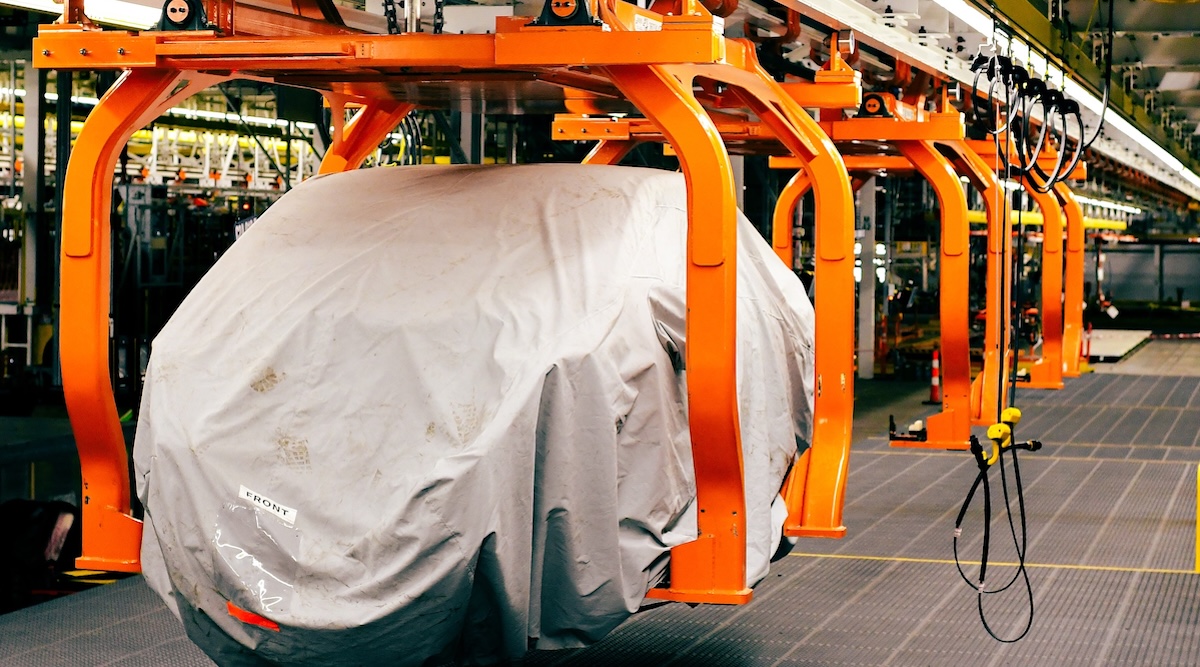
Against this volatile backdrop, traditional automakers are recalibrating their production footprints. Ford has announced that its highly anticipated, budget-friendly electric pickup truck—officially christened the Fathom—will be manufactured at its heavily overhauled Louisville Assembly Plant (LAP) in Kentucky. Utilizing a revolutionary "Universal EV Production System" (UEV), Ford aims to bypass traditional assembly bottlenecks, targeting an aggressive starting MSRP of $28,350 and positioning itself at the forefront of the next wave of mass-market EV adoption.
Chronology of Events
Understanding the current trajectory of the EV market requires examining the rapid sequence of domestic and international milestones that have unfolded over recent years:
- February 2025: President Donald Trump initiates military operations against Iran, severely destabilizing regional energy infrastructure and triggering immediate anxiety over global crude and refined product flows.
- Late 2025: Following legislative pushes by the Republican majority, the $7,500 federal EV tax credit is officially sunsetted, causing a severe, industry-wide contraction in new EV sales across the United States.
- August 2025: Ford unveils its Universal EV Production System, introducing an unconventional, tree-like assembly sequence designed to radically reduce manufacturing footprints, lower structural costs, and improve worker ergonomics.
- Spring 2026: Online consumer interest and web searches surge as fence-sitting buyers grapple with climbing gasoline prices. Concurrently, a massive influx of off-lease EVs floods the pre-owned market, temporarily reshaping consumer purchasing habits.
- July 2026: Ukrainian drone campaigns push Russian oil refining capacity to a 24-year low, causing international crack spreads to explode and driving long-term gasoline price forecasts upward.
- Late July / Early August 2026: High-level diplomatic friction intensifies as the White House attempts to negotiate the reopening of the Strait of Hormuz and informally implores Ukrainian leadership to halt attacks on Russian naval and export facilities—efforts largely undermined by subsequent strikes on the Black Sea port of Novorossiysk.
- August 2026: Ford formally names its forthcoming mid-sized electric pickup truck the Fathom and confirms it will roll off the newly modernized lines of the Louisville Assembly Plant, with pre-orders slated to open early next year.
Supporting Data and Economic Mechanics
To comprehend why fuel prices remain stubbornly high despite modest fluctuations in crude oil benchmarks, one must examine the economic concept of the crack spread—the price differential between a barrel of crude oil and the petroleum products refined from it, such as gasoline and diesel.
Renowned economist Paul Krugman recently highlighted the explosive nature of the current crack spread, which has widened by approximately $35.00 per barrel since the onset of the conflict with Iran.
[Crude Oil Price Increase: +$25/barrel]
                  +
[Refining Capacity Loss / Crack Spread Surge: +$35/barrel]
                  =
[Total Refined Product Price Spike: ~$60/barrel equivalent]
This mathematical reality means that even when crude oil appears moderately priced on global exchanges, the wholesale and retail costs of refined gasoline and diesel remain severely inflated due to a global deficit in refining capacity. With Russian refining output hitting multi-decade lows due to targeted drone strikes, and Middle Eastern processing facilities facing persistent security threats, consumers are insulated from relief.
For American drivers, this economic environment transforms the traditional cost-of-ownership equation. EVs, which rely on domestically generated electricity rather than internationally traded refined petroleum, suddenly offer a predictable, insulated financial shelter against systemic energy shocks.
Official Responses and Diplomatic Fallout
The macroeconomic pressures facing the administration have complicated its public stance on energy independence and foreign policy. Attempts by Washington to stabilize global oil markets have yielded mixed, and occasionally embarrassing, diplomatic outcomes.
Reports indicate that high-ranking administration officials, including Vice President JD Vance, directly implored Ukrainian President Volodymyr Zelenskyy to halt strikes on Russian naval targets and export terminals in the Black Sea, specifically citing fears of further global oil market contagion. However, these diplomatic appeals were swiftly rebuffed by reality on the ground, underscored by subsequent successful Ukrainian drone operations against critical port infrastructure in Novorossiysk.
On the domestic front, automotive executives are navigating the shifting political landscape by focusing relentlessly on unit economics rather than relying on government subsidies. Ford’s decision to proceed with the Fathom program signals a recognition that the future of the automotive sector is electric, tax credit or no tax credit.
"The UEV Production System and its assembly tree will allow Ford to assemble the Fathom 40% faster than LAP’s current products," corporate communications emphasized, noting that the overall operational tempo will outpace legacy gas-powered assembly lines by 15%. By stripping the plant to its bare concrete walls and completely redesigning the manufacturing process from the ground up, Ford has engineered a pathway to profitability at a sub-$30,000 price point.

Implications for the Future of American Mobility
The convergence of geopolitical instability, systemic fossil fuel inflation, and aggressive manufacturing innovation carries profound implications for the trajectory of American transportation:
1. The Death of the Fossil Fuel Cost Advantage
For decades, internal combustion engine (ICE) vehicles held an unassailable advantage in upfront purchase price, while oil markets enjoyed relative stability. Today, that stability is gone. With chronic vulnerabilities in global shipping lanes (such as the Strait of Hormuz) and vulnerable continental refinery networks, petroleum markets face structural volatility. This permanently elevates the attractiveness of electric vehicles as a hedge against fuel price inflation.
2. A Paradigm Shift in Manufacturing
Ford’s implementation of the Universal EV Production System at the Louisville Assembly Plant may serve as a watershed moment for American industrial engineering. If the tree-like assembly sequence successfully delivers the Fathom at its targeted $28,350 base price, it will prove that traditional automakers can profitably build affordable EVs at scale without relying on federal subsidies. Other domestic and international competitors will inevitably be forced to adopt similar radical manufacturing overhauls.
3. Infrastructure as the Final Frontier
While vehicle affordability and operating costs are increasingly aligned in favor of electrification, the broader buildout of public and private charging infrastructure remains the critical catalyst for mass adoption. Fortunately, investment in fast-charging networks continues at a rapid pace across the United States, easing range anxiety even as vehicle sales navigate regulatory and legislative turbulence.
As the market looks toward the opening of Fathom pre-orders and the rollout of first-quarter production prototypes next year, the overarching narrative is clear. Despite the best efforts of political opponents to stall the transition, economic reality, international conflict, and engineering ingenuity are combining to force the American automotive market into an electric future.
