As nations worldwide race against the clock to meet aggressive climate targets, Carbon Capture and Storage (CCS) has re-emerged as one of the most polarizing topics in modern energy policy. Touted by major international bodies as an indispensable tool for cutting emissions in hard-to-abate sectors, CCS is simultaneously condemned by critics as a costly, unproven lifeline for the fossil-fuel industry.
With governments like the UK committing billions to industrial decarbonization clusters, the debate over the viability, ethics, and performance of CCS has never been more urgent. This comprehensive analysis explores the roots of CCS, its current global status, its role in net-zero modeling, and the mounting controversies surrounding its deployment.
Main Facts: What is Carbon Capture and Storage?
At its core, Carbon Capture and Storage (CCS) is a technological process designed to intercept carbon dioxide ($CO_2$) emissions at the point of generation—such as a gas-fired power plant, steel mill, or cement factory—before they can escape into the atmosphere.
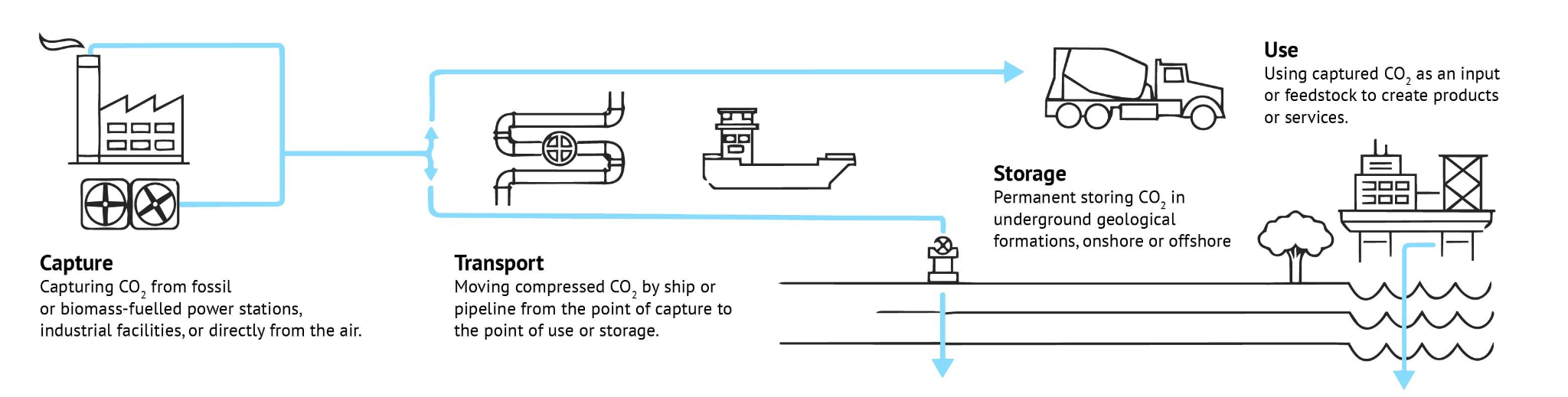
The procedure typically involves three distinct phases:
Capture: The $CO_2$ is separated from a facility’s exhaust stream, commonly using a chemical solvent.
Transportation: The captured gas is compressed into a supercritical liquid and transported via pipelines, ships, or specialized vehicles.
Storage: The liquid $CO_2$ is injected deep underground into stable geological formations, such as depleted oil and gas reservoirs or saline aquifers, for permanent isolation.
Related variations of the technology include CCUS (Carbon Capture, Utilisation, and Storage), which repurposes captured $CO_2$ to manufacture commercial goods like synthetic fuels, fertilizers, or building materials. However, utilization does not always guarantee permanent storage, as the $CO_2$ can eventually be released back into the atmosphere.
Furthermore, CCS is frequently confused with Carbon Dioxide Removal (CDR) technologies like BECCS (Bioenergy with Carbon Capture and Storage) and DACCS (Direct Air Capture and Storage). While BECCS and DACCS actively pull legacy carbon out of the atmosphere to create "negative emissions," conventional CCS acts as a preventative firewall, intercepting emissions directly at industrial source points.
Chronology: The Evolution of CCS
To understand how CCS reached its current prominence, it is helpful to trace its historical trajectory from an academic concept to a cornerstone of national climate strategies:
1970s (The EOR Era): Carbon capture technology initially gained traction in the United States and Canada, not for climate mitigation, but for Enhanced Oil Recovery (EOR). Fossil fuel operators injected captured $CO_2$ into depleted wells to pressurize underground chambers and extract residual crude oil. EOR remains the primary commercial driver for historical and current projects.
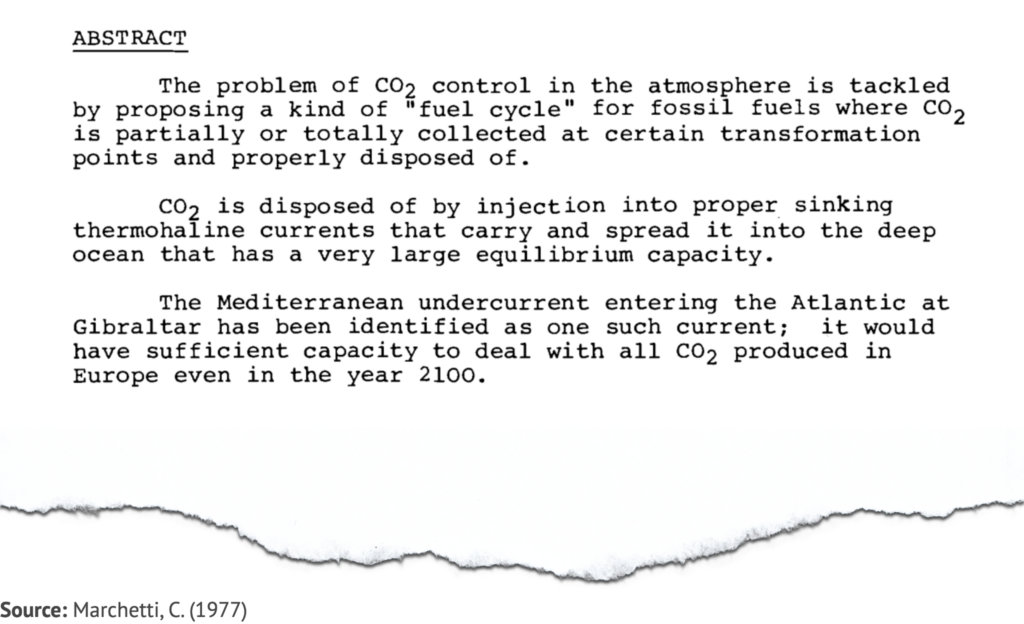
1976–2005 (Theoretical Foundations): The concept of deploying CCS specifically to combat climate change first surfaced in academic literature in the late 1970s. By 2005, the Intergovernmental Panel on Climate Change (IPCC) published a landmark special report on CCS, identifying a handful of small-scale operational projects globally.
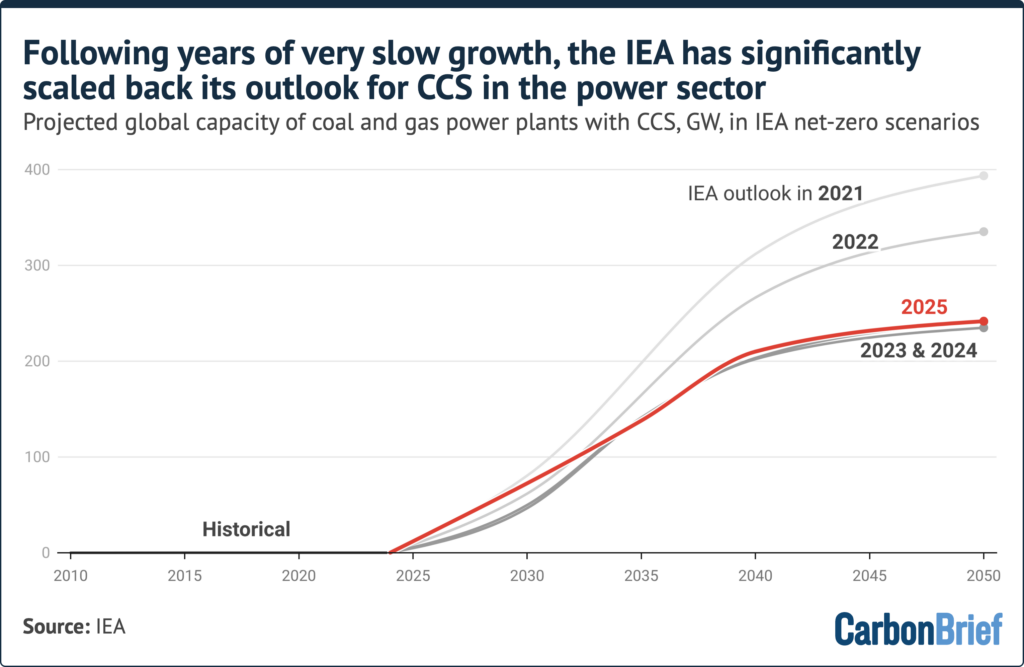
The 2000s–2010s (The Coal Interlude): A major wave of interest swept across Europe and North America, focusing primarily on enabling coal-fired power plants to run with fewer emissions. However, this momentum largely fizzled out as the cost of renewable energy sources, like wind and solar, plummeted, rendering coal-CCS economically unviable. Today, only seven CCS-coal facilities operate worldwide.
2015–Present (The Paris Agreement & Hard-to-Abate Focus): The adoption of the 2015 Paris Agreement and the global push toward net-zero emissions revived political and industrial interest in CCS. Rather than focusing on coal, modern strategies target "hard-to-abate" sectors like cement, chemical production, and blue hydrogen generation, alongside regional industrial clusters.
Supporting Data: Capacity, Realities, and Performance Gaps
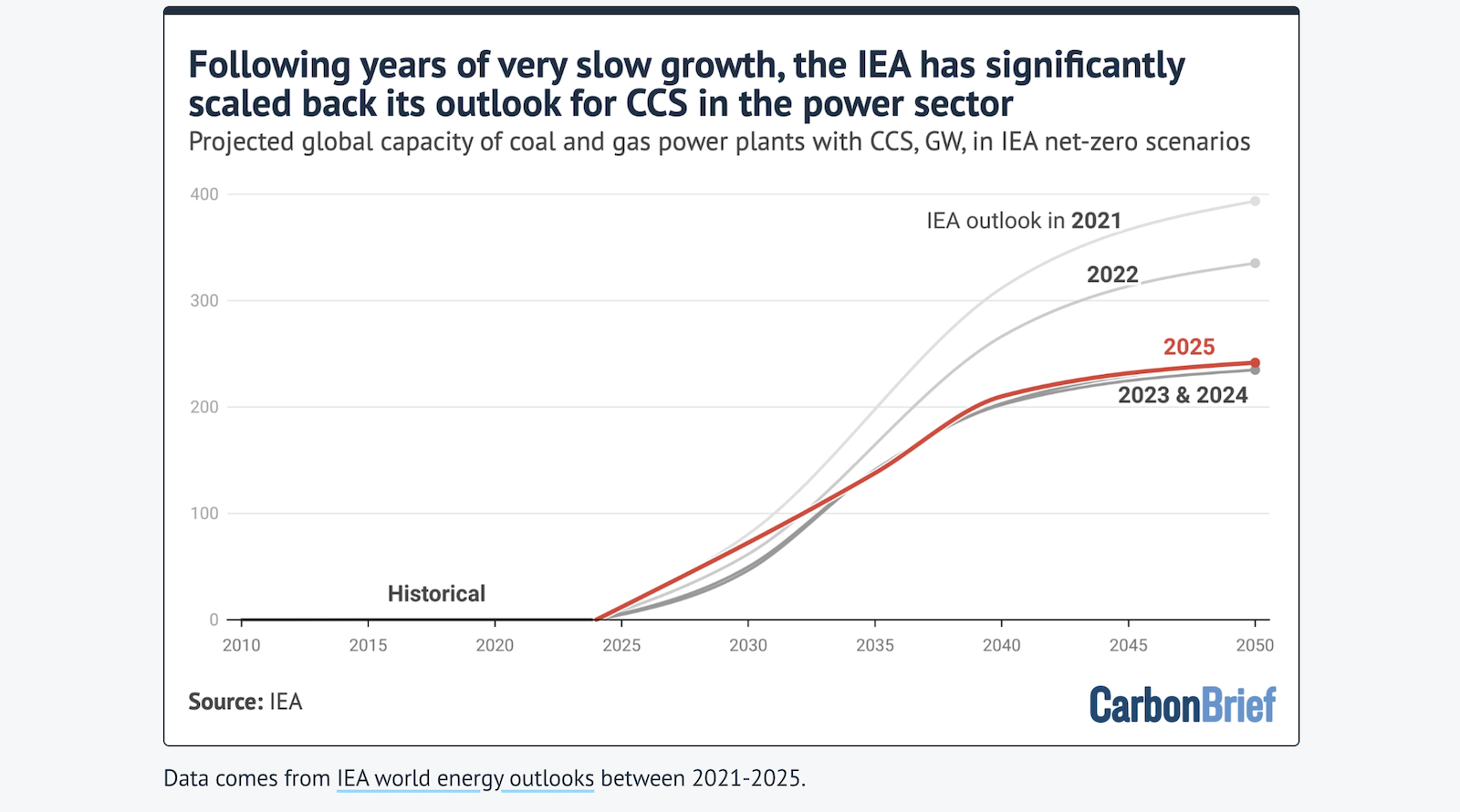
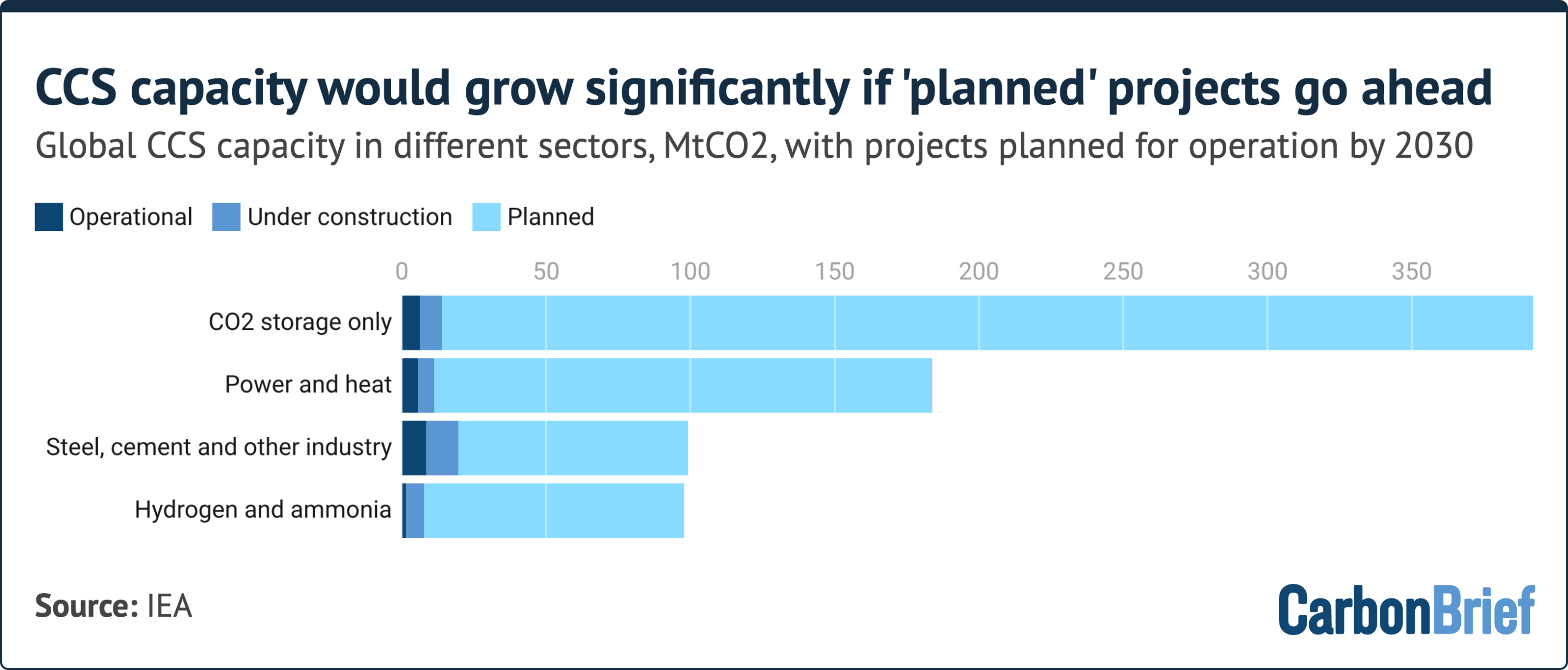
Proponents of CCS argue that scaling up the technology is non-negotiable for achieving global climate goals. However, empirical data reveals a stark chasm between current capacity and the projections embedded in climate models.
Global Deployment vs. Emissions
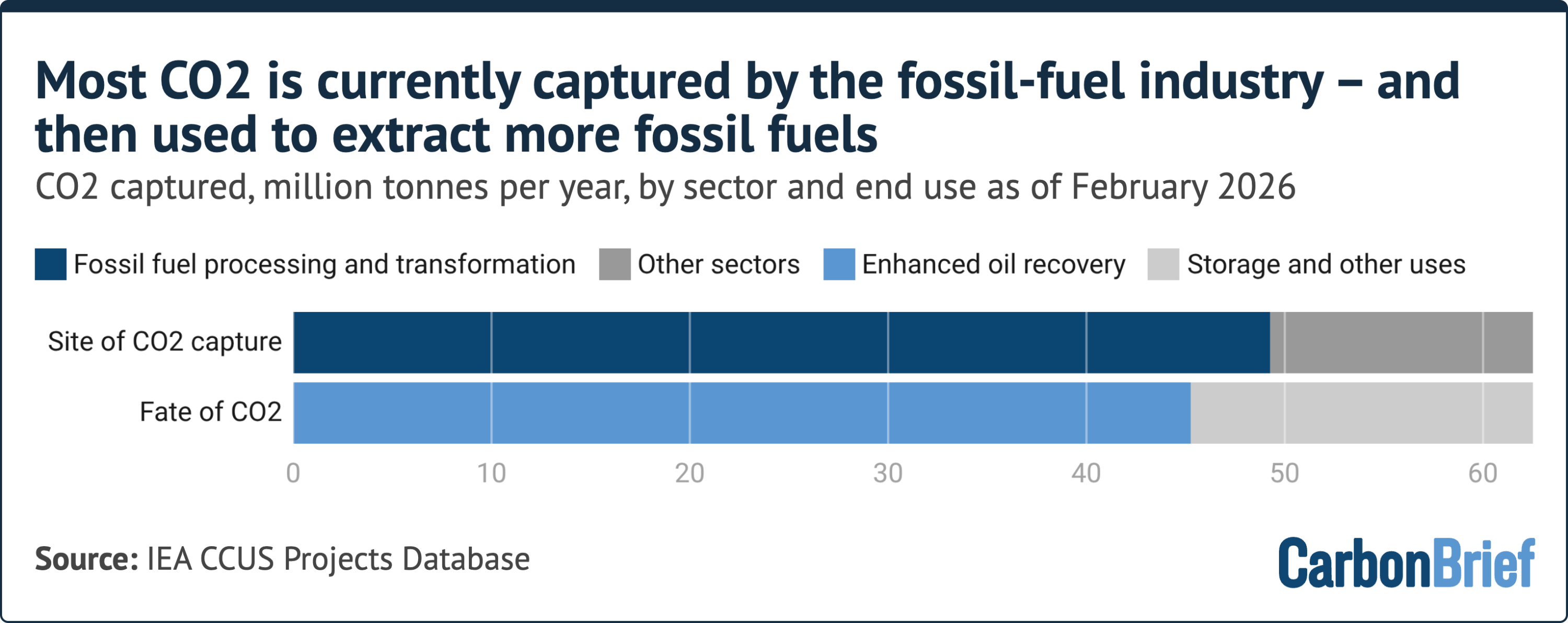
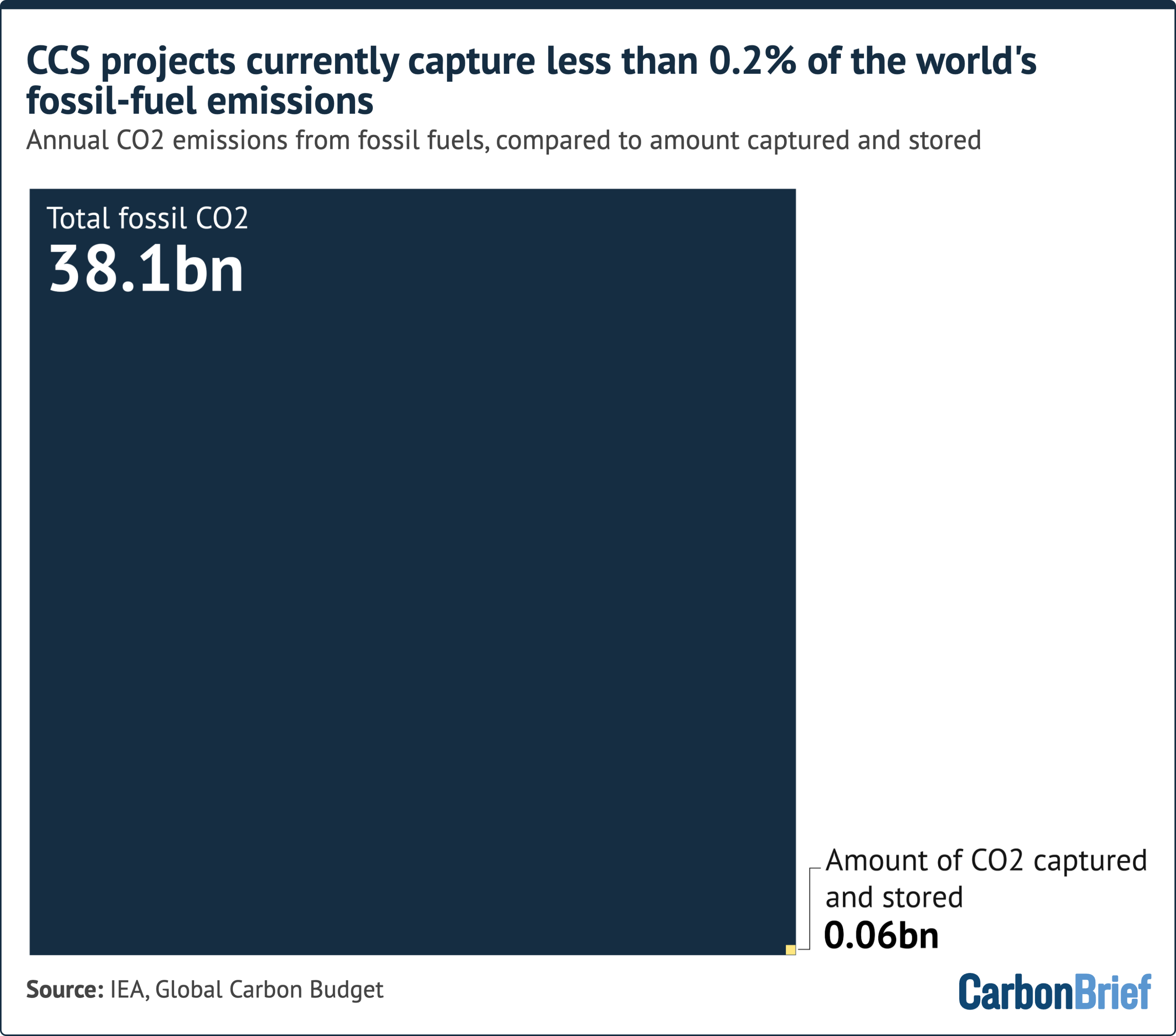
As of early 2026, the International Energy Agency (IEA) database records 75 operational CCS projects globally. Together, these facilities capture roughly 62.5 million tonnes of $CO_2$ ($MtCO_2$) annually—an amount equivalent to the total greenhouse gas emissions of Ecuador.
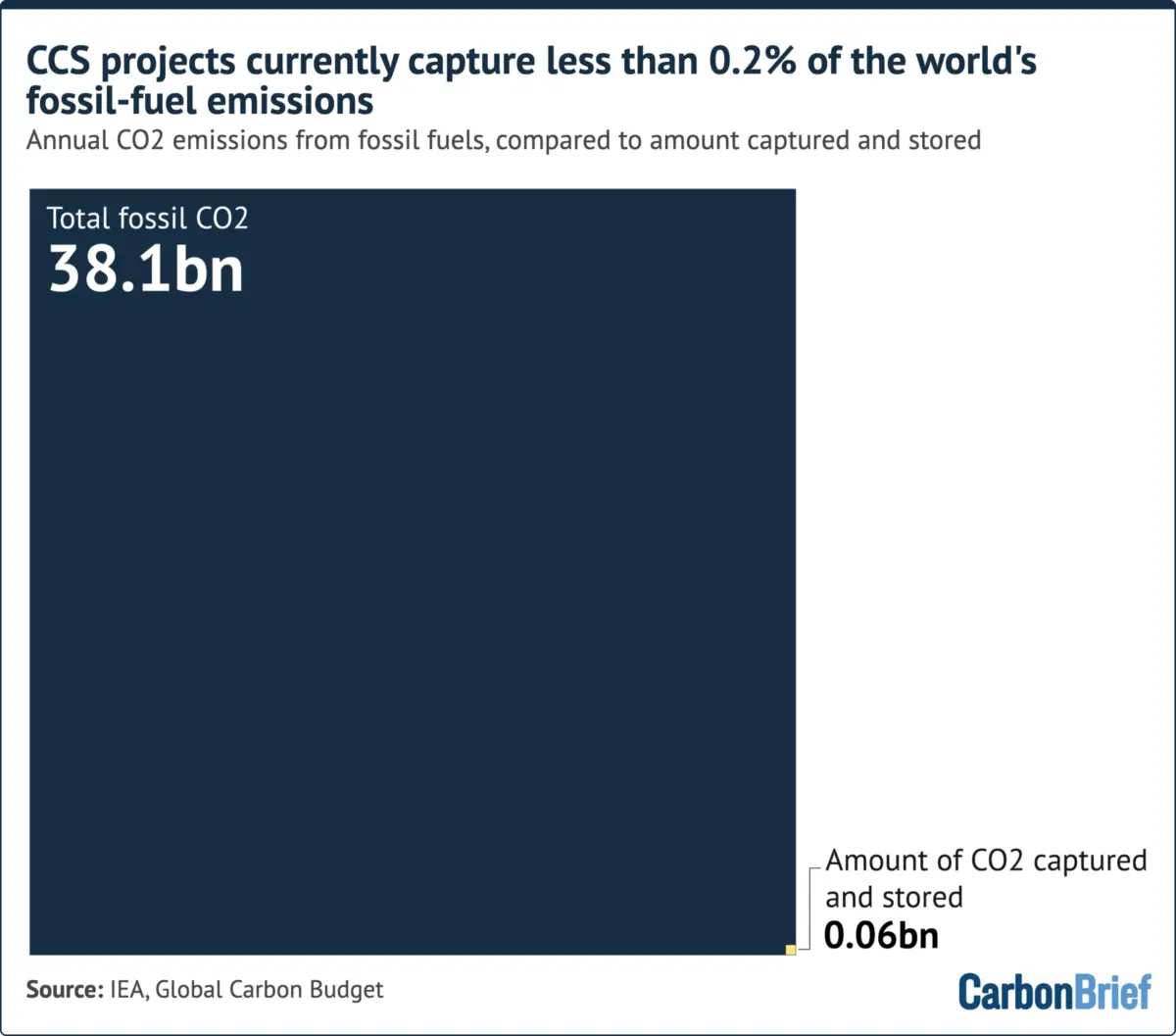
When measured against global fossil-fuel emissions (which hover around 38 billion tonnes annually), current CCS projects capture less than 0.2% of the world’s total carbon output.
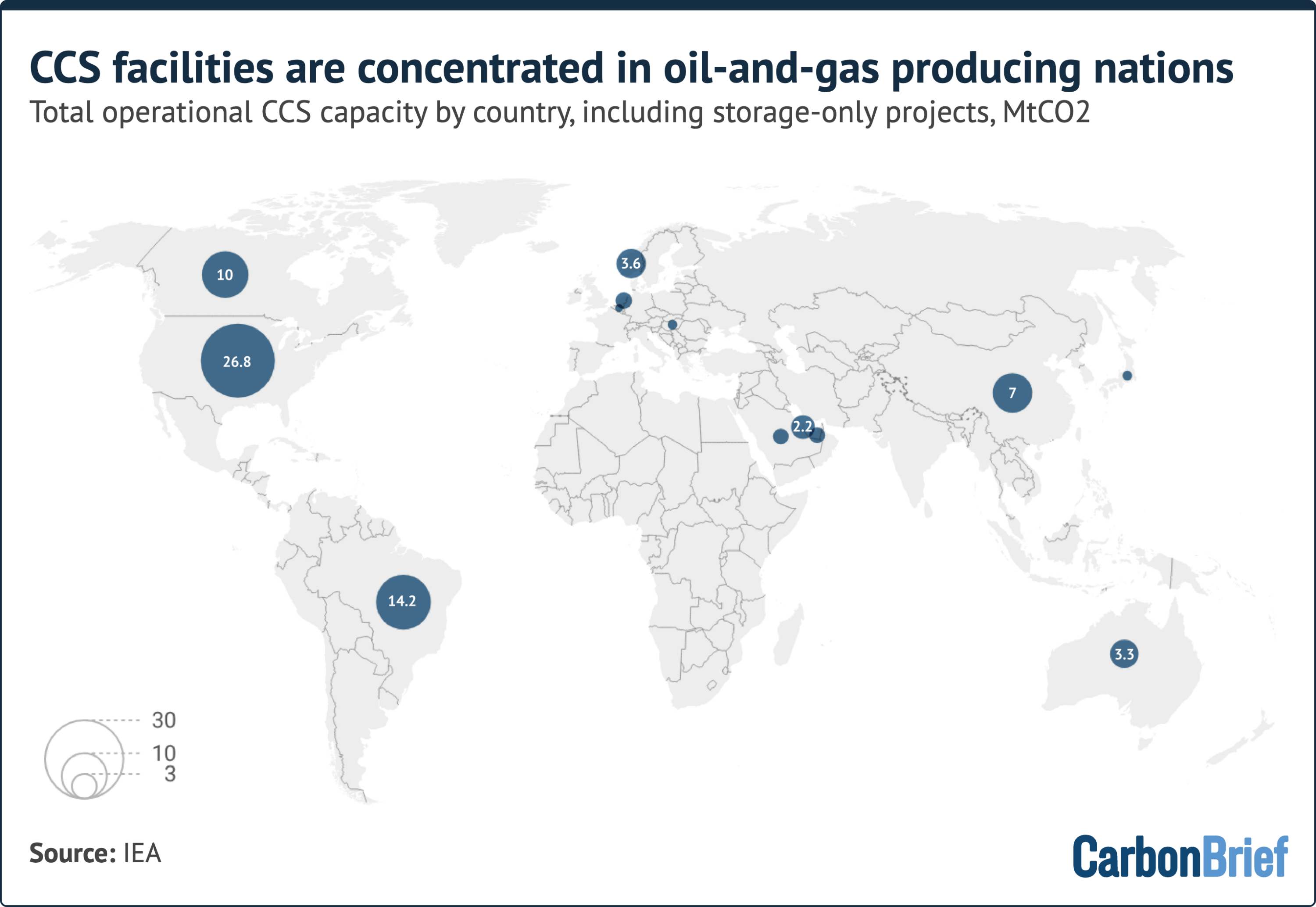
Moreover, geographical concentration remains pronounced. The vast majority of existing capacity is clustered in the United States and Canada, followed by major fossil-fuel producers like Norway, Brazil, and Gulf states. Approximately three-quarters of all captured carbon globally continues to be utilized for Enhanced Oil Recovery, directly aiding fossil-fuel extraction.
The Performance Gap
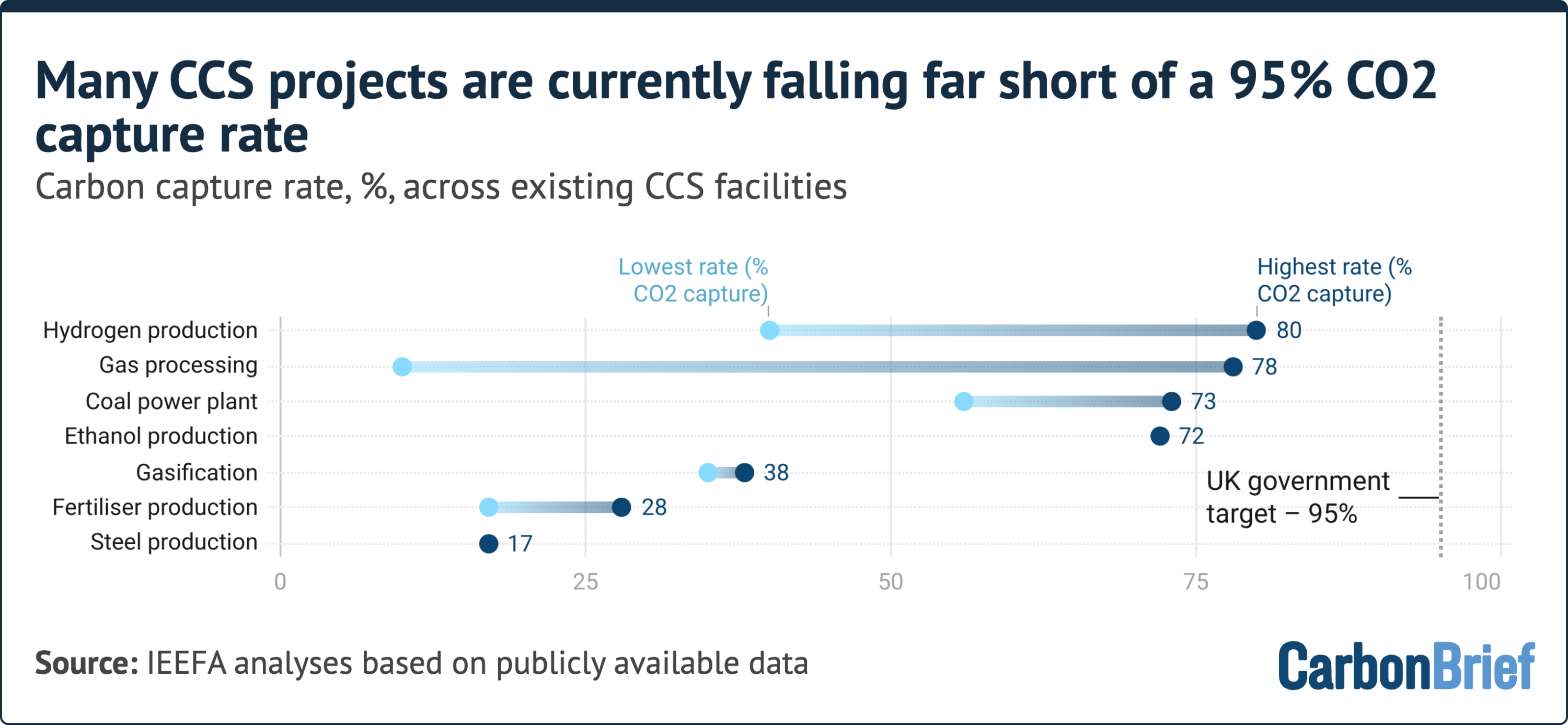
Critics frequently point to a troubling performance gap in existing infrastructure. While regulatory frameworks often mandate capture rates of 90% to 95%, real-world data analyzed by institutions such as the Institute for Energy Economics and Financial Analysis (IEEFA) indicates that many facilities fall far short.
Average capture efficiencies across existing commercial installations vary drastically by sector:
Steel production facilities: ~17% capture efficiency
Gas processing and blue hydrogen plants: ~50% to 80% efficiency
Coal power plants: Frequently plagued by downtime and underperformance
A 2023 analysis by Climate Analytics warned that if future large-scale CCS deployments continue to achieve only 50% capture rates alongside high upstream methane leaks from natural gas extraction, "high-CCS" pathways could inadvertently result in tens of gigatonnes of additional greenhouse gas emissions by 2050.
Official Responses: The Net-Zero Dilemma
The international scientific community remains divided on the exact weight CCS should carry in long-term decarbonization pathways.
The Case for Necessity
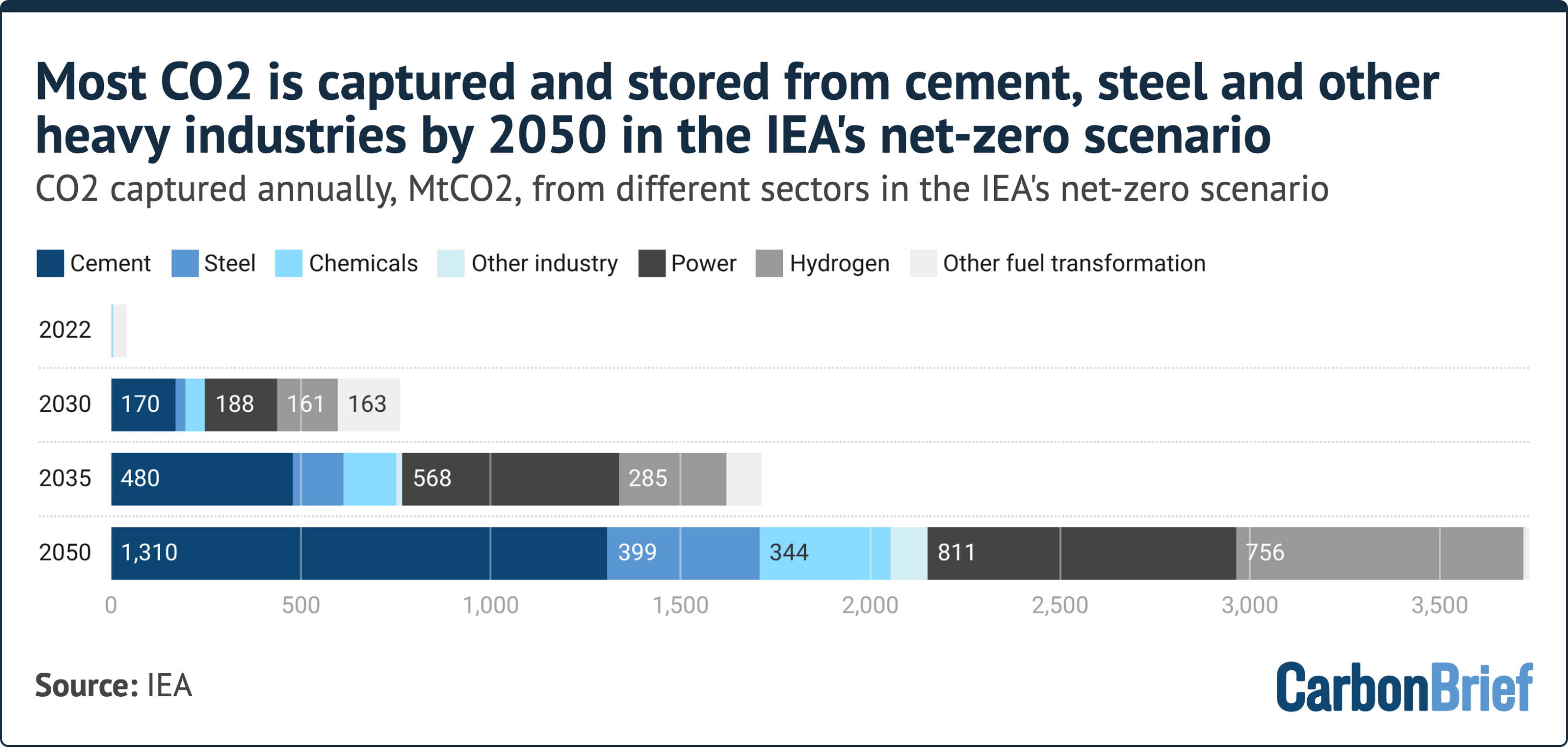
Influential organizations, including the IPCC and the IEA, describe CCS as "critical" for cutting emissions in sectors where full electrification is technically impossible. Cement manufacturing, for instance, releases approximately 7% of global $CO_2$ emissions through calcination—a chemical process inherent to turning limestone into clinker, completely independent of the energy source used to heat the kiln. For cement, steel, and chemicals, the IEA regards CCS as virtually the only viable mitigation tool.
Dr. Jennifer Roberts of the University of Strathclyde and the UK Carbon Capture and Storage Research Centre notes:
"From an IPCC climate modelling perspective… reaching net-zero without CCS is far more expensive, disruptive and potentially out of reach."
The Case Against a "Dangerous Distraction"
Conversely, environmental advocates, civil society groups, and numerous independent energy analysts label CCS a "false solution" designed to protect fossil-fuel business models.
A prominent 2023 Oxford University working paper concluded that pursuing a "low-CCS" net-zero pathway could save approximately $1 trillion annually compared to a high-CCS trajectory, largely avoiding the massive capital expenditures required to build unproven infrastructure. Critics argue that pouring public subsidies into CCS acts as a moral hazard, delaying the rapid, necessary transition toward 100% renewable energy grids and absolute fossil-fuel phaseouts.
Implications: The UK Case Study
To understand how these global debates manifest in national policy, one can examine the United Kingdom. The UK government has committed up to £21.7 billion over the next 25 years to establish a domestic CCS industry centered around regional industrial clusters: the East Coast Cluster, HyNet, Acorn, and Viking.
The Policy Architecture
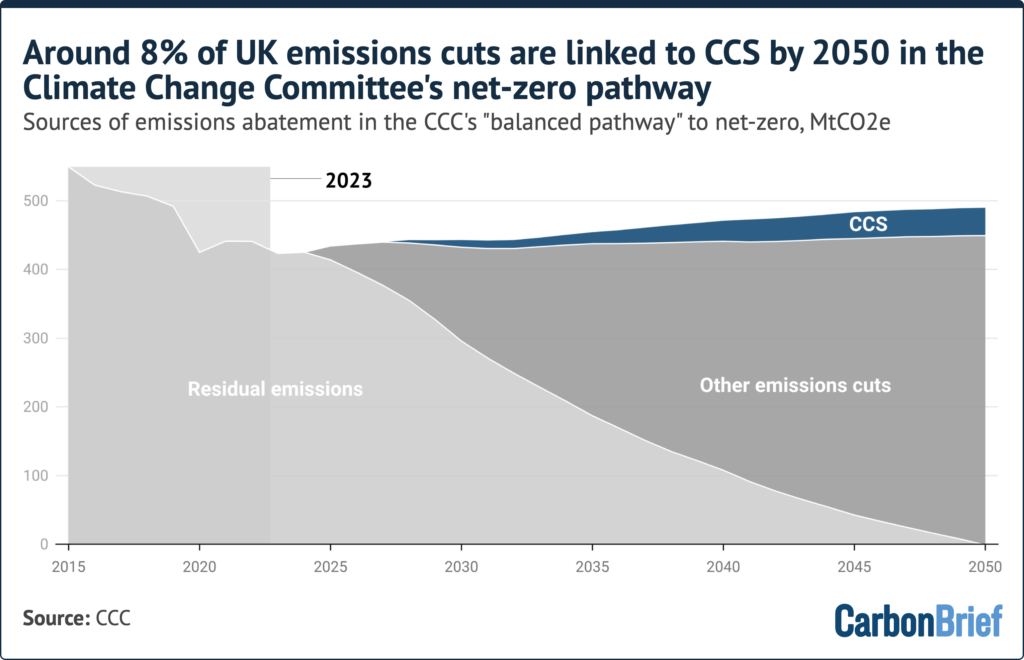
Proponents within the UK government argue that these investments will successfully unlock heavy industries, facilitate low-carbon "blue" hydrogen production, and provide dispatchable backup power through gas-CCS plants. The Climate Change Committee (CCC) maintains that CCS is essential for achieving the nation’s carbon budgets, projecting that CCS-related measures will account for roughly 8% of domestic emissions reductions by 2050.
Public Backing and Legal Pushback
However, the UK strategy has faced intense domestic backlash. Critics and legal challengers—such as those involved in opposition to the Net Zero Teesside power project—argue that relying on gas-fired CCS locks the nation into prolonged fossil-fuel dependency.
Key concerns regarding the UK approach include:
Upstream Methane Emissions: If gas-CCS plants rely heavily on imported natural gas with high upstream methane leakage rates, lifecycle emission savings may plummet from an intended 75% down to just 25%.
Misallocation of Capital: Watchdogs, including the UK Parliament’s Public Accounts Committee, have cautioned that government funding mechanisms risk diverting critical financial support away from genuine hard-to-abate sectors (like cement) toward more politically convenient gas-power infrastructure.
Fossil Fuel Entrenchment: Environmental groups contend that oil and gas majors use CCS commitments as a public relations shield to justify ongoing exploration and extraction.
Conclusion
Carbon Capture and Storage sits at a profound crossroads. On one hand, integrated assessment models suggest that eliminating emissions from complex, chemical-heavy industrial processes without CCS would be exceptionally difficult and costly. On the other hand, decades of unmet expectations, poor real-world capture efficiencies, and deep institutional ties to the fossil-fuel industry give legitimate cause for skepticism.
Ultimately, the future of CCS hinges on rigorous targeting, stringent regulatory accountability, and a refusal to let the technology serve as a smokescreen for continued fossil-fuel expansion. If prioritized strictly for true hard-to-abate sectors like cement and lime production—while backed by strict, enforceable capture thresholds—CCS may yet fulfill its promise as a vital net-zero tool. If misused to extend the lifespan of unabated fossil fuels, however, it risks becoming the costly distraction its critics fear.