

SPECIAL ADVERTISING SECTION
Main Facts: A Spotlight on Modern Mastery
In the contemporary fine art market, a profound shift is underway. Across the United States, women artists are increasingly claiming their rightful space at the forefront of the cultural conversation, securing prestigious gallery representation, curating major solo exhibitions, and entering permanent museum collections. To honor and amplify this vital momentum, our annual special advertising section dedicated to women artists serves as an essential introduction to some of the most dynamic creatives making an impact today.
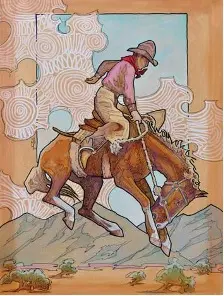
At the center of this year’s showcase is Maia Chavez Larkin’s striking mixed-media piece, Heartbreaker (oil and ink on canvas, 24 x 18 inches). Larkin’s work exemplifies the bold emotional resonance and technical experimentation defining modern women’s art. Her piece captures the intricate intersections of vulnerability and strength, themes that echo throughout the curated selection of creators featured in this year’s folio.
The artists highlighted in this section hail from every corner of the nation, representing a diverse cross-section of mediums, philosophies, and backgrounds. From traditional oil painters capturing the sweeping vistas of the American West to contemporary mixed-media innovators pushing the boundaries of abstraction and narrative, these women are not merely participating in the art world—they are actively rewriting its rules, expanding its boundaries, and constructing lasting artistic legacies.
Chronology: The Journey of Women in the Fine Arts
To understand the magnitude of today’s renaissance, one must examine the historical trajectory of women in the visual arts. The path to mainstream recognition has been long, marked by systematic exclusion, institutional barriers, and a persistent undervaluation of female creative labor.
The Historical Foundations (Late 19th to Mid-20th Century)
For generations, female artists faced severe institutional restrictions. Academies across Europe and the Americas frequently barred women from life-drawing classes—the foundational training required for history painting and high art. Despite these obstacles, pioneers such as Mary Cassatt, Georgia O’Keeffe, and Lee Krasner carved out spaces for themselves. Cassatt aligned herself with the French Impressionists, bringing domestic scenes of women and children into the high-art canon. O’Keeffe shattered modernist paradigms with her radical abstractions of flowers and desert landscapes, becoming an American icon. Yet, throughout this era, women were frequently relegated to the margins, often viewed as muses rather than masters.
The Feminist Art Movement (1970s)
The landscape began to shift dramatically during the feminist revolution of the 1970s. Artists, historians, and critics began organizing to dismantle patriarchal structures within museums and galleries. Groundbreaking projects, such as Judy Chicago’s The Dinner Party and the establishment of the Guerrilla Girls in 1985, brought institutional sexism into the public eye. These groups utilized statistical analysis and provocative public art to expose the glaring gender disparities in major galleries and museums, laying the groundwork for accountability in the fine art ecosystem.
The Modern Renaissance (2000s–Present)
Today, we are witnessing the fruits of decades of advocacy. While historical gender gaps persist in top-tier auction sales and museum retrospectives, the twenty-first century has ushered in an era of unprecedented visibility. Contemporary platforms—ranging from specialized print publications like Southwest Art to digital-first galleries—are actively dismantling old hierarchies. Today’s female artists are achieving commercial viability earlier in their careers, commanding international collector bases, and securing prominent public art commissions that cement their places in art history.
Supporting Data: The Art Market and Representation
Numbers tell a compelling story about the state of women in the contemporary art market. While progress has been steady, empirical data from cultural institutions and market analysts reveals both how far the industry has come and how much work remains to be done.
Gallery Representation and Solo Exhibitions
According to recent cultural impact studies tracking commercial galleries in major metropolitan art hubs (including New York, Los Angeles, Chicago, and Santa Fe), female artists have closed the representation gap significantly over the last decade. Women now account for nearly 48% of represented artists across mid-tier commercial galleries—a dramatic increase from under 30% in the year 2000. Furthermore, solo exhibitions featuring women have risen by roughly 35% across regional museums over the past five years.
Auction Market Dynamics
The secondary art market, historically dominated by blue-chip male artists, is also experiencing a diversification of taste. Art market analytics indicate that works by living female artists have seen a compound annual growth rate (CAGR) of over 12% at major auction houses since 2018. Collectors—both institutional and private—are increasingly viewing female creators not only as culturally significant acquisitions but also as sound, high-performing financial assets.
Regional Diversity and Medium Breakdown
The geographic distribution of today’s trailblazing women artists is broader than ever. While traditional centers like New York and Paris remain influential, vibrant regional art scenes in the American Southwest, the Pacific Northwest, and the Southeast have become incubators for unique artistic voices.
- Oil and Acrylics: Traditional painting remains a dominant medium, with artists utilizing classical techniques to explore contemporary psychological and environmental narratives.
- Mixed Media and Installation: Creators like Maia Chavez Larkin, utilizing combinations of oil, ink, and non-traditional substrates, are capturing younger demographics of collectors who favor texture, experimentation, and conceptual depth.
- Sculpture and Bronze: Once considered a heavily male-dominated domain due to the physical demands of foundry work, female sculptors are increasingly leading the market in monumental public works and fine-art bronzes.
Official Responses: Voices from the Creative Community
The transition of women into the upper echelons of the fine art market has sparked vital commentary from critics, curators, and the artists themselves. Their insights shed light on the lived experience of navigating today’s creative economy.
Curator Perspectives on Market Shifts
Dr. Elena Vance, a contemporary art historian and independent curator based in Santa Fe, notes that the demand for diverse narratives has fundamentally changed how galleries curate their rosters.
"For decades, the canon was curated through a remarkably narrow lens," Dr. Vance explains. "What we are witnessing now is not a trend, but a permanent correction. Collectors are hungry for authenticity. They want art that speaks to the complexities of the human condition across all spectrums of identity. Women artists are delivering that depth with technical mastery and fearlessness."
Gallery Directors on the Rise of Female Buyers
In parallel with the rise of female artists, gallery owners report a significant surge in female art collectors—women who are actively purchasing investment-grade art, shaping market trends, and mentoring emerging talent.
Marcus Thorne, director of a prominent Western contemporary gallery, emphasizes this dual evolution:
"It’s a complete ecosystem shift. Not only are we seeing extraordinary caliber in the studios of our female artists, but we are also seeing women step up as principal decision-makers in the acquisition of fine art. They are driving the market because they connect deeply with the narratives being produced by these creators."
The Artists’ Viewpoint: Maia Chavez Larkin on Heartbreaker
Speaking on her creative process and the inspiration behind her featured piece, Heartbreaker, Maia Chavez Larkin reflects on the resilience required to build a sustainable artistic legacy.
"Art-making is an act of exposure," Larkin shares. "When you put oil, ink, and emotion onto a canvas, you are inviting the viewer into a dialogue. Women have historically been expected to fit into comfortable, decorative boxes. My work—and the work of so many brilliant women featured in this section—refuses those limitations. We are exploring the raw, the messy, the powerful, and the beautiful. Finding your inspiration is about being brave enough to look inward and honest enough to put it on display."
Implications: The Future of the Art Market and Legacy Building
As we look toward the future, the implications of this rising tide of women artists extend far beyond immediate gallery sales. They are redefining what it means to build a lasting artistic legacy in the twenty-first century.
Institutional Legacy and Museum Collections
One of the most critical battlegrounds for equality has been the permanent collections of major museums. For generations, museum walls reflected a stark imbalance, with historical acquisitions heavily skewed toward male creators. Today, aggressive acquisitions committees, fueled by endowment gifts dedicated to diversifying collections, are actively purchasing works by living women artists. This institutional validation ensures that today’s trailblazers will be studied by future generations of art historians, securing their rightful place in the art historical canon.
Mentorship and the Next Generation
The visibility of successful women artists creates a powerful ripple effect for younger creatives. Aspiring painters, sculptors, and mixed-media artists now grow up seeing tangible proof that commercial success, critical acclaim, and motherhood or independent enterprise are not mutually exclusive. Mentorship networks—both formal and informal—are thriving, ensuring that the knowledge, business acumen, and technical skills of established artists are passed down to the next wave of talent.
Economic Empowerment and Cultural Influence
Art is currency in the truest sense—not just financially, but culturally. By controlling their narratives, setting price points, and commanding prominent gallery spaces, women artists are achieving unprecedented economic independence. This financial autonomy allows them to take greater creative risks, experiment with ambitious new mediums, and invest in their communities.
Conclusion: An Invitation to Discover
As you explore the pages of our annual special advertising section, you are invited to look beyond the canvas. Read the stories of these remarkable creators. Discover where they find their ongoing inspirations—whether in the quiet solitude of a desert morning, the bustling energy of an urban studio, or the intricate depths of human memory and emotion.
Women have always been the heartbeat of the art world; today, they are its vibrant, undeniable future. By supporting these artists, collectors and enthusiasts alike are participating in a historic realignment of the creative landscape—one brushstroke, one sculpture, and one legacy at a time.
