

Introduction: Turning Desert Water into Arizona Wine
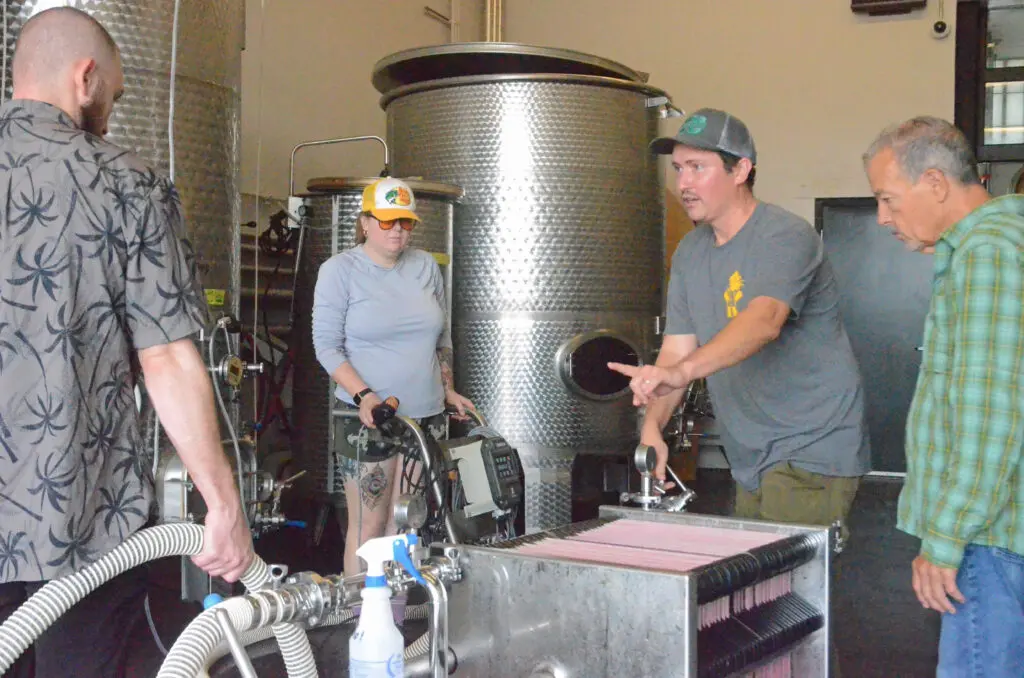
At Yavapai College’s Southwest Wine Center, located on the picturesque Clarkdale campus, the age-old adage of turning water into wine is a practical, everyday reality. On July 18, 2026, this transformation reached its seasonal crescendo. Under the guidance of viticulture and enology instructor Jason McCluskey, a select group of students gathered to execute the final bottling run of the season.
The focus of this final run was a specific, robust vintage labeled 24YCTA—a code denoting the harvest year (2024), the producing institution (Yavapai College), and the grape variety (Tannat). This exercise was more than a production milestone; it served as the capstone of an intensive, hands-on summer curriculum designed to prepare the next generation of winemakers for the rapidly expanding Arizona wine industry.
The Southwest Wine Center stands as a premier educational institution in the Southwest United States, offering students real-world experience in wine growing (viticulture) and winemaking (enology). By combining rigorous scientific instruction with physical cellar operations, the center has established itself as an essential pipeline of skilled labor for the region’s commercial vineyards.
The Chronology of Bottling Day: From Tank to Cork
The bottling of a commercial vintage is a high-stakes, multi-step process where precision is paramount. On July 18, McCluskey led his summer cohort of four students through the systematic progression required to move the wine from bulk storage into individual, shelf-ready bottles.
[Filtration Phase] ➔ [Stabilization (Sulfur)] ➔ [Nitrogen Purging] ➔ [Vacuum Filling & Corking] ➔ [Post-Bottling Storage]Phase 1: Precision Filtration and the Deception of Color
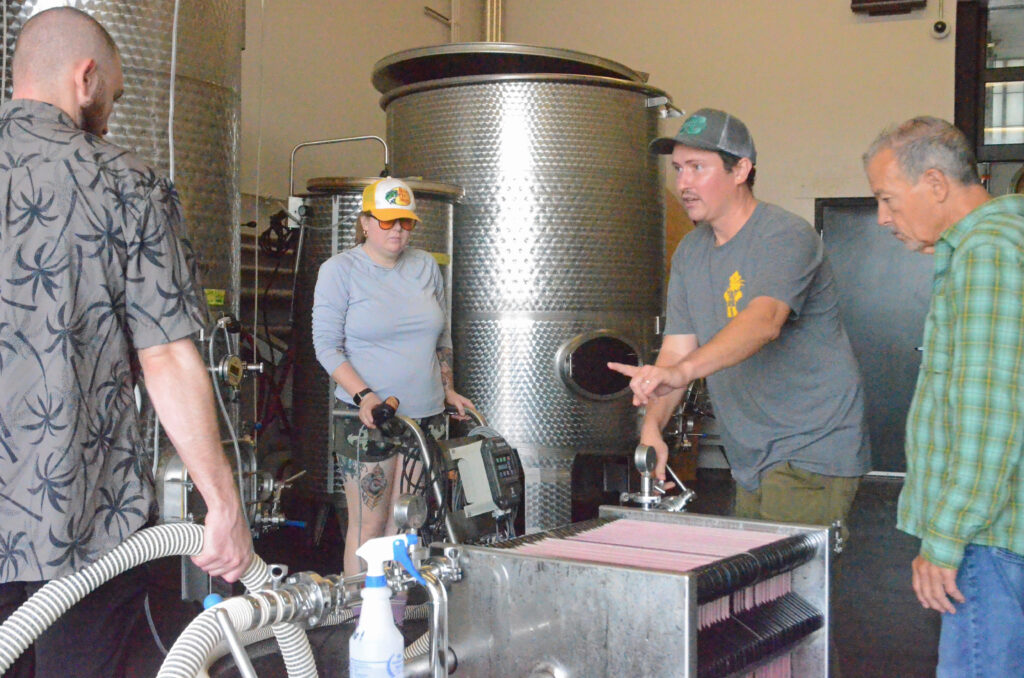
The day began with the critical step of filtration. The primary objective of this phase is to clarify the liquid, removing macroscopic debris, suspended grape matter, and dead yeast cells (lees) left over from the fermentation process. If left unfiltered, these particles can negatively affect the wine’s clarity, stability, and aging potential.
The process started with a water-primed filtration system. When the wine was first introduced to the system, it pushed out the priming water, creating a temporary "winewater" mixture.
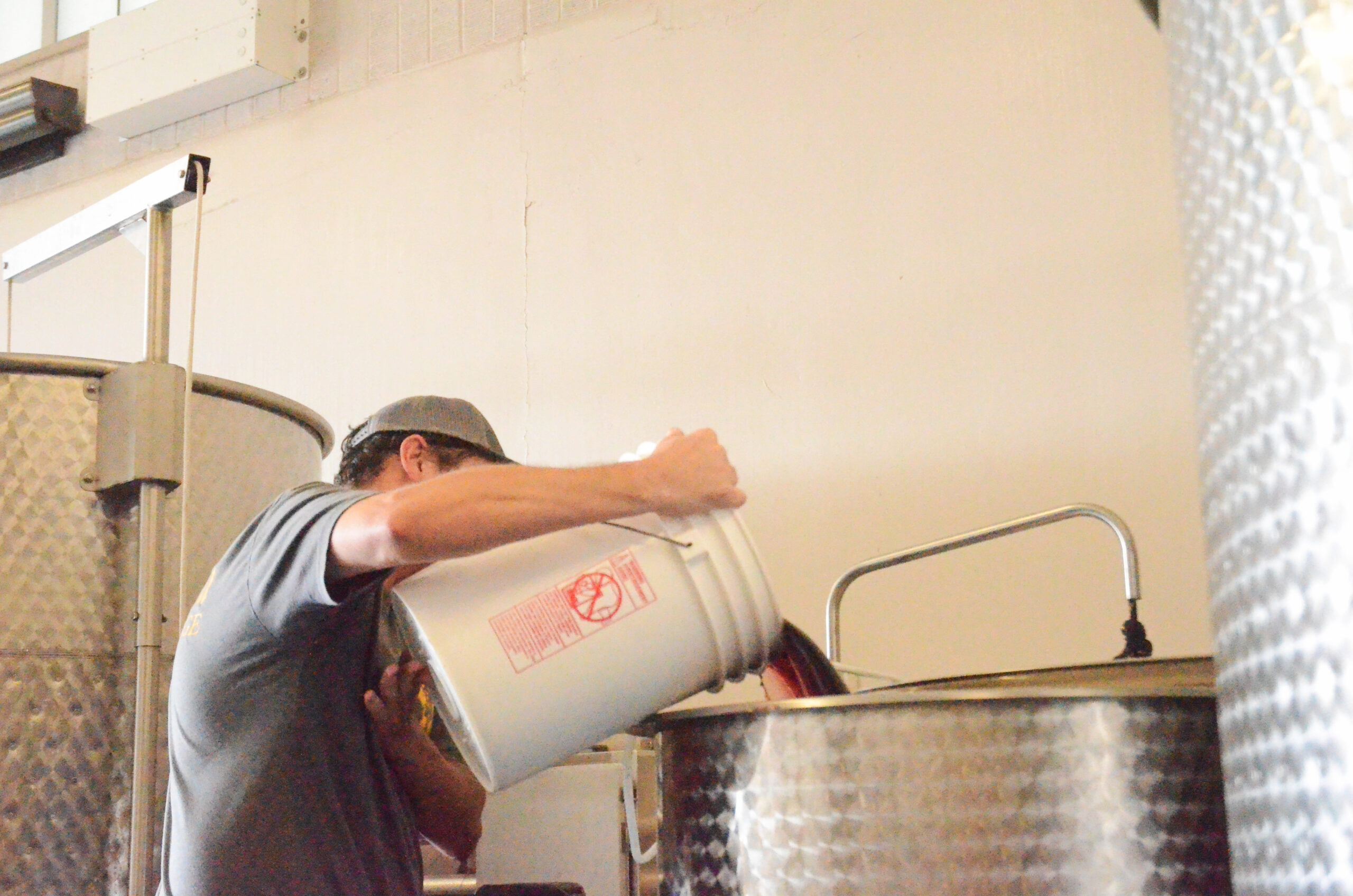
"We’ve got our winewater mixture there," McCluskey explained as the initial cloudy, diluted liquid was pumped into a waste bucket. "We’ll actually taste it—and we taste wine frequently during this process, but we spit it out."
Evaluating when the system has fully transitioned from water to pure wine requires sensory analysis. However, the 24YCTA Tannat posed a unique visual challenge. Because Tannat is famous for its thick skins and highly pigmented juice, the liquid turned a deep, dark red almost instantly, even when highly diluted with priming water.
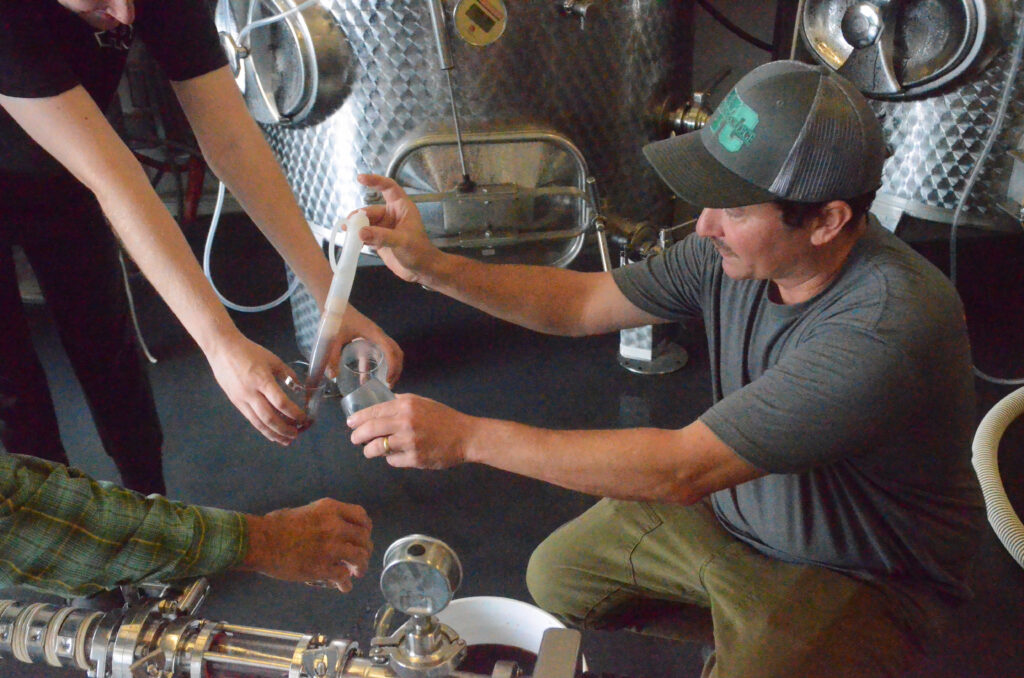
When the mixture appeared visually rich enough to be pure wine, the class paused to taste it. Despite its deep color, the liquid remained watery on the palate.
"I think this wine is a little more deceptive because the color itself is so dark," McCluskey noted. "I think normally we would have run more and then just drained it. But the color was so dark it looked like it had turned into wine a little prematurely."
Once the taste profile confirmed that all priming water had been flushed from the lines, the pure, filtered Tannat was routed into a sanitized stainless steel holding tank.
Phase 2: Stabilization and Chemistry
With approximately 58 gallons of clarified Tannat successfully filtered, the winemaking team moved to the stabilization phase. To protect the vintage from premature aging and microbial spoilage, a calculated, minimal dose of sulfur dioxide ($SO_2$) was added to the tank. Sulfur dioxide acts as both an antimicrobial agent and an antioxidant, preserving the fresh fruit characteristics of the wine and ensuring shelf-life stability once sealed in glass.
Phase 3: The Mechanical Ballet of the Bottling Line
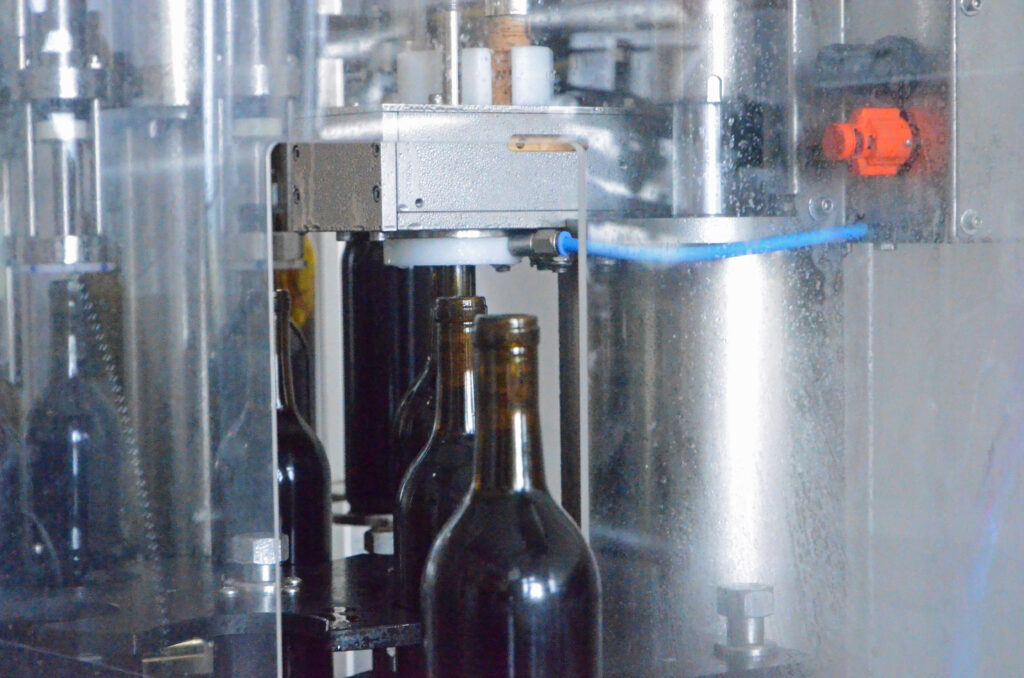
Once stabilized, the wine was pumped directly to the automated bottling line. The bottling machine operates as a synchronized, three-stage assembly line:
- Oxygen Displacement (Nitrogen Sparging): Empty glass bottles moved along a conveyor belt and were first injected with food-grade nitrogen gas. This step displaces ambient oxygen inside the bottle, preventing oxidation which can destroy the delicate aromatic compounds of the wine.
- Precision Filling: The bottles were filled to an exact volume with the filtered Tannat.
- Vacuum Corking: Immediately after filling, the machine pulled a vacuum in the neck of the bottle to remove any residual oxygen before mechanically pressing a natural cork into place.
By the end of the session, the small class had successfully processed, filled, and corked nearly 20 cases of wine (approximately 240 bottles).
Phase 4: The Monsoon Factor and the Labeling Delay
While the bottling line operated flawlessly, the final step of the packaging process—labeling—had to be postponed. July in northern Arizona is characterized by the annual summer monsoon season, which brings sudden storms and high humidity. On July 18, the ambient humidity in the cellar caused immediate condensation to form on the cold glass exteriors of the freshly filled bottles.
"We’re not labeling today," McCluskey stated. "For this particular one, we don’t have a label this year. But that’s not it. I wouldn’t even label today, even if we could, because of the humidity."
McCluskey drew on his past winemaking experiences in other states to explain how regional climates dictate cellar operations. "In Missouri, when we were bottling, we always had to heat up the wine a little. We had to get the wine to about 68 degrees before the labels would even stick."
The unlabeled bottles were carefully boxed and transferred to temperature-controlled storage, where they will remain until the humidity subsides and labels can be securely applied.
Supporting Data: The Science, Terroir, and Regional Metrics
The operations at the Southwest Wine Center reflect the broader growth of Arizona’s wine industry. The success of varietals like Tannat highlights the unique environmental conditions of the region.
Verde Valley AVA at a Glance:
- Established: November 9, 2021 (by the TTB)
- Status: Arizona's 3rd American Viticultural Area
- Commercial Vineyards: 24 active operations
- Core Grape Varieties: Tannat, Syrah, Grenache, Mourvèdre
The Tannat Grape in Arizona Terroir
Tannat is a red wine grape historically associated with the Madiran AOC in South-West France and, more recently, as the flagship grape of Uruguay. It is characterized by:
- High Tannin Content: Provides excellent structure, body, and aging potential.
- Thick Skins: Offers natural resistance to rot and fungal diseases, making it highly resilient.
- Deep Pigmentation: Yields wines of intense color, which explains the visual deception experienced by the students during filtration.
In the high-desert climate of Arizona’s Verde Valley, Tannat thrives. The grape benefit from the region’s intense solar radiation and dramatic diurnal temperature shifts (often swinging up to 30 degrees Fahrenheit between day and night). These conditions allow the grape to achieve optimal phenolic ripeness while retaining the natural acidity required for balanced, premium wines.
The Verde Valley AVA
The Southwest Wine Center is located within the Verde Valley American Viticultural Area (AVA), which was officially designated on November 9, 2021, by the federal Alcohol and Tobacco Tax and Trade Bureau (TTB). This designation recognizes the valley’s distinctive soil composition (derived from volcanic and limestone sources), elevation (typically between 3,000 and 5,000 feet), and microclimate.
Currently, the Verde Valley AVA is home to 24 commercial vineyards, making it a critical economic driver for regional tourism and agricultural development.
Voices from the Cellar: Pedagogical Approaches and Student Perspectives
The educational philosophy of the Southwest Wine Center centers on active participation. Rather than observing from a distance, students are expected to take full ownership of production decisions under professional supervision.
Jason McCluskey’s Global Journey
Instructor Jason McCluskey brings a wealth of international experience to Yavapai College. A native of Phoenix, McCluskey began his professional wine journey in 2008. His career includes academic study in New Zealand—a country renowned for its cool-climate viticulture and state-of-the-art enology programs—followed by practical winemaking roles in the premier growing regions of Oregon and the challenging continental climate of Missouri.
Returning to Arizona to join Yavapai College earlier this year, McCluskey has championed a highly tactile teaching style. "The students do everything," McCluskey said. "But I’m here to make sure that they’re doing it right."
For McCluskey, small class sizes are highly beneficial. While enrollments can reach up to 20 students, the intimate summer cohort of four allowed for one-on-one instruction and a relaxed pace. "Days like this are kind of nice, though, where our workload’s pretty low, so there’s no huge rush. Especially ramping up towards harvest, there’s a lot to do. We’ve gotten a lot done."
Student Integration into the Local Industry
To complete their certificate or degree programs at Yavapai College, students must complete a minimum of 20 practicum hours. These hours are designed to bridge the gap between academic theory and commercial reality, often through internships or volunteer work at local commercial estates.
Jacob Schoen, a second-year viticulture student, completed his required hours by working at Cove Mesa Vineyard in Cornville, Arizona. Cove Mesa, like many boutique vineyards in the Verde Valley, operates with a lean permanent staff of about three people. During high-intensity bottling days, these local estates rely on skilled student volunteers like Schoen to scale up their operations.
This mutually beneficial arrangement provides local wineries with competent, educated labor during critical production windows, while giving students exposure to different styles of equipment, cellar layouts, and business philosophies.
Strategic Implications: Cultivating the Future of Southwest Viticulture
The activities at the Southwest Wine Center represent the maturation of Arizona’s wine industry. Once dismissed as too hot or dry for premium viticulture, the state has proven that its high-elevation deserts can produce world-class wines.
Economic & Educational Pipeline:
[Yavapai College SWWC] ➔ [Skilled Student Labor] ➔ [24 Local AVA Vineyards] ➔ [Premium Arizona Wine Industry]
By standardizing technical training, Yavapai College helps local vineyards reduce their reliance on out-of-state consultants and cellar hands. Graduates of the program are equipped to step directly into roles as vineyard managers, assistant winemakers, and laboratory technicians.
Furthermore, the wine produced at the Southwest Wine Center serves a dual purpose. Beyond its primary role as an educational tool, the finished wine is sold directly to the public through the center’s tasting room and dedicated wine club. The revenue generated from these sales is reinvested into the program, funding modern equipment and expanding research opportunities.
As the industry prepares for the upcoming harvest season, the successful bottling of the 24YCTA Tannat stands as a testament to the viability of high-desert viticulture. Through structured education, regional collaboration, and a focus on grape varieties suited to the local terroir, the Southwest Wine Center continues to elevate Arizona’s standing on the national wine stage.
