

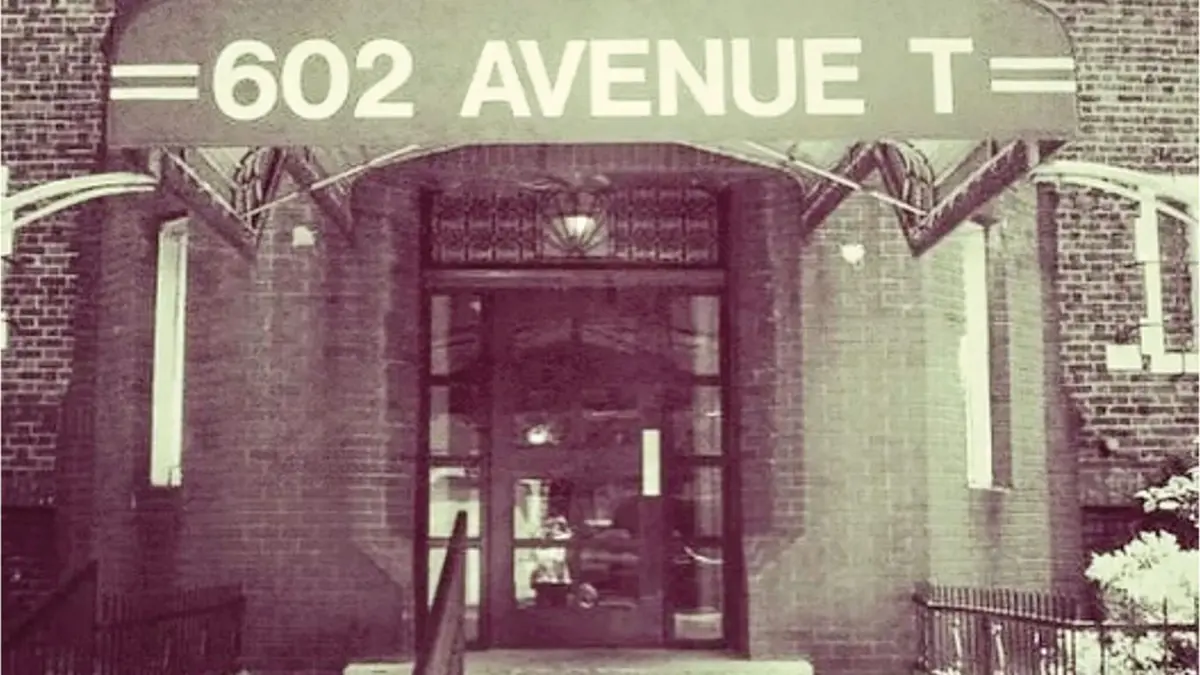
Main Facts: A Reluctant Return and an Unexpected Education
In the autumn of 1991, following the collapse of her first serious romantic relationship, author and culinary writer Elissa Altman found herself at a profound crossroads. Stripped of her independence and priced out of Manhattan’s pulsing cultural hubs, she made a reluctant pilgrimage across the boroughs to 602 Avenue T near Coney Island. There, she moved into the long-vacant apartment of her late grandmother—a time capsule of mid-century domesticity that her family had quietly maintained for decades.
The apartment, located an exhausting ninety-minute subway ride from Greenwich Village, was a safety net designed for familial emergencies. Altman’s father and aunt had continued paying the $142 monthly rent—a rate frozen in time since the family first took up residence in 1933—guarding against divorce, destitution, or personal collapse. Altman checked every box on that grim checklist.
Upon moving her in, her father handed her two artifacts that would define the next chapter of her life: a one-liter bottle of Bombay Sapphire gin and a chilling, unambiguous warning: "Don’t turn on the oven. It could explode."
What followed was not merely a lesson in stove-top resourcefulness, but an accidental masterclass in philosophy. Cut off from the baking and roasting techniques that anchored her culinary identity, Altman turned to the neighborhood shops of Avenue U. There, under the watchful eyes of neighborhood matriarchs, she learned the foundational Zen principle of the "beginner’s mind"—a lesson that transcended the kitchen and ultimately provided a blueprint for navigating the emotional architecture of survival, aging, and human resilience.
Chronology: From Late-Eighties Culinary Hedonism to the Quiet Streets of Brooklyn
The Hedonistic Heights: New York’s Late-Eighties Food Boom
To understand the claustrophobia of Altman’s 1991 exile, one must first understand the intoxicating culinary world she left behind. Just two years earlier, in the late 1980s, Altman was deeply immersed in New York City’s vanguard food scene. By day, she worked at the legendary specialty food emporium Dean & DeLuca; by night, she attended cooking school; and on weekends, she catered out of a cramped walk-up apartment.
It was an era of delicious contradictions. The New York food world was experiencing a high-velocity collision between hyper-modern gastronomy—characterized by vertical plating, spun-sugar nests, and early sous-vide circulators—and a rustic rebirth of Italian cucina povera (peasant cooking).
Walking the aisles of Dean & DeLuca offered a surreal tableau of culinary gear:
- Precision kitchen tweezers and bird’s-beak knives for carving intricate radish roses.
- Glossy black charger plates the size of Pontiac steering wheels.
- Traditional French rolling pins and rusting, old-school Sabatier chef’s knives that demanded constant, meticulous care.
The Fall: Exile to Avenue T
By 1991, however, the professional food world had receded. Altman had transitioned back into publishing, and the glittering array of culinary tools was replaced by the stagnant air of her grandmother’s apartment at 602 Avenue T. The space had remained virtually unchanged since 1933, retaining the distinct ghost-echoes of Altman’s childhood Sunday afternoons in the 1960s and 70s.
Her primary coping mechanism—cooking—was rendered instantly obsolete by the volatile, hazardous iron beast in the kitchen. Unable to bake a loaf of bread or roast a piece of meat without risking structural disaster, Altman was forced to rethink her relationship with nourishment entirely.
The Discovery of Avenue U
Too far to walk to the traditional kosher butchers where her grandmother once sourced briskets and challah, Altman wandered two blocks in the opposite direction toward Avenue U. There, she encountered a vibrant, insular Italian enclave. Both sides of the street were lined with hyper-specialized, privately owned micro-shops:
- A salumeria curing meats.
- A macelleria butchering cuts to order.
- A formaggeria stacked with wheels of aged cheese.
- An alimentari stocking pantry staples.
- A neighborhood fishmonger, a greengrocer, and a local wine shop.
It was here, amidst the hum of daily Brooklyn commerce, that Altman’s re-education began.
Supporting Data: The Economics of Rent Control and Neighborhood Resilience
| Metric / Detail | Historical Context | Significance to the Narrative |
|---|---|---|
| Address | 602 Avenue T, Brooklyn, NY | A temporal anomaly near Coney Island, untouched since 1933. |
| Monthly Rent | $142.00 | Maintained by family for nearly 60 years as an emergency safety net. |
| Commute | 1.5 hours to Greenwich Village | Geographically and socially isolated from Altman’s professional and social circles. |
| Culinary Shift | Dean & DeLuca (Manhattan) to Avenue U (Brooklyn) | Transition from elite, trend-chasing gastronomy to hyper-local, daily subsistence cooking. |
| Duration of Stay | Approximately 18 months (1991–1993) | The window during which Altman internalized the lessons of the "beginner’s mind." |
The economic realities of twentieth-century New York played an invisible yet crucial role in Altman’s narrative. The preservation of the Avenue T apartment for nearly six decades highlights a bygone era of rent stability and familial safety nets—mechanisms that shielded working-class families from the relentless displacement of the city’s real estate market.
Similarly, the micro-economy of Avenue U—comprising independent grocers, butchers, and cheesemongers—represented a vanishing model of food distribution. Rather than purchasing mass-produced goods once a week at a suburban supermarket, the neighborhood’s residents engaged in daily, transactional rituals of acquisition. One bought what was fresh that morning, cooked it that evening, and repeated the cycle the following day.
Official Responses and Cultural Encounters: The Wisdom of the Grandmothers
The bridge between Altman’s high-stress, anxiety-ridden publishing life and her culinary rebirth was forged not in a classroom or a cookbook, but on the sidewalk of Avenue U.
On her first shopping trip, clutching a basket containing a sprouting head of broccoli, a loaf of semolina bread, and a single fig, Altman found herself surrounded by an informal committee of neighborhood matriarchs. Dressed entirely in black, purse-lipped, and radiating sharp skepticism, they inspected her basket.
"What you gonna make with that?" one demanded.
Stammering, Altman confessed her culinary paralysis and explained the terrifying reality of her grandmother’s explosive oven. The women laughed—a collective dismissal of bourgeois anxiety.
"You don’t need no oven," they told her, cutting straight to the heart of the matter. "You need to think like a baby, not like a robot."
One woman seized a pencil and a piece of brown butcher’s paper from the clerk, scribbling a rapid-fire list before thrusting it into Altman’s hands with an authoritative command: "Start here."
The list was simple, uncompromising, and immediate:
- Olive oil
- Parmigiano-Reggiano
- Porcini mushrooms
- Garlic
- Butter
- Bread
- Sage
- Ricotta
- Eggs
- Lasagna sheets
With a final eye-roll, the woman dismissed her. It was an unofficial induction into a lineage of practical wisdom—one that bypassed culinary pretension in favor of pure, instinctual survival.
Implications: The Zen of the Everyday and the "Beginner’s Mind"
For the next eighteen months, Altman shopped daily on Avenue U, slowly decoding the advice of the neighborhood grandmothers. She realized that "thinking like a baby" was the Western vernacular for a concept deeply embedded in Eastern philosophy: the shoshin, or "beginner’s mind," coined by the Japanese Zen monk Shunryu Suzuki (1904–1971).
In his seminal text, Zen Mind, Beginner’s Mind, Suzuki describes this state as one of radical openness, unburdened curiosity, and total freedom from preconception:
"In the beginner’s mind there are many possibilities, but in the expert’s there are few."
The women of Avenue U had never read Suzuki. They wore no robes and chanted no mantras. Yet, every sigh, every stomp, and every scribbled list embodied the purest expression of Zen philosophy. They approached food—and life—without the paralyzing weight of past trauma or future assumptions.
Using that initial scrap of butcher’s paper, Altman cooked her first stove-top meal in the condemned kitchen: porcini-stuffed ravioli bathed in brown butter and sage. Eating it, the philosophical realization crystallized:
- Do not make assumptions about what you can and cannot do.
- Treat every kitchen as an undiscovered country.
- Treat every onion as if it were the first onion ever grown.
- Shop daily, honor what is fresh, and cook it in the present moment.
Writing as Survival
When Altman finally packed her belongings and handed the keys back to her father in 1993—releasing a lease that had bound her family to Avenue T for sixty years—she carried far more than memories out of Brooklyn.
Looking back across her career—spanning cooking school, Dean & DeLuca, editing cookbooks, and writing memoirs of comfort and hunger like Poor Man’s Feast—Altman arrived at a stunning realization: she had never truly been writing about food.
She had been writing about survival. About the messy, magnificent art of living.
Whether applied to cooking, romance, financial ruin, creative output, aging, caregiving, or emotional trauma, the beginner’s mind remains the ultimate anchor. It is the core of human vulnerability—the discomfort, the flailing, and the maddening, gorgeous imperfection of being human.
As the oppressive heat of summer gives way to the crisp, fifty-nine-degree mornings of September, the light shifts, and porcini mushrooms reappear in local markets. The transition demands that we let go of the safety rails of the past. For every autumn brings a new season, and every onion, if we are paying attention, is entirely new.
