

By Environmental Policy & Public Lands Desk
Updated September 17, 2026
Main Facts: The Rush for Minerals on Newly Opened Public Lands
The fierce, decades-long battle over the fate of America’s public lands has entered a volatile new chapter. Fresh mapping data reveals that mining interests have officially filed 16 new claims within the boundaries of the recently reduced Bears Ears National Monument in southeastern Utah.
The filings, recorded by the San Juan County Recorder’s office, arrived on September 11—precisely the day that the Trump administration’s controversial executive proclamation shrinking the monument took formal effect. Conservationists, legal experts, and Indigenous advocates warn that heavy machinery could begin breaking ground in these fragile, culturally rich ecosystems within a matter of months.
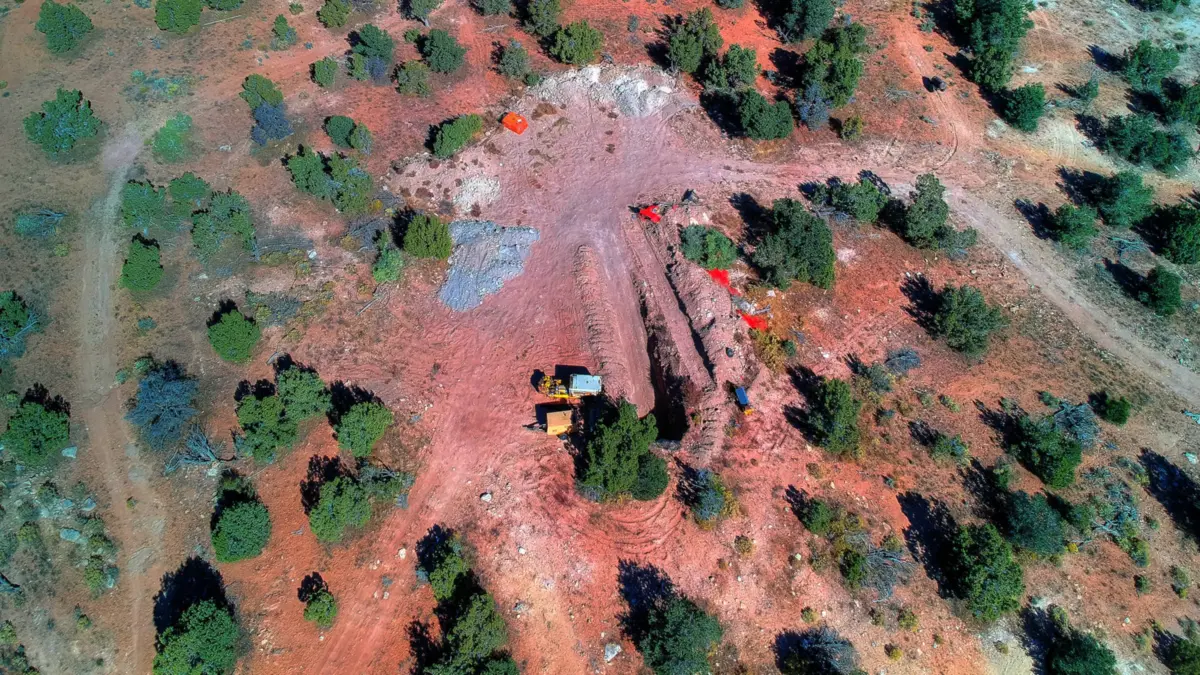
The claims are concentrated in two distinct, ecologically sensitive zones within the disputed monument. Three of the claims, filed by prospector George W. Schultz, are situated in the Lockhart Basin within the northern reaches of Bears Ears. The remaining 13 claims were filed by Kimmerle Mining and are clustered in the central-eastern portion of the monument. Notably, two of Kimmerle’s filings represent direct adjustments and attempts to revive the infamous "Easy Peasy Mine"—a controversial extraction site that was previously established following the initial reduction of the monument in 2017, only to be closed, dismantled, and reburied after the Biden administration fully restored the boundaries in 2021.
These 16 claims sit squarely on public lands that were stripped of federal protection in July. At that time, President Donald Trump signed an executive order slashing both Bears Ears and Grand Staircase-Escalante National Monuments by more than 90 percent. The aggressive boundary rollbacks have ignited immediate, high-stakes litigation, pitting a coalition of environmental organizations, tribal nations, and outdoor brands against the federal government in a legal war that could permanently alter the interpretation of the Antiquities Act and reshape the future of America’s national conservation system.
Chronology: A Decade of Upheaval at Bears Ears
To understand how mining companies are moving so swiftly to stake claims on previously protected public lands, one must examine the turbulent timeline of the Bears Ears region over the past ten years:
- December 2016: Following years of intense lobbying by a historic coalition of five Native American tribes (the Hopi Tribe, Navajo Nation, Ute Mountain Ute Tribe, Pueblo of Zuni, and Ute Indian Tribe), President Barack Obama designates the 1.35-million-acre Bears Ears National Monument using the authority granted under the 1906 Antiquities Act. The designation aims to protect sacred ancestral sites, prehistoric dwellings, and delicate desert ecosystems.
- December 2017: President Donald Trump visits Utah and signs an executive proclamation reducing the size of Bears Ears by roughly 85 percent, dividing it into two smaller, isolated units (Shash Jaa and Indian Creek). Shortly after, mining prospectors—including Kimmerle Mining—rush to stake claims, leading to the development of exploratory sites like the Easy Peasy Mine.
- January 2021: President Joe Biden takes office and signs an executive order directing the Department of the Interior to review national monument boundaries. In October 2021, Biden officially restores Bears Ears to its original 1.35-million-acre footprint. Mining operations are halted, and disturbed sites, including the Easy Peasy Mine, are ordered closed and reburied.
- 2023: Frustrated by the restoration, a coalition of monument opponents—including Kimmerle Mining managing member Kyle Kimmerle—files a federal lawsuit against the Biden administration. The plaintiffs argue that expanding the monument beyond its 2017 boundaries violated the Antiquities Act’s mandate to restrict monuments to the "smallest area compatible with proper care." While a lower district court initially dismisses the suit, an appeals panel reverses the decision in June 2025, breathing new life into the anti-monument legal challenge.
- July 2026: President Trump issues a new executive order drastically scaling back both Bears Ears and Grand Staircase-Escalante by more than 90 percent, reopening millions of acres of public land to mineral entry and leasing.
- September 11, 2026: The Trump administration’s proclamation officially takes effect. Within hours, mining interests file 16 new claims across the newly unprotected acreage in San Juan County.
- September 17, 2026: Conservation groups, including the Southern Utah Wilderness Alliance (SUWA), confirm the filings through county mapping data, warning that industrial mining activity could resume within months.
Supporting Data: Scale, Scope, and Regulatory Realities
While the total number of claims—16 in total—might initially sound modest, conservationists stress that the geographical realities of federal mining law could allow these footprints to expand dramatically.
According to data analyzed from the San Juan County Recorder’s office and insights provided by SUWA staffers who reviewed court documents and mapping data, public land claims are frequently filed in standardized 160-acre administrative blocks. However, the physical surface disturbances associated with individual lode or placer mining claims are typically smaller, generally ranging between one and 20 acres per claim in the early stages of exploration and extraction.
Despite these seemingly compact initial footprints, legal and environmental experts emphasize several compounding risk factors:
- Iterative Expansion: Miners frequently amend and expand their claims as exploratory drilling reveals viable deposits of minerals, precious metals, or critical energy materials.
- Cumulative Industrial Footprint: The presence of multiple active claims across both the northern Lockhart Basin and the central-eastern sectors fragments contiguous wildlife corridors and industrializes previously pristine wilderness.
- Regulatory Hurdles: Before any physical digging or road-building can commence, claimants must secure explicit approval from the Bureau of Land Management (BLM). This process ordinarily triggers an environmental assessment under the National Environmental Policy Act (NEPA).
However, public lands advocates point out that under current administration directives favoring domestic mineral production, BLM reviews for claims on newly unreserved public lands may be expedited or streamlined, leaving communities and conservation groups with narrow windows to mount administrative challenges.
Official Responses: Perspectives from Advocates and Litigants
The unfolding crisis at Bears Ears has drawn sharp condemnation from conservation groups and Indigenous advocates, while proponents of resource extraction defend the filings as a rightful assertion of economic liberty and statutory interpretation.
Grant Stevens, communications director for the Southern Utah Wilderness Alliance (SUWA), did not mince words when discussing the legality and ethics of the new claims.
"These are areas that were in the national monuments, and these were areas that should still be protected," Stevens told Backpacker. "What Trump did was illegal. The fear here and in future mining claims is going to be the scale and the impact on the land, the ecosystems, the cultural sites. All of those are very real."
SUWA, alongside a broad coalition of environmental nonprofits, archaeological societies, and corporate allies like outdoor apparel giant Patagonia, is actively prosecuting a major federal lawsuit to invalidate the July presidential proclamation. They argue that the Antiquities Act was designed to give presidents the unilateral authority to protect public lands, not to strip protections away and expose them to industrial development.
Conversely, the legal team representing mining interests views the matter through an entirely different constitutional lens. Kyle Kimmerle and other industry plaintiffs argue that expansive monument designations represent executive overreach that harms local economies, locks up vital resources, and flouts the original intent of the 1906 legislation. Their ongoing litigation contends that past expansions by the executive branch abused the "smallest area compatible" clause of the Antiquities Act, making the recent boundary reductions a necessary correction.
Hanna Larsen, a staff attorney with SUWA, acknowledges that while environmental groups have limited legal standing to challenge the mining claims directly, they are prepared to scrutinize every step of the BLM review process.
"I think seeing action on the ground within a few months is certainly possible," Larsen warned. "While we have few legal avenues to contest the claims themselves right off the bat, we can and will look into our options to oppose BLM approvals once those applications move forward."
Implications: The National Battle Over Public Lands
The rush to stake mining claims in Bears Ears is much more than a localized dispute over 16 plots of land in southeastern Utah; it is a bellwether for the future of federal conservation policy across the United States.
If the courts ultimately uphold the Trump administration’s sweeping rollback of Bears Ears and Grand Staircase-Escalante, the legal precedent could permanently weaken the Antiquities Act. Success for the administration would establish that any future president possesses the unchecked authority to shrink or dismantle national monuments established by their predecessors, effectively transforming America’s protected public heritage into a political football subject to every change in executive administration.
For the ecosystems and cultural landscapes of Bears Ears, the stakes could not be higher. The region contains tens of thousands of invaluable Native American cultural resources, including ancient cliff dwellings, petroglyphs, burial sites, and traditional use areas that are sacred to modern tribal nations. Industrial mining brings heavy traffic, road construction, toxic tailings, and landscape scarring that cannot be easily mitigated in an arid desert environment—even if a future administration were to attempt another boundary restoration.
As legal briefs pile up in federal courtrooms and mapping technicians continue to monitor San Juan County recorder files, the countdown has begun. With mining companies poised to break ground and environmental lawyers preparing for the fight of their lives, the coming months will determine whether the canyons and mesas of Bears Ears remain a protected sanctuary for future generations or fall victim to the roar of industrial excavators.
