


By CleanTechnica Feature Report
A walk down the gentle slope toward the East Falmouth harbor feels much like a stroll through any other historic maritime village on Cape Cod, Massachusetts. Classic one- and two-story homes stand proudly with weathered-shingle facades, pleasure craft and small commercial fishing boats rest quietly in gravel driveways, and a familiar, comforting aroma of damp seaweed and salt lingers on the warm coastal breeze.
Yet, hidden beneath the surface of this picturesque New England aesthetic lies a quiet environmental revolution.
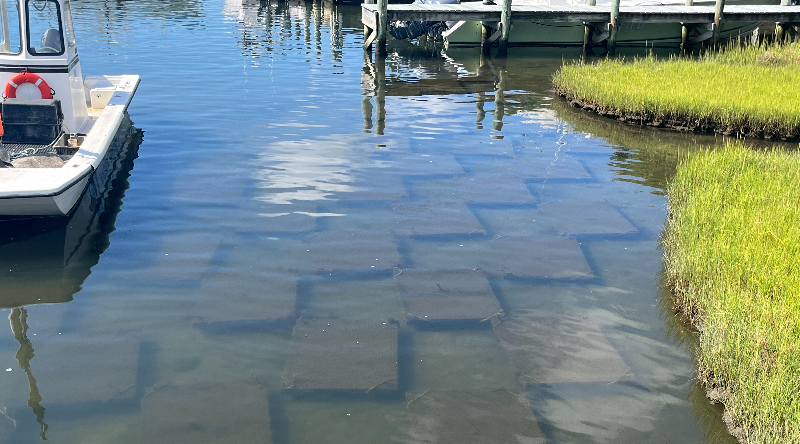
Tucked into the shimmering waters of Waquoit Bay and its surrounding estuaries is an expansive, highly organized aquaculture network. While many casual observers associate shellfish farming strictly with relieving pressure on overexploited wild fisheries, the reality on this upper Cape peninsula is far more complex and vital. Here, oyster farming has evolved into a frontline defense mechanism for ecological restoration, municipal regulatory compliance, and local economic revitalization.
Main Facts: The Intersection of Aquaculture and Ecosystem Health
For towns across Cape Cod, the pressure to restore degraded coastal water quality has reached a critical juncture. Local municipalities face stringent regulatory, environmental, and legal mandates—notably driven by the federal Clean Water Act and state-level Total Maximum Daily Load (TMDL) requirements. Excessive nutrient loading, primarily nitrogen originating from wastewater and septic systems, has wreaked havoc on coastal ecosystems, fueling algae blooms, depleting dissolved oxygen, and suffocating marine life.
Traditionally, municipalities turn to massive, multi-million-dollar civil engineering projects like central sewering to combat nitrogen pollution. However, the costs are astronomical, and the timelines are often measured in decades. Seeking less costly, highly effective, and environmentally sensible management options, towns like Falmouth have pioneered an alternative: municipal and private shellfish aquaculture.
- The Core Mechanism: Oysters are natural filter feeders. As they pump water through their gills to feed on microscopic algae, they ingest and bioaccumulate nitrogen. When the mature oysters are harvested and removed from the water, that nitrogen is permanently stripped from the local ecosystem.
- Cost Efficiency: Data collected by Falmouth’s Water Quality Management Committee highlights a staggering economic disparity. Mitigating nitrogen via shellfish aquaculture is exponentially cheaper than installing advanced, alternative (I/A) denitrifying septic systems or urine-diverting infrastructure.
- Economic Engine: The Massachusetts shellfish aquaculture sector has grown into a thriving $28 million industry. Falmouth’s program turns a profit for the town, utilizing leasing fees to purchase new seed stocks while providing lucrative commercial opportunities for local growers.
Chronology: From Concept to a Quadrupled Program
The path toward integrating oyster farming into municipal infrastructure planning was forged over decades of trial, regulatory strategizing, and community buy-in.
2018: Laying the Groundwork
Faced with escalating water quality obligations, the Falmouth Select Board tasked the Water Quality Management Committee with investigating non-traditional nitrogen-removal methods. That same year, a landmark study by Roger Williams University detailed how Falmouth was developing a pioneering Rotational Aquaculture Plan. This blueprint aimed to establish limited private and municipal shellfish farming in local estuaries to meet Clean Water Act obligations while creating economic benefits for the community.
To streamline the complicated permitting process, the NOAA Sea Grant Aquaculture Extension and Technology Transfer program introduced MA-ShellfAST. This online geographic information system (GIS) mapping tool provided growers and regulatory agencies with critical environmental, legal, and municipal data layers, making it significantly easier to site farms responsibly.
2020–2024: Pilot Programs and Expansion
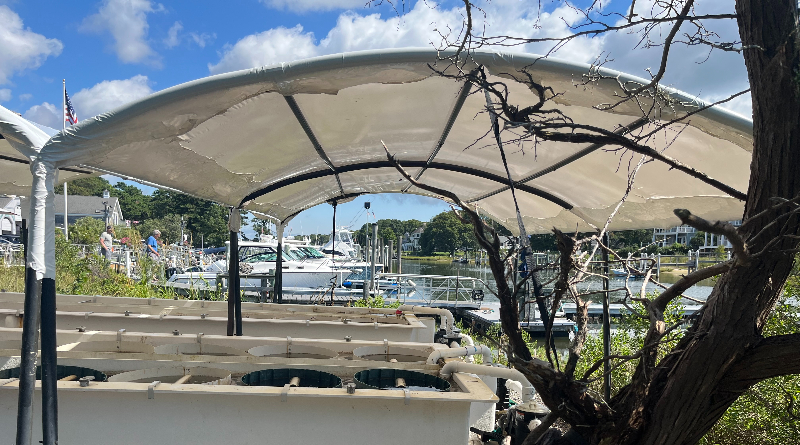
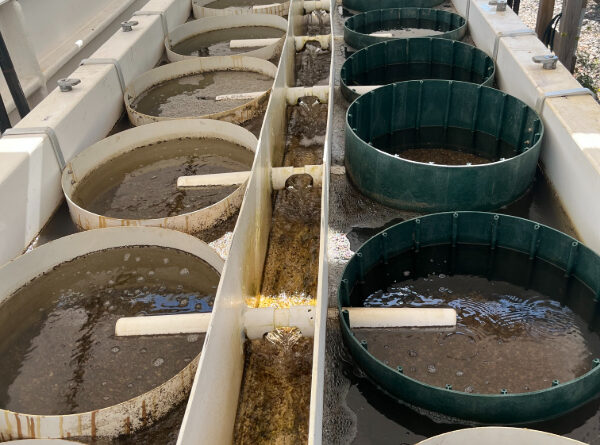
Local enterprises quickly capitalized on the framework. In 2020, Ward Aquafarms deployed its first round of oysters into the Eel River near Washburn Island. Utilizing land-based upwellers during the fragile nursery phase, the operation successfully scaled up once the juveniles reached a size robust enough for open-water grow-out bags.
Simultaneously, initiatives like the Cape Cod Oyster Company leveraged the nutrient-rich waters of the Seapit River—fed by freshwater flows from the Moonakis and Little Rivers mixing with Vineyard Sound tides—to cultivate prime commercial crops. Monitoring data collected between 2021 and 2024 in the Eel River definitively proved that the deployed shellfish were pulling their weight, removing nitrogen quantities equivalent to the output of dozens of households.
2025: Rapid Scaling
By mid-2025, the program entered an aggressive growth phase. R. Charles Martinsen III, Falmouth’s Deputy Director, announced to the Water Quality Management Committee that the town’s aquaculture footprint was poised to more than quadruple. Plans were set in motion to expand the program from its initial footprint to cover between 80 and 140 acres, scaling production targets to an astounding 1.3 million oysters.
Supporting Data: The Economics and Science of Nitrogen Removal
To understand why Falmouth and other Cape Cod towns are doubling down on aquaculture, one must examine the hard numbers presented by municipal researchers and committees.
In presentations before the Water Quality Management Committee, member Thomas Duncan detailed the comparative costs of nitrogen mitigation. Focusing on data gathered from the Eel River project, Duncan demonstrated that the resident shellfish population successfully removed an amount of nitrogen equivalent to the waste generated by 26 single-family homes.
When translated into capital expenditure, the efficiency of aquaculture becomes glaringly apparent:
- Urine-Diverting Systems: Approximately $2,088 per equivalent unit of nitrogen removed.
- Innovative/Alternative (I/A) Septic Systems: Approximately $1.17 million per equivalent unit.
- Shellfish Aquaculture: Offers a fraction of these capital costs while simultaneously generating marketable food commodities and municipal revenue.
The economic model is entirely self-sustaining. Commercial growers lease space from the town, paying roughly $19,600 per farm annually. Additionally, growers can rent specialized growing gear—such as floating bags and cages—directly from the municipality.
Rather than disappearing into a general fund, these lease revenues are funneled into a dedicated revolving account specifically earmarked for purchasing subsequent generations of shellfish seeds. This creates a virtuous cycle where environmental remediation directly funds its own continuation.
Official Responses and Environmental Stewardship
The integration of commercial enterprise with municipal ecological goals requires unprecedented cooperation between local government, federal science agencies, and commercial harvesters.
The Waquoit Bay National Estuarine Research Reserve—spanning 2,800 acres of open water, salt marshes, barrier beaches, and forests—serves as the epicenter for these collaborative efforts. Because Waquoit Bay represents a classic shallow northeastern estuary, its pristine yet nitrogen-stressed ecosystem provides an ideal living laboratory. For over thirty years, the Reserve has generated long-term ecological datasets, making it one of the most rigorously studied marine environments in the Northeast.
Municipal leaders emphasize that aquaculture is viewed not as a standalone silver bullet, but as a crucial pillar within a multi-faceted management strategy. As Deputy Director R. Charles Martinsen III noted during budget and planning hearings, oyster farming works in tandem with centralized sewering, upgraded septic mandates, and public education campaigns to help the town satisfy state-mandated Total Maximum Daily Load limits.

Furthermore, technological tools like MA-ShellfAST have transformed regulatory resistance into collaborative planning. By allowing prospective farmers to pre-screen sites for biophysical constraints, navigational conflicts, and environmental sensitivities before submitting formal applications, the tool has streamlined the permitting process while protecting sensitive marine habitats.
Broader Implications: A Blueprint for Coastal Communities
The success of Falmouth’s aquaculture expansion carries profound implications well beyond the shores of Cape Cod. Coastal municipalities worldwide face a compounding crisis: rising sea temperatures, intense nutrient runoff, failing legacy septic infrastructure, and strict environmental regulations.
What is happening in Waquoit Bay and Falmouth’s various river networks demonstrates that economic enterprise and ecological restoration do not have to be mutually exclusive. By treating commercial shellfish farming as a public utility—a living, breathing biological filtration system—coastal towns can turn a traditional environmental liability into a thriving local asset.
As local resident Jeanne Concannon, who introduced visiting researchers to the area’s vibrant farming network, aptly summarizes: the solutions to our most complex environmental challenges are sometimes hiding right beneath our feet—or, in this case, sitting right on our half-shell plates.

The next time you enjoy a locally farmed Cape Cod oyster at a seaside tavern, remember that you are participating in more than just a culinary tradition. You are actively contributing to the restoration, preservation, and revitalization of America’s fragile coastal estuaries.
