

By James Gritz (Originally published in the Substack newsletter Ordinary Mind; enriched and expanded for global syndication)
Main Facts
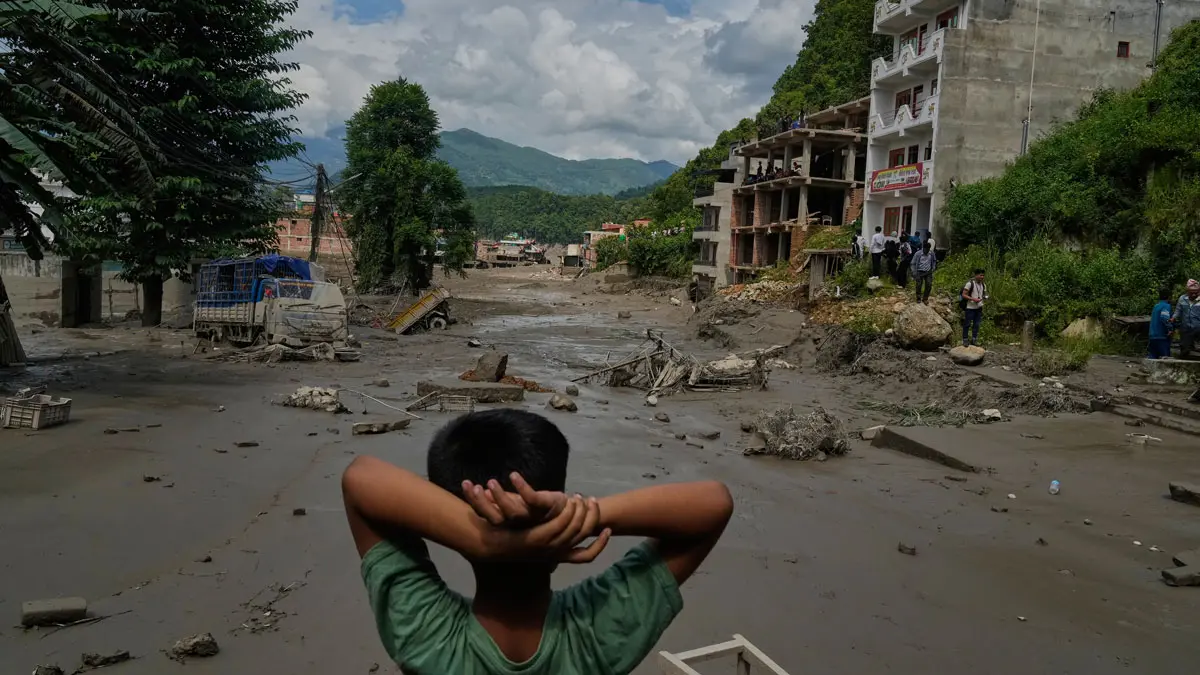
On the morning of August 26, a catastrophic high-altitude environmental disaster struck the roof of the world. A massive glacier gave way above Kyirong on the Tibetan side of the Himalayan border, precipitating a colossal wall of water, ice, and heavy debris. The torrent tore violently down through the rugged terrain, following the path of the Bhote Koshi River before surging into the Trishuli River basin.
In its wake, the flash flood obliterated entire communities, sweeping away vital bridges, rural infrastructure, and major hydropower installations across the Rasuwa and Nuwakot districts of Nepal.
According to the latest figures released by Nepal’s National Disaster Risk Reduction and Management Authority (NDRRMA), the human toll is staggering. More than 350 people have been confirmed dead in Nepal alone, while over 800 individuals remain unaccounted for, leaving families and rescue workers in a desperate race against time. Across the border in Tibet, initial reports confirm at least three fatalities, with hundreds more missing.
Among the missing are significant numbers of pilgrims journeying toward Mount Kailash and Lake Mansarovar. These sacred sites hold profound spiritual significance for millions globally, revered as holy ground by Hindus, Buddhists, Jains, and Bönpo adherents alike.
For those familiar with the region—particularly the global community of Tibetan Buddhists—the affected geography is far more than abstract coordinates on a map. Rasuwa and Nuwakot sit at the heart of historical transit and spiritual routes. For decades, Nepal has served as a central sanctuary and vibrant hub for Tibetan Buddhism in exile, making the devastation in these mountain valleys feel deeply personal to practitioners and teachers worldwide.
Chronology of the Disaster
Understanding the swiftness and ferocity of the August 26 event requires examining the timeline of the collapse and its immediate aftermath:
- Pre-Dawn / Early Morning, August 26: Instability high in the mountains above Kyirong, Tibet, reaches a critical threshold. A massive glacial section shears off, sending an unprecedented volume of liquefied ice, rock, and mud hurtling downward.
- Morning, August 26: The torrent crosses the international border, slamming directly into the upper reaches of the Rasuwa district in Nepal. The sheer volume of the flash flood overpowers natural riverbanks, turning the Bhote Koshi into a violent battering ram.
- Mid-Day, August 26: As the deluge progresses southward, it engulfs settlements, washes out connecting roadways and suspension bridges, and severely damages multiple hydropower stations, cutting off local communications and power grids. The floodwaters continue their destructive march into the Nuwakot district before feeding into the swollen Trishuli River.
- August 27: Emergency response teams begin pushing into the hardest-hit valleys. Dramatic footage released by the Nepal Red Cross Society and broadcast internationally via outlets like Euronews reveals entire landscapes altered, with thick layers of grey silt and debris choking the Rasuwa valley.
- August 28: Spiritual leaders, including the Dalai Lama and Tenzin Wangyal Rinpoche, issue public statements offering prayers, condolences, and early warnings regarding environmental shifts. National authorities update casualty figures as search-and-rescue operations expand despite blocked roads and treacherous terrain.
Supporting Data and On-the-Ground Realities
The sheer scale of the August 26 glacial outburst flood has overwhelmed local disaster response mechanisms, necessitating coordinated international and domestic intervention.
Casualties and Missing Persons
- Confirmed Fatalities (Nepal): 350+
- Missing Persons (Nepal): 800+
- Confirmed Fatalities (Tibet, China): 3
- Missing Persons (Tibet, China): Hundreds unaccounted for, including domestic and international pilgrims.
Infrastructure Impact
- Destroyed Regions: Rasuwa and Nuwakot districts.
- Critical Infrastructure Damaged: Multiple hydropower stations along the Bhote Koshi-Trishuli river corridor, numerous local bridges, regional highways, and remote mountain villages.
- Access Constraints: Landslides, washed-out roads, and compromised communication lines have severely hampered rescue logistics, leaving many high-altitude communities entirely isolated.
Official Responses and Spiritual Condolences
As rescue operations press forward, religious leaders, humanitarian organizations, and governmental bodies have responded with a unified call for compassion, assistance, and long-term environmental vigilance.
Statements from Spiritual Leaders
In a formal statement released on Thursday, August 28, the Dalai Lama addressed the unfolding humanitarian crisis:
"I am saddened to learn of the devastating floods in the Rasuwa region of Nepal and Kyirong in Tibet, resulting in loss of life and heavy structural damage. I pray for all those who have lost their lives, and offer my sympathy and heartfelt condolences to the bereaved and to all those affected by this tragedy."
Crucially, the Dalai Lama also pointed toward broader ecological realities, identifying climate change as a possible underlying catalyst for the glacial collapse.
Similarly, renowned Bön teacher Tenzin Wangyal Rinpoche shared a dedicated prayer with his global community of students:
"May those who have passed rest in peace. May the injured recover swiftly. May grieving families find strength and comfort, and may all those offering help be guided by compassion and wisdom."
Official Government and Institutional Updates
Nepali authorities, operating through the NDRRMA, are coordinating emergency relief efforts on a national scale. Official, real-time updates regarding search, rescue, and rehabilitation statistics continue to be published via the official portal at ndrrma.gov.np.
Implications: Climate Change and the Vulnerability of the Third Pole
While the immediate focus remains on locating survivors, recovering the dead, and providing emergency medical aid, scientists and environmental observers note that the disaster underscores a terrifying vulnerability across the Himalayan region—often referred to as the "Third Pole."
The Himalayas contain the largest reserve of ice outside the polar regions. However, rapidly accelerating global temperatures are causing high-altitude glaciers to melt at unprecedented rates. This warming creates unstable glacial lakes held back by fragile moraine walls, as well as destabilized ice shelves prone to sudden catastrophic failure.
When a glacier gives way like the one above Kyirong, it does not merely cause a seasonal rise in river levels; it triggers glacial lake outburst floods (GLOFs) or massive ice-avalanches that travel at blinding speeds down steep mountain gorges. These events defy traditional seasonal flood patterns, striking without warning during months when communities least expect extreme water surges.
The implications for hydro-dependent nations like Nepal are profound. Entire green-energy projects, designed to power local economies and reduce carbon reliance, face existential threats from upstream glacial hazards. Furthermore, the tragedy highlights the urgent need for cross-border early warning systems between China and Nepal, ensuring that hydrological and meteorological data from the Tibetan plateau can be shared instantly with downstream communities in the Himalayas before a wall of water breaches the border.
How to Help: Verified Relief Channels
For individuals around the world whose lives, spiritual paths, or personal histories have been touched by Nepal, this moment calls for active solidarity. Nepali authorities have issued strict warnings regarding fraudulent online fundraisers and unverified personal accounts capitalizing on public grief. Disaster opportunism moves fast; donors are strongly advised to channel aid exclusively through established, registered organizations.
Several reputable organizations are actively operational on the ground:
- Nepal Red Cross Society: Operating via the International Federation of Red Cross and Red Crescent Societies (IFRC), the organization has unlocked emergency response funding to support boots-on-the-ground rescue and relief work. Learn more at ifrc.org.
- GlobalGiving’s Nepal Flood Relief Fund: This fund directly channels financial resources to trusted local grassroots organizations specializing in search-and-rescue operations, emergency medical care, and temporary shelter. Contribute via globalgiving.org.
- Direct Relief: Having maintained an active support network within Nepal’s health system since 2009, Direct Relief is currently coordinating targeted medical shipments and supply chains in direct collaboration with Nepal’s Ministry of Health. Visit directrelief.org.
Visual documentation of the disaster’s immense scale can be viewed via international coverage, such as the footage of the devastated Rasuwa valley filmed by the Nepal Red Cross and hosted by Euronews.
Closing Reflection
May those who have perished in the floods find swift peace. May the hundreds still missing be located safely, and may the rescue workers laboring in treacherous conditions be protected. In the face of overwhelming natural upheaval, the resilience of the Himalayan people must be met with our collective generosity, wisdom, and compassion.
About the Author
James Gritz is a longtime Tibetan Buddhist practitioner and artist whose work is deeply rooted in the Dharma. A student of Chögyam Trungpa Rinpoche since 1973, he has continued his path under the guidance of Dzongsar Khyentse Rinpoche, Jigme Khyentse Rinpoche, and other teachers.
His Buddhist-inspired projects include documenting the Nangchen Nuns in eastern Tibet alongside Tsoknyi Rinpoche, working as a still photographer for the documentary Blessings: The Tsoknyi Nangchen Nuns of Tibet, and co-directing Never Give Up, a documentary on the 17th Karmapa. He also served as the official photographer for the Karmapa’s inaugural U.S. and European tours and is the author of Pith Instructions from My Teachers (Sumeru Press, 2024). To explore his photography, writing, and future cultural tours, visit jamesgritz.com.
