

Introduction: The "Norway of the Pacific" That Almost Was
Once celebrated globally as a prospective "Norway of the Pacific," New Zealand’s ambitious transition toward electric mobility faced a sudden, severe roadblock following a seismic political shift. When a newly elected conservative government dismantled generous clean-vehicle tax incentives and introduced a comprehensive road user charge, the nation’s burgeoning EV market was stopped dead in its tracks.
Yet, automotive history rarely moves in straight lines. Defying expectations, New Zealand’s electric vehicle sector has risen from the doldrums in a remarkable market rebound. Driven by skyrocketing fossil fuel costs, shifting geopolitical headwinds, and unwavering consumer demand, plug-in vehicles are once again capturing nearly 30% of the country’s monthly market share. Far from a passing trend, the electric vehicle transition in the "Land of the Long White Cloud" has proven resilient, charting a course toward a cleaner, electrified automotive future.
Main Facts: A Market Rebirth in Numbers
The turnaround in New Zealand’s automotive landscape is as swift as it is dramatic. According to recent data tracking provided by James at EVDB NZ, the market recovery is underpinned by several key metrics:

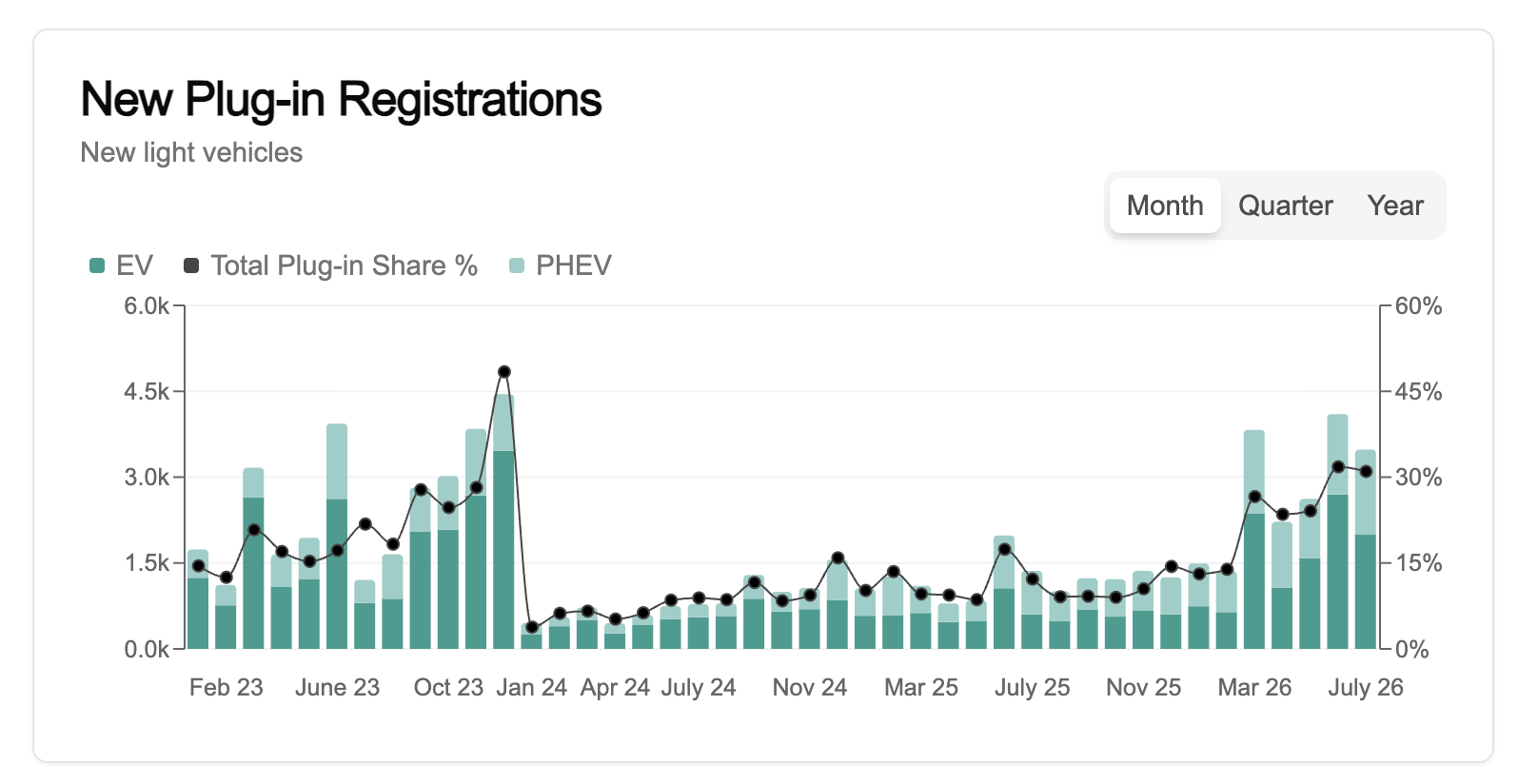
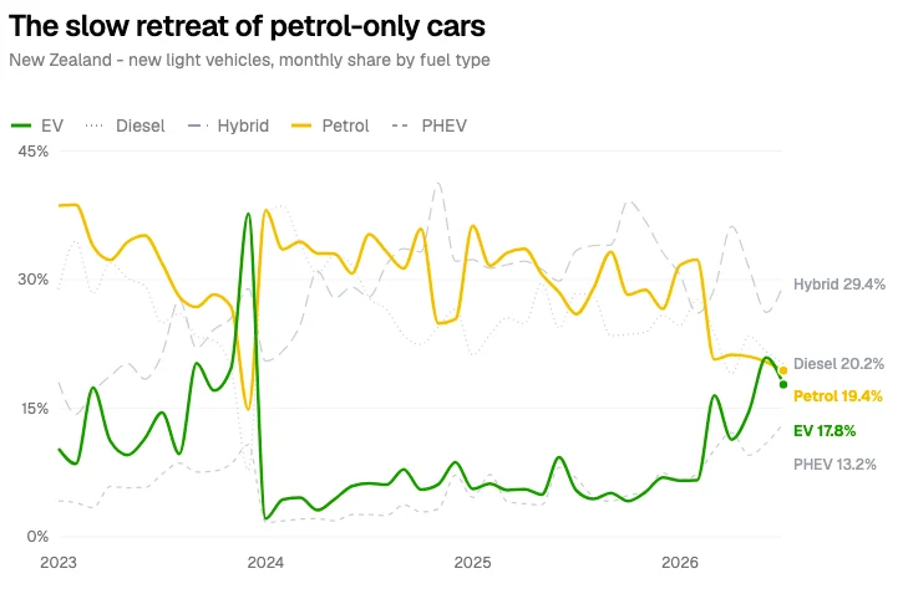
- Stunning Rebound: After touching a high-water mark of 37.7% market penetration in December 2023, EV adoption plummeted to a dismal 2% in January 2024 following policy reversals. However, by March of this year, the market began its ascent, with plug-in vehicle penetration consistently nudging the 30% threshold over recent months.
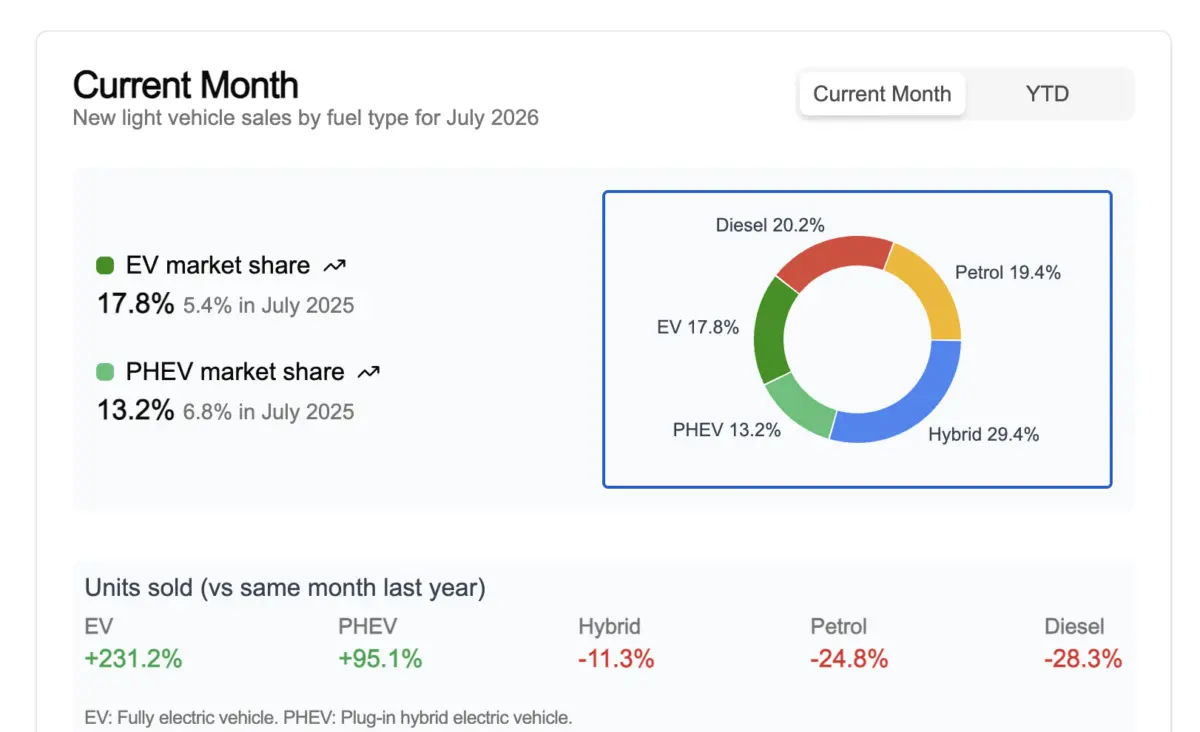
- Explosive Growth in Sales: Battery electric vehicles (BEVs) have witnessed a staggering 231% year-on-year surge, while plug-in hybrid electric vehicle (PHEV) sales have nearly doubled. Concurrently, mild hybrid, standard petrol, and diesel vehicle registrations are on a steady downward trajectory.
- Fleet Milestones: New Zealand has officially surpassed a symbolic milestone, with roughly 100,000 BEVs and 50,000 PHEVs now operating on its roads. While these figures account for approximately 3.38% of the total national fleet, the accelerating pace of new sales signals a fundamental shift in consumer preferences.
- Dominance of Affordable Imports: Used imports continue to anchor the market, led heavily by the ubiquitous Nissan Leaf. Nearly one in every four EVs on New Zealand roads is a Leaf, creating a lasting legacy that sustains widespread CHADeMO fast-charging infrastructure. Meanwhile, new vehicle sales are heavily shaped by competitive global offerings, with Chinese-manufactured BEVs capturing significant market share alongside prominent US, Japanese, and South Korean models.
Chronology: From Peak to Policy Shock to Resurgence
To understand New Zealand’s current EV landscape, one must examine the turbulent timeline of policy changes and market reactions that have defined the 2020s.
The Golden Era and Sudden Halt (2023–Early 2024)
During the peak of the previous government’s clean car discount scheme, New Zealand enjoyed rapid EV adoption. Incentives made buying low-emission vehicles financially attractive for everyday drivers, pushing market penetration to a remarkable 37.7% by December 2023.
However, the momentum stalled almost overnight. Following a change in government, conservative leadership systematically dismantled the feebate system, removing buyer incentives and leveling the playing field by imposing flat-rate road user charges on electric and alternative-fuel vehicles. The resulting market shock was immediate: in January 2024, EV sales crashed to just 2% of total registrations, plunging the sector into a prolonged slump.
The Turning Point and Fleet Depletion (2025–Early 2026)
For over a year, the market remained dormant, weighed down by the added costs of EV ownership and regulatory uncertainty. Yet, macroeconomic and geopolitical factors soon began to tilt the scales back. As global crude oil supplies faced renewed volatility and domestic fossil fuel prices climbed to punishing heights, the financial argument for driving electric reasserted itself.
By early 2026, car yards across New Zealand began reporting empty lots as a surge in demand outpaced the supply of affordable second-hand EVs. Dealerships struggled to keep vehicles on the lot as buyers looked to escape high pump prices.
The July 2026 Resurgence
By mid-2026, the recovery solidified into a permanent trend. Monthly plug-in vehicle penetration pushed back toward the 30% mark. Battery-electric and plug-in hybrid registrations shattered previous comparative periods, proving that consumer desire for low-emission transport could outlast shifting government subsidies.
Supporting Data: The Economics of Driving in New Zealand
The resurgence of electric vehicles is intrinsically linked to the harsh economic realities of fueling internal combustion engine (ICE) vehicles in New Zealand.
The High Cost of Fossil Fuels
Pump prices across the country remain persistently high, heavily driven by excise duties, emissions levies under the Emissions Trading Scheme (ETS), and a flat 15% Goods and Services Tax (GST). Regional variations add further pressure, with fuel significantly more expensive in isolated and tourist-heavy areas compared to urban hubs.
- Regular Petrol (91 Octane): Retails between $NZ 3.00 and $NZ 3.15 per litre (roughly equivalent to $US 7.83 per gallon).
- Premium Petrol (95 Octane): Retails between $NZ 3.25 and $NZ 3.40 per litre.
- Diesel: Retails between $NZ 2.30 and $NZ 2.55 per litre. While seemingly cheaper at the pump, the addition of the distance- and weight-based Road User Charge (RUC) brings the real-world operational cost of diesel vehicles roughly in parity with petrol.
Electricity and the Economics of Electrification
By contrast, New Zealand benefits from a robust, renewable-heavy electricity grid dominated by hydroelectric generation. Electricity typically costs between 39 and 50 cents NZ per kWh.

Economic modeling by Concept Consulting illustrates the profound systemic benefits of shifting away from imported petroleum. The firm estimates that the electrification of New Zealand’s land transport sector will transform national energy demand, replacing roughly 190 petajoules (PJ) of imported liquid fuels per year with approximately 49 PJ of domestically produced electricity. At prevailing energy costs, this transition yields direct national fuel cost savings estimated at an impressive $2.9 billion annually.
Official Responses and Industry Perspectives
While market analysts and consumer groups celebrate the grassroots return of EV sales, industry stakeholders remain pragmatic about the timeline required to completely transition the national vehicle fleet.
Automotive experts emphasize that New Zealand possesses a uniquely idiosyncratic automotive market. New Zealanders traditionally retain their vehicles for extended periods, and the country relies heavily on importing used vehicles from Japan—a market that has historically experienced a slower adoption curve for electric vehicles.
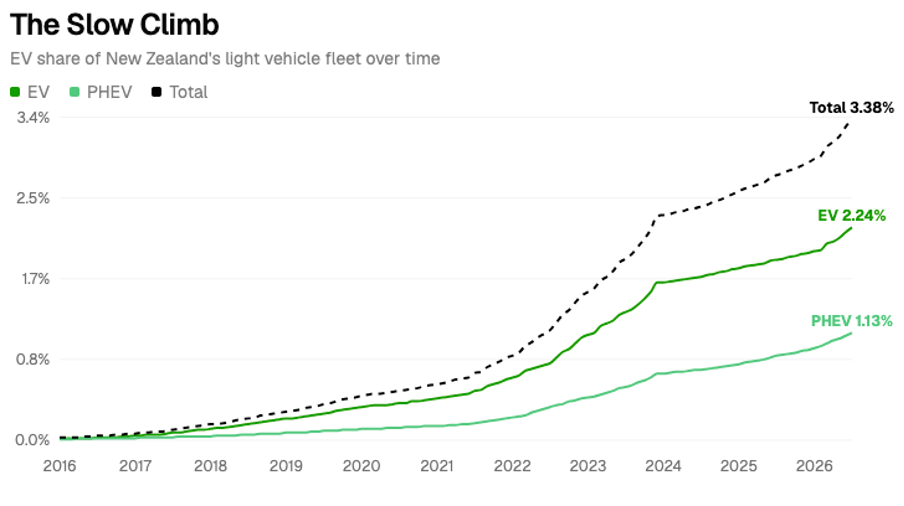
Analyst projections underscore this structural lag. Even under optimistic scenarios where 100% of new vehicle registrations become entirely electric by 2030, industry forecasts suggest that the broader light vehicle fleet will only reach a 50% electric share by 2040.
Despite these long horizons, community engagement remains remarkably high. Online forums and enthusiast groups, such as New Zealand EV owner networks on Facebook, continue to foster a collaborative culture. Owners regularly share practical tips, highlight EV-friendly tourist accommodations, and collaborate to address community challenges, including recent instances of public charging cable vandalism.
Implications: A Bright, Electric Future
The broader implications of New Zealand’s EV market recovery extend far beyond domestic transport tallies. They offer a masterclass in market resilience in the face of political headwinds.

When government policy abruptly turned hostile toward clean transport, it was widely assumed the transition would remain indefinitely frozen. Instead, fundamental economic pressures—chiefly the exorbitant cost of imported fossil fuels and the operational savings of domestic renewable electricity—re-engaged the consumer base.
In Māori mythology, the demigod Maui failed in his quest to conquer Hine-nui-te-pō, the Goddess of Death, making human mortality permanent. Yet, the New Zealand automotive market is proving that an economic paradigm can indeed rise from the grave. For the driving public in the Land of the Long White Cloud, the road ahead is no longer obscured by policy reversals or fossil fuel dependence; it is illuminated, clear, and firmly electric.
