

By James Gritz
Originally published in Ordinary Mind
Main Facts
On the morning of August 26, a catastrophic natural disaster struck the roof of the world. A massive glacier suddenly fractured and gave way high above Kyirong, situated on the Tibetan side of the Himalayan border. The colossal volume of displaced ice, water, and debris instantly transformed into a violent, high-velocity torrent.
Plunging southward, the wall of water tore aggressively through the rugged terrain of Rasuwa and subsequently battered Nuwakot, obliterating everything in its path. Entire mountain villages were swept away in minutes, critical highway bridges were snapped like twigs, and multiple vital hydropower stations were severely damaged or completely destroyed. The relentless deluge surged down the Bhote Koshi River before spilling massively into the Trishuli River basin.
The human toll has been catastrophic. According to the latest official assessments released by Nepal’s National Disaster Risk Reduction and Management Authority (NDRRMA), more than 350 people are now confirmed dead across Nepal, while over 800 individuals remain unaccounted for. Across the border in Tibet, authorities have confirmed at least three fatalities, with hundreds more missing.
Compounding the tragedy, a significant portion of the missing individuals are believed to be spiritual pilgrims journeying toward Mount Kailash and Lake Mansarovar—geographic features revered as sacred ground by Hindus, Buddhists, Jains, and Bönpo adherents alike.
For many international observers, human rights advocates, and spiritual practitioners worldwide, this disaster is not merely a distant news headline. Nepal has long served as a vibrant epicenter of Tibetan Buddhism in exile, providing sanctuary for monastic institutions, cultural preservation projects, and practitioners from around the globe. Regions like Rasuwa and Nuwakot carry deep personal and historical resonance for those connected to the Himalayan region’s spiritual lineage.
Chronology of the Disaster
Pre-Dawn Stability to Sudden Cataclysm
While precise meteorological data leading up to the exact moment of fracture is still being analyzed by glaciologists, local accounts indicate that the disaster unfolded with terrifying speed and virtually no advance warning.
- Early Morning, August 26: High above Kyirong on the Tibetan plateau, structural weaknesses within an unstable alpine glacier—exacerbated by rising regional temperatures and heavy seasonal moisture—reached a critical threshold. The glacier experienced a catastrophic collapse, releasing millions of cubic meters of water and loose rock debris into narrow high-altitude valleys.
- Morning to Midday, August 26: The flash flood wave crossed the international border, slamming directly into the Rasuwa district in Nepal. Moving at destructive speeds, the debris flow inundated valley settlements, overwhelmed local infrastructure, and severed primary transit routes. Emergency communication lines were knocked out almost instantly, plunging affected communities into isolation.
- Afternoon, August 26: The surging waters continued their relentless descent into the Nuwakot district, swelling the Bhote Koshi and Trishuli rivers far beyond their maximum capacity. Downstream communities received frantic, short-notice warnings, prompting hurried evacuations to higher ground, though many residents and travelers were caught completely off-guard.
- August 27 – Present: Rescue and recovery operations commenced under extremely hazardous conditions. Emergency responders, armed forces, and local volunteers mobilized despite blocked roads, compromised bridges, and continuous threats of secondary landslides or upstream damming. Relief organizations began distributing emergency funds, while international monitoring agencies started assessing the broader structural and environmental fallout.
Supporting Data and On-the-Ground Impact
The physical destruction left in the wake of the glacial outburst flood is staggering. Infrastructure vital to Nepal’s energy grid and regional connectivity has been heavily compromised:
- Casualty Metrics: Over 350 confirmed fatalities in Nepal, with more than 800 individuals missing. In Tibet, 3 confirmed deaths and hundreds unaccounted for. Rescue workers warn that these figures are likely to rise as remote valleys become accessible.
- Geographical Spread: The impact zone spans from the high-altitude Tibetan borderlands of Kyirong down through Nepal’s steep Rasuwa and Nuwakot valleys, directly threatening the vital river corridors of the Bhote Koshi and Trishuli.
- Infrastructure Damage: Multiple hydropower installations along the river basins have been knocked offline, threatening regional power stability. Critical road networks, suspension bridges, and local markets have been entirely erased, cutting off vital trade and humanitarian supply routes.
- Pilgrim Demographics: The timing of the disaster coincided with regional pilgrimage seasons. Many missing persons are travelers and devotees navigating high-altitude mountain routes toward sacred sites such as Mount Kailash and Lake Mansarovar.
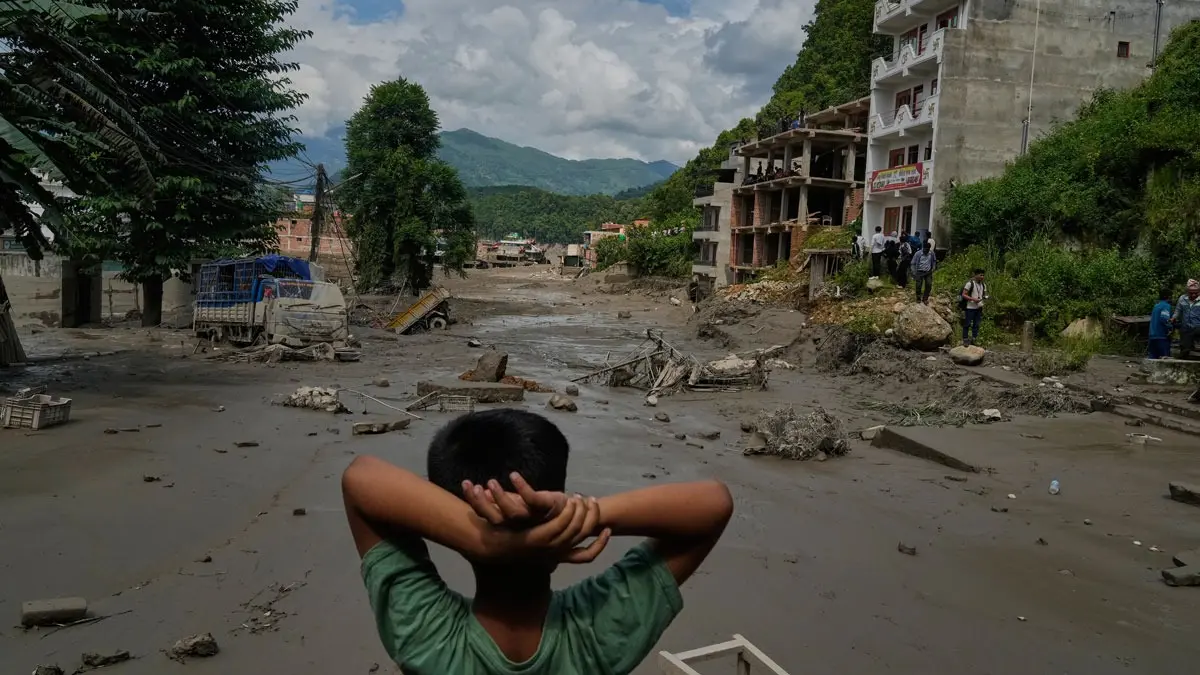
Visual documentation captured by the Nepal Red Cross Society and broadcast via international networks like Euronews reveals the apocalyptic scale of the Rasuwa valley inundation, where entire tracts of forested land and human settlement have been replaced by desolate expanses of grey silt and jagged rock debris.
Official and Spiritual Responses
As rescue operations strain against the vast geographic scale of the disaster, spiritual leaders and international organizations have stepped forward to offer condolences, practical guidance, and appeals for climate action.
Statements from Spiritual Leaders
The 14th Dalai Lama released a poignant statement addressing the tragedy:
"I am saddened to learn of the devastating floods in the Rasuwa region of Nepal and Kyirong in Tibet, resulting in loss of life and heavy structural damage. I pray for all those who have lost their lives, and offer my sympathy and heartfelt condolences to the bereaved and to all those affected by this tragedy."
Significantly, His Holiness also pointed directly to climate change as a critical underlying catalyst behind such increasingly frequent and extreme Himalayan catastrophes.
Renowned Bön teacher Tenzin Wangyal Rinpoche shared a heartfelt prayer with his global community of students:
"May those who have passed rest in peace. May the injured recover swiftly. May grieving families find strength and comfort, and may all those offering help be guided by compassion and wisdom."
Official Relief Coordination
The Government of Nepal, operating through the National Disaster Risk Reduction and Management Authority (NDRRMA), has coordinated emergency search-and-rescue deployments. For official updates, situation reports, and safety advisories, authorities direct the public to the official portal at ndrrma.gov.np.
Implications: Climate Change and the Vulnerable Himalayas
Beyond the immediate human suffering and structural ruin, the Kyirong-Rasuwa disaster highlights a deeply alarming environmental reality: the extreme vulnerability of the Hindu Kush Himalaya region to anthropogenic climate change.
Often referred to as the "Third Pole," the Himalayan mountain range holds the largest reserve of ice outside the polar regions. These high-altitude glaciers feed major river systems that sustain the livelihoods of nearly two billion people downstream across South and Southeast Asia. However, scientific consensus indicates that Himalayan glaciers are melting at an unprecedented and accelerating rate.
The formation of unstable glacial lakes, the weakening of permafrost, and the sudden failure of hanging glaciers—such as the one that collapsed above Kyirong—are textbook manifestations of a warming climate. When a glacier retreats or thaws rapidly, it leaves behind massive moraine dams or destabilized ice masses that can fail catastrophically under the pressure of intense monsoon rains or internal melting.
This disaster serves as a grim warning for regional governments and international climate bodies. Without substantial investments in early-warning systems, climate-resilient infrastructure, and aggressive global carbon mitigation strategies, catastrophic Glacial Lake Outburst Floods (GLOFs) and glacial collapses will likely become an increasingly frequent and deadly feature of life in the Himalayan foothills.
How to Help
For individuals around the world who have found spiritual enrichment, cultural inspiration, or community connection in Nepal over the years, this moment calls for active solidarity and support.
Relief agencies are actively operating on the ground, providing emergency medical care, search-and-rescue support, and shelter to displaced families:
- Nepal Red Cross Society: Operating via the International Federation of Red Cross and Red Crescent Societies (IFRC), which has deployed emergency relief funds directly to local response teams. Learn more at ifrc.org.
- GlobalGiving’s Nepal Flood Relief Fund: Channels financial resources directly to trusted local grassroots organizations managing search operations, medical triage, and temporary shelter construction. Donate at globalgiving.org.
- Direct Relief: Has maintained an active operational partnership supporting Nepal’s national health system since 2009, currently coordinating emergency medical shipments directly with Nepal’s Ministry of Health. Visit directrelief.org.
A Crucial Warning Regarding Relief Scams
Nepali authorities and international humanitarian monitors have issued strict warnings regarding fraudulent fundraising efforts. In the wake of high-profile disasters, opportunistic scammers frequently set up unverified personal accounts, crowd-funding pages, and social media campaigns. Donors are strongly urged to channel financial contributions exclusively through established, officially registered humanitarian organizations to ensure funds reach those in desperate need safely and efficiently.
May those who have died find peace. May the missing be found. May the searchers stay safe.
