

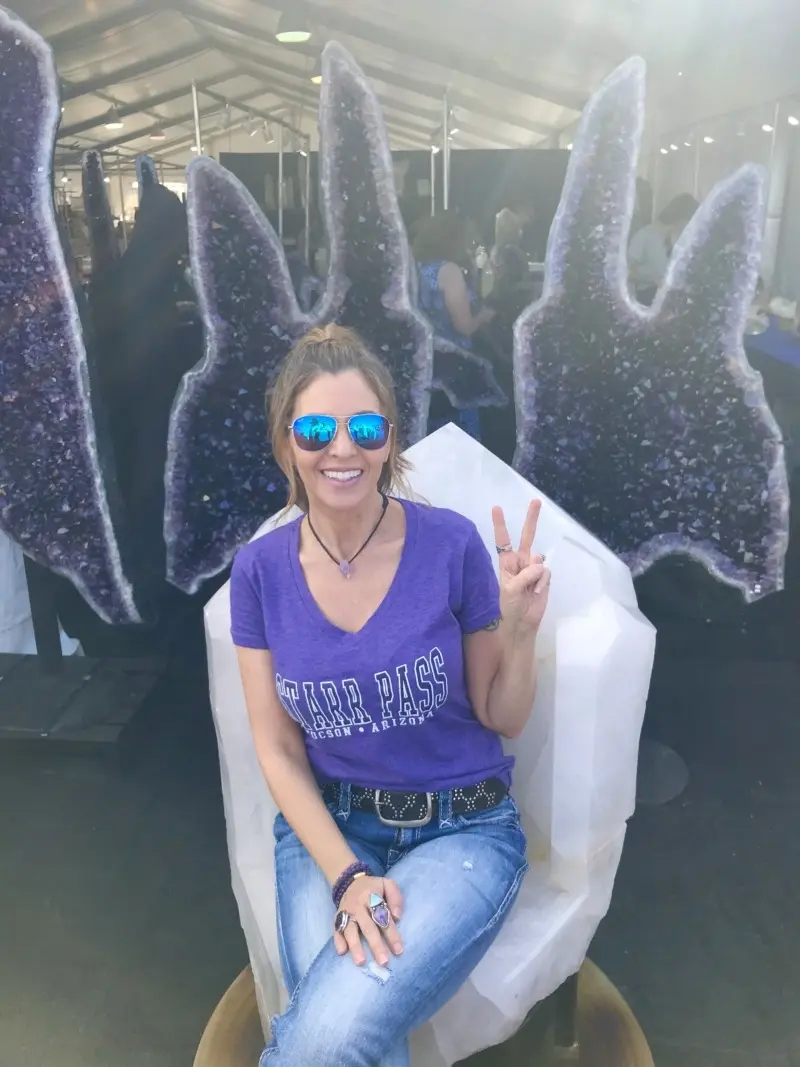
For mineral enthusiasts, lapidary artists, and metaphysical practitioners, visiting one of the world’s premier gem and mineral exhibitions is the ultimate bucket-list experience. Among the global circuit of mineral trade expos, two North American giants stand head and shoulders above the rest: the Tucson Gem, Mineral & Fossil Showcase in Arizona and the Denver Gem and Mineral Show in Colorado.
While both events draw tens of thousands of visitors from across the globe, they offer distinct experiences shaped by their geography, scale, climate, and vendor demographics. To help prospective attendees navigate these massive marketplaces, Team HM’s Crystal Coach, Lisa D’Arrigo, has broken down the differences in an exclusive video comparison.
Whether you are looking to source high-end inventory for a crystal business, source raw stones for wire-wrapping, or simply soak in the high-vational energy of thousands of earth-born specimens, understanding the nuances of Tucson and Denver is essential for planning the ultimate crystal pilgrimage.
Main Facts: Scale, Scope, and Setting
To understand the magnitude of these events, one must first look at the sheer logistical footprint of the Tucson and Denver shows.
The Tucson Gem, Mineral & Fossil Showcase
- Location: Tucson, Arizona
- Timing: Typically held annually across late January and February.
- Scope: Sprawling across more than 40 distinct sites, tents, hotels, and convention centers throughout the entire city.
- Atmosphere: A sprawling, city-wide takeover where hotels strip their rooms of beds to display geodes, and giant white tents pop up in parking lots from downtown to the outskirts.
The Denver Gem & Mineral Show
- Location: Denver, Colorado
- Timing: Generally held in the autumn (September).
- Scope: Primarily centralized around major convention spaces, such as the Colorado Convention Center or the National Western Complex, alongside companion shows scattered nearby.
- Atmosphere: More consolidated than Tucson, offering a slightly more navigable, structured convention center experience while still delivering breathtaking indoor displays of museum-grade specimens.
Chronology: From Local Club Exhibits to Global Mega-Shows
Both exhibitions boast rich histories that trace the evolution of rockhounding from a niche hobby into a multi-billion-dollar global industry.
The Evolution of Tucson
The Tucson show humble-began in the mid-20th century as a localized gathering organized by the Tucson Gem and Mineral Society (TGMS). What started as a modest club swap meet in a school cafeteria gradually expanded over decades as international dealers realized the strategic value of gathering in the American Southwest during the winter.
By the late 20th and early 21st centuries, the event had ballooned into the largest gem and mineral show in the world. Today, it is not merely a single trade show, but a synchronized federation of independent shows operating concurrently under different management teams, ranging from wholesale-only high-security venues to retail-friendly public bazaars.
The Evolution of Denver
Similarly, the Denver Gem and Mineral Show has roots deeply planted in regional mineral club cooperation. Organized initially by a coalition of Colorado mineral societies, the event gained international prominence due to Colorado’s rich mining history and its central geographic location in the United States.
Over the years, the Denver showcase evolved to mirror the multi-venue model pioneered by Tucson, establishing a primary main show supplemented by satellite shows (such as the HardRock Summit) that cater to both fine mineral collectors and commercial gemstone buyers.
Supporting Data: What to Expect at the Shows
Both the Tucson and Denver shows are a visual feast of geologic wonder. Attendees are routinely greeted by breathtaking natural formations that defy imagination.

The Reign of Quartz: Fire & Ice and Earth Keepers
Clear quartz remains an undisputed rock star in the mineral kingdom. Known for its abundance, versatility, and high resonance, it commands a massive presence at both expos.
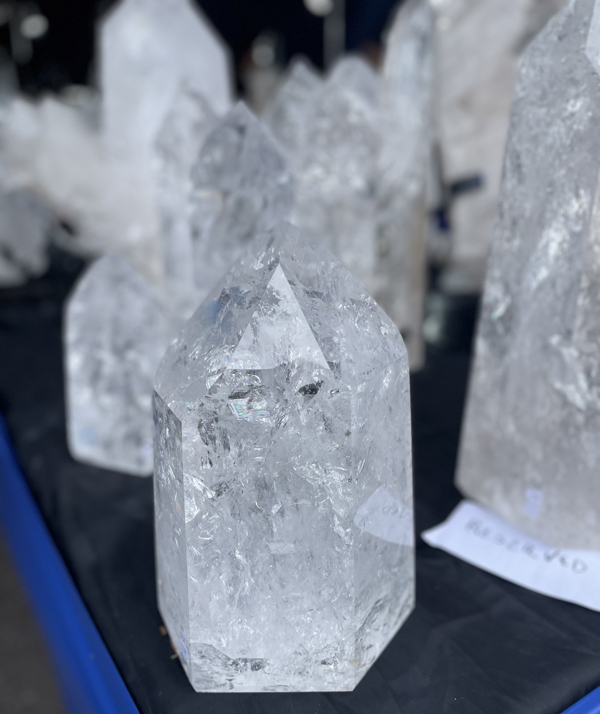
- Fire & Ice Quartz Towers: Highly polished, geometrically precise towers featuring internal fracturing that catches the light to create internal rainbows and shimmering light displays. These are heavily featured by vendors in Denver and Tucson alike, prized for their visual drama and aesthetic appeal.
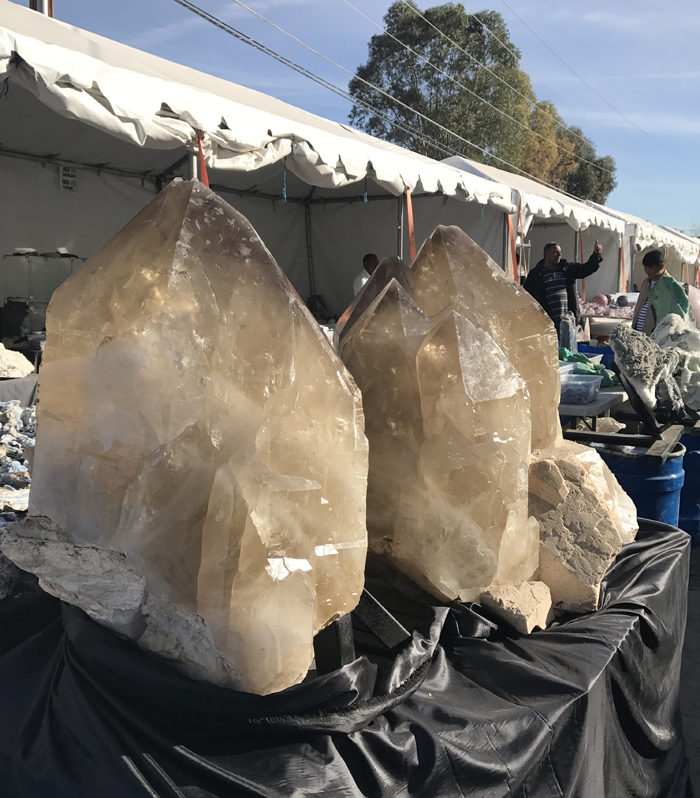
- Smokey Quartz Earth Keepers: Massive, grounding master crystals retrieved from deep within the earth. At Tucson, visitors frequently encounter monumental Smokey Quartz specimens weighing hundreds of pounds—crystals whose energetic "torus" (electromagnetic energy field) can be felt from across a showroom floor.
Carvings, Beads, and Master Lapidary Art
Beyond raw clusters and polished towers, the shows serve as global hubs for master artisans.
- Intricate Carvings: Sculptors from around the world transform minerals into sacred art. A notable standout frequently sighted at the Denver show includes hyper-detailed deities, such as intricate Krishna carvings sculpted from soothing lilac Lepidolite.
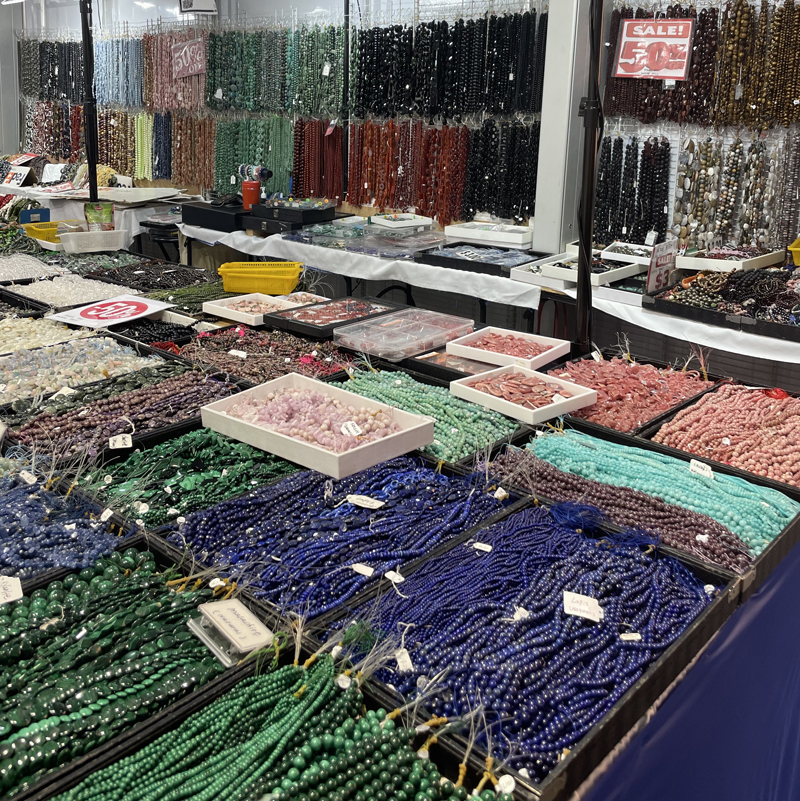
- Endless Beads: For jewelry makers and wire-wrappers, the bead selections are staggering. Entire pavilions are dedicated exclusively to gemstone strands, ranging from common amethyst and turquoise to rare, high-grade meteorites, moldavite, and charoite.
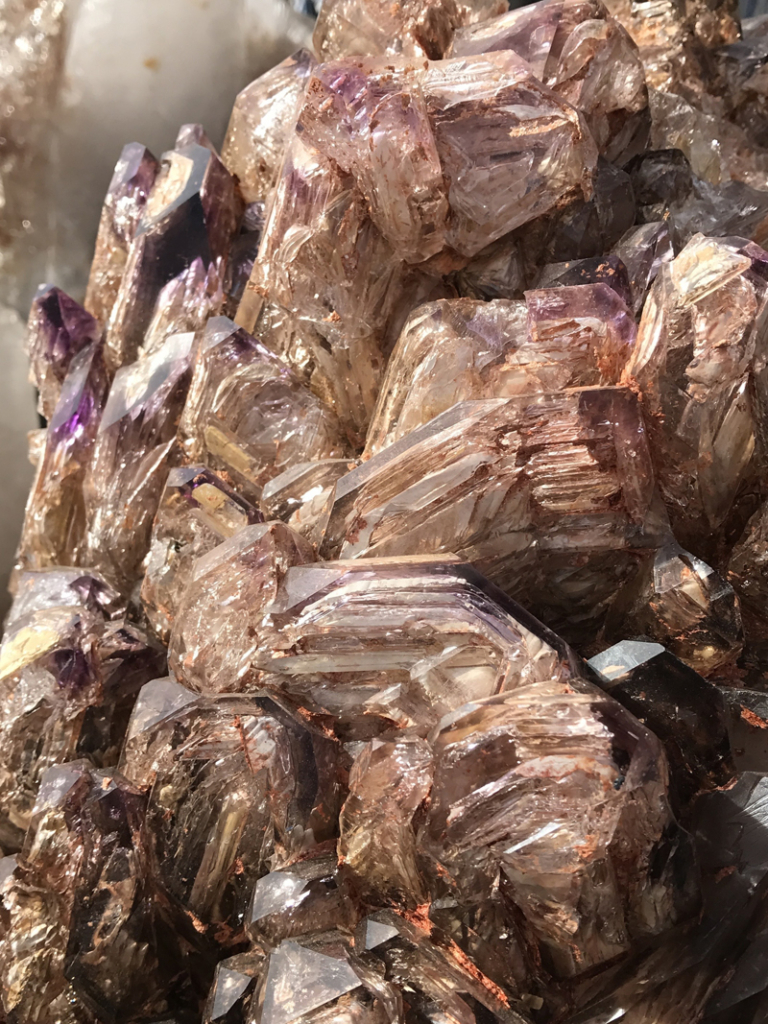
- Skeletal and Elestial Masterpieces: Advanced collectors hunt down rare structural formations like Elestial quartz and skeletal amethysts from the Tucson show floor. These labyrinthine stones feature layered "window" structures that make peering into them feel like gazing into entire inner worlds or ancient cosmic libraries.
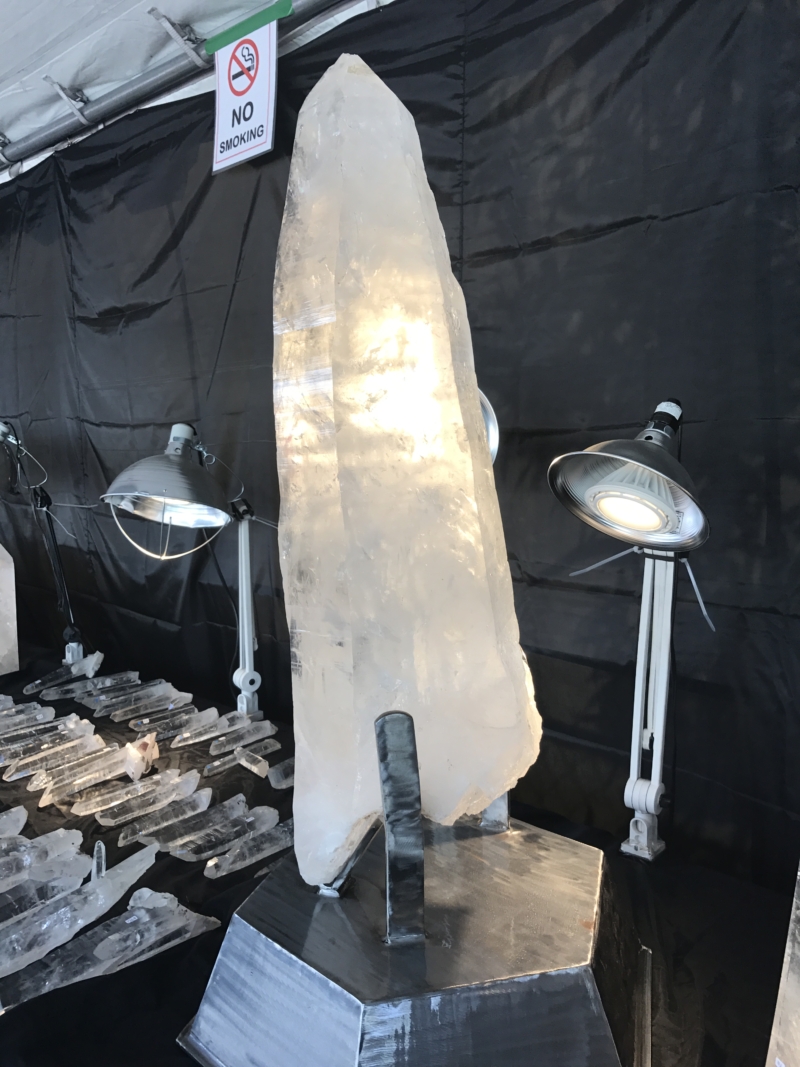
- Giant Lemurian Seed Crystals: Standing face-to-face with a towering, laser-etched Lemurian quartz point—complete with characteristic ladder-like striations—is an unforgettable rite of passage exclusive to these high-level shows.
Strategic Considerations: Tips for Attending
Visiting a major gem show requires careful preparation. Whether you are traveling as a wholesale buyer or a retail crystal enthusiast, keeping a few foundational tips in mind will ensure a successful trip.
1. Know Your Credentials (Wholesale vs. Retail)
Many venues at Tucson and Denver are strictly wholesale-only, requiring a valid business license and tax ID to enter. However, a significant portion of the shows are open to the general public. Always check the credential requirements of specific venues before planning your itinerary.
2. Prepare for Physical Endurance
These shows are massive. You will easily log 10,000 to 20,000 steps a day walking across convention floors, navigating tent mazes, or traversing hotel corridors.
- Wear supportive, broken-in walking shoes.
- Dress in layers (especially in Tucson, where desert mornings are freezing but afternoons warm up quickly, or in Denver, where mountain weather can fluctuate dramatically).
- Stay hydrated and carry healthy snacks.
3. Logistics: Transport and Shipping
- Tucson: Because the shows are scattered across the city, renting a car or utilizing rideshare services is necessary. Parking can be competitive, so planning your routes by geographic cluster is advised.
- Denver: Centralized convention venues make public transit or hotel shuttles more viable, though winter and autumn mountain weather can occasionally impact travel plans.
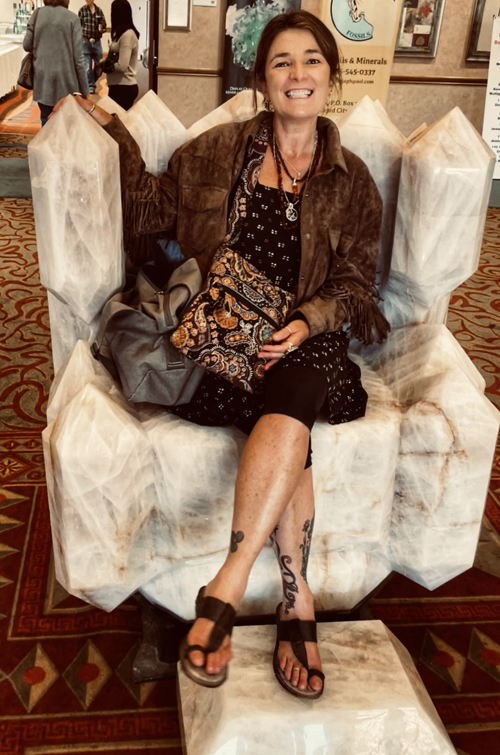
- Shipping Heavy Purchases: If you fall in love with a heavy mineral specimen, a crystal throne made of milky quartz, or a massive geode, do not try to carry it home in your luggage. On-site shipping and packing services are readily available at both shows to securely transport your heavy treasures back home.
Implications: The Cultural and Economic Impact on the Crystal Community
The massive influx of international trade during the Tucson and Denver show seasons carries profound economic and cultural implications for the global wellness and lapidary communities.
Economically, these exhibitions serve as the primary pipeline for the international crystal trade. Miners, extractors, and family-owned quarries from Madagascar, Brazil, India, Pakistan, China, and Africa rely on these events to secure their annual revenue. Conversely, small business owners, metaphysical shop operators, and holistic practitioners stock their inventories for the upcoming year, driving local micro-economies across North America.
Culturally, the shows foster a deep sense of community and education. They bridge the gap between hard science (mineralogy, geology, and crystallography) and metaphysical applications (energy work, meditation, and crystal healing). By bringing together scientists, collectors, and spiritual seekers under one roof, the shows validate the profound human fascination with the Earth’s geological history.
As Lisa D’Arrigo emphasizes in her comparison video, even if you do not purchase a single stone, simply attending a major gem show to immerse yourself in the high-frequency crystal vibes, witness rare geological marvels, and connect with fellow earth-lovers is an experience that transforms everyone who walks the floor.
