

By the Editorial Desk
Published as Part 2 of the Holistic Wellness and Crystal Therapy Series
In the realm of holistic health and energetic anatomy, understanding the body’s subtle energy hubs—known as chakras—is only the first step toward achieving total well-being. Following our foundational exploration into the biophysics of crystal healing, practitioners and wellness seekers alike often arrive at the most crucial juncture of their self-care journey: How do I accurately identify which chakra needs balancing?
Far from being an ambiguous guessing game, determining chakra health relies on a structured blend of diagnostic assessments, physical and emotional self-reflection, energetic tool utilization, and intuitive development. Whether you are a seasoned holistic practitioner or a curious beginner taking your first steps into energy work, mastering the art of chakra identification can profoundly transform your physical vitality and emotional equilibrium.
Main Facts: The Anatomy of Chakra Imbalances
Chakras are spinning wheels of energy located along the spine, stretching from the root at the base to the crown at the top of the head. When these vital centers become blocked, sluggish, or hyperactive, the disruption manifests across physical, mental, and spiritual dimensions.
Identifying an imbalanced chakra is not about diagnosing isolated incidents; rather, it requires recognizing patterns of distress. According to leading crystal and energy healing educators, there are four primary methodologies used to pinpoint exactly where your energetic blockages lie:
- Chakra Diagnostic Tests: Utilizing structured questionnaires and quizzes to establish a baseline.
- Symptom Mapping: Analyzing clusters of physical ailments or emotional hurdles tied to specific energy centers.
- Energy Sensing: Employing tools like pendulums and kinetic testing to directly measure energetic output.
- Intuitive Development: Tapping into innate sensory channels—often referred to as the "clairs"—to perceive blockages.
By combining these methods, practitioners can form a reliable consensus on which energy center requires targeted restorative work.
Chronology: The Evolution of Diagnostic Techniques in Energy Work
The methods used to assess chakra health have undergone a significant evolution over the past several decades, transitioning from ancient esoteric traditions to accessible, modern self-care practices.
- Ancient Beginnings: Historically, chakra assessment relied entirely on the intuitive observations of gurus, shamans, and Ayurvedic practitioners who used deep meditation and subtle energy perception to read a subject’s aura.
- The Mid-20th Century Shift: As Eastern metaphysical concepts gained traction in the West, literature began categorizing physical and psychological symptoms, linking specific bodily ailments to individual chakras. Books such as Vibrational Healing Through the Chakras standardized these correlations for Western readers.
- The Digital Era (Late 1990s–Present): With the rise of the internet, practitioners translated traditional diagnostic indicators into accessible online quizzes and tests, allowing individuals to evaluate their energetic states from home.
- Modern Integration: Today, techniques such as pendulum dowsing have been demystified and integrated into structured curricula—such as Certified Crystal Practitioner programs—making advanced energy sensing approachable for everyday learners.
Supporting Data and Diagnostic Frameworks
To effectively determine which chakra requires attention, practitioners look to distinct behavioral, emotional, and physical indicators. While a single symptom is rarely enough to confirm a blockage, a persistent cluster of issues strongly points toward a specific energy center.
1. Utilizing Structured Chakra Tests
Online chakra assessments function much like personality or wellness quizzes. By answering a series of targeted questions regarding your current life stressors, physical habits, and emotional states, these tests evaluate which energy centers are experiencing a deficit or an excess of prana (life force). When utilizing these tests, experts recommend pairing the results immediately with a corresponding healing crystal designed to restore natural vibrational flow.
2. Identifying Glaring Physical and Emotional Syndromes
Every chakra governs specific organs, glands, and emotional states. Recognizing a "syndrome of issues" allows for precise identification:
- Root Chakra (Muladhara): Linked to survival, security, and physical grounding. Imbalances often manifest as persistent lower back pain, financial anxiety, or a general lack of safety.
- Heart Chakra (Anahata): The center of compassion, love, and connection. Blockages can present as chronic chest tension, immune system deficiencies, or an inability to establish healthy emotional boundaries.
- Upper Chakras: Centers like the third eye and crown govern intuition and higher consciousness, where imbalances may translate to mental fog, cynicism, or spiritual disconnection.
3. Energy Sensing and the Use of Pendulums
Energy sensing is frequently viewed as an innate gift reserved for the "energetically gifted," but holistic educators emphasize that it is a learnable skill. Through dedicated practice, anyone can learn to detect whether a chakra is underactive, overactive, or entirely blocked.
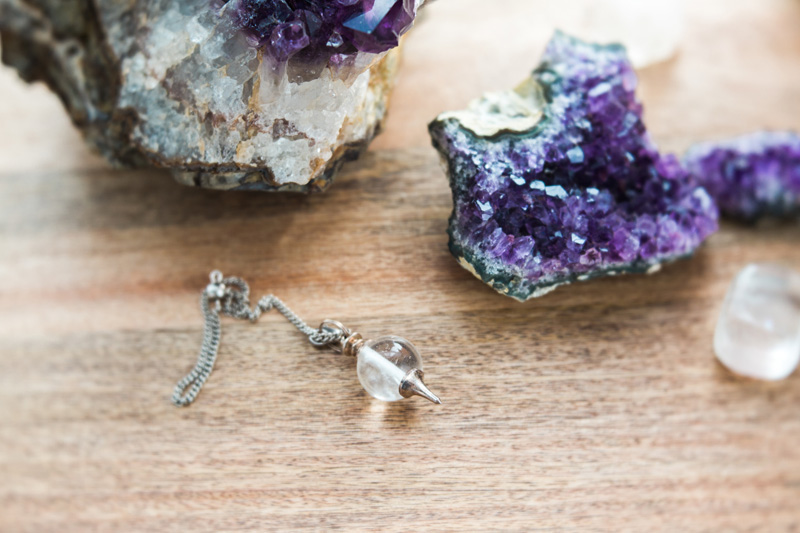
One of the most accessible entry points for energy sensing is the pendulum. A pendulum acts as an extension of your subconscious and energetic field, reacting to the subtle electromagnetic frequencies emitted by each chakra. By holding a crystal pendulum steady over each energy center, practitioners can observe the pendulum’s directional spin or oscillation, translating its movement into actionable data regarding chakra health.
(For a deep dive into mechanics, readers frequently consult foundational guides on how to use a pendulum.)
4. Tapping into Intuition and the "Clair" Senses
Intuition functions much like a skeletal muscle—neglect causes it to atrophy, while consistent engagement strengthens it. When working with chakras, intuitive assessment involves tuning into subtle inner senses, often categorized under the "clairs":
- Clairvoyance (Clear seeing): Perceiving colors, symbols, or energetic webs around the chakras.
- Clairaudience (Clear hearing): Receiving auditory inner messages or guidance regarding energetic blockages.
- Clairsentience (Clear feeling): Physically sensing temperature changes, tingling, or pressure shifts in the hands when near a blocked chakra.
Official Perspectives and Expert Insights
Holistic health professionals emphasize that diagnostic techniques should never be practiced in a vacuum. According to leading crystal practitioners and course instructors, precision in energy work comes from triangulation—using multiple methods to verify a single diagnosis.

"You’ll find that over time and with practice, your abilities will grow and sharpen. It will become easier to identify which chakras are out of balance. You may even ‘just know’ without needing to check," notes master crystal educator Hibiscus Moon.
Experts stress that these sensing and balancing protocols are not elite practices reserved for spiritual gurus. They are fully accessible to anyone willing to commit time to study, maintain consistency in practice, and attentively listen to the subtle physical and emotional feedback loops of their own bodies.
Furthermore, foundational texts such as The Crystal Healer and Vibrational Healing Through the Chakras are frequently cited by professionals as indispensable manuals for mapping physical symptoms to energetic root causes, serving as bridge materials between ancient energetic philosophies and modern wellness routines.
Implications for Personal Wellness and Self-Care
The implications of accurately identifying an imbalanced chakra extend far beyond spiritual satisfaction; they offer a proactive roadmap for holistic health management.
- Targeted Healing vs. General Wellness: Instead of using a scattershot approach to self-care, identifying the exact chakra in distress allows individuals to deploy specific remedies—such as targeted crystal selections, breathwork, and affirmations—saving time and accelerating recovery.
- Empowerment Through Self-Diagnosis: By learning to trust internal intuition, read physical syndromes accurately, and utilize tools like pendulums, individuals reclaim agency over their own health and energetic hygiene.
- Long-Term Resilience: Treating the energetic root cause of physical or emotional hurdles prevents minor imbalances from cascading into major chronic issues.
As we look toward the next installment of this comprehensive chakra series—which will explore the exact mechanical application of crystals to restore energetic harmony—the immediate takeaway is clear: mastering the diagnostic phase is the bedrock of holistic self-mastery. By cultivating your intuition, analyzing your physical state, and utilizing time-tested energetic tools, you can unlock a higher, more balanced state of being.
