

Main Facts: The Rediscovery of a Forgotten Pioneer
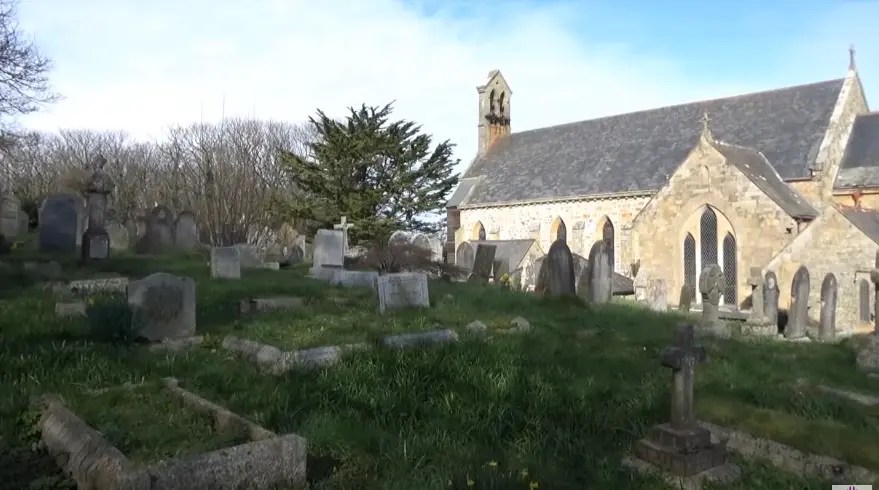
Decades after her death in relative obscurity and penury, the final resting place of Pamela Colman Smith—the brilliant artistic force behind the world’s most ubiquitous and beloved tarot deck—has been substantially pieced together by researchers. Smith, universally known to history and contemporary enthusiasts as "Pixie," passed away on September 18, 1951. Exactly one week later, on September 25, 1951, she was interred in the churchyard of St. Michael & All Angels Church, located in a scenic coastal area that reflected her deep, lifelong affinity for the sea, woodlands, and nature. Her funeral service was conducted by Joseph Henry du Moulin-Browne, a well-regarded Roman Catholic priest of the era.
Despite her monumental contribution to esoteric history—her iconic artwork for the Rider-Waite-Smith tarot deck, commissioned by occultist Arthur Edward Waite and first published in 1909—Smith died with few financial resources and little public acclaim outside of her immediate artistic circles. Consequently, her original grave marker was either temporary (such as a simple wooden cross) or entirely nonexistent from the outset. Over the years, environmental weathering, the passage of time, and a devastating local disaster obliterated the physical evidence that might have pointed directly to her plot.
Yet, persistent historical detective work has brought researchers remarkably close to the truth. By cross-referencing surviving parish burial registers with the chronological layout of the graveyard and the dates inscribed on surrounding headstones, modern investigators—supported by independent local historians—have pinpointed the most probable section of St. Michael & All Angels Churchyard where Smith’s mortal remains lie. This long-overdue spotlight on her final days aims to restore dignity, recognition, and remembrance to an artist whose vibrant visual language continues to influence millions of people worldwide.
Chronology: Tracing the Life, Death, and Burial of "Pixie"
To understand the quiet tragedy of Pamela Colman Smith’s final resting place, one must examine the timeline of her life, her later years, and the unfortunate historical gaps that obscured her burial site for generations.
1878–1909: An Artistic Awakening
Born in London in 1878 to American parents, Pamela Colman Smith spent an itinerant childhood moving between Jamaica, London, and New York. Gifted with a vivid imagination and a synesthetic appreciation for art and music, she trained at the Pratt Institute in Brooklyn under Arthur Wesley Dow. Returning to England, she established herself as an illustrator, theatrical designer, and writer, eventually joining the Hermetic Order of the Golden Dawn. It was through this esoteric circle that she met Arthur Edward Waite. In 1909, Waite commissioned Smith to create a set of 78 tarot illustrations. Working under tight deadlines, she produced a revolutionary deck that broke away from traditional purely illustrative or purely predictive formats, infusing the Minor Arcana with rich psychological, emotional, and narrative depth.
1911–1951: Decline and Obscurity
Despite the enduring legacy of the tarot deck—which would eventually bear her name alongside Waite’s—Smith’s later professional life did not sustain her financially. She converted to Roman Catholicism in 1911, an event that profoundly shaped her spiritual outlook. As the decades progressed, commissions dwindled, and she withdrew from the bustling artistic centers of London to live a more secluded life on the coast. When she died on September 18, 1951, at the age of 73, her passing went largely unremarked by the broader cultural establishment.
September 25, 1951: The Interment
One week after her death, Smith was laid to rest at St. Michael & All Angels Churchyard. Father Joseph Henry du Moulin-Browne presided over the service. Because Smith left behind negligible estate assets and no immediate family members to advocate for an elaborate memorial, her grave was marked simply, if at all.
The Parish Record Disaster
The loss of precise documentation regarding Smith’s plot was compounded by an unfortunate accident decades later. During renovation work at the church, parish records were temporarily stored in a builders’ hut on the property. A fire broke out in this structure, consuming irreplaceable historical documents, including the original chronological register of burials for that era. For decades, this tragic loss left historians and tarot scholars unable to answer a fundamental question: Where, precisely, is Pamela Colman Smith buried?
Supporting Data: Methodology and Field Investigation
The recent breakthroughs regarding Smith’s grave were not achieved through luck alone, but through rigorous historical methodology, architectural analysis of the churchyard, and collaboration with local experts.
When researchers first visited St. Michael & All Angels Churchyard, they faced a daunting landscape of weathered headstones, overgrown grass, and missing documentation. However, a close examination of the graveyard’s geography yielded critical clues:
- Chronological Plot Arrangement: Unlike modern cemeteries that often sell plots at random or based strictly on current availability, historic English churchyards frequently filled up in a linear, chronological fashion. Graves from a specific year tend to cluster together in defined rows or sections.
- Surviving Headstone Markers: By cataloging the dates and names of legible markers surrounding the periphery of the church, researchers identified a distinct cluster of graves dated precisely 1950 and 1951. This timeframe directly aligns with Smith’s death in late September 1951.
- Unmarked Plots: Within this specific 1950–1951 cluster located in the far corner to one side of the church, investigators identified at least three unmarked plots.
- Independent Historical Validation: To ensure academic rigor, the team’s preliminary findings—developed during an on-site visit—were presented to a local historian who had researched the churchyard’s history and genealogy for over thirty years. The local expert independently reviewed the layout, parish survival fragments, and burial pacing, validating the conclusion that Smith’s plot rests within this specific corner.
During the field recording session, investigators noted the evocative nature of the location. Situated near the shoreline—a landscape that mirror’s Smith’s well-documented love for the sea—the site is enveloped by woodland tranquility and birdsong. A poignant moment occurred during video documentation when the church bells began to toll, creating an atmosphere that many researchers interpreted as a symbolic resonance of peace and well-being for the long-forgotten artist.
Official Responses and Esoteric Research
The rediscovery of the context surrounding Pamela Colman Smith’s final resting place has sparked renewed academic and cultural dialogue within the international tarot community. For decades, mainstream art history largely overlooked Smith, categorizing her primarily as an illustrator in the shadow of male occult figures like Arthur Edward Waite and Aleister Crowley.
However, modern scholarship has sought to correct this historical imbalance. Authors and researchers such as Marcus Katz and Tali Goodwin have dedicated extensive efforts to unearthing the true dynamics of the Waite-Smith collaboration. Their seminal work, Secrets of the Waite-Smith Tarot (Llewellyn, 2015), introduced new photographs, archival discoveries, and biographical details that re-center Smith as the visionary architect of the deck’s imagery.
Organizations such as the Tarot Association have stepped up to spearhead ongoing investigations, providing their members with exclusive access to newly uncovered documents, rare photographs, and specialized essays—such as the in-depth digital feature titled "The Kiss of the Sun for Pardon: A Memory of Pamela Colman Smith."
Historians and association representatives emphasize that understanding Smith’s life, struggles, and final resting place is not merely an exercise in academic curiosity; it is an act of historical restitution. By reconstructing the physical environment of her burial and mapping her final days, the esoteric community is ensuring that the woman who gave shape to the collective unconscious of modern tarot is never again relegated to the margins of history.
Implications: Preserving a Cultural Legacy and Looking Forward
The ongoing efforts to honor Pamela Colman Smith carry profound implications for how we understand the history of modern esotericism, art, and cultural marginalization.
1. Re-Evaluating Female Contributions to the Occult
Historically, women played foundational roles within fin-de-siècle esoteric movements like the Golden Dawn, yet their contributions were frequently eclipsed by patriarchal publishing structures and biographical biases. Smith’s anonymity in death mirrored her financial struggles in life—a stark contrast to the global commercial success her deck achieved over the course of the 20th and 21st centuries. Pinpointing her resting place serves as a powerful metaphor for recovering lost female histories, pulling figures out of unmarked graves and into the light of cultural recognition.
2. Practical Innovation Rooted in Accurate History
As noted by leading research bodies, a comprehensive understanding of tarot history provides a factual foundation for modern practical innovation. By stripping away romanticized myths and uncovering the true biographical realities of creators like Smith and Waite, contemporary tarot readers, psychologists, and artists can better understand the psychological and symbolic mechanics built into the cards. This rigorous approach elevates tarot from a mere novelty to a serious field of cultural, artistic, and psychological study.
3. Future Preservation at St. Michael & All Angels
With the probable site of Smith’s grave now identified by both visiting researchers and veteran local historians, conversations are turning toward how best to honor the location. While the loss of the parish records to the builders’ hut fire means an exact plot number may never be definitively certified via paperwork, the geographical consensus offers a sacred space for reflection. Admirers, artists, and scholars visiting St. Michael & All Angels Churchyard now have a dedicated location to pay their respects to "Pixie"—the visionary artist who breathed life into the Fool, the High Priestess, and the entire pantheon of the tarot.
Through continued archival research, community engagement, and dedicated publications, the memory of Pamela Colman Smith is finally receiving the enduring tribute it has always deserved.
