

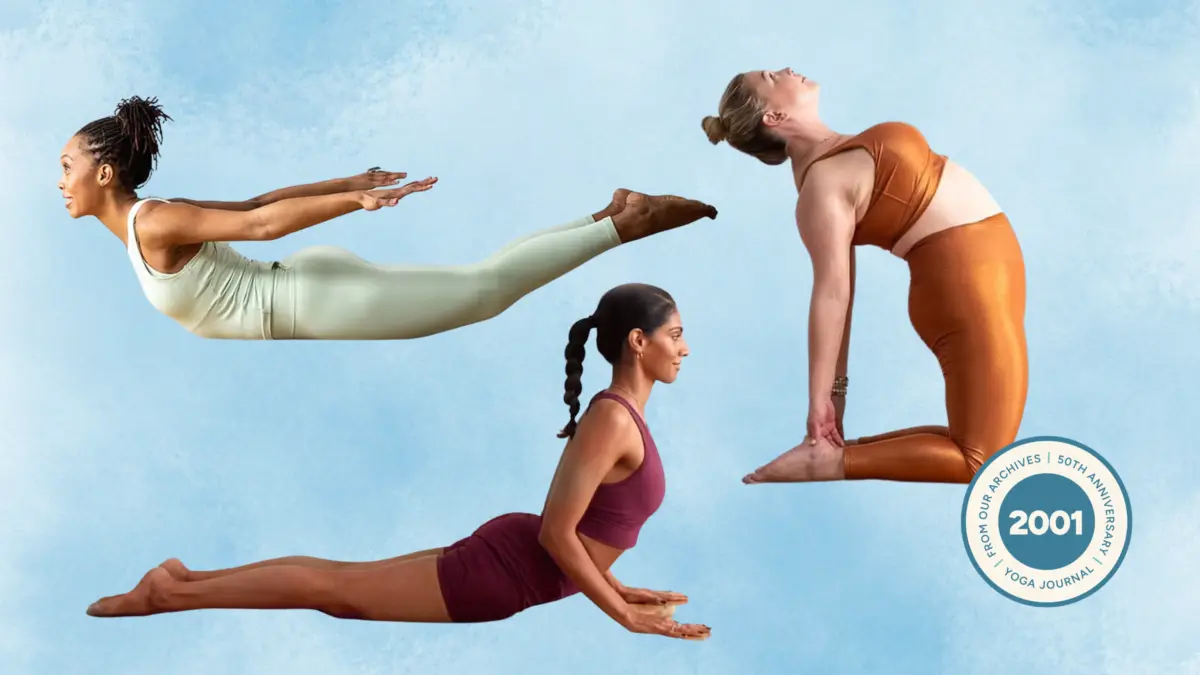
Published: September 17, 2026
Original Archive Source: Yoga Journal (July–August 2001)
Main Facts
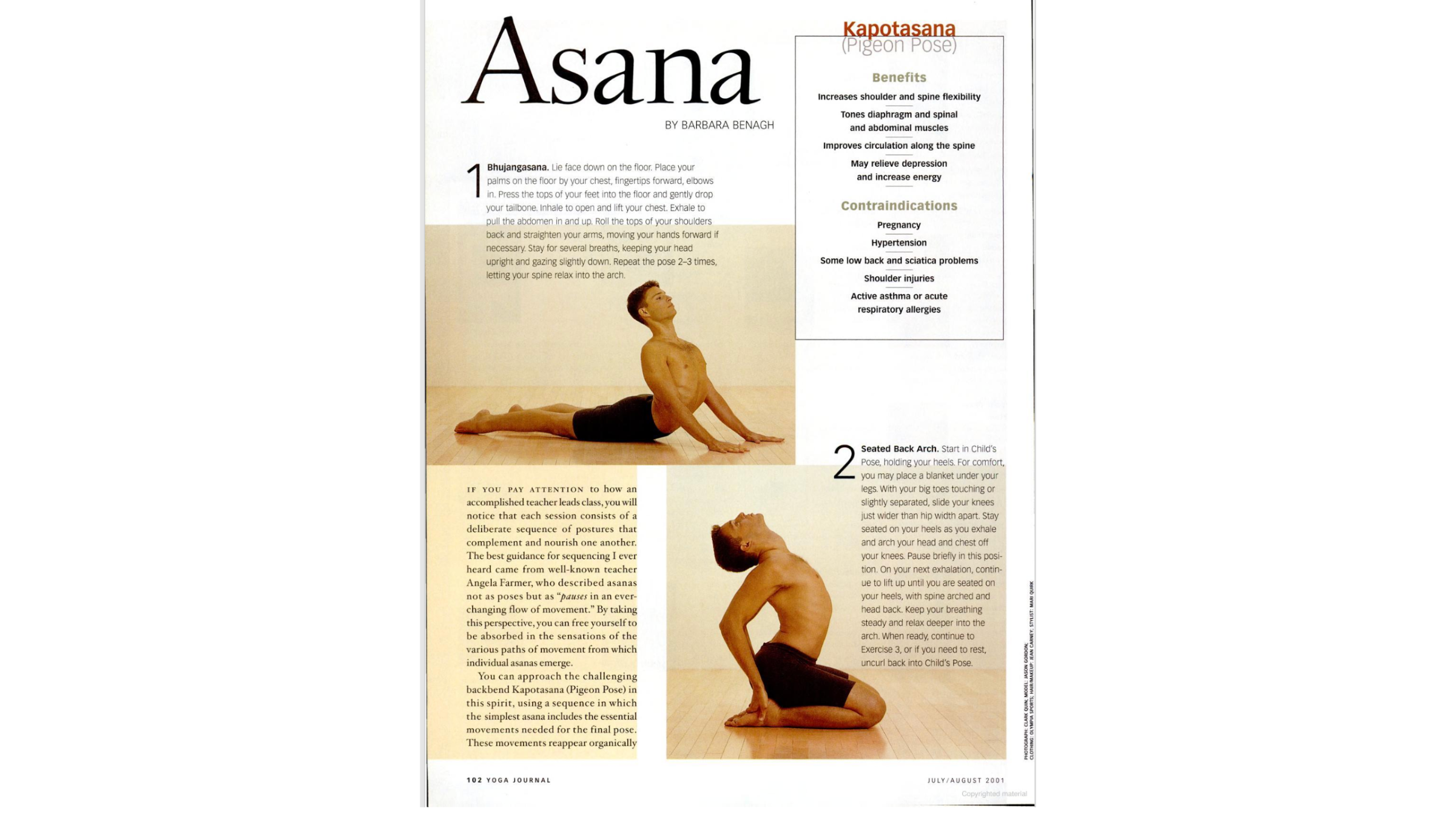
In the landscape of modern postural yoga, advanced backbends like Kapotasana (Pigeon Pose) often loom as intimidating physical milestones—testaments to extreme flexibility, open shoulders, and resilient spines. However, a foundational philosophy shared by master instructors challenges the isolated treatment of these intense postures. Rather than viewing individual asanas as static destinations, experienced practitioners approach them as fleeting "pauses in an ever-changing flow of movement."
Rooted in sequencing methodology originally outlined in the July–August 2001 issue of Yoga Journal, this systemic approach demonstrates that even the most complex backbends are simply organic extensions of basic movements. By deconstructing the physical trajectory from passive props (Bolster Backbends) to prone arches (Bhujangasana), kneeling integrations (Ustrasana), and finally full expressions of Kapotasana, students learn to cultivate internal space, somatic awareness, and the psychological surrender required to navigate high-intensity postures safely.
Chronology of Practice: The Pathway to Kapotasana
Mastering an advanced backbend cannot be rushed; it demands a chronological progression that builds stability, neuromuscular coordination, and energetic readiness from the ground up.
Phase 1: Passive Preparation with a Bolster
The journey begins away from active exertion. By positioning a rolled blanket or bolster beneath the upper back for five to ten minutes, practitioners stimulate back muscles, sharpen sensory focus, and acclimate the nervous system to the sensation of an arch. This passive stage teaches the practitioner how breath influences backbends: a steady, complete exhalation prevents the sympathetic nervous system from triggering a "fight-or-flight" stress response, allowing spinal tension to dissolve.
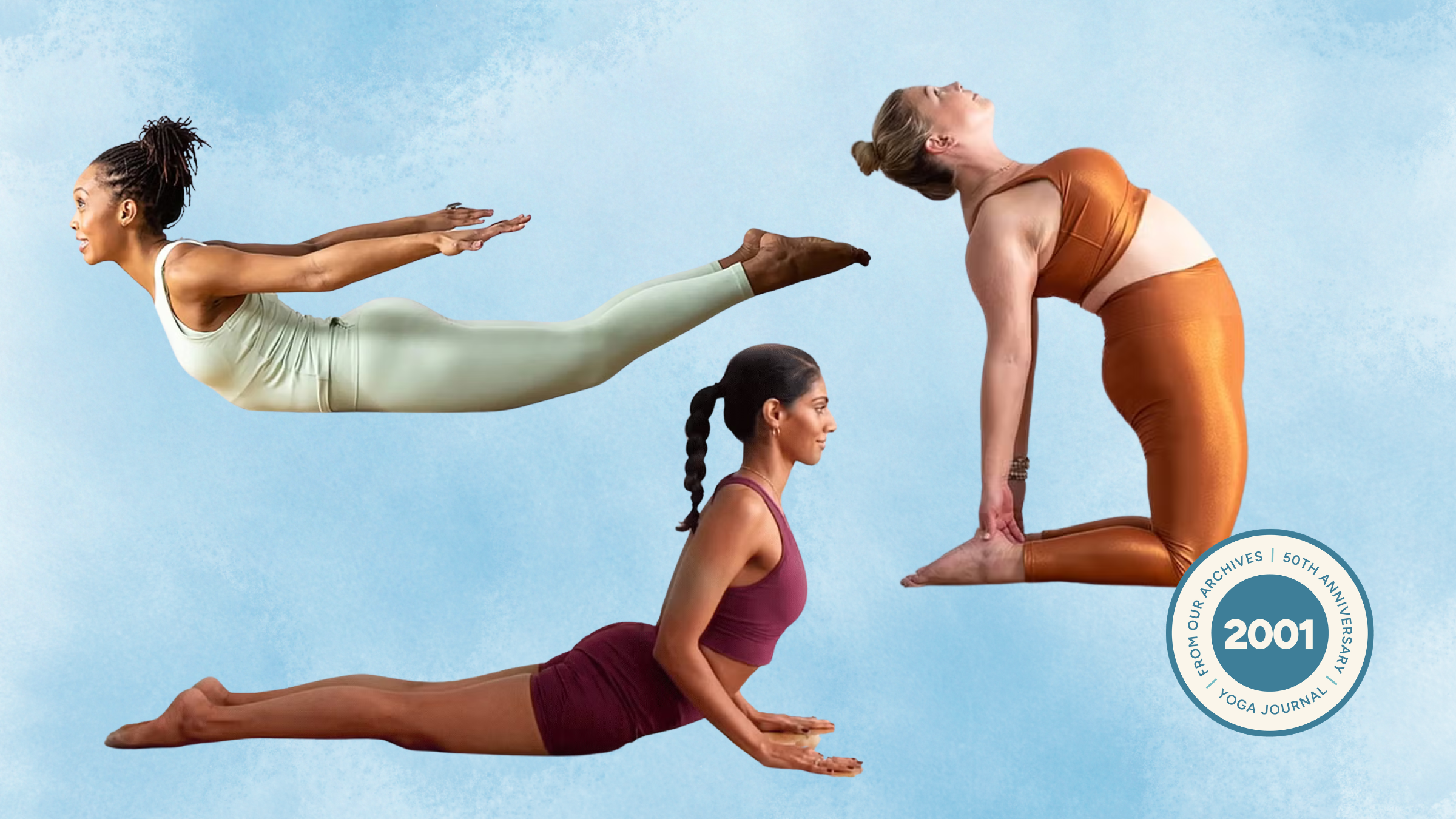
Phase 2: Active Prone Integration in Bhujangasana (Cobra Pose)
Transitioning to the floor, the practitioner engages Bhujangasana to establish the foundational mechanics of the spine:
- Pelvic Stability: Lengthening the tailbone toward the heels while drawing the pubis away from the navel creates essential pelvic support without compression.
- Leg Grounding: Rooting the tops of the feet and extending the calves establishes a stable anchor, inviting lightness in the pelvis.
- Spinal Flow: Moving away from the "Cobra on Crutches" pitfall—where weight is lazily dumped into straight arms—the practitioner initiates the lift from the pelvic floor, allowing the spine to arch fluidly upward and backward.
Phase 3: Kneeling Elevation in Ustrasana (Camel Pose)
Moving from the floor to a kneeling position, the practice introduces Ustrasana (often entered dynamically from Balasana, or Child’s Pose). Here, the challenge shifts to eliminating "kinesthetic numbness" in the mid-spine. Practitioners learn to prevent the common compensatory habit of thrusting the thighs forward, maintaining structural integrity by balancing weight evenly between the knees and the tops of the feet while sustaining the upward spinal wave.
Phase 4: The Ultimate Surrender into Kapotasana
Only when the spine can maintain an integrated, unsupported arch does the practitioner approach Kapotasana. By releasing the hands from the heels, bringing the palms together in Anjali Mudra, and extending overhead toward the floor, the practitioner surrenders to gravity. Through incremental hand-walking and breath-led adjustments, the body eventually folds into the full expression of the pose—resting the head upon the feet while the legs remain actively grounded.
Supporting Data & Biomechanical Insights
An analysis of intelligent asana sequencing reveals several critical biomechanical principles that protect the body during extreme spinal extension:
- Nervous System Regulation: Clinical and somatic observations indicate that prolonged holding of unconditioned backbends overstimulates the sympathetic nervous system, leading to hyperventilation and muscle guarding. Controlled exhalations reduce heart rate variability and induce muscular relaxation.
- Lumbar Decompression: Anatomical data confirms that lower back pain during backbending is primarily caused by two factors: inadequate abdominal core support and localized immobility in the thoracic (mid) spine. When the thoracic spine remains rigid, the lumbar vertebrae absorb a disproportionate amount of compression.
- The Physics of Femur Placement: Maintaining the femurs toward the back of the leg space during Ustrasana and Kapotasana prevents hyper-extension of the hip flexors, redistributes gravity evenly across the kinetic chain, and protects the lower back from pinching.
Expert Perspectives and Philosophical Implications
The methodology popularized by teachers like Angela Farmer and preserved in the Yoga Journal archives reframes how practitioners interact with physical difficulty.
The Balance of Effort and Surrender
In modern fitness culture, physical achievement is frequently equated with brute force, muscular tension, and aggressive pushing. However, advanced yoga philosophy introduces a paradox: true grace in high-stakes postures like Kapotasana requires an exquisite equilibrium between active structural intention and complete psychological surrender.
"In a culture that so often defines surrender as weakness, it’s no wonder we resist, thinking we have to be hard and forceful. But yoga helps teach us that clarity and effectiveness require a balance between effort and surrender."
Moving Past Kinesthetic Numbness
Yoga educators emphasize that blocked areas along the spine—often ignored or glossed over due to habitual movement patterns—represent psychological as well as physical blind spots. By systematically scanning the body during transitional poses, practitioners develop heightened interoception (the internal perception of the body’s condition). This heightened awareness turns every foundational posture into a diagnostic tool, allowing students to map their internal landscape and dismantle chronic holding patterns safely.
Implications for Modern Yoga Practice
The long-term implications of this archival sequencing philosophy extend far beyond the execution of a single advanced pose.
- Injury Prevention: By emphasizing spinal integration and thoracic mobility over superficial depth, practitioners significantly lower the incidence of lumbar strain and soft-tissue injuries associated with forced backbends.
- Mindfulness-Based Movement: This pedagogical framework shifts student motivation away from ego-driven milestone-chasing ("getting the pose") toward process-oriented inquiry. Every posture becomes a laboratory for observing breath, tension, and release.
- Cohesive Sequencing: Teachers who adopt this "common thread" methodology can craft more intelligent, safe, and transformative class structures. By demonstrating how a simple Cobra Pose contains the DNA of a complex Pigeon Pose, instructors empower students to find advanced expression within the simplest foundational movements of daily practice.
