

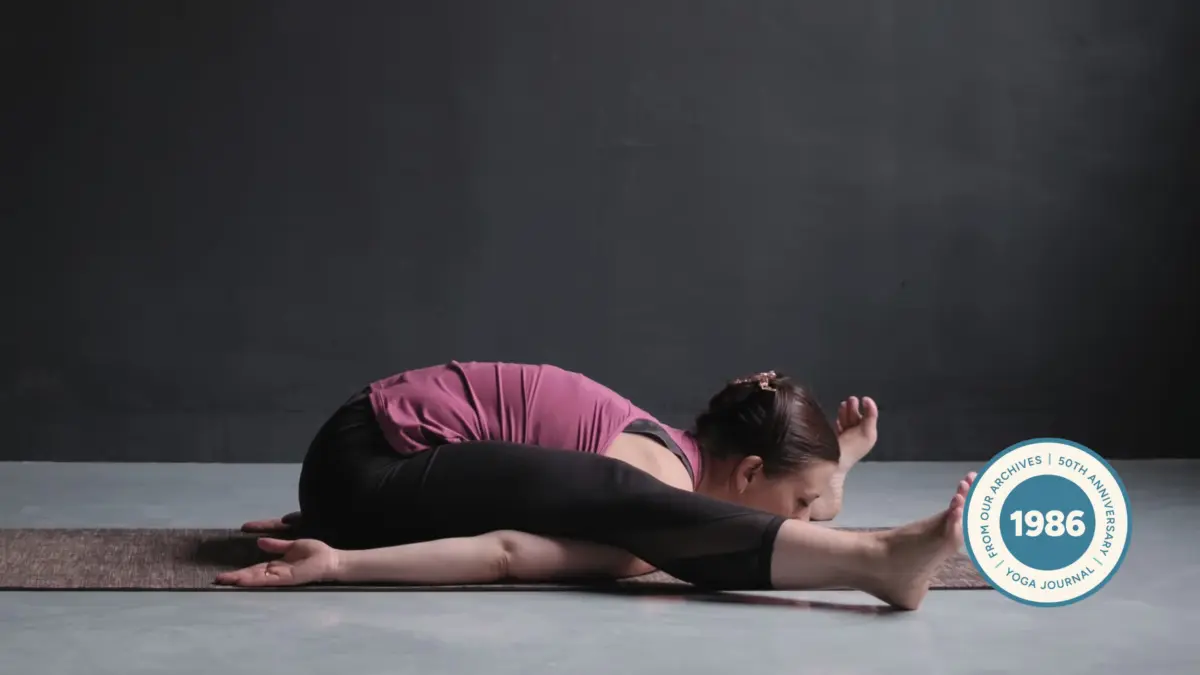
Published as part of the Yoga Journal Archives series, revisiting seminal teachings first published in the July-August 1986 issue.
Main Facts
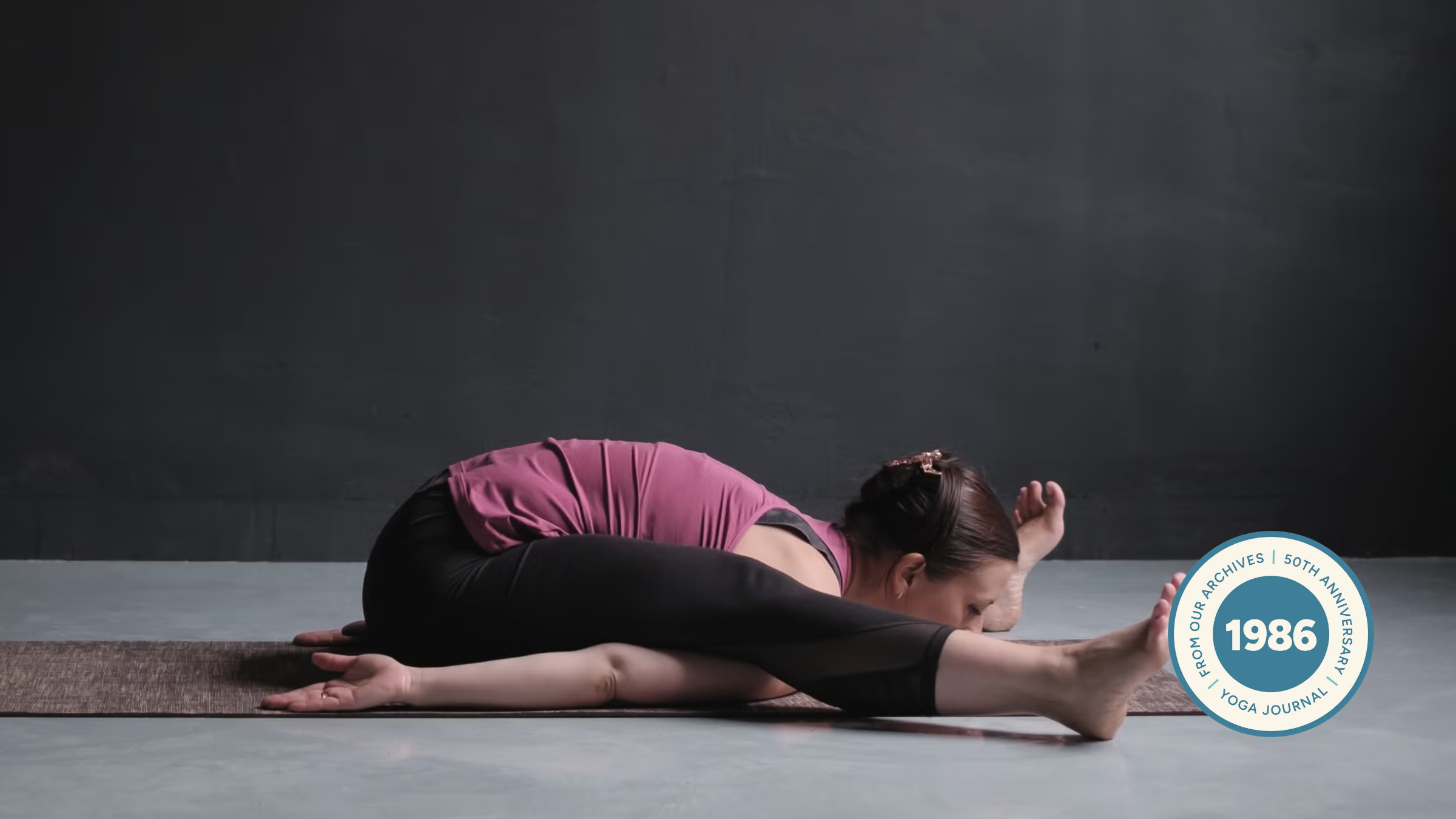
Tortoise Pose, known in Sanskrit as Kurmasana, is a deeply grounding seated forward fold steeped in rich mythological symbolism. By physically mirroring the shape of a tortoise withdrawing its limbs into its shell, the asana serves as a somatic metaphor for pratyahara—the yogic practice of sensory withdrawal. In this state, the practitioner deliberately turns away from outward agitation and external stimuli to cultivate a profound inner silence.
From a physiological perspective, Kurmasana targets the deep tissues of the lower spine, stimulates the abdominal organs, and requires an exceptional degree of mobility. Specifically, mastery of the pose demands profound flexibility in the hamstring muscle group of the posterior thighs, the adductors of the inner thighs, and the external rotators of the hips. Without adequate freedom in these regions, the pelvis cannot properly rotate forward, often leading to spinal compensation and physical strain.
Mentally and philosophically, Kurmasana acts as a gateway to meditation. Drawing from the foundational teachings of Patanjali’s Yoga Sutras, the pose helps quiet the vrittis (mental fluctuations). When the body is securely and comfortably locked into the geometry of the tortoise, the mind is stripped of external inputs, offering practitioners a direct taste of "no-mind" (nirvikalpa states) and tranquil inner stillness.
Chronology
The transmission of Kurmasana follows a rich historical timeline, evolving from ancient Vedic mythology into the codified frameworks of classical hatha yoga and modern Western instruction:
- Ancient Mythological Origins: In Hindu mythology, the tortoise (Kurma) represents the second avatar of Lord Vishnu. During the churning of the cosmic ocean (Samudra Manthana), Vishnu assumed the form of a giant tortoise to bear the weight of Mandara Mountain on his shell, stabilizing the universe. This mythological motif of foundational support and inward protection forms the philosophical bedrock of the pose.
- Classical Codification: Centuries later, classical texts like the Hatha Yoga Pradipika cataloged Kurmasana among the primary seated postures designed to awaken vital energy (prana) and steady the mind for meditation.
- The 20th-Century Iyengar Renaissance: The modern biomechanical understanding and alignment precision of Kurmasana were largely popularized by legendary yogis such as B.K.S. Iyengar. His seminal 1966 text, Light on Yoga, provided rigorous structural breakdowns of the pose, influencing generations of Western practitioners.
- July–August 1986 (Yoga Journal Archive): Yoga Journal published a definitive instructional and philosophical guide on Kurmasana, detailing the delicate balance between muscular release and disciplined positioning—insights that continue to guide modern alignment-based yoga classes today.
- Present Day: Kurmasana remains a cornerstone of advanced sequencing in contemporary studios, frequently integrated into workshops focusing on deep hip-opening, spinal health, and meditative depth.
Supporting Data & Biomechanical Insights
Executing Kurmasana safely requires an understanding of human anatomy and the forces acting upon the vertebral column during forward flexion.
Muscular Requirements
To successfully lower the torso toward the floor without injury, practitioners must engage with three primary muscle groups:
- Hamstrings: The posterior thigh muscles must lengthen sufficiently to allow the extended legs to remain relatively straight as the torso moves forward.
- Adductors: The inner thigh muscles must release tension to allow the legs to remain stable while accommodating the width of the torso.
- External Rotators: Located on the sides of the hips, these muscles must be supple enough to allow the pelvis to tilt forward over the femurs. Tight external rotators actively impede forward-bending movements, forcing the lower back to compensate.
The Physics of Spinal Health
A primary anatomical directive in Kurmasana—and all forward bends—is that movement must originate exclusively from the hip joints, minimizing unnecessary flexion in the vertebral column.
When a practitioner attempts to force a deeper fold by excessively rounding the lumbar (lower) and thoracic (middle) back, they place immense mechanical strain on vulnerable soft tissues. This includes:
- Intervertebral discs
- Spinal ligaments and tendons
- Supporting back muscles
Repeatedly overstretching these posterior soft tissues weakens them over time, impairing their ability to support the spine during upright posture. Furthermore, this physical overstretching creates bodily agitation, which directly translates to mental restlessness. By keeping the natural curves of the spine intact and bending from the hips, practitioners reduce physical trauma and quiet the nervous system.
Official Responses & Philosophical Frameworks
The integration of body and mind in Kurmasana is heavily informed by classical yogic philosophy, particularly the teachings of Patanjali.
Conquering the Vrittis
According to Patanjali, author of the Yoga Sutras, the mind is essentially a rapid series of fluctuations or vrittis. When these agitations cease, the traditional concept of the "ego-mind" dissolves, allowing the practitioner to perceive reality beyond the limitations of everyday sensory perception.
Yoga scholars and meditation teachers note that Kurmasana serves as a physical catalyst for this process. By physically enveloping oneself—tucking the arms beneath the knees and folding inward—the body mimics the sensory withdrawal of pratyahara. The external world fades, and the practitioner experiences a profound shift from active movement to deep stillness.
The Paradox of Effort and Surrender
Practicing Kurmasana requires navigating a delicate philosophical paradox: the balance between determination and release.
- Determined Positioning: To lengthen stubborn hip and thigh muscles, a practitioner must apply consistent, firm muscular energy in the direction opposite to contraction. Without discipline, the posture collapses.
- Mindful Surrender: However, excessive aggression toward the body leads to injury and tension. True progress in Kurmasana requires the art of letting go—surrendering ego control over consciousness, embracing vulnerability, and allowing the nervous system to relax into the stretch.
As master instructors frequently emphasize, this dual approach of disciplined structure and fearless surrender trains both the physical body and the psychological self, uncovering the enduring joy at the heart of yoga practice.
Implications for Practice and Modern Sequencing
Understanding the historical, anatomical, and philosophical dimensions of Kurmasana transforms the pose from a mere physical gymnastics feat into a holistic meditative practice.
Step-by-Step Integration
For modern practitioners looking to safely approach Tortoise Pose, instructors recommend the following sequence:
- Preparation with Props: Beginners can sit on a firmly folded yoga mat or blanket to elevate the hips. This slight elevation encourages the forward rotation of the pelvis, easing the initial strain on the hamstrings and lower back.
- Establishing the Foundation: Begin with a wide-legged seated forward fold, such as Upavistha Konasana (Wide-Angle Seated Forward Bend), keeping the legs spaced approximately three feet apart with the knees active and straight.
- Arm Placement: Focus first on the forward-bending action of the torso. Only as flexibility permits, gradually exhale and slip one arm at a time underneath the bent knees, pointing the arms backward to mirror the forward extension of the legs.
- Holding and Breathing: Maintain smooth, steady breathing while holding the pose for 30 to 60 seconds. Take care to avoid placing undue shear stress on the elbow joints as the body lowers. Slowly and mindfully exit the pose on an inhalation.
Advanced Variations
For experienced yogis, advanced variations of Kurmasana include binding the arms around the back or crossing the ankles behind the head (Sitali Kurmasana), fully embodying the impenetrable shell of the tortoise.
Ultimately, whether practiced as a standalone meditation or integrated into a comprehensive deep-forward-folding sequence, Kurmasana challenges practitioners to look inward. By bridging anatomical alignment with the ancient pursuit of stillness, the pose remains as vital and transformative today as it was when first chronicled decades ago.
