
SPECIAL ADVERTISING FEATURE | Art & Culture Desk
Published: August 2026
Main Facts
The enduring allure of the natural world continues to serve as the beating heart of contemporary representational art, as evidenced by a newly released showcase highlighting the intersection of landscape, wildlife, and studio craftsmanship. At the center of this movement is a dedicated cohort of painters who look beyond the confines of urban development to find endless visual poetry in the great outdoors.
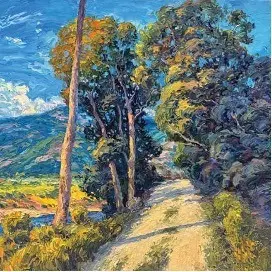
Among the standout pieces drawing critical attention is Country Lane, a striking 40-by-40-inch oil on canvas by acclaimed artist Brad Teare. This masterwork exemplifies the core philosophy of plein-air and studio-based landscape painting: the translation of fleeting atmospheric moments, rugged terrain, and organic geometries into permanent visual statements.
Rather than merely mimicking nature, the works featured in this specialized collection capture the psychological and emotional resonance of the wilderness. From the dappled sunlight breaking through heavy forest canopies to the expansive horizons of the American West, artists are utilizing texture, light, and color theory to invite viewers on a profound visual journey. Whether painted entirely en plein air—on location amidst the elements—or meticulously developed from field sketches back in the studio, these compositions represent the culmination of observation, technical mastery, and a deep-seated reverence for the natural environment.
Chronology
The tradition of documenting the natural world through paint has evolved significantly over the centuries, establishing a rich timeline that informs today’s working artists:
- Early 19th Century (The Foundation): The rise of landscape-focused art movements, such as the Hudson River School in the United States and the Barbizon School in France, shifted cultural perspectives. Nature was no longer viewed merely as a backdrop for historical or religious narratives, but as a majestic, divine subject worthy of primary focus.
- Late 19th Century (The Plein-Air Revolution): The invention of collapsible tin paint tubes in the mid-1800s, coupled with the availability of portable easels, revolutionized how artists worked. Painters like the French Impressionists left the dark confines of their studios to capture the changing effects of light directly outdoors.
- Mid-to-Late 20th Century (Regionalism and Wildlife Conservation): As industrialization threatened natural habitats, artists increasingly turned their attention to preserving the wilderness on canvas. Wildlife art emerged as a distinct, highly respected genre, bridging the gap between scientific observation and fine art.
- The 21st-Century Digital and Contemporary Era: Modern artists like Brad Teare balance ancient traditions with contemporary sensibilities. Utilizing high-resolution digital studies alongside traditional oil techniques, today’s creators document not only pristine wildernesses but also the shifting rural interfaces where human civilization meets untamed land.
Supporting Data
The commercial and cultural appetite for landscape and wildlife art remains robust within the fine art market. According to recent industry analytics from major art market monitors:
- Market Share: Landscape and wildlife art consistently rank among the top three most-collected genres in traditional gallery spaces across North America, appealing to both seasoned collectors and first-time art buyers.
- The Plein-Air Economy: Membership in national plein-air painting organizations has grown by over 45% over the past decade, reflecting a surge in both hobbyist participation and professional output dedicated to outdoor observation.
- Scale and Medium: Large-format canvases—such as Brad Teare’s 40 x 40-inch Country Lane—have seen a notable rise in demand. Collectors increasingly seek immersive, room-anchoring pieces that bring the expansive scale of natural vistas into residential and corporate interior spaces.
- Environmental Longevity: The use of archival-grade oil paints and high-density cotton duck or linen canvases ensures that these modern landscapes will endure for centuries, effectively serving as historical visual archives of contemporary geography.
Official Responses and Curatorial Insights
Art critics, gallery directors, and the artists themselves have weighed heavily on why the urge to paint the natural world remains as vital today as it was centuries ago.
"There is a fundamental dialogue that occurs the moment an artist steps outside and faces a landscape," notes a leading Southwest art curator. "Nature doesn’t pose, and it doesn’t wait. The light shifts by the minute, the wind alters the foliage, and the atmosphere changes entirely. When an artist successfully captures that fleeting essence—whether on location or interpreted later through memory and studio studies—they are freezing time."

Brad Teare, reflecting on the creation of works like Country Lane, emphasizes the meditative discipline required to translate raw terrain into a cohesive painting:
"When you look down a quiet country lane, you aren’t just seeing dirt, trees, and shadow. You are seeing rhythm, structure, and historical weight. The challenge of oil paint is that it is a physical, stubborn medium. You have to push it, layer it, and scrape it away until it mirrors the organic chaos and quiet order of the real world. The canvas becomes a record of that internal and external negotiation."
Cultural historians also point out that art focusing on the natural world plays a vital role in modern environmental consciousness. By highlighting the raw beauty found just beyond our doorsteps, these works remind the public of what is at stake amid rapid suburban sprawl and environmental degradation.
Implications
The continued celebration and creation of landscape and wildlife art carry significant implications for both the cultural landscape and environmental stewardship.
1. Cultural Reconnection in a Digital Age
As modern society becomes increasingly dominated by screens, artificial intelligence, and urban density, art that celebrates the physical outdoors acts as a vital psychological anchor. Works that portray quiet lanes, dense forests, and expansive skies offer viewers a meditative escape, fostering a sense of peace and a renewed appreciation for the physical world.
2. Economic Support for Conservation and Regional Arts
The creation and collection of outdoor art directly stimulate regional economies, supporting independent frame shops, specialized art supply manufacturers, local galleries, and rural communities where artists travel to paint. Furthermore, a portion of proceeds from wildlife and landscape art sales frequently finds its way back into conservation initiatives, linking the aesthetic appreciation of nature directly to its financial preservation.
3. The Evolution of Artistic Techniques
The synthesis of traditional studio craftsmanship with modern outdoor observation ensures that classical painting techniques are not lost to history. Artists continue to innovate—experimenting with palette knives, heavy impasto, glazing, and color juxtaposition—pushing the boundaries of what oil on canvas can convey.
Ultimately, as showcased by works like Brad Teare’s Country Lane, the great outdoors will forever remain art’s greatest muse. By continuing to step outside, observe, and translate the wild into pigment and canvas, contemporary artists ensure that the timeless beauty of nature is preserved, celebrated, and shared with generations to come.
