

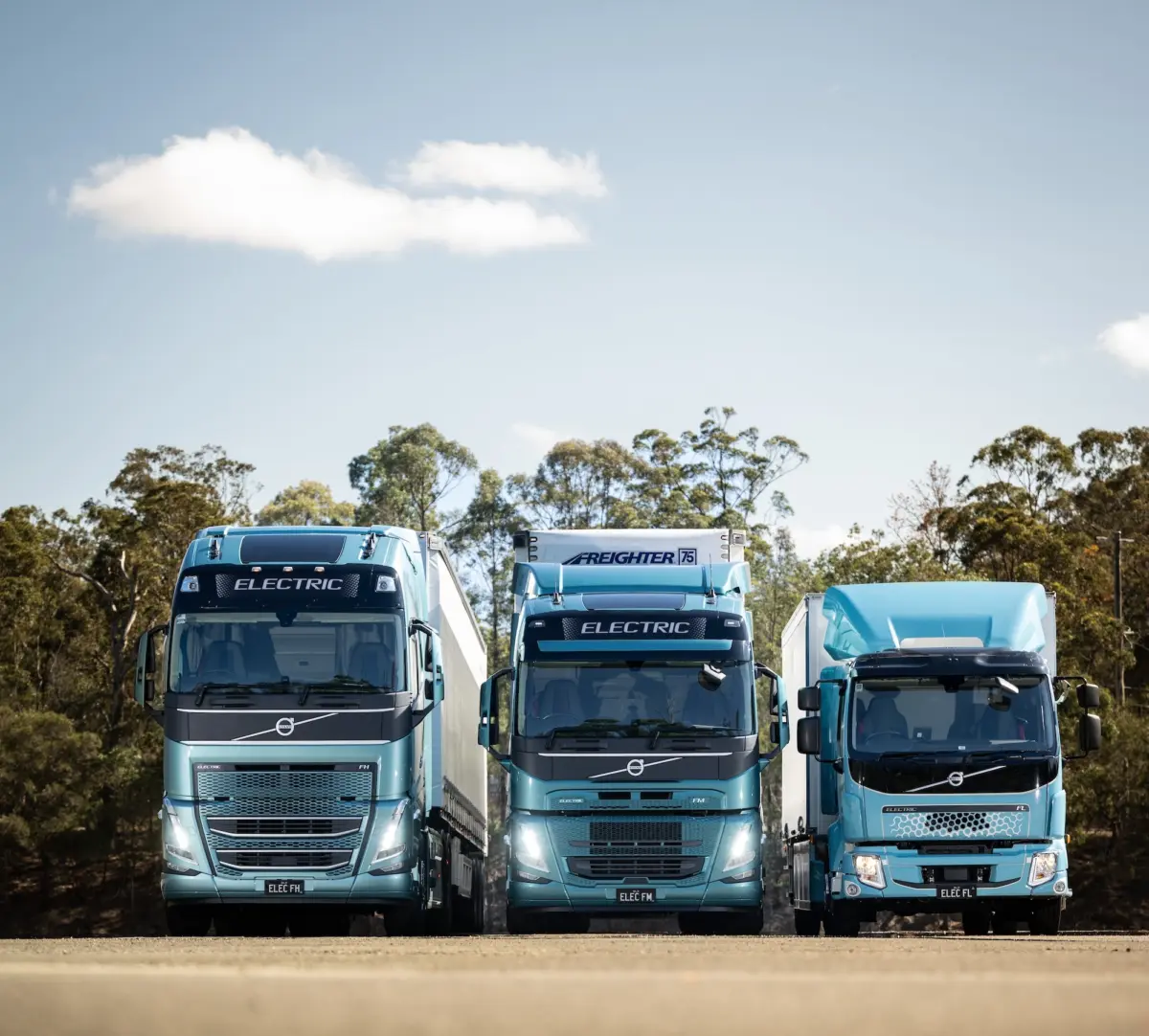
For over seven decades, diesel has served as the undisputed lifeblood of Australia’s heavy vehicle logistics sector. Pumping thousands of liters of fossil fuel into semi-trailers, rigid trucks, and delivery vans has long been an accepted, unalterable cost of doing business across the vast Australian continent. However, according to Tim Washington, Co-Founder and CEO of electric vehicle (EV) infrastructure provider JET Charge, that era is coming to a definitive end.
The question facing commercial fleet operators across the country is no longer if they should electrify their operations, but whether their charging infrastructure will be ready when the vehicles arrive. Driven by an unprecedented convergence of skyrocketing fuel costs, tightening emissions targets, geopolitical instability, and a narrowing window for electrical grid access, Australian logistics is undergoing a fundamental structural transformation.
Main Facts: The Economic Turning Point for Commercial Fleets
The financial realities of operating fossil-fueled commercial vehicles have shifted dramatically. Volatility in global oil markets has driven diesel prices to punishing heights—soaring well past AU$2.60 per liter at depots in many regions, significantly outpacing the baseline projections used by industry analysts just a few years ago.
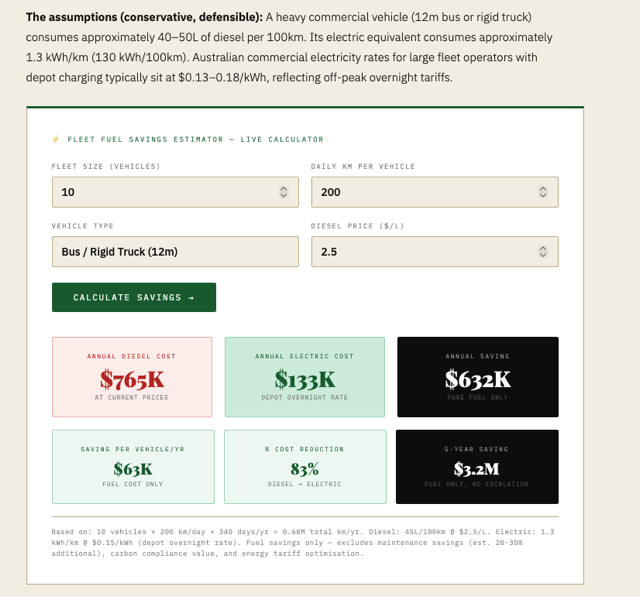
This sustained pricing pressure has rendered the economics of diesel-reliant logistics increasingly untenable. According to JET Charge, the fuel cost savings of transitioning a commercial fleet to electric power are no longer marginal; they are transformational. For a large fleet operator running 100 heavy vehicles, transitioning to EVs can yield operational savings reaching up to AU$4.5 million, a figure that continues to scale upward as diesel prices climb and maintenance overheads drop. Electric motors feature significantly fewer moving parts than internal combustion engines, slashing routine maintenance expenses and shrinking vehicle payback periods from years to mere months.

Despite these clear financial incentives, the heavy commercial electric truck market in Australia is still in its nascent stages. While early-adopting pioneers are testing the waters with a scattering of Volvo electric trucks, eActros models, Janus Electric conversions, and newly arrived Windrose semi-trailers in Melbourne, the immediate action is heavily concentrated in the "last mile" rigid delivery truck segment. Yet, international precedents set by markets in Europe and China indicate that heavy-duty electric semi-trailers are poised to take center stage in Australia much sooner than many operators anticipate.
Chronology of a Compressed Transition
The timeline for Australian fleet electrification has experienced a dramatic acceleration. What was once mapped out as a measured, five-year transition plan by many corporate boards has been sharply compressed down to 12 to 18 months, largely dictated by traditional vehicle lease-cycle arrangements.
The 18-Month Window
Corporate logistics providers currently evaluating their fleet refresh cycles face a critical juncture. Companies that choose to lock into another five-to-six-year diesel lease cycle risk finding themselves severely disadvantaged by the time those vehicles reach retirement. By the mid-2020s, tightening federal emissions standards and escalating carbon-reduction mandates will make holding onto fossil-fueled vehicles increasingly punitive.
The Looming Infrastructure Bottleneck
Furthermore, JET Charge warns that delaying infrastructure investments until the end of the decade will lead to severe grid congestion. Fleet operators will increasingly find themselves competing directly with well-funded data centers and other heavy energy users for limited electrical grid access and power availability.

Because grid upgrades and high-capacity depot installations take time to plan, approve, and build, current market demand means that fleets failing to commit to infrastructure developments today risk being locked out of essential power allocations until 2027 or 2028. Consequently, smart operators are treating depot electrification not as a long-term sustainability goal, but as an active procurement decision and an urgent risk-mitigation strategy against supply chain cost inflation.
Supporting Data: Real-World Projections and Case Studies
To demonstrate that these financial models are grounded in operational reality rather than theoretical accounting, JET Charge has released comprehensive fleet fuel calculators mapping out the dramatic savings available to operators of all sizes.
+-------------------------------------------------------------------------+
|                ESTIMATED FLEET TRANSITION METRICS                       |
+---------------------------+---------------------+-----------------------+
| Fleet Size & Type         | Diesel Baseline     | EV Transition Savings |
+---------------------------+---------------------+-----------------------+
| Small Rigid (Last Mile)   | High Fuel/Maint.    | Significant Drop      |
| Medium Rigid Delivery     | High Exposure       | Substantial Savings   |
| Heavy Semi-Trailers (100) | AU$ Baseline Peak   | Up to AU$4.5M+ Saved  |
+---------------------------+---------------------+-----------------------+
The IKEA Australia Playbook
The viability of this transition is already being proven by major corporate giants operating within Australia. When global furniture retailer IKEA committed to achieving 100% zero-emission deliveries, the primary roadblock was not the availability of electric trucks, but the lack of accessible charging infrastructure.
Because delivery subcontractors often operate on exceptionally thin logistics margins, individual operators could not independently fund heavy-duty depot charging infrastructure. To solve this, JET Charge partnered with IKEA Australia to deploy 59 commercial chargers across seven strategic locations.

This infrastructure rollout de-risked the entire transition. It empowered delivery partners—including ANC Delivers, Kings Transport, and All-Purpose Transport—to scale their zero-emission vehicle fleets with confidence. Supported by integrated billing solutions via Chargefox for seamless power cost recovery, IKEA transformed its logistics footprint. The company dramatically increased its zero-emission deliveries from a mere 5% in 2022 to an astounding 83% by late 2025, operating over 100 electric delivery vehicles nationwide.
This initiative serves as a blueprint for the broader retail and logistics sector: remove the infrastructure barrier, and the vehicle transition naturally follows.
Official Responses and Industry Perspectives
Industry leaders and corporate executives are increasingly vocal about the necessity of moving away from fossil fuels, pointing to systemic macroeconomic pressures that make the status quo unsustainable.
Tim Washington emphasizes that private depot infrastructure must account for roughly 70% of a commercial fleet’s total charging needs. To facilitate this on a national scale, JET Charge has forged strategic alliances—such as its partnership with NewVolt—to systematically electrify vital commercial freight corridors across Australia.
Despite the clear benefits, industry leaders acknowledge that significant psychological and structural hurdles remain. "People still think charging is hard," Washington notes, highlighting the need for continued industry education and standardized administrative processes, such as systems to accurately reimburse employees or contractors for home and on-the-road power usage.
Major Australian grocery and retail chains, which face immense pressure to keep consumer prices stable amidst a broader cost-of-living crisis, have echoed the sentiment that traditional supply chain cost increases are unsustainable. Suppliers are being squeezed from all sides by rising fuel and operational expenses. By eliminating exposure to volatile diesel markets through localized fleet electrification, businesses can regain long-term budget predictability.
Implications for the Broader Australian Economy
The transition of Australia’s heavy vehicle fleet extends far beyond individual corporate balance sheets; it carries profound macroeconomic implications for the entire nation.
Mitigating Inflation and Supply Chain Pressures
Because diesel is the primary fuel moving goods from ports and agricultural hubs to retail shelves, fluctuations in diesel prices ripple through every sector of the Australian economy. These high transportation costs feed directly into domestic inflation, which in turn places upward pressure on interest rates and deepens consumer cost-of-living anxieties. Decarbonizing the supply chain acts as an effective macroeconomic shock absorber, insulating retail prices from international oil crises and geopolitical conflicts.

The Path Forward
Overcoming the remaining roadblocks requires a proactive cultural and financial shift within corporate boardrooms. Companies must allocate dedicated capital budgets for electric infrastructure today rather than treating it as an afterthought.
Through targeted infrastructure partnerships, sophisticated billing and reimbursement frameworks, and a growing network of high-capacity charging corridors, companies like JET Charge are clearing the path forward. For Australian trucking—spanning metro delivery routes, regional freight lines, and remote transport networks—the future is undeniably electric, and the race to secure the grid has officially begun.
