

By the Tarot Association Investigative Desk
Special Report
Main Facts: The Anatomy of "Ancient Echoes"
In the ever-evolving landscape of esoteric practices, modern divination, and self-exploration techniques, few frameworks have garnered as much intrigue recently as Ancient Echoes. Developed as a specialized Tarosophy "split-deck" method, Ancient Echoes bridges the gap between contemporary psychological introspection and traditional cartomancy, offering practitioners a structured, repeatable pathway to explore supposed past lives and understand their direct, indelible bearing on the present.
Unlike standard tarot spreads that evaluate linear time or immediate predictive outcomes, Ancient Echoes operates on a multidimensional premise. It treats the standard 78-card tarot deck not as a single homogenous tool, but as a tripartite system of archetypes, social identities, and daily energies. By intentionally separating the deck into three distinct stacks—the Major Arcana, the Minor Arcana, and the Court Cards—the practitioner creates a modular diagnostic tool designed to map the soul’s trajectory across incarnations.
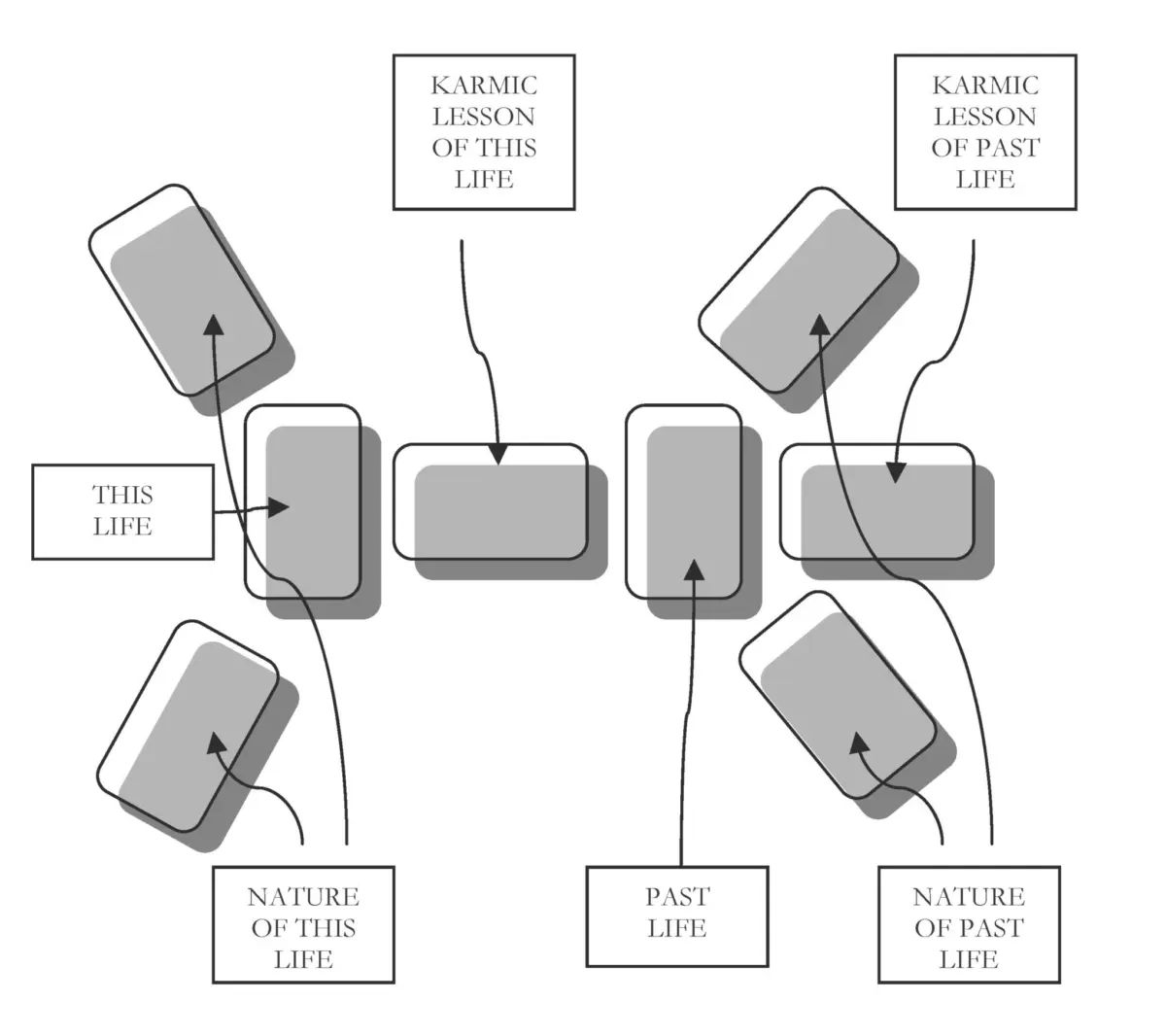
At its core, the method requires users to systematically layout and dialogue with cards representing:
- The Present Soul: A Court Card anchoring the user’s current energetic baseline.
- The Current Lifetime: A pair of Minor Arcana cards defining the circumstances and nature of the present incarnation.
- The Previous Life Echo: A Court Card signifying a past-life persona.
- The Karmic Lesson: A Major Arcana bridge card connecting past experiences to present-day spiritual evolution.
- Past-Life Context: Additional Minor Arcana cards that flesh out the historical or situational environment of the previous incarnation.
The primary objective of Ancient Echoes is not merely historical curiosity regarding who one might have been in a bygone era. Instead, it functions as a therapeutic narrative device, allowing readers to weave coherent, meaningful stories out of abstract symbols to unpick deep-seated behavioral patterns, unexplained phobias, and recurring life obstacles.
Chronology: The Evolution of Tarosophy and the Birth of the Split-Deck Method
To understand how Ancient Echoes arrived at its current iteration, one must examine the broader historical development of Tarosophy—a philosophical approach to the tarot pioneered in the early 21st century that emphasizes wisdom, play, and practical magic over rigid fortune-telling.
Phase One: The Rise of Tarosophy (2000s–2010s)
For decades, tarot was largely viewed through the narrow lens of predictive divination or psychological mirroring via systems like Jungian archetypes. However, modern esoteric teachers began pushing for a more interactive philosophy. Tarosophy emerged as a system that viewed the cards as living paradigms, conceptual tools, and conversational partners. Practitioners began experimenting with non-traditional layouts, breaking away from the classic Celtic Cross to invent dynamic, kinetic spreads that treated different sections of the deck as distinct voices.
Phase Two: Experimentation with Stratified Decks (2010s–2020)
As tarot readers sought deeper psychological and spiritual layers in their readings, innovators began experimenting with "split-deck" methodologies. Recognizing that Major Arcana cards carry heavy, overarching spiritual themes, Minor Arcana cards reflect daily mundane events, and Court Cards represent internalized psychological states or archetypal figures, esoteric researchers started dividing decks prior to shuffling. This technique allowed for targeted statistical probabilities within a reading—ensuring, for instance, that a profound spiritual lesson (Major Arcana) was guaranteed to intersect with a daily action (Minor Arcana).
Phase Three: The Conceptualization of Ancient Echoes (2020–Present)
Ancient Echoes was formalized as a direct response to clients seeking past-life regression modalities without undergoing hypnotic induction. Recognizing the rich narrative potential inherent in the court and suit structures, creators formulated a step-by-step layout process. The method was refined to allow for infinite outward expansion—what modern practitioners call "chaining echoes"—enabling a reader to track a lineage of past lives backward through time by continuously drawing new Karmic Lesson cards and historical markers.
Supporting Data: Step-by-Step Execution and Advanced Analysis
To fully comprehend the mechanics of Ancient Echoes, one must look closely at its procedural execution and the analytical frameworks used by practitioners to decode the resulting layouts.
The Step-by-Step Protocol
- Preparation: Take a complete tarot deck and carefully separate it into three independent stacks: the Court Cards (Pages, Knights, Queens, Kings), the Major Arcana (The Fool through The World), and the Minor Arcana (Aces through Tens across the four suits).
- Establishing the Present Self: Take the stack of Court Cards, shuffle thoroughly, and draw one card. Place it in the centre of your workspace with the mental or verbal affirmation: "This is the nature of my Soul in present-time."
- Defining the Current Incarnation: Shuffle the Minor Arcana stack. Draw two cards and place them adjacent to the central Soul card, declaring: "This is the nature of my lifetime in this life."
- Summoning the Previous Echo: Return to the Court Card stack, shuffle again while keeping the current life cards in view, and draw one card. Place it to the side (top, bottom, left, or right) of the Minor cards, stating: "This is an echo of my previous lifetime self."
- Identifying the Karmic Bridge: Shuffle the Major Arcana stack. Select a single card and position it directly between the present-day Soul Court Card and the previous-life Court Card. Affirm: "This is the Karmic lesson I must learn in this lifetime."
- Narrating the Past Life: Shuffle the Minor Arcana stack once more, keeping the newly placed Karmic Lesson in mind. Draw two cards and place them against the previous-life Court Card. Declare: "This was the nature of that previous life." Use these cards to construct a narrative or historical vignette.
Advanced Analytical Techniques
Experienced practitioners rarely stop at a single generational snapshot. The true depth of Ancient Echoes lies in its scalability:
- Infinite Regression (Chaining Echoes): Readers can continue the process indefinitely. By treating the previous life’s Court Card as a new anchor point, the practitioner can draw a subsequent Karmic Lesson Major Arcana card and pull further Minor Arcana pairs, working systematically backward through sequential past lives.
- Suit and Gender Diagnostics: Analysts encourage looking at broader patterns across multiple past-life draws. Are the Minor Arcana cards associated with previous lives predominantly male or female court figures? Do specific suits dominate? For instance, a heavy concentration of Pentacles across past-life echoes might suggest recurring themes of agrarian labor, financial scarcity, or material obsession, whereas Cups might point toward emotional turbulence, artistic pursuits, or relational dependencies.
- The Karmic Row: By laying out all the Karmic Lesson Major Arcana cards in a sequential horizontal line as the reading expands backward, readers can analyze the macro-progression of the soul. Observing whether the Major Arcana cards transition from reactive energies (like The Tower or The Devil) toward integrated spiritual mastery (like The World or The Sun) offers profound insights into the soul’s developmental arc.
Official Responses: Perspectives from Esoteric Communities and Critics
The introduction of structured, non-hypnotic past-life exploration tools like Ancient Echoes has sparked diverse conversations across metaphysical circles, psychological communities, and traditional tarot organizations.
Endorsements from the Esoteric Community
Proponents of Tarosophy and modern intuitive arts have warmly embraced the method, praising its structural elegance and psychological safety.
"Ancient Echoes takes what can often feel like vague, ungrounded psychic speculation and grounds it in a rigorous, tactile framework," notes a senior instructor at the Tarot Association. "By forcing the reader to separate the deck, you eliminate confirmation bias. The cards act as objective mirrors. When a user weaves a story out of those split stacks, they aren’t just guessing about history; they are engaging in a powerful form of narrative therapy that helps resolve modern anxieties by reframing them as ancestral or past-life echoes."
Many practitioners highlight the therapeutic utility of the spread. Rather than requiring expensive, time-consuming regression therapy sessions, Ancient Echoes empowers individuals to act as their own historians and healers, using the universal symbolic language of the tarot to unlock subconscious blockages.
Skepticism and Critical Analysis
Conversely, mainstream skeptics and psychological professionals urge caution, maintaining a clear distinction between metaphorical self-reflection and literal reincarnation claims.
“While narrative tarot spreads are wonderful tools for creative writing, metaphorical exploration, and metaphorical self-examination, we must remain grounded in empirical reality,” states a prominent behavioral psychologist specializing in cognitive reframing techniques. “There is no scientific validation for past-life memories, whether accessed via hypnosis or shuffled cardboard rectangles. However, if a person uses a framework like Ancient Echoes to identify negative personal patterns—such as a persistent fear of scarcity or toxic relationship dynamics—and uses that story to enact positive behavioral changes in the present, the psychological utility is undeniable, regardless of the metaphysical claims.”
Furthermore, traditional tarot traditionalists occasionally express concern that splitting the deck disrupts the organic, synchronous flow of a standard reading, where any card can theoretically appear alongside any other. However, Tarosophy advocates counter that specialized questions demand specialized tools, comparing the split-deck approach to medical specialization in anatomy.
Implications: The Future of Archetypal Self-Discovery
As alternative wellness practices continue to surge in popularity, the implications of methods like Ancient Echoes extend far beyond the niche hobby of card reading. They represent a broader cultural shift toward DIY psychological tooling and narrative-based healing.
1. Democratization of Esoteric Therapy
In the past, exploring deep-seated psychological trauma or exploring spiritual concepts of reincarnation required specialized practitioners, gurus, or hypnotherapists. By converting these explorations into accessible, tactile card mechanics, Ancient Echoes democratizes the process. Anyone with a standard 78-card deck can engage in deep philosophical and psychological introspection from their own living room.
2. The Rise of Narrative Medicine and Jungian Play
The reliance on storytelling within Ancient Echoes aligns closely with modern developments in narrative therapy—a modality that posits individuals can rewrite their personal stories to overcome trauma and stagnation. By compelling the user to "weave a story" from disparate symbolic inputs, the spread bridges the gap between left-brain analytical processing and right-brain imaginative synthesis.
3. Expansion of Tarosophy into Mainstream Mindfulness
As people increasingly look for screen-free, tactile ways to process stress, anxiety, and existential questions, structured spreads that encourage meditative patience are likely to grow. The ability to chain echoes backward through time offers an endless frontier for personal journaling, artistic inspiration, and spiritual journaling.
Conclusion
Ancient Echoes stands as a fascinating bridge between ancient philosophical queries about the soul’s journey and modern, interactive cartomancy. Whether viewed as literal historical archaeology of past incarnations or as a brilliant exercise in metaphorical storytelling and psychological projection, the method provides a robust, endlessly expandable framework for self-discovery.
By carefully sorting the deck, laying out the pillars of present reality, and stepping backward through the echoes of time, practitioners are finding new ways to heal old wounds—proving that sometimes, to understand where we are going, we must first learn how to read the echoes of where we have been.
