

By CleanTechnica News Desk
In a landmark decision handed down on Friday, September 11, 2026, the U.S. Court of Appeals for the District of Columbia Circuit delivered a stinging rebuke to the federal government, ruling that the Department of Energy (DOE) grossly overstepped its statutory authority by invoking emergency powers to prevent the retirement of a major coal-fired power plant in Michigan.
The ruling marks a pivotal legal turning point in an ongoing nationwide battle over energy independence, state jurisdiction, and the aggressive executive maneuvering designed to keep aging fossil-fuel infrastructure online against market forces. For ratepayers in the Midwest, the decision offers a glimmer of hope after being forced to absorb hundreds of millions of dollars in costs for a facility that regulators, grid operators, and state officials agreed was no longer necessary.
Main Facts: The Clash Over the J.H. Campbell Generating Station
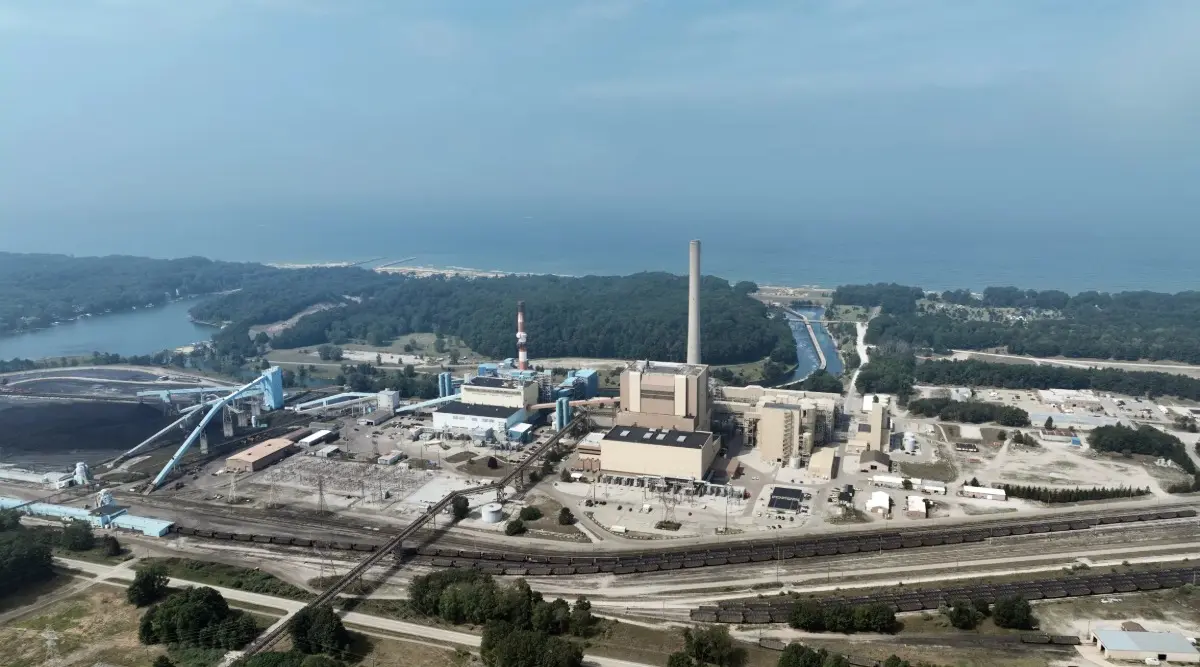
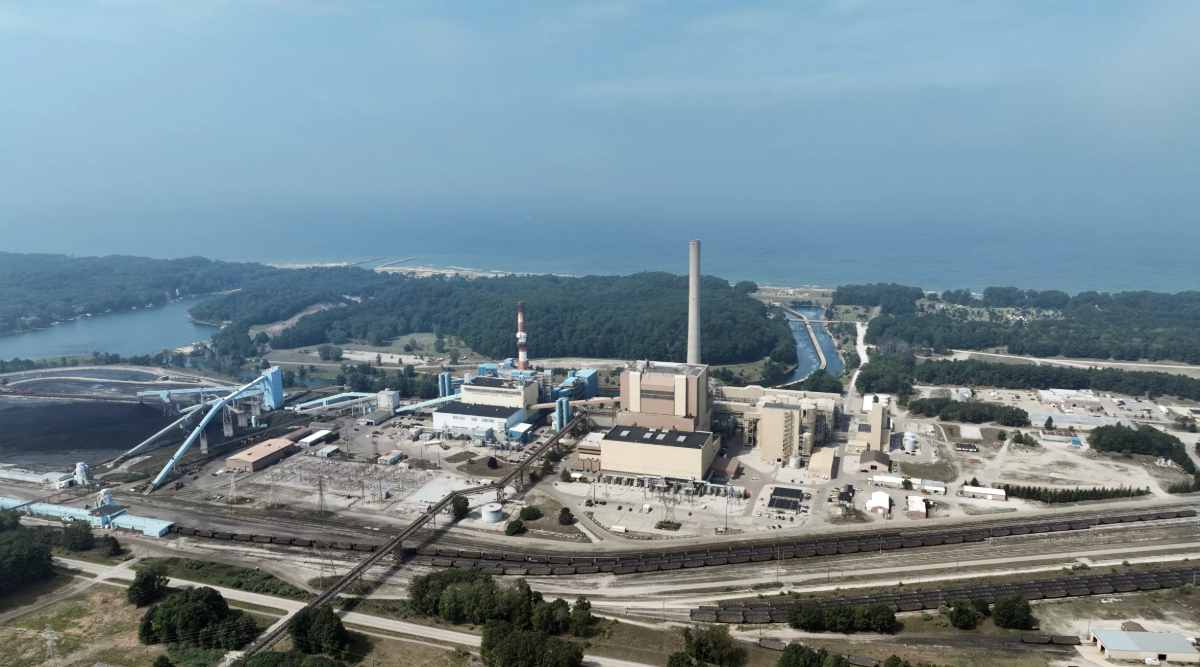
At the center of the legal dispute is the J.H. Campbell generating station, located in West Olive, Michigan, mere miles from the eastern shores of Lake Michigan. Operational since 1962, the massive facility once supplied up to 1,420 megawatts (MW) of electricity from three separate coal-fired generating units at its peak.
By the early 2020s, however, the plant’s owner, Consumers Energy, recognized that the aging facility was becoming obsolete, expensive to maintain, and environmentally burdensome. The utility formulated a comprehensive transition plan to shutter the coal plant and replace its capacity with a modern, cleaner mix of solar resources, methane generation, and advanced battery storage systems.
This transition strategy underwent rigorous review. It was approved by Michigan state utility regulators and greenlit by MISO (Midwest Independent System Operator), the regional transmission organization responsible for managing the high-voltage electric grid across the lower Michigan peninsula and large swaths of the American Midwest. Grid planners confirmed that the proposed clean energy mix would not only fully replace the output of the retired coal plant but also provide surplus power to ensure regional grid reliability.
Despite this localized and institutional consensus, the federal government intervened. Utilizing Section 202(c) of the Federal Power Act—a rarely used statutory provision intended for genuine, acute weather or wartime emergencies—the Department of Energy issued a series of emergency orders compelling Consumers Energy to keep the J.H. Campbell facility running.
The D.C. Circuit Court of Appeals ultimately found this federal justification to be entirely fictitious. Writing for the three-judge panel, Judge Cornelia Pillard emphasized that the management of day-to-day power generation and long-term energy planning rests firmly with the states and regional grid operators, not federal bureaucrats attempting to pick preferred fossil-fuel resources.
Chronology of Events: From Retirement Plans to Federal Override
To understand how a routine utility retirement transformed into a federal legal showdown, it is necessary to examine the timeline of policy changes, regulatory approvals, and administrative maneuvers:
- 1962: The J.H. Campbell generating station commences commercial operation in West Olive, Michigan, providing decades of coal-fired baseload electricity to the Midwest.
- Early 2020s: Consumers Energy initiates long-term planning to retire the facility, mapping out a replacement strategy centered on utility-scale solar, battery energy storage, and flexible peaking resources. State regulators and MISO approve the blueprint.
- May 23, 2025: Leveraging a regulatory playbook assembled during the prior presidential transition by conservative strategists like Russell Vought at the Heritage Foundation, the Department of Energy issues its first Section 202(c) emergency order. The directive forces the J.H. Campbell plant to remain operational, claiming a broad energy emergency.
- June 23, 2025: During one of the grid’s most stressed demand days of the summer, the unreliability of the aging facility is underscored when Campbell Unit 1 suddenly trips offline in the middle of the day. Meanwhile, Campbell Unit 2 remains completely out of service—a status it has maintained almost continuously since the emergency orders began.
- Late 2025 – Early 2026: Having discovered that Section 202(c) orders can be extended indefinitely by simply rolling over 90-day "emergency" declarations, the administration issues its sixth consecutive extension for the Campbell plant.
- January 2026: A coalition of states—including Michigan, Minnesota, and Illinois—alongside leading environmental and consumer advocacy groups, formally files a multi-jurisdictional lawsuit challenging the legality of the DOE’s ongoing mandates.
- September 11, 2026: The D.C. Circuit Court of Appeals rules unanimously in favor of the coalition, vacating the DOE’s emergency orders and rebuking the administration for misusing statutory emergency powers to advance a partisan fossil-fuel agenda.
Supporting Data: Costs, Unreliability, and Financial Impact
The economic and operational fallout of the federal government’s intervention has been heavily scrutinized by energy analysts, legal experts, and public interest organizations. Far from protecting grid reliability, the forced retention of the J.H. Campbell plant has highlighted the operational hazards and exorbitant costs of keeping aging coal infrastructure on life support.
The Financial Burden on Ratepayers
According to filings and public interest reports, ratepayers within the MISO service area have been forced to shoulder more than $248 million in cumulative costs simply to keep the dilapidated J.H. Campbell facility functioning past its scheduled retirement date.
A broader study published by the energy consulting firm Grid Strategies estimates that federal mandates designed to forestall the retirement of coal-fired power plants across the United States could ultimately cost consumers upward of $3 billion per year. These expenses cover ongoing maintenance, environmental compliance updates, and capacity payments for plants that frequently sit idle or fail to perform when called upon.
Operational Unreliability
Proponents of the federal orders frequently argued that the Campbell plant was indispensable for regional security. However, empirical data from the plant’s operation during the 2025 and 2026 summer demand peaks tells a starkly different story.
Kathryn McGrath, a public affairs and communications strategist for Earthjustice’s Clean Energy Program, highlighted the facility’s chronic mechanical instability:
"Campbell’s output since the 202(c) orders began on May 23, 2025, demonstrates its unreliability and the dangers to grid reliability of relying on old coal plants. For instance, on June 23, 2025, the grid’s most stressed day that summer, Campbell Unit 1 suddenly dropped offline in the middle of the day. Meanwhile, Campbell Unit 2 was already offline that day, had been offline since May 23, and has barely been able to stay online during the entire term of the orders."
This erratic performance stands in sharp contrast to modern battery energy storage systems and fast-responding renewable assets, which offer rapid deployment and predictable capacity without the massive baseline upkeep and emission profiles of 1960s-era coal boilers.
Official Responses: Legal and Advocacy Perspectives
The D.C. Circuit Court’s ruling drew immediate praise from state attorneys, environmental attorneys, and consumer watchdogs who spent over a year litigating against the federal mandates.
Michael Lenoff, lead attorney for Earthjustice, underscored the systemic overreach of the Department of Energy during a press briefing following the decision:

"The court rejected the Department of Energy’s use of emergency authority, and agreed with our interpretation that emergency authority is to be used for actual emergencies, not picking preferred resources or addressing issues that Congress and the law have entrusted states to deal with. The DOE needs to stay in its lane and use its emergency powers only in actual emergencies. Preventing the market-driven retirements of coal plants to advance a coal-friendly agenda is not a proper use of emergency powers."
Sanjay Narayan, chief appellate counsel for the Sierra Club, echoed these sentiments, focusing on the human and economic toll borne by everyday utility customers:
"Today’s ruling is a victory for families across the Midwest who are tired of paying to keep this old, expensive, and dirty power plant online. Instead of working to lower costs and clean up our air and water, the administration has been pulling out all the stops to try to bolster dirty and expensive fossil fuels—at public expense. This reckless agenda will not succeed. We will continue to hold the Department of Energy accountable to the law, and ensure that the J.H. Campbell plant finally retires as it was scheduled to."
Broader Implications: The "Flooding the Zone" Strategy and the Future of the Grid
Legal analysts note that the J.H. Campbell case is emblematic of a broader governance philosophy developed during Donald Trump’s time out of office by policy architects such as Russell Vought at the Heritage Foundation. This strategy—often informally described as "flooding the zone"—relies on systematically cataloging latent executive powers, emergency authorities, and statutory gray areas across federal agencies.
When deployed, these measures exploit the inherent friction and deliberate pacing of the American judicial system. By issuing immediate administrative orders that take effect instantly, the executive branch can alter on-the-ground economic realities for months or years while opponents are forced into protracted, expensive court battles. Even when courts eventually rule these orders illegal—as the Supreme Court did with certain administration tariffs—the administration can pivot immediately to a secondary emergency provision, creating an endless loop of regulatory uncertainty.
Beyond Michigan, the Department of Energy has utilized similar Section 202(c) directives to keep coal plants operating in states like Washington, Indiana, and Colorado. Yet, despite these extraordinary federal life-support measures, the domestic coal industry continues to shed jobs and lose ground to cheaper, cleaner alternatives driven by market economics.
For the Midwest, Friday’s ruling serves as a vital judicial check against executive overreach. It reaffirms that the foundation of American energy policy rests on transparent, long-term resource planning by local utilities, state public utility commissions, and regional grid operators—not on fictitious emergencies manufactured in Washington to rescue dying fossil-fuel assets at the expense of everyday ratepayers.
