

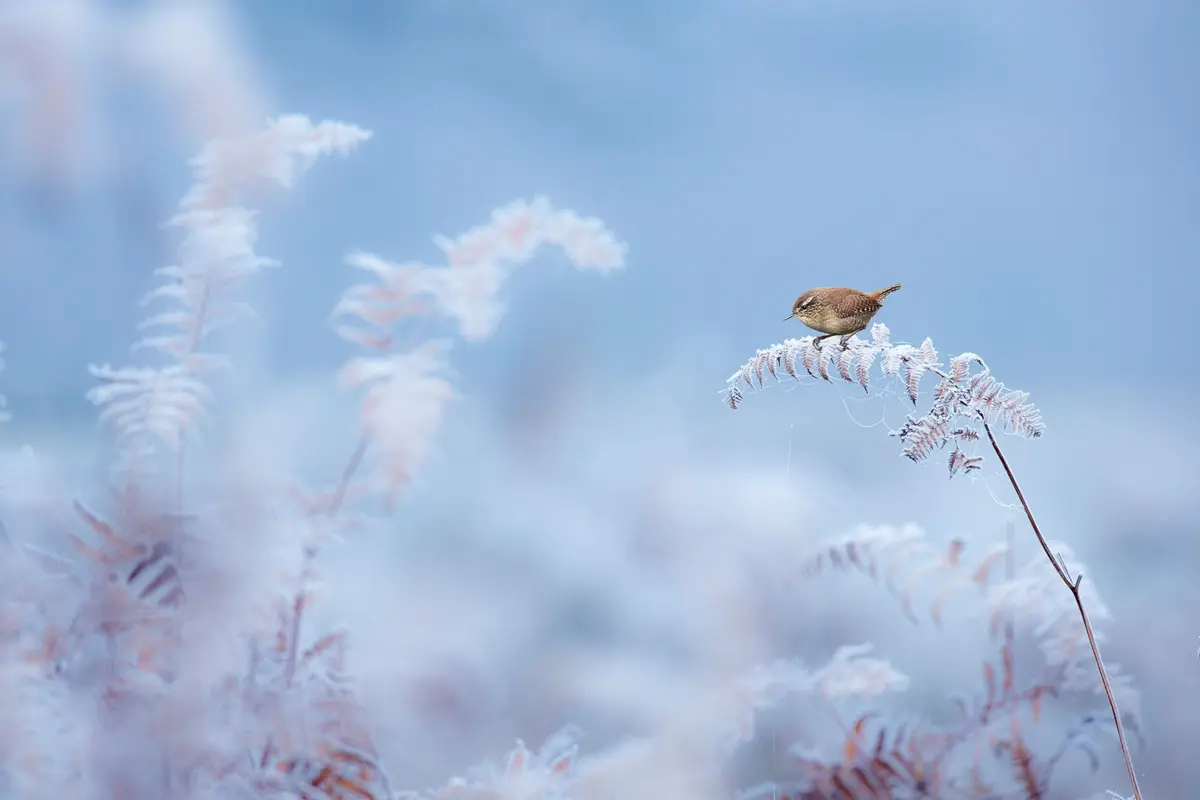
Main Facts
Passerine birds, scientifically classified under the massive order Passeriformes, represent the largest and most diverse group of avian species on Earth, encompassing over half of all known birds. Commonly recognized as perching birds, they are biologically defined by a distinct anisodactyl toe arrangement—featuring three toes pointing forward and one facing backward—which provides exceptional grip and agility. From the brilliant goldfinch to the ubiquitous garden robin, passerines include familiar families such as sparrows, tits, finches, warblers, and swallows.
While found worldwide in virtually every terrestrial habitat ranging from dense forests and open fields to urban backyards, their small size and rapid, unpredictable movements present a formidable challenge to wildlife photographers. Despite these technical hurdles, their accessibility makes them an ideal and endlessly rewarding subject for both aspiring and seasoned natural history photographers looking to hone their fieldcraft.

Chronology of the Shoot: Planning, Setup, and Execution
Successfully capturing professional-grade images of passerine birds requires a methodical approach that unfolds over several distinct phases.
Phase 1: Observation and Fieldcraft
The photographic process begins long before stepping into the field or lifting a camera. Photographers must first invest time in passive observation, studying the daily rhythms, flight paths, and foraging habits of local species. Learning to identify birds by their complex songs is an invaluable skill, particularly in dense foliage where visual spotting is difficult.

Phase 2: Constructing the Studio Environment
The next step involves establishing a reliable feeding station, particularly during the harsh winter months when natural resources dwindle. By offering high-energy foods such as sunflower seeds, nyjer seeds, and mealworms, photographers can entice skittish subjects into pre-determined zones. This phase also includes positioning natural perches—such as moss-covered branches or blooming spring twigs—near the feeding areas, carefully angled to maximize the impact of natural light.
Phase 3: Technical Calibration
Before the birds arrive, camera bodies and telephoto lenses must be meticulously configured. Shutter speeds must be locked at a minimum of 1/1000th of a second to freeze sudden motions, and continuous autofocus (AI Servo/AF-C) systems must be primed to track erratic flight paths.

Phase 4: The Capture Window
With the environment stabilized and the camera calibrated, the photographer enters the active shooting phase. Using continuous burst modes, remote shutter releases, or manual focus traps for birds in flight, the photographer anticipates behavioral cues—such as territorial disputes, bathing rituals, or feeding interactions—to capture fleeting, high-impact moments.
Supporting Data & Technical Parameters
Achieving optical sharpness and compelling aesthetics in passerine photography relies on strict adherence to photographic metrics. Because these subjects are diminutive and lightning-fast, the margin for error is razor-thin.

- Shutter Speed: A minimum threshold of 1/1000th of a second is required to freeze standard perching movements. For high-speed actions such as take-offs, landings, or interactions in flight, speeds must be elevated to 1/2500th of a second or faster.
- Aperture Range: Wide apertures between f/2.8 and f/5.6 are essential for isolating the subject through a shallow depth of field, rendering busy background foliage into smooth, buttery bokeh. However, frame-filling macro portraits or multi-bird squabbles may require stopping down to maintain sharpness across multiple planes.
- ISO Management: In low-light environments, particularly under dense forest canopy or overcast skies, photographers should not hesitate to raise ISO settings. Achieving critical sharpness with manageable sensor noise is universally preferred over a clean image plagued by motion blur.
- Focal Lengths: Telephoto lenses ranging from 300mm to 600mm (including flexible tele-zooms) are standard equipment. Longer focal lengths heavily exaggerate background compression, naturally enhancing subject isolation.
Expert Perspectives and Field Strategies
Professional wildlife conservationists and nature photographers emphasize that ethical considerations and behavioral understanding must supersede the desire for a pristine photograph.
According to leading field experts, minimizing human impact on nesting and foraging sites is paramount. "Never compromise the well-being of a subject for the sake of an image," notes seasoned wildlife documentation guidelines. During the vulnerable breeding season—when parents are feeding newly fledged chicks—photographers are urged to exercise extreme caution, utilizing portable hides or camouflage netting left in situ over extended periods to allow birds to acclimate to human presence.

Furthermore, field specialists stress that environmental context is just as important as the bird itself. Rather than shooting against flat, uninspired skies or sterile feeder trays, experts recommend integrating natural elements like running water reflection pools, weathered lichen branches, and strategic negative space. Creating a reflection pool using a rectangular planting tray paired with dark foliage reflections allows photographers to bypass glaring, washed-out skylights, resulting in moody, emotionally resonant imagery.
Implications for Conservation and Wildlife Appreciation
The practice of passerine bird photography extends far beyond artistic expression; it plays a vital role in fostering broader environmental stewardship. Because passerines are among the most accessible wildlife species, backyard feeding stations and local park photography serve as a gateway for the general public to engage directly with the natural world.

By closely observing the intricate behaviors, vibrant plumage, and delicate interactions of garden birds, amateur photographers develop a profound appreciation for local biodiversity. This grassroots engagement frequently translates into active participation in citizen science initiatives, such as backyard bird counts and habitat conservation projects.
Ultimately, mastering the technical and patient art of passerine photography not only yields breathtaking portfolios but also cultivates a deeper societal commitment to protecting the fragile ecosystems that sustain these remarkable perching birds worldwide.
