

For decades, home bakers have nurtured sourdough starters with scientific precision, experimenting with hydration percentages, stretch-and-fold timings, and long cold-retardation phases. Yet, a persistent frustration unites both rookie bakers and veteran enthusiasts: the elusive bakery-quality crust. Despite using top-tier organic flours and meticulously managed fermentation, home-baked loaves often lack the blistering, crackling crust and expansive "oven spring" characteristic of commercial artisan bakeries.
The disparity does not stem from a lack of skill, but rather from equipment limitations. While commercial bakeries rely on heavy-duty, industrial deck ovens with rotating stone shelves that radiate intense, consistent heat, standard home kitchens utilize wire racks and thin metal baking sheets that struggle to retain thermal energy.
However, a culinary renaissance is sweeping home kitchens, driven by a deceptively simple piece of hardware: the heavy, cast-iron bread oven. Tested over a decade of personal sourdough baking—and backed by rigorous comparative evaluations of top-tier market options—specialized cast-iron vessels have proven to be the ultimate game-changer for structure, crumb, and crust development.
The Main Facts: Bridging the Gap Between Home and Commercial Baking
Achieving professional results in a residential kitchen requires solving two fundamental thermodynamic challenges: heat transfer and moisture retention.
When cold bread dough encounters a preheated cast-iron vessel, heat transfers instantaneously to the loaf. This thermal shock triggers a rapid expansion known as "oven spring," setting the structure of the loaf and creating the sought-after blistered texture on the crust. Simultaneously, the domed lid of a dedicated bread oven traps the steam released naturally by the baking dough.
In a conventional home oven, built-in venting systems evacuate moisture to promote dry baking. For bread, however, this is counterproductive; trapped steam keeps the outer surface of the dough soft and pliable during the critical first phase of baking, allowing the loaf to expand fully before the crust hardens. Once the lid is removed, the dry heat of the oven transforms that gelatinized exterior into a shattering, caramelized crust.
Compared to alternatives made from glass, silicone, ceramic, or thin sheet metal, cast iron possesses superior thermal mass. It absorbs heat gradually, holds it evenly, and distributes it with unwavering consistency. The sensory difference—from the visual depth of the golden-brown hue to the audible crackle upon slicing—is immediately apparent.
Chronology of Evolution: From Improvised Dutch Ovens to Specialized Vessels
The movement toward high-performance home bread baking has evolved significantly over the past thirty years.
- The 1990s (The Early Adopters): Home sourdough baking began gaining traction among wellness-minded food enthusiasts. Lacking specialized equipment, bakers improvised by inverting standard heavy Dutch ovens—baking the bread inside the deep base and using the lid as a platform, or vice-versa. While this trapped steam effectively, the deep walls of traditional Dutch ovens made scoring sticky, high-hydration doughs hazardous and prone to burns.
- The 2010s (The Artisan Boom): As the craft bread movement exploded across social media and urban centers, home bakers demanded better tools. Standard round Dutch ovens proved inadequate for oblong shapes like batards, baguettes, or large oval loaves.
- The Present Day (Specialized Engineering): Modern cookware manufacturers have engineered purpose-built cast-iron bread ovens. Featuring low-profile bases, broad surface areas, and high-domed lids specifically designed to optimize steam circulation and accommodate diverse loaf geometries, these vessels represent the pinnacle of modern home baking technology.
Supporting Data: Evaluating the Top Three Cast-Iron Bread Ovens
To establish definitive recommendations for home bakers, culinary experts evaluated the leading cast-iron bread ovens on the market, testing them across strict criteria: heat retention, steam-trapping efficiency, geometric versatility, ease of maintenance, and overall value.
| Oven Model | Best For | Material | Size & Shape | Price (USD) | Overall Rating |
|---|---|---|---|---|---|
| Challenger Breadware Bread Pan | Serious artisan bakers | Bare black cast iron | 15.5 x 10.5-inch base (Rectangular) | $299.00 | 4.6 / 5 |
| Tramontina Cast Iron Bread Oven | Budget-conscious bakers | Enameled cast iron | 9.5-inch round base | $59.95 | 4.2 / 5 |
| Le Creuset Bread Oven | Premium performance & aesthetics | Enameled cast iron | 9.5-inch round base | $324.95 | 4.4 / 5 |
1. Challenger Breadware Bread Pan: The Professional’s Choice
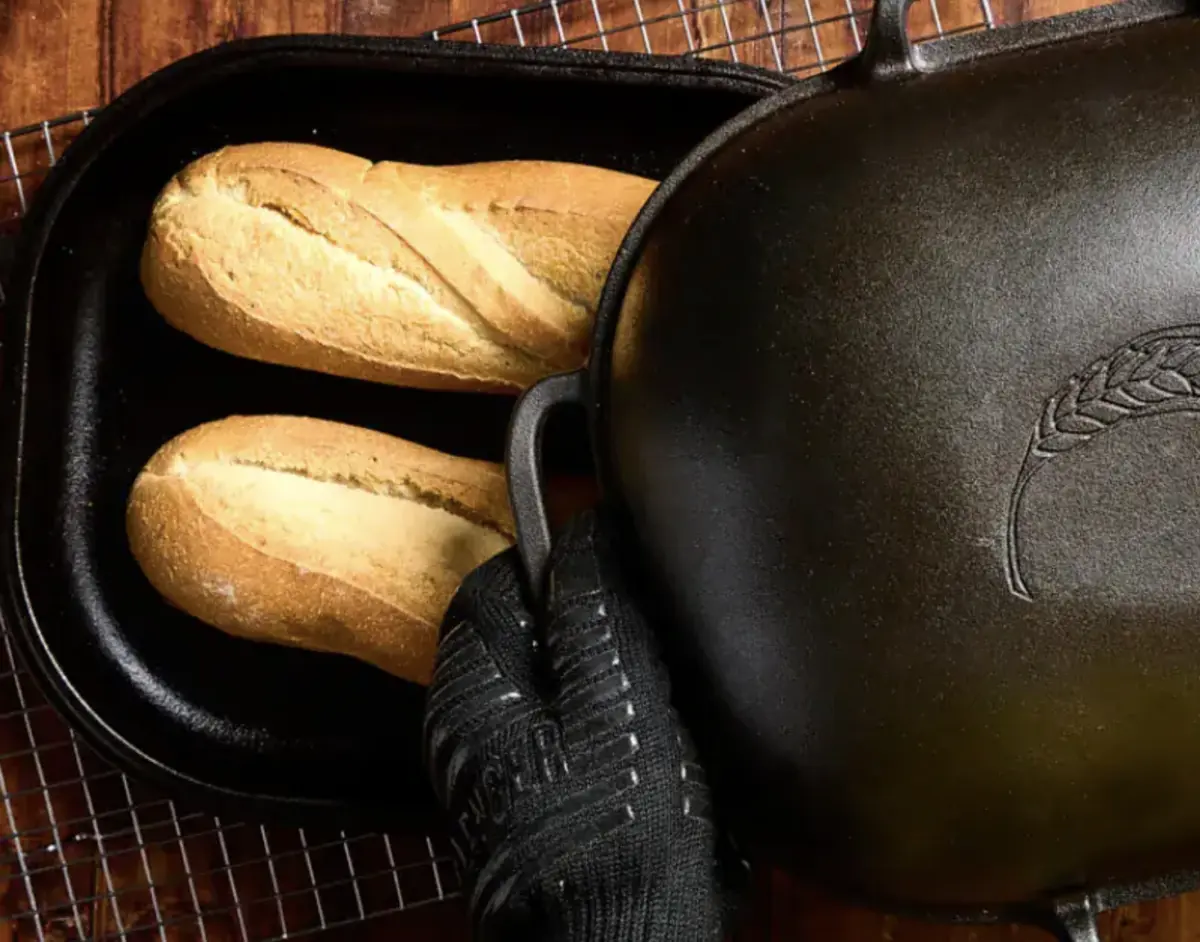
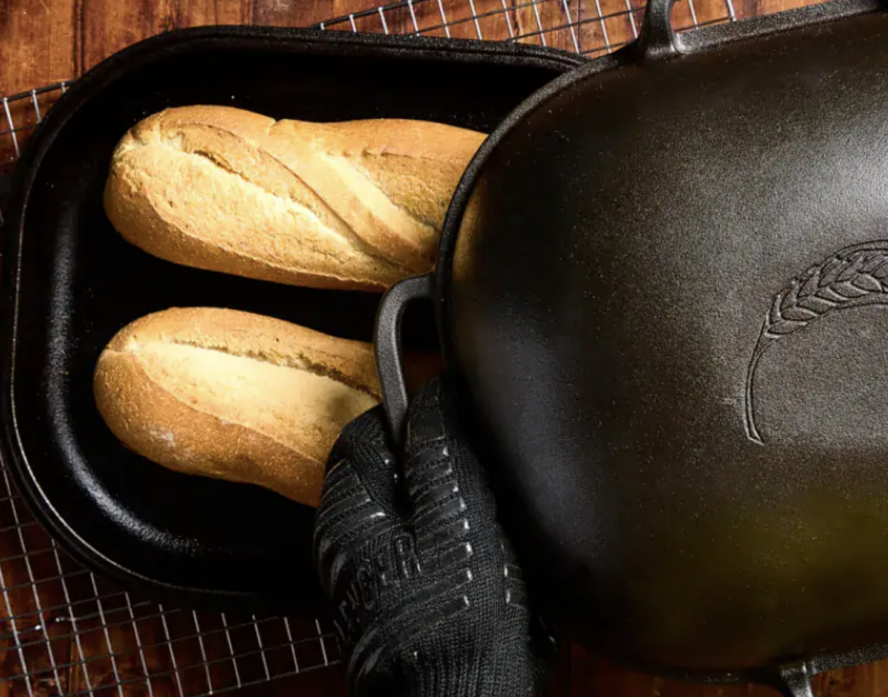
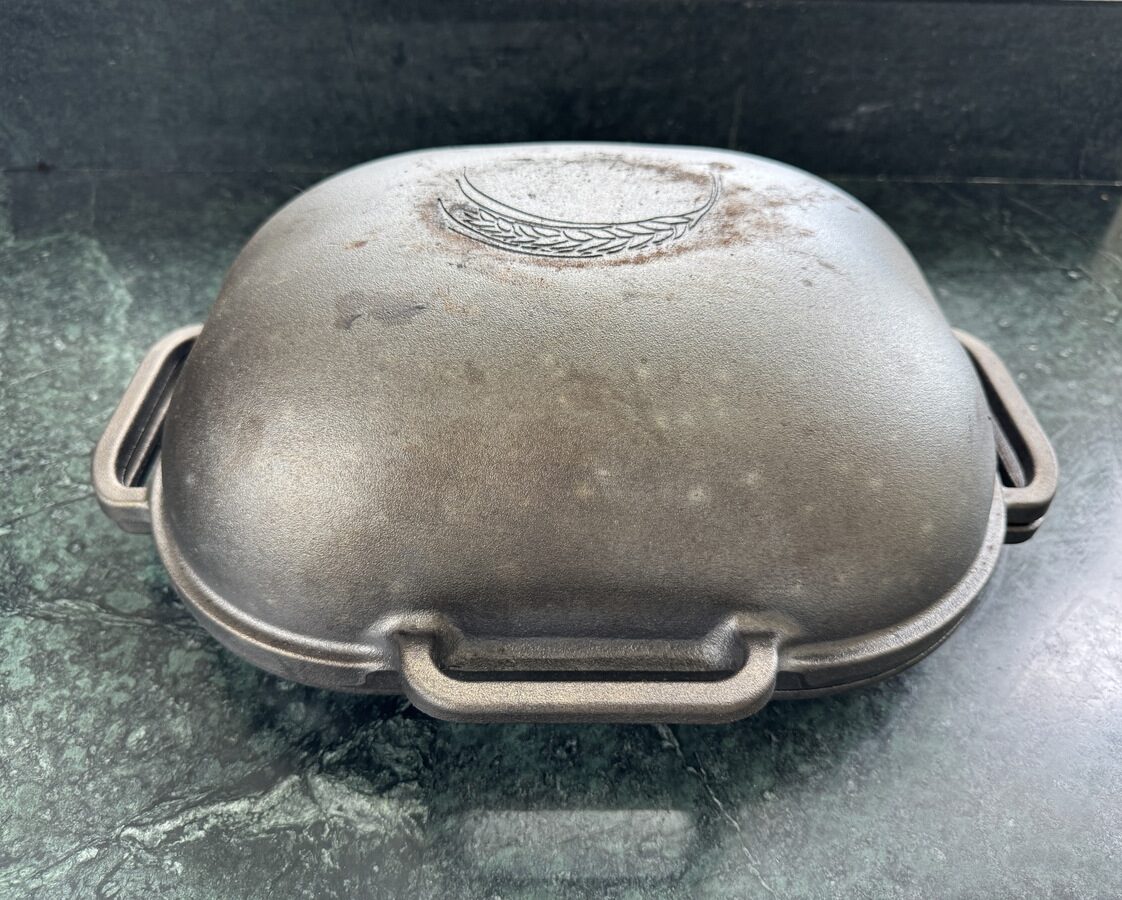
Designed by a home baker frustrated by the limitations of standard cookware, the Challenger Bread Pan is an engineering marvel for serious practitioners. Featuring a broad, low-profile rectangular base (15.5 x 10.5 inches), it easily accommodates full-sized oval batards, boules, and even baguettes or focaccias.
- Performance: Crafted from thick, heavy, bare black cast iron, it delivers maximum thermal radiation directly into the dough. Loaves baked in this pan consistently yield rich, dark bottom crusts and deep crackling.
- Design Features: The gently domed rectangular lid creates an airtight seal to trap steam efficiently. Uniquely, the lid can be flipped upside down and used independently as a baking surface for pizzas or flatbreads.
- Trade-offs: Weighing in at 20 pounds, it is the heaviest option tested, requiring caution when maneuvering in and out of a hot oven. It commands a premium price of $299.00 and requires standard bare cast-iron maintenance to prevent rust.
2. Tramontina Cast Iron Bread Oven: The Value Champion
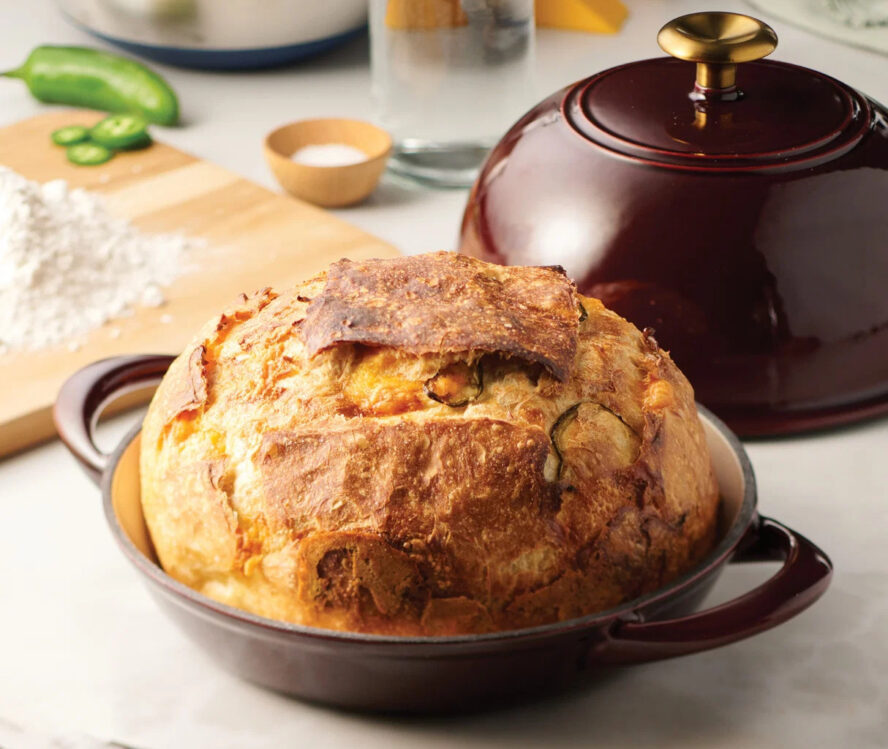
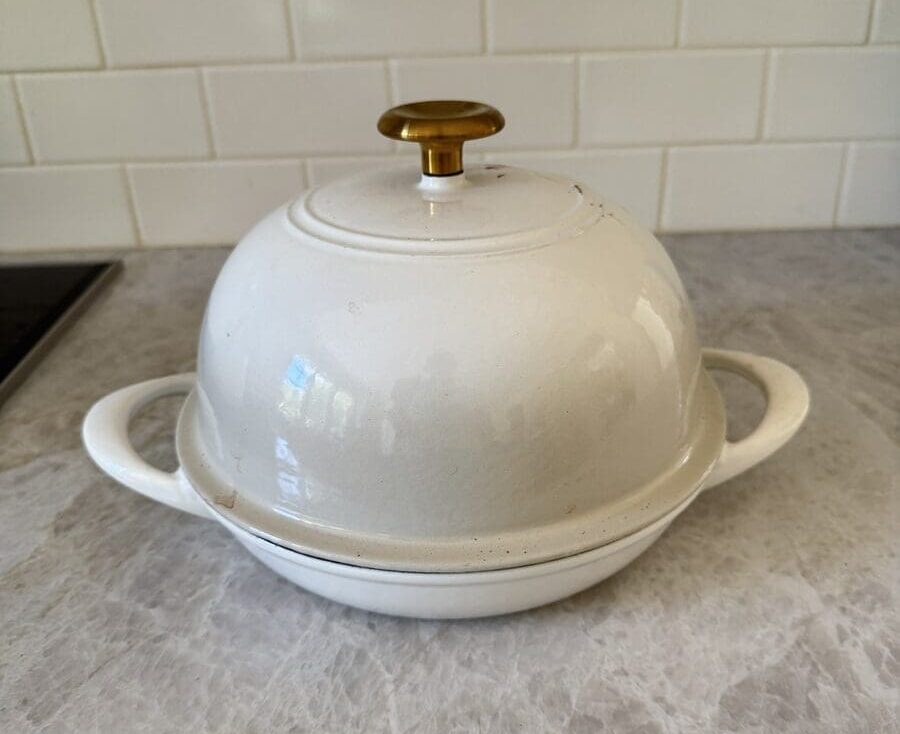
For bakers seeking high-end performance without breaking the bank, the Tramontina Cast Iron Bread Oven offers incredible value at just $59.95.
- Performance: Constructed from dense cast iron with an enameled coating, it delivers impressive heat retention and even distribution. The high-domed lid sits flush against the base, maintaining an optimal steam environment for classic round boules.
- Design Features: Available in five vibrant colorways, it features an off-white porcelain enamel interior that minimizes sticking and eliminates the need for seasoning. It is oven-safe up to 500°F and backed by a lifetime warranty.
- Trade-offs: The 9.5-inch round base limits versatility, making it poorly suited for oblong batards or large-format loaves. Additionally, the white enameled interior and exterior are prone to visible smudges and staining over time.
3. Le Creuset Bread Oven: The Luxury Standard
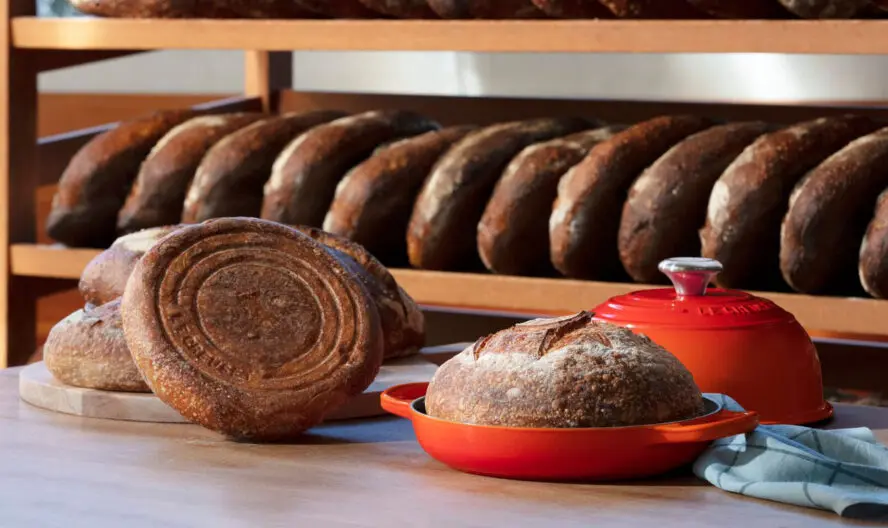
A seamless extension of Le Creuset’s legendary enameled cookware lineup, this bread oven combines heirloom durability with striking countertop aesthetics.
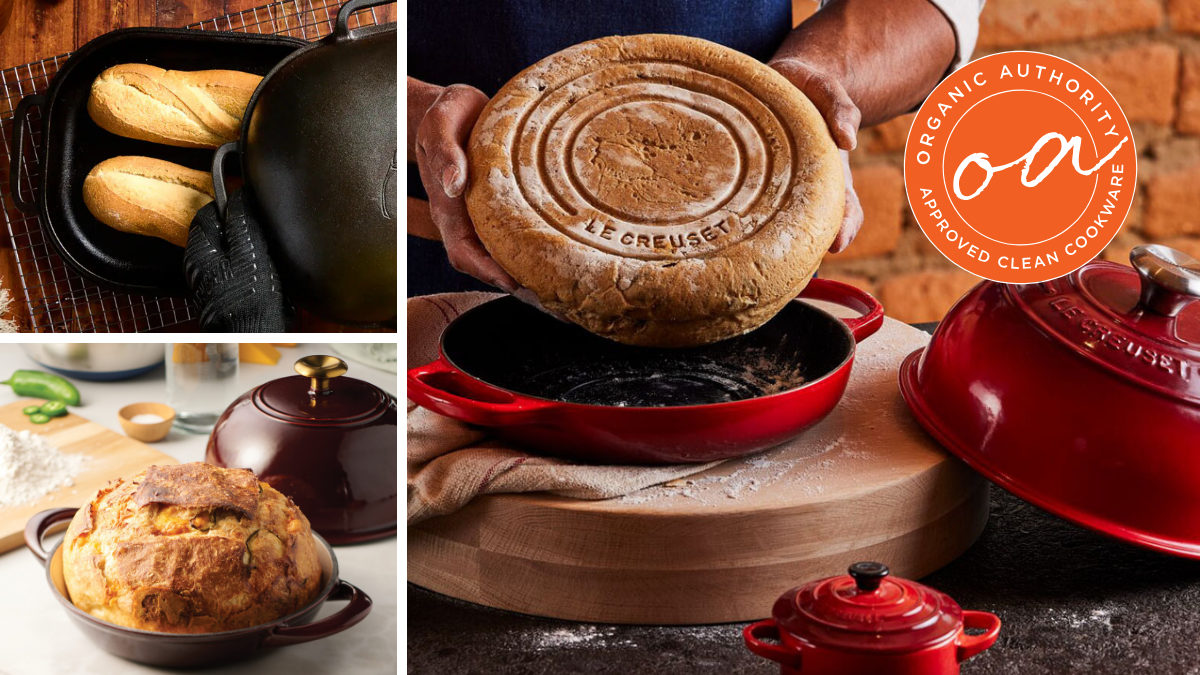
- Performance: The inverted design places a deep, high-capacity dome over a shallow 9.5-inch round base. The base features three concentric ridge circles that promote airflow underneath the loaf while leaving a signature branding stamp on the bottom crust.
- Design Features: The matte black enameled interior absorbs and transfers heat exceptionally well, producing dark, golden crusts without requiring seasoning. It is significantly lighter and easier to handle than bare cast-iron alternatives.
- Trade-offs: Retailing at $324.95, it is the most expensive option on the market. Like the Tramontina, its circular geometry restricts baking formats primarily to round boules.
Bare Cast Iron vs. Enameled Cast Iron: The Great Baking Debate
Choosing between bare cast iron and enameled cast iron involves weighing thermal physics against kitchen convenience:
- Bare Cast Iron: Because no coating separates the metal from the dough, bare cast iron radiates heat directly into the loaf. This direct transfer results in darker bottom crusts, more dramatic surface blistering, and superior overall crust coloration. However, it demands attentive maintenance: it requires periodic seasoning, cannot be soaked in water, and must be dried thoroughly to prevent rust.
- Enameled Cast Iron: Cooled by porcelain enamel layers, these vessels require zero seasoning and offer effortless cleanup. They resist rust entirely and slide loaves out smoothly. The trade-off is a slight moderation in direct heat transfer, which can yield marginally lighter crust colors, alongside the risk of chipping under thermal shock.
Implications for the Modern Home Kitchen
The widespread availability of specialized cast-iron bread ovens signals a broader shift in domestic culinary culture. Home cooking is no longer just about convenience; it is about recapturing artisanal traditions and elevating everyday nutrition through mastery of technique and hardware.
By investing in a dedicated bread oven—whether opting for the uncompromising professional performance of the Challenger, the accessible entry point of the Tramontina, or the luxury craftsmanship of Le Creuset—home bakers can bypass the limitations of residential kitchen appliances. The result is an accessible culinary upgrade that transforms routine flour, water, and salt into bakery-caliber masterpieces, proving that exceptional artisan bread belongs on the home table.
