


Main Facts: The Titans of the Mineral World
For mineralogists, lapidary artists, holistic practitioners, and passionate crystal collectors worldwide, attending one of the world’s premier gem and mineral expos is the ultimate bucket-list experience. Among the global circuit, two monumental North American events stand peerless as the undisputed heavyweights of the industry: the Tucson Gem and Mineral Show in Arizona and the Denver Gem and Mineral Show in Colorado.
These massive conventions are far more than mere marketplaces; they are global convergences of geology, commerce, and holistic culture. Drawing tens of thousands of attendees—ranging from wholesale buyers and museum curators to retail hobbyists and energy workers—these exhibitions transform entire cities into bustling hubs of Earth’s most magnificent geological treasures.
Recently, Team HM’s Crystal Coach, Lisa D’Arrigo, teamed up with crystal expert Hibiscus Moon to break down the nuances, logistical realities, and distinct vibes of these two legendary shows. Through an in-depth video comparison and years of firsthand field experience, the duo has provided the ultimate guide for anyone planning a pilgrimage to the "Big Two" of the gem world.
Chronology and Evolution: From Local Clubs to Global Mega-Events
To truly appreciate the scale of these exhibitions, one must understand their historical trajectories.
The Tucson Phenomenon
The Tucson Gem, Mineral & Fossil Showcase traces its humble origins back to 1954, when the Tucson Gem and Mineral Society hosted a modest local exhibition at a local school. Over the decades, what started as a regional gathering for hobbyists exploded exponentially. Today, the event has evolved into the largest, oldest, and most prestigious gem show in the world.
Spanning nearly three weeks every winter (typically late January through mid-February), the Tucson showcase is not confined to a single convention center. Instead, it takes over the entire city. More than 40 distinct shows operate simultaneously across hotels, tents, convention centers, and vacant lots throughout Tucson. From high-end wholesale venues catering exclusively to business owners to sprawling open-air international bazaars featuring rough-cut stones straight from Madagascar and Brazil, Tucson is an all-encompassing, city-wide geological takeover.
The Denver Evolution
While Tucson dominates the winter season, the Denver Gem and Mineral Show holds the crown as North America’s premier autumn destination for crystal lovers. Established over 50 years ago by the Greater Denver Area Gem and Mineral Council, the Denver show has similarly outgrown its original confines.
Held annually in September, the main event anchors itself at the spacious National Western Complex, supported by numerous satellite shows scattered across the city. While slightly more consolidated than its sprawling Tucson counterpart, the Denver show offers an exceptionally rich, highly curated environment that blends world-class competitive mineral displays with massive wholesale and retail merchant spaces.
Supporting Data and Highlights: A Feast for the Senses
Whether wandering through the desert heat of Arizona in February or breathing in the crisp mountain air of Colorado in September, attendees are met with staggering displays of geological artistry.
The Reign of Quartz
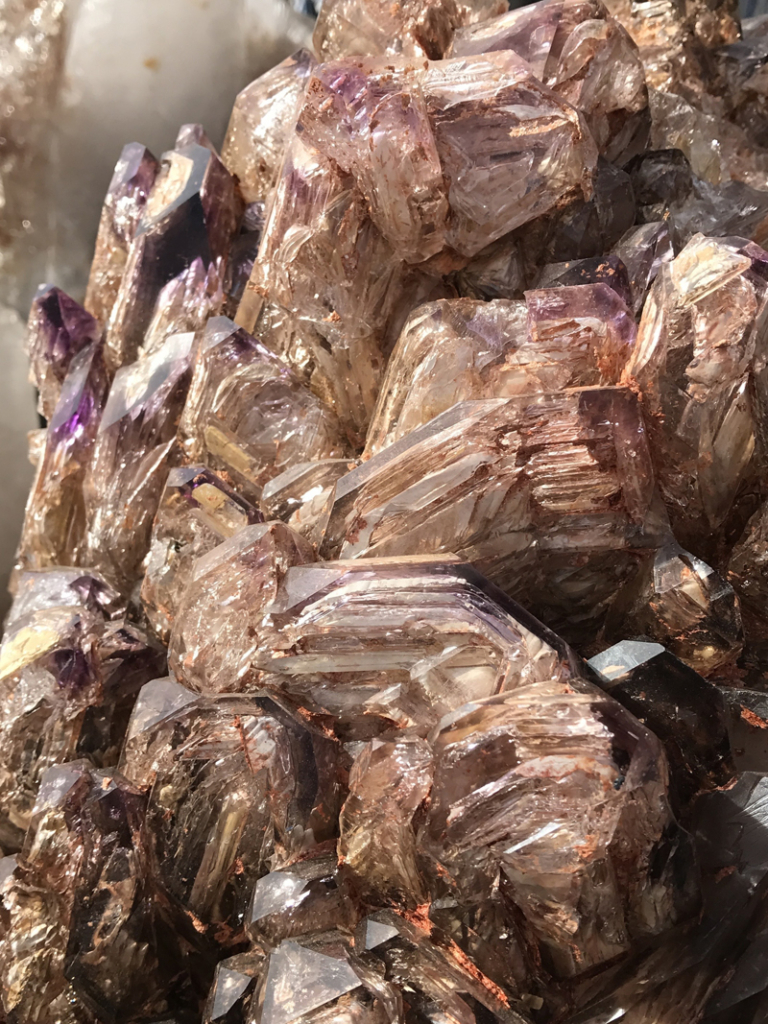
At both shows, quartz remains the undisputed "rock star" of the mineral kingdom. From pristine, water-clear termination towers to massive, awe-inspiring Smokey Quartz "Earth Keeper" crystals, the sheer abundance of quartz varieties staggers the imagination.

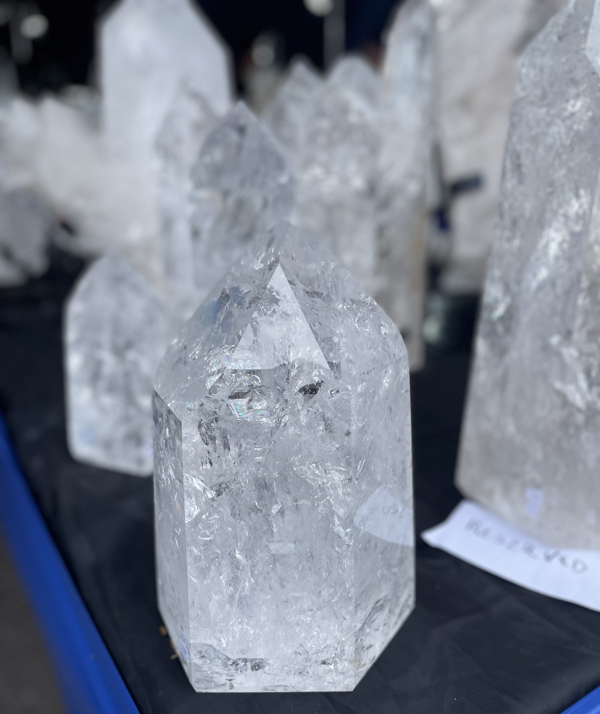
- Fire and Ice Quartz: Highly prized for their internal fracture networks that refract light into dazzling rainbow inclusions, these towers are a staple of the Denver exhibition floor.
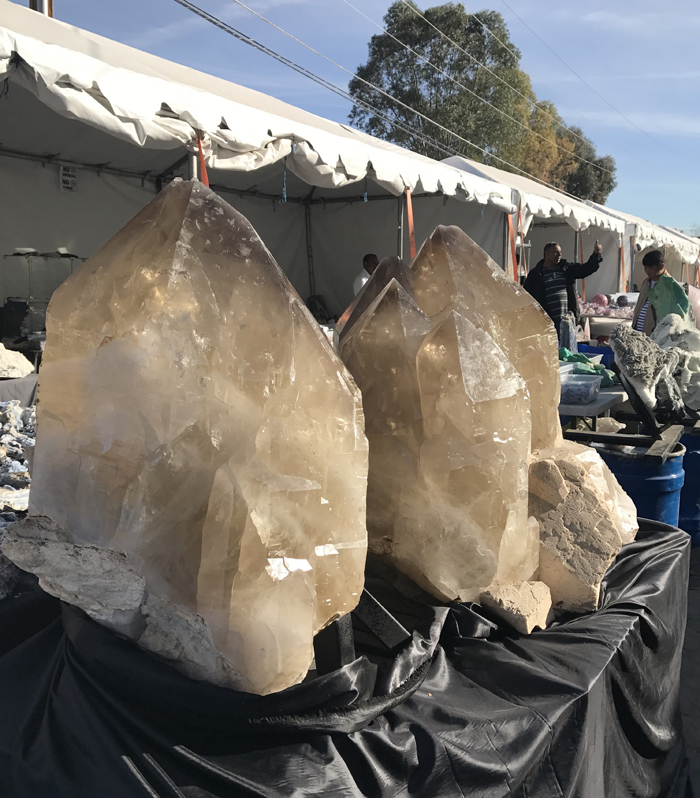
- Smokey Quartz Earth Keepers: Massive, grounding specimens weighing hundreds of pounds are frequently showcased at Tucson, radiating immense energetic presence (or "energy tori," as crystal enthusiasts often note).
- Skeletal and Elestial Quartz: Often referred to as "window crystals," these complex, layered formations feature intricate geometric etchings that invite deep meditation and inner exploration.
Masterpieces of Nature and Artistry
Beyond raw mineral specimens, the shows highlight human craftsmanship at its absolute peak. Artisans from around the globe converge to display breathtaking creations:
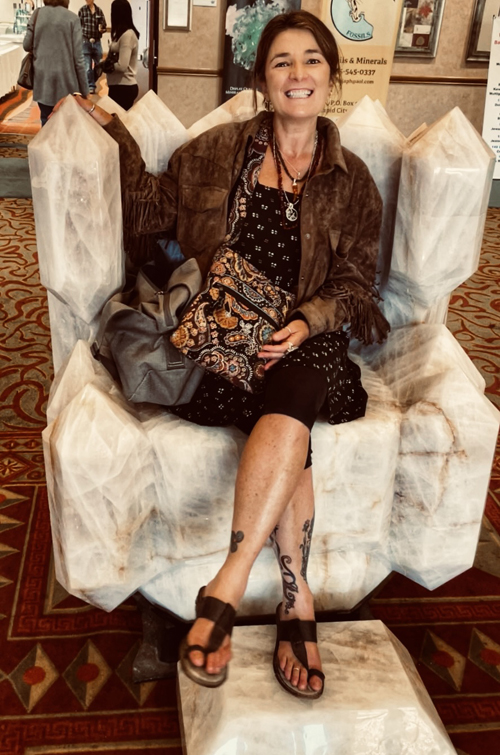
- Intricate Carvings: Museum-quality sculptures, such as divine figures carved from multi-ton blocks of purple Lepidolite, showcase the symbiotic relationship between lapidary skill and natural stone.
- The Bead Pavilions: Miles of aisles dedicated entirely to gemstone beads—ranging from common amethyst and rose quartz to rare, gem-grade sugilite and larimar—offer an endless palette for jewelry designers.
- Giant Lemurian Seed Crystals: Standing taller than a human, pristine Lemurian quartz points bearing their signature striated ladder bars command reverence from all who pass by them.
Official Perspectives and Expert Insights: Navigating the "Big Two"
Choosing between Tucson and Denver—or deciding to conquer both—requires careful planning. According to Team HM’s comprehensive breakdown, prospective attendees must weigh several critical factors before packing their bags.
Key Considerations Before You Go
- Scope and Scale: Tucson is a marathon, not a sprint. Spanning dozens of venues across an entire city, it requires careful logistical planning, rental cars, and comfortable walking shoes. Denver, while still massive, is more centralized, making it slightly more manageable for first-timers with limited time.
- Wholesale vs. Retail Access: Both shows feature areas restricted to wholesale buyers (requiring business licenses and tax IDs), alongside vast open-to-the-public retail zones. Knowing which venues cater to your specific purchasing goals is vital.
- Climate and Seasonality: Tucson in February offers warm desert sunshine, ideal for open-air tent shopping. Denver in September brings crisp autumn mountain weather, occasionally accompanied by early seasonal chills.
- Energetic Integration: As Hibiscus Moon and Lisa D’Arrigo frequently emphasize, gem shows are energetic powerhouses. Stepping into a massive hall filled with thousands of tons of high-vibration crystals can induce "crystal hangover" or sensory overload. Grounding techniques and pacing are essential survival skills for the sensitive soul.
Implications: The Cultural and Economic Impact of the Gem Circuit
The cultural and economic ripple effects of the Tucson and Denver gem shows extend far beyond the weekend shopper.
Economically, these events inject tens of millions of dollars into their respective local hospitality, tourism, and service industries. For international miners and local artisans—many hailing from developing nations in Africa, South America, and Asia—these expos serve as vital economic lifelines, providing a direct global marketplace for their labor and resources.

Culturally, the shows play a pivotal role in the modern resurgence of interest in earth sciences, holistic wellness, and sustainable sourcing. As consumers become increasingly conscious of the origins of their purchases, educational outreach at these expos—such as mineral identification seminars, lapidary workshops, and discussions on ethical mining practices—fosters a deeper, more respectful relationship with the natural world.
Ultimately, whether one seeks a tiny, pocket-sized tumbled stone, an investment-grade museum specimen, or simply the vibrant, community-driven energetic charge of thousands of fellow crystal enthusiasts, a pilgrimage to Tucson or Denver remains an unforgettable milestone on the journey of any crystal lover.
