

By Jessica Little
Nova Scotia
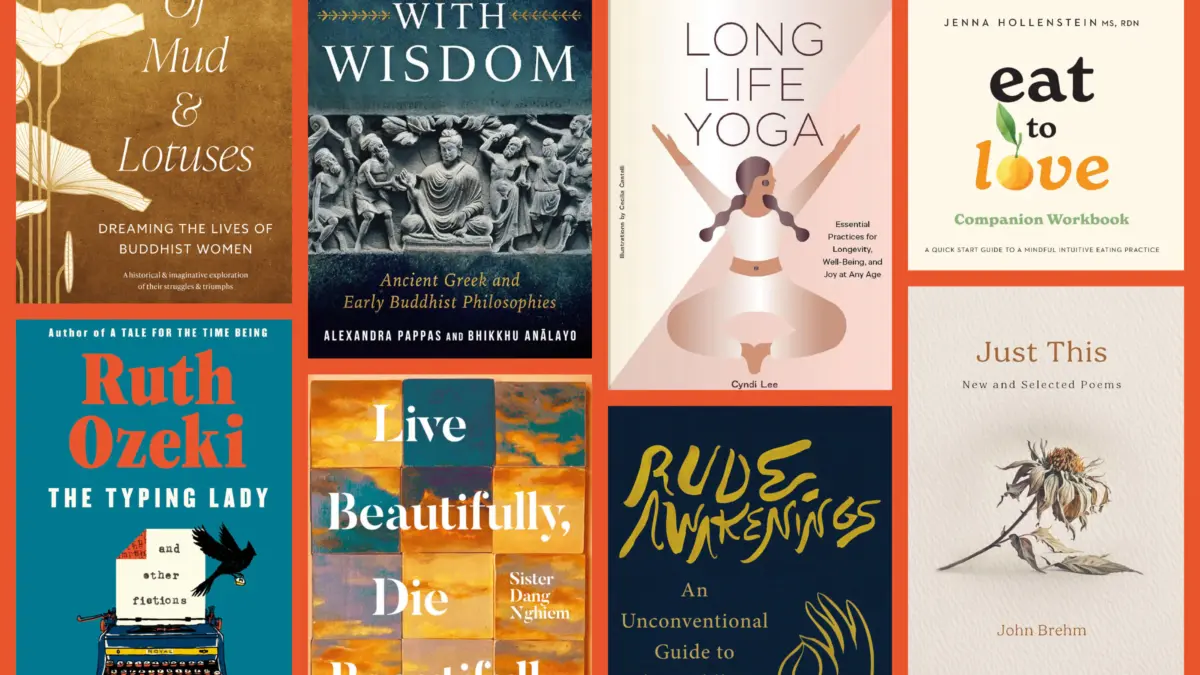
In an era defined by rapid technological acceleration, socio-political polarization, and existential anxieties, the timeless wisdom of Buddhist philosophy continues to offer profound refuge. Across the literary landscape, a new wave of publications is bridging ancient contemplative traditions with modern psychology, physical wellness, and creative expression. From intimate historical re-imaginings of women in early Buddhism to practical guides on mindful eating, aging gracefully, and confronting mortality, contemporary authors are demonstrating the extraordinary versatility of the dharma.
This review explores eight notable new and recent releases that illuminate the path of mindfulness, resilience, and compassion, charting a course for readers seeking deeper meaning in turbulent times.
Main Facts: A Diverse Literary Harvest
The contemporary spiritual book market is experiencing a vibrant renaissance, particularly in works that merge rigorous philosophical inquiry with deeply personal, lived experiences. Recent offerings from major publishing houses—including Shambhala Publications, Wisdom Publications, Viking, and Parallax Press—highlight a shift toward inclusivity, practical application, and cross-cultural dialogue.
Key highlights from this publishing wave include:
- Fictionalizing the Unrecorded: Scholars like Paula Arai use creative narrative to give voice to historical Buddhist women whose contributions were largely omitted from traditional canons.
- Zen and the Art of Fiction: Acclaimed novelist and Zen priest Ruth Ozeki blends secular storytelling with core Buddhist philosophical insights.
- East-West Philosophical Bridges: Scholars Alexandra Pappas and Bhikkhu Analayo undertake a comparative study examining the surprising intersections between ancient Greek philosophy and early Buddhism.
- Embracing Impermanence: Former medical doctor and monastic Sister Dang Nghiem offers a meditation on grief, aging, and the certainty of death.
- Longevity and Mindful Movement: Renowned yoga teacher Cyndi Lee adapts traditional yoga postures for practitioners of all ages, integrating yogic ethics with physical longevity.
- Unconventional Dharma: Shambhala Publications founder Samuel Bercholz shares a lifetime of encounters with Tibetan masters through a lens of humor and practical wisdom.
- Mindful Nourishment: Nutrition therapist Jenna Hollenstein provides a tangible workbook to help readers escape toxic diet culture through intuitive eating.
- Poetic Resilience: Poet John Brehm confronts terminal illness and pain with unflinching humor and grace in his latest collection.
Chronology: The Evolution of Modern Buddhist Publishing
To understand the current state of Buddhist literature, it is helpful to trace its evolution over the past several decades.
Phase One: Translation and Academic Transmission (Mid-to-Late 20th Century)
Initially, Western engagement with Buddhism was largely academic and textual. Scholars and early monastics focused on translating Pali, Sanskrit, Tibetan, and Chinese canons into English. Books from this era were primarily scholarly texts, introductory primers, or direct translations of foundational sutras.
Phase Two: Practical Integration and Psychological Adaptation (Late 20th to Early 21st Century)
As teachers like Thich Nhat Hanh, Chögyam Trungpa Rinpoche, and various Zen masters established roots in North America, literature shifted toward practical application. Meditation manuals became mainstream, and psychologists began mapping Buddhist mindfulness onto cognitive behavioral therapies, birthing the Mindfulness-Based Stress Reduction (MBSR) movement.
Phase Three: Diversification and Lived Experience (Present Day)
Today’s publishing landscape reflects a maturing Western sangha. Authors are no longer merely explaining basic concepts; they are applying the dharma to complex modern realities—such as systemic disenfranchisement, eating disorders, chronic illness, aging, and cross-cultural philosophical synthesis. The books highlighted in this survey represent this contemporary maturity, offering nuanced, highly specialized, and deeply personal engagements with the spiritual path.
Supporting Data and Detailed Book Analyses
1. Reclaiming Herstory: Of Mud & Lotuses
In Of Mud & Lotuses: Dreaming the Lives of Buddhist Women (Shambhala Publications), Japanese American scholar Paula Arai explores the paradoxical reality of Buddhist women: a history marked simultaneously by profound spiritual power and systemic disenfranchisement.
Part One utilizes imagined accounts to fill historical silences. Notable entries include a fictional epistolary exchange between Siddhartha and his stepmother Mahaprajapati—who famously petitioned three times for the ordination of women—and the tale of a 15th-century Japanese woman who smuggled her hair into a monastery inside a donated statue.
Part Two shifts to contemporary nonfiction vignettes drawn from interviews with North American Buddhist women, tackling taboo subjects like abortion and addiction. Arai’s work successfully bridges ancient history with modern struggles, offering a vital corrective to patriarchal historical records.
2. Zen Wisdom in Narrative: The Typing Lady
Renowned novelist and Zen priest Ruth Ozeki returns with The Typing Lady: And Other Fictions (Viking), a short story collection infused with deep Zen philosophy.
In "Feelings," two high school girls grapple with their own selfishness during a school-mandated "compassion project." Meanwhile, in "Dead Beat Poet," a publishing industry worker is haunted by the ghost of a Beat poet who delivers pragmatic, anti-dogmatic advice: "Well, you don’t have to feel shitty about feeling shitty. You don’t have to feel meta-shitty."
Ozeki has frequently noted that writing functions as a form of seated meditation (zazen), allowing her to intimately observe the unfolding patterns of the human mind.
3. Comparing Antiquities: In Love with Wisdom
What happens when Western classical philosophy meets Eastern contemplative tradition? In Love with Wisdom: Ancient Greek and Early Buddhist Philosophies (Wisdom Publications) addresses this directly.
Co-authored by ancient Greek philosophy specialist Alexandra Pappas and German Buddhist monk Bhikkhu Analayo, the book is a structural dialogue. The first half examines Greek perspectives, while the second explores early Buddhism. Together, the authors compare how both traditions navigate impermanence, the middle path, the four classical elements, and mindfulness practices—particularly in the face of death. This comparative study provides a robust framework for integrating ancient wisdom into modern Western frameworks.
4. Field Notes from the Edge: Live Beautifully, Die Beautifully
"When we remember that death is certain, we begin to value each breath more deeply," writes Sister Dang Nghiem, MD, in Live Beautifully, Die Beautifully: Field Notes from the Edge of Impermanence (Parallax Press).
After losing her partner in a tragic accident, Dang Nghiem abandoned her medical career to join Thich Nhat Hanh’s monastic community. Framing her book around the traditional Buddhist five remembrances—which remind us of our inherent vulnerability to aging, illness, and death—she uses her life story as a kaleidoscope. Her objective is simple yet profound: to help readers recognize the hidden patterns of beauty and impermanence in their own lives.
5. Yoga Across the Lifespan: Long Life Yoga
Yoga teacher and Buddhist chaplain Cyndi Lee addresses the inevitability of physical aging in Long Life Yoga: Essential Practices for Longevity, Well-Being, and Joy at Any Age (Chronicle Books).
Featuring warm, accessible illustrations by Cecilia Castelli, the book is divided into two sections. Section One covers the ethical foundational frameworks of yoga: the yamas (restraints) and niyamas (observances). Section Two offers gentle, restorative asanas designed to combat inflammation and maintain physical vitality without injury, proving that yoga is a lifelong practice accessible to every body.
6. Unconventional Guidance: Rude Awakenings
Samuel Bercholz, founder of Shambhala Publications, distills decades of spiritual discipleship into Rude Awakenings: An Unconventional Guide to the Buddhist Path (Shambhala Publications).
Having studied under Tibetan masters Chögyam Trungpa Rinpoche and Thinley Norbu Rinpoche for decades, Bercholz writes with humor, candor, and sharp insight. The book covers Mahayana fundamentals, the nuances of artistic expression, and the critical art of identifying an authentic spiritual teacher. Appendices dedicated to Trungpa’s teachings and Shambhala warrior slogans make this an invaluable manual for unorthodox seekers.
7. Mindful Eating: Eat to Love Companion Workbook
Nutrition therapist and mindfulness teacher Jenna Hollenstein expands upon her 2019 release with the Eat to Love Companion Workbook: A Quick Start Guide to Intuitive Eating Practice (Cambium Editions).
Divided metaphorically into chapters named Earth, Sun, Rain, Trunk, Branches, and Air, the workbook offers somatic exercises, journal prompts, and self-compassion tools. By moving away from restrictive diet culture, Hollenstein—a regular contributor to Lion’s Roar—helps readers realign with their body’s innate wisdom.
8. Redeeming Suffering: Just This
"Now I long / to see and say something / beautiful, something that would / redeem this suffering, sanctify it, / or at least make it more bearable," writes poet John Brehm in Just This: New and Selected Poems (Wisdom Publications).
Faced with a sobering medical diagnosis, Brehm pairs new poems confronting pain and mortality with selected works from his previous collections. Co-leader of mindfulness and poetry retreats alongside his wife, Alice Boyd, Brehm proves that poetry can serve as an effective vehicle for radical acceptance and emotional healing.
Official Responses and Publisher Perspectives
Publishers and spiritual institutions have responded enthusiastically to this latest wave of literature, noting a clear cultural demand for accessible, psychologically grounded spiritual tools.
Representatives from Shambhala Publications emphasize that contemporary readers are increasingly weary of dogmatic gatekeeping. Books like Bercholz’s Rude Awakenings and Arai’s Of Mud & Lotuses reflect a broader institutional push toward transparency, historical inclusivity, and irreverent authenticity.
Similarly, editors at Wisdom Publications highlight that cross-cultural comparative works, such as In Love with Wisdom, are critical for establishing academic and philosophical legitimacy for Buddhism within Western intellectual circles. By treating early Buddhist thought as a peer to Greco-Roman philosophy, publishers are actively dismantling outdated orientalist tropes and positioning the dharma as a universal science of mind.
Implications: The Future of Western Buddhism
The collective release of these eight titles points to several profound implications for the future of contemplative practice in the West:
- Democratization of the Dharma: As demonstrated by Hollenstein’s intuitive eating workbook and Lee’s adaptive yoga guide, Buddhist principles are successfully breaking free from monastic walls, infiltrating daily somatic, nutritional, and physical health practices.
- De-centering Patriarchy: Scholarly and creative recovery projects, such as those by Paula Arai, signal a necessary reckoning within global sanghas. By imagining the interior lives of historical women, contemporary writers are actively reshaping the lineage of authority in Buddhism.
- Integration of Mortality: In works by Sister Dang Nghiem and John Brehm, facing illness and death is not treated as a morbid philosophical exercise, but as an urgent catalyst for joy, compassion, and authentic living.
- Resilience in Complexity: Whether through Ruth Ozeki’s playful Zen fiction or Samuel Bercholz’s unvarnished teacher-student anecdotes, modern practitioners are learning to navigate psychological distress—including anxiety, addiction, and self-doubt—not by fleeing from discomfort, but by leaning directly into it.
Ultimately, these publications remind us that the heart of Buddhist practice remains unchanged across millennia: an invitation to wake up to the present moment, meet our suffering with radical kindness, and discover the quiet, unshakeable beauty hidden within our everyday lives.
