

Main Facts
Carbon Capture and Storage (CCS) has long promised to be a vital bridge technology in the global fight against climate change, yet it has remained notoriously expensive, technically complex, and energy-intensive. Traditional systems rely heavily on capturing pure streams of carbon dioxide and compressing them for deep geological sequestration—a process fraught with logistical bottlenecks.
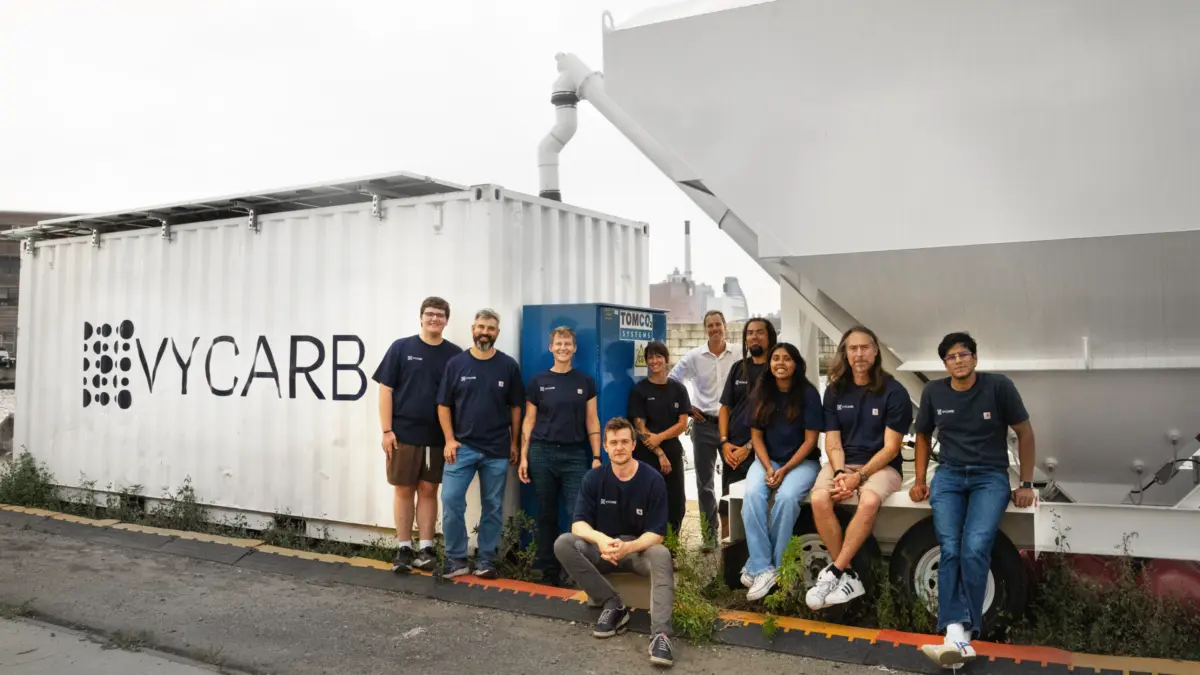
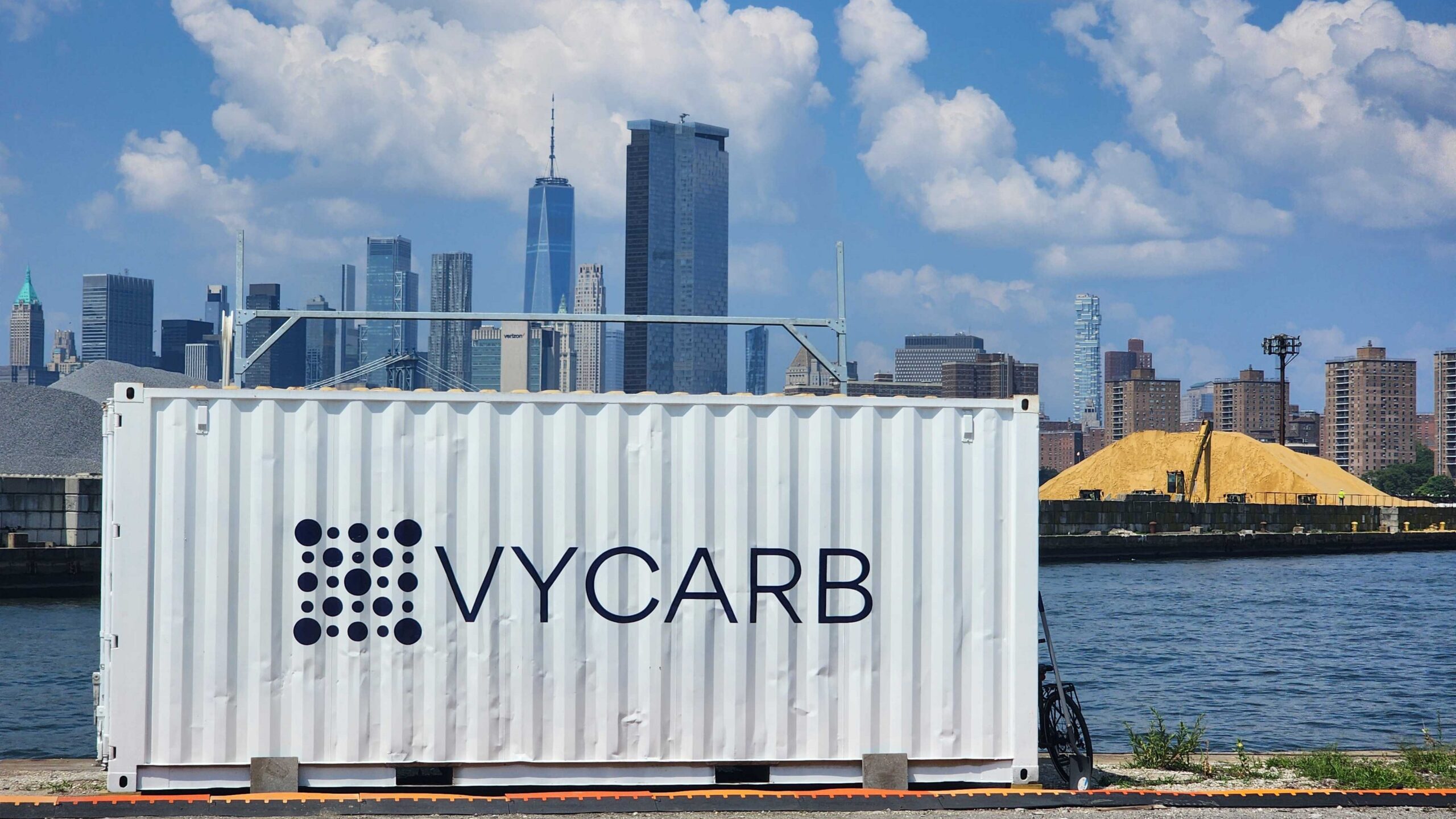
Enter Vycarb, a Brooklyn-based climate tech startup founded in 2022. Operating out of its headquarters in the Brooklyn Navy Yard and running a live pilot project on the East River, Vycarb has achieved a major technological milestone that could dramatically alter the economics of industrial decarbonization. By leveraging ocean-based chemistry and real-time sensor technology, the company has successfully demonstrated the ability to dissolve low-purity $textCO_2$ directly into seawater, converting it into stable, dissolved bicarbonate ($textHCO_3^-$) with minimal power consumption and cheap, prevalent alkaline minerals.
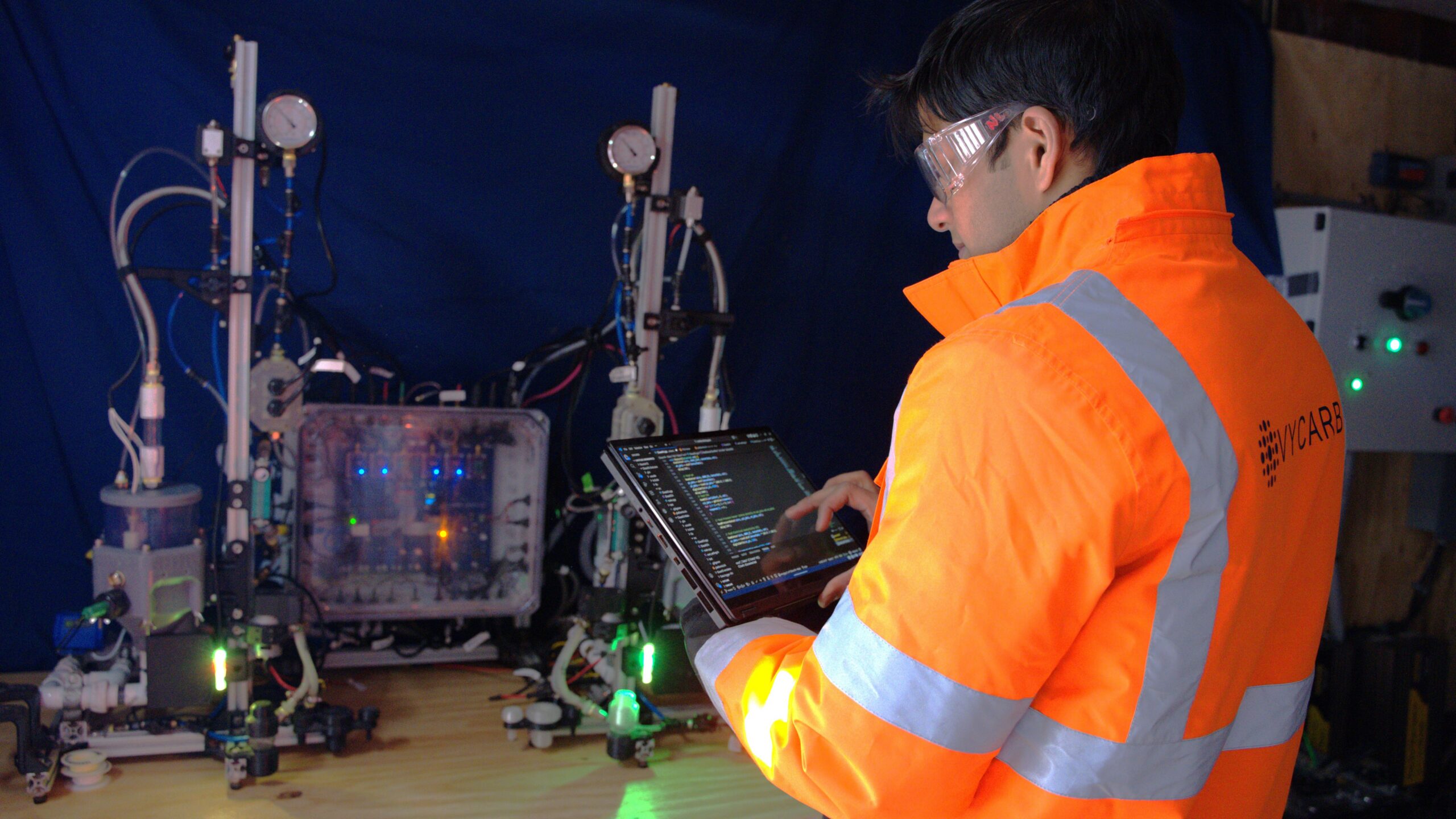
The implications are profound. Rather than requiring the hyper-expensive, energy-hungry purification steps that define traditional CCS, Vycarb’s system has proven capable of capturing 99% of $textCO_2$ from gas streams with purity levels as low as 50%, converting 85% of that gas into soluble bicarbonate. The startup is now targeting field trials that validate 99% incorporation at just 10% purity, having already successfully tested concentrations as low as 1.5% in laboratory settings. This means industrial exhaust gases from fossil fuel combustion could soon be utilized directly, bypassing the purification stage entirely.
Chronology of Innovation
- 2022: Vycarb is founded in Brooklyn, New York, with a vision to make marine carbon dioxide removal (mCDR) measurable, verifiable, and economically viable.
- 2023–2025: The startup develops proprietary real-time sensor technologies and aqueous chemistry systems, scaling its prototype design for marine deployment.
- 2026 (Recent Milestone): Vycarb establishes its headquarters in the Brooklyn Navy Yard and launches a high-profile pilot project on the East River, backed by major industrial investors including Shell, Rio Tinto, and Idemitsu.
- Mid-2026: New test results confirm the system’s ability to process low-purity $textCO_2$ (down to 50% purity, with lab tests hitting 1.5%), setting the stage for aggressive commercialization, independent validation, and industrial scale-up.
Supporting Data and Financial Mechanics
The economic viability of carbon capture has historically hinged on a complex web of capital expenditures, operational overhead, and government incentives. Vycarb’s low-cost approach drastically alters this equation, opening access to multiple lucrative revenue and compliance streams worldwide:
1. Government Tax Credits and Subsidies
- United States (45Q Tax Credit): Offers up to $85 per metric ton (MT) for permanently stored industrial $textCO_2$. Because burning hydrocarbons generates roughly two to three times the mass of the fuel in $textCO_2$, heavy emitters like coal-fired power plants could theoretically generate more in sequestration credits than they spend on the fuel itself.
- United States (45Z Clean Fuel Credits): Extended through 2029, providing up to $1.00 per gallon for non-aviation fuels and $1.75 per gallon for aviation fuels based on lifecycle emissions, giving biofuel producers a powerful incentive to integrate carbon capture.
- International Funds: Programs such as Denmark’s CCS fund—which plans to disburse DKK 815 million ($127 million USD) annually starting in 2030 to achieve 0.9 million MT of annual reductions—place a high valuation on permanent storage, projecting over $143 per ton.
2. Avoided Compliance Costs and Carbon Markets
- Carbon Taxes and Cap-and-Trade: Singapore currently prices carbon emissions at $45/ton, with projections reaching $80/ton by 2030. Meanwhile, European Union Emissions Trading System (EU ETS) allowances trade around €82.42 ($95.66 USD) per metric ton, and California’s Low Carbon Fuel Standard (LCFS) credits hover near $79 per MT.
- Voluntary Carbon Markets: High-integrity, verifiable carbon removal credits can fetch up to $300 per ton. Vycarb has already successfully sold credits under the U.S. Department of Energy (DOE) Carbon Dioxide Removal (CDR) Purchase Prize.
- Feedstock Economics: The system relies primarily on agricultural limestone (aglime or calcium carbonate, $textCaCO_3$) as an alkalizing agent. While it takes roughly two tons of limestone to remove one ton of $textCO_2$, limestone is inexpensive, globally abundant, and supported by well-established supply chains.
Official Responses and Expert Perspectives
The breakthrough has drawn praise from industry leaders and academic circles alike, particularly for its ability to cut through the engineering complexities that plague conventional point-source capture.
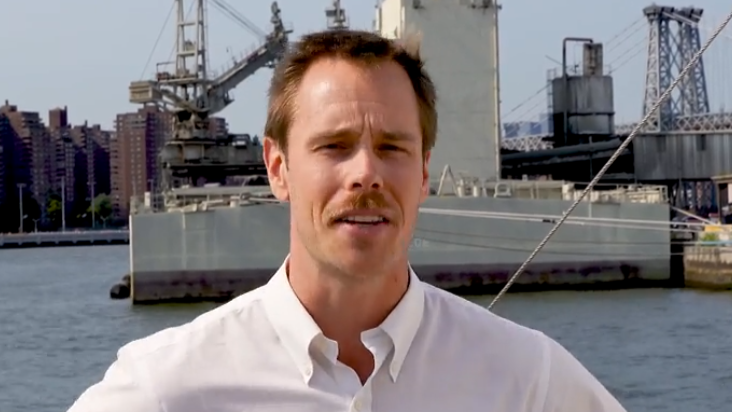
Dr. Garrett Boudinot, CEO and Founder of Vycarb, highlighted the core engineering bottleneck the company has managed to bypass during a recent interview at the Brooklyn Navy Yard:
"Every industrial emitter we talk to faces the same problem: capturing and purifying $textCO_2$ before it can ever be stored is often the most expensive and technically complex part of the entire process. These results show that we can sidestep purification entirely to provide a full-stack CCS solution for a wide range of emissions sources. It’s an important proof point demonstrating the technical advancement and potential cost-savings of the Vycarb approach to permanent industrial decarbonization."
Industry analysts note that by removing the need for cryogenic distillation or amine-based scrubbing towers to purify exhaust gases, capital expenditure requirements for factories and power plants drop precipitously. Furthermore, because Vycarb’s system operates at a controlled pH of around 7.5, the output water is slightly more basic than surrounding coastal environments without triggering mineral precipitation or endangering marine wildlife. In fact, by neutralizing local coastal acidification—a chronic issue near industrial zones—the process can yield localized ecological co-benefits.
Implications for Global Decarbonization
While technological innovations like Vycarb’s ocean-based storage system offer a powerful new tool, the company is unequivocal on one point: carbon capture does not replace the absolute necessity of phasing out fossil fuels. The energy transition must continue unabated. However, as long as humanity continues to emit $textCO_2$—whether from fossil fuel combustion, cement manufacturing, or municipal waste treatment—mitigation technologies are essential to prevent catastrophic warming.
The Cement and Wastewater Frontiers
Beyond power plants, Vycarb’s technology opens doors to hard-to-abate sectors:
- Cement Production: Responsible for 8% to 10% of global $textCO_2$ emissions (roughly matching the global carbon footprint of personal vehicles), cement manufacturing inherently releases $textCO_2$ as limestone is calcined. Because limestone is both the primary raw ingredient for cement and the alkalizing feedstock for Vycarb, coastal cement kilns are uniquely positioned to integrate this technology seamlessly into their operations.
- Wastewater Treatment: Accounting for up to 5% of global greenhouse gas emissions—surpassing aviation and shipping combined—sewage treatment plants generate methane and $textCO_2$ through bacterial digestion. Coastal wastewater facilities already manage large volumes of water and require routine pH adjustment, making them prime candidates for localized marine carbon capture.
A Carbon "Time Machine"
To understand the elegance of Vycarb’s mechanism, it helps to view the system as a geological time machine. Hundreds of millions of years ago, Earth experienced periods of vastly elevated atmospheric $textCO_2$. Over deep time, that carbon dissolved into the oceans, formed carbonic acid, weathered continental rock, and reacted with alkaline minerals to form stable marine bicarbonates and limestone deposits.
Human industrial activity has compressed this multi-millennial geochemical cycle into decades, overwhelming natural planetary feedback loops and driving rapid ocean acidification. By accelerating this natural mineral-weathering cycle safely within engineered reactors—and converting industrial emissions directly into stable ocean bicarbonate before they ever reach the atmosphere—Vycarb offers a pragmatic path forward.
As the startup transitions from its East River pilot to full-scale commercialization, its success suggests that the future of carbon removal may not lie exclusively in deep subterranean gas vaults, but in harmonizing with the chemistry of the world’s oceans.
