

By Staff Reporters
Published August 31
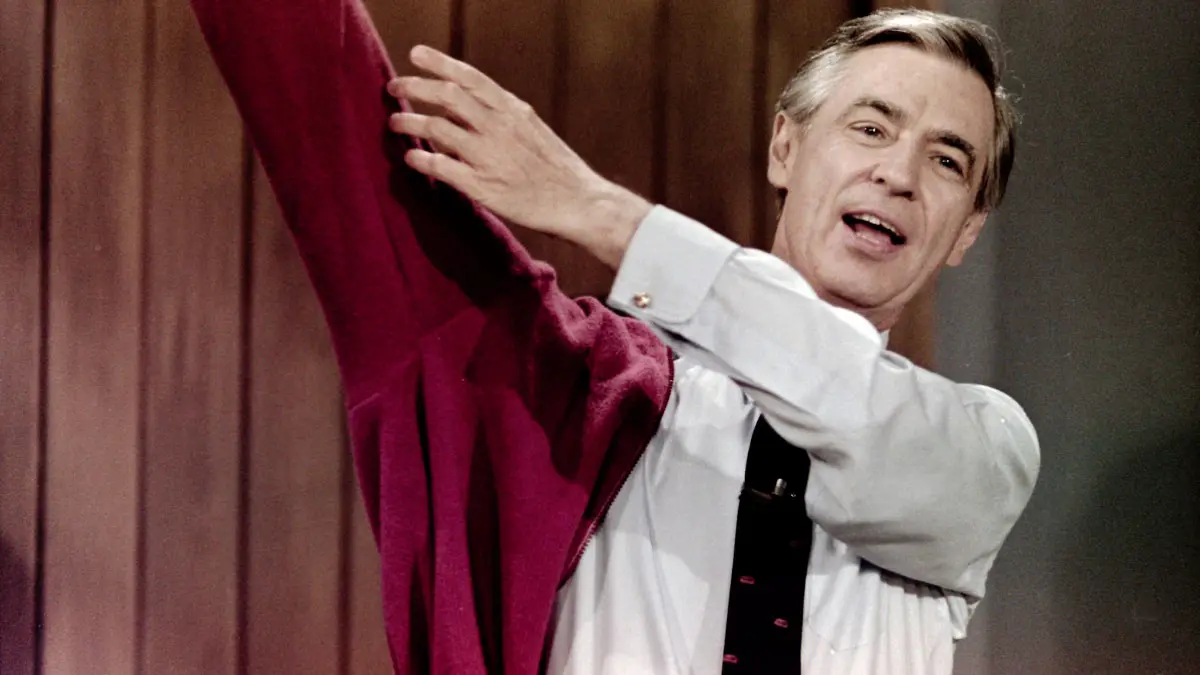
As the calendar turns to August 31, it marks exactly twenty-five years since the final broadcast of Mister Rogers’ Neighborhood. For over three decades, the gentle-voiced, cardigan-wearing Presbyterian minister invited generations of children into a living room where they were met not with flashy distractions, but with radical, unyielding acceptance.
Though Fred Rogers passed away in 2003, and his final episode aired in 2001, his legacy occupies a unique space in modern culture. Bridging the gap between mid-century broadcasting and contemporary discussions on mental health, systemic equity, and emotional intelligence, Rogers remains a touchstone for what media can achieve when driven by empathy rather than commercialism.
Main Facts: The Legacy of a Cultural Icon
- The Anniversary: August 31st marks the silver anniversary (twenty-five years) since the final new episode of Mister Rogers’ Neighborhood aired on public television in 2001.
- The Core Philosophy: Fred Rogers anchored his educational children’s program on a singular, foundational premise: “You don’t need to change anything about yourself to be loved.”
- Interfaith and Philosophical Parallels: Observers, theologians, and meditation teachers note striking similarities between Rogers’ Christian theology of grace and universal contemplative frameworks, such as the Buddhist practice of metta (loving-kindness) and the non-dual philosophy of Advaita Vedanta.
- Radical Activism Through Quietness: Far from being merely a passive, sweet television personality, Rogers engaged in quiet, persistent activism—challenging racial segregation on television, defending public broadcasting before the United States Senate, and confronting the emotional fallout of national tragedies like September 11.
Chronology: From "Fat Freddy" to American Living Rooms
To understand the profound empathy Fred Rogers extended to millions, one must examine the personal crucible from which it was forged.
- 1928–1940s (Formative Years): Born in Latrobe, Pennsylvania, a young Fred Rogers suffered from severe childhood illnesses and was bullied by peers who taunted him as "Fat Freddy." To cope with isolation and fear, he developed a rich internal world, later channeling his insecurities into his beloved puppets, including Daniel Striped Tiger.
- 1951–1962 (Entering Ministry and Television): Rogers graduated from Rollins College with a degree in music composition and briefly attended seminary before realizing the transformative potential of television. Ordained as a Presbyterian minister in 1962, he made a conscious choice not to pastor a traditional church, viewing the emerging television screen as his parish.
- 1968–2001 (Mister Rogers’ Neighborhood): The program launched nationally on NET (which later became PBS) in 1968. Over 895 episodes, the show tackled difficult, real-world topics—divorce, death, war, and physical disabilities—with unmatched gentleness.
- 1969 (The Wading Pool & Senate Defense): Officer Clemmons (played by François Clemmons) joined Rogers to cool his feet in a shared wading pool, subverting racial segregation norms of the era. Later that year, Rogers delivered his historic, unscripted testimony before the U.S. Senate Subcommittee on Communications, successfully defending $20 million in federal funding for public broadcasting.
- August 31, 2001: The final new episode of Mister Rogers’ Neighborhood airs. Just eleven days later, the nation is shaken by the September 11 terrorist attacks.
- 2003–Present: Fred Rogers passes away from stomach cancer in February 2003 at the age of 74. In the decades following, cultural re-evaluations—sparked by the critically acclaimed 2018 documentary Won’t You Be My Neighbor? and the 2019 feature film A Beautiful Day in the Neighborhood starring Tom Hanks—introduce his philosophy to entirely new generations.
Supporting Data & Cultural Impact
While television ratings in the late 20th century measured success in sheer viewership, the enduring impact of Mister Rogers’ Neighborhood is best understood through its qualitative footprint:
- Longevity: Spanning 33 seasons, the show remains one of the longest-running programs in public broadcasting history.
- Senate Impact: Rogers’ 1969 testimony is frequently cited by media historians as one of the most effective congressional appeals ever recorded. Senator John Pastore, initially hostile to funding public television, openly capitulated on the record after listening to Rogers speak for less than seven minutes, remarking, "I think it’s wonderful. Looks like you just earned the 20 million dollars."
- Cross-Disciplinary Relevance: Modern psychological research increasingly validates Rogers’ approach to emotional literacy. Studies in childhood development consistently show that validating children’s emotions—rather than dismissing or punishing them—fosters resilience, self-regulation, and empathy later in life.
Official Responses and Public Perceptions
Throughout his life and posthumously, Rogers’ work has elicited profound emotional responses, alongside occasional controversy.
Critics and the "Entitlement" Debate
During the height of his popularity, some conservative commentators criticized Rogers’ message that children are loved simply for who they are. They argued that such affirmations risked raising a generation of entitled individuals who believed self-worth did not need to be earned through achievement or hard work.
However, contemporary theologians and mental health professionals push back against this interpretation. Rogers was not offering empty praise or ego inflation; rather, he was operating from a theological conviction rooted in the inherent sacredness of every human being. As spiritual commentators note, his message was not “You are special because you are better than others,” but rather “You are inherently worthy of love because you exist.”
The Complexities of Inclusion
Rogers’ commitment to progress was revolutionary for its time, yet not without its constraints. When François Clemmons, a Black actor who portrayed Officer Clemmons, came out as gay, Rogers advised him to keep his sexual orientation private to protect the show from conservative backlash and ensure its survival. While this decision placed a heavy psychological burden on Clemmons—who struggled with the duality of being accepted on screen while being closeted in reality—colleagues maintain that Rogers navigated an impossible cultural landscape with an eye toward preserving a platform that brought immense good to millions.
Implications: The Relevance of Metta and Neighborhoods Today
Twenty-five years after the final episode, the cultural yearning for the environment Rogers created has only intensified. In an era marked by digital polarization, social isolation, and political vitriol, the lessons of Mister Rogers’ Neighborhood offer a blueprint for social repair.
Contemplative teachers draw direct parallels between Rogers’ daily television greetings and metta (the Buddhist practice of unconditional loving-kindness). Whether through the lens of Christian grace, Buddhist meditation, or Advaita Vedanta’s non-dual recognition that the boundary between "self" and "other" is illusory, Rogers’ work points to a universal human truth: we are profoundly interconnected.
Rogers did not ask viewers to fix global geopolitical crises. Instead, his calls to action were localized and intimate. He asked people to look at the person immediately in front of them, to listen patiently, and to make them feel seen.
As society reflects on a quarter-century without new episodes from the man who changed his shoes and sweater every day to welcome us in, his central challenge remains as urgent as ever: Can we slow down enough to truly see our neighbors, and can we find the courage to say, "I like you just as you are"?
