


As global consumers increasingly pivot away from sugar in search of healthier lifestyles, zero-calorie artificial sweeteners have become kitchen and pantry staples. Among them, sucralose—widely recognized by its ubiquitous yellow-packet brand name, Splenda—stands as one of the most heavily consumed non-nutritive sweeteners on Earth.
Yet, as people swap their traditional granulated sugar for synthetic alternatives to manage weight or regulate blood sugar, a persistent question echoes across search engines and wellness forums: Is sucralose actually bad for you?

While regulatory bodies maintain that the sweetener is safe within established limits, emerging scientific research highlights a more nuanced reality. From potential shifts in the gut microbiome to altered glycemic responses, modern nutritional science urges a closer look at what happens when we invite artificial sweeteners into our daily routines.
Main Facts: What Is Sucralose and How Does It Work?
To understand the health debates surrounding sucralose, one must first look at its chemical composition. Sucralose is a chlorinated derivative of sucrose (table sugar). During the manufacturing process, three specific hydroxyl groups on a standard sucrose molecule are selectively replaced with chlorine atoms.

This structural modification yields a powerful result: a non-nutritive sweetener that is roughly 600 times sweeter than regular table sugar. Because the human body lacks the specific enzymatic machinery required to break down this unique molecular structure, sucralose passes through the gastrointestinal tract largely unmetabolized. Consequently, it contributes zero calories to the diet—a property that has made it a darling of the weight-loss and diabetes-management industries.
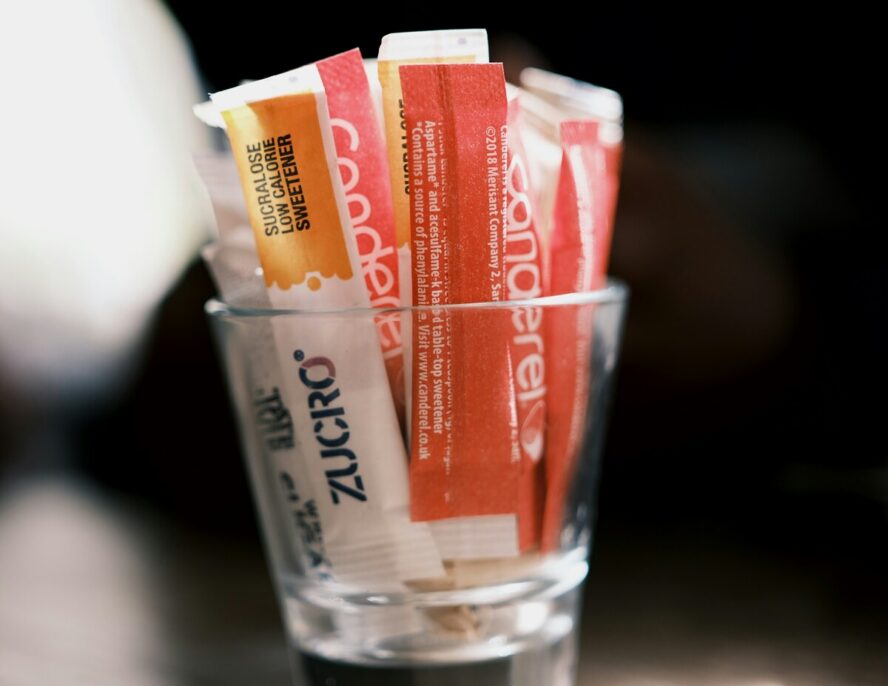
However, commercial formulations complicate this simple picture. Pure sucralose is so intensely sweet that it is rarely sold in its raw form to consumers. Instead, products like Splenda utilize bulking agents—predominantly dextrose and maltodextrin—making up roughly 99% of the packet’s contents, with sucralose accounting for the remaining 1%. These carbohydrate fillers carry their own minor caloric and glycemic footprints, introducing variables that researchers must account for when studying the sweetener’s overall health impacts.
Chronology of Controversy: From Rodent Studies to Human Trials
The safety profile of sucralose has evolved through decades of toxicological testing, regulatory reviews, and, more recently, clinical trials focusing on the human microbiome.
- 1990s–1998: Following extensive preclinical safety evaluations, the U.S. Food and Drug Administration (FDA) officially approved sucralose as a general-purpose sweetener for food and beverages.
- 2016: A prominent long-term carcinogenicity study conducted on rodents by the Ramazzini Institute suggested a link between sucralose consumption and increased cancer risks in mice. This study ignited widespread public concern and media scrutiny. However, international food safety agencies swiftly scrutinized the methodology, ultimately dismissing its conclusions due to design flaws and misinterpretation of data.
- 2022: A landmark clinical trial published in the journal Cell shifted the scientific conversation away from cancer and toward metabolic and gut health. Researchers demonstrated that short-term consumption of non-nutritive sweeteners, including sucralose and saccharin, could significantly impair glycemic responses and alter both oral and gut microbiome compositions in healthy human subjects.
- 2023: The World Health Organization (WHO) issued a prominent guideline advising against the use of non-sugar sweeteners for long-term weight control, recommending instead that individuals reduce overall sweet tastes in their diets by consuming whole fruits and unsweetened beverages.
- 2025–2026: Recent clinical investigations continue to refine our understanding, with studies pointing toward decreases in insulin sensitivity and subtle shifts in gut bacteria diversity among specific populations, particularly individuals managing type 2 diabetes or metabolic syndrome.
Supporting Data: Safety Thresholds and Clinical Findings
When evaluating safety, regulatory agencies look closely at the Acceptable Daily Intake (ADI)—the amount of a food additive that can be safely consumed on a daily basis over a lifetime without appreciable health risk.
Regulatory thresholds vary by region, reflecting differing interpretations of toxicological data:
- The FDA sets the ADI for sucralose at 5 milligrams per kilogram (mg/kg) of body weight per day.
- The European Food Safety Authority (EFSA) has historically set its ADI higher, at 15 mg/kg of body weight per day, following its own comprehensive re-evaluations.
To put these numbers into perspective for an average adult weighing approximately 185.4 pounds (84.1 kg), an individual would need to consume roughly 31 commercial packets daily to reach the conservative FDA limit, and nearly 95 packets to reach the EFSA threshold.
+-----------------------------------+---------------------------------------+---------------------------------------+
| Body Weight                       | Packets to Hit FDA ADI (5 mg/kg)      | Packets to Hit EFSA ADI (15 mg/kg)    |
+-----------------------------------+---------------------------------------+---------------------------------------+
| FDA Standard Adult (132 lbs / 60kg)| ~22.5 packets                         | ~67.6 packets                         |
| Average American (185.4 lbs / 84.1kg)| ~31.6 packets                        | ~94.8 packets                         |
+-----------------------------------+---------------------------------------+---------------------------------------+
Despite these high safety thresholds, recent clinical trials suggest that physiological effects can manifest at lower doses. For example, studies evaluating individuals consuming roughly 25% to 30% of the FDA ADI observed measurable reductions in insulin sensitivity and alterations in gut microbiota diversity over testing periods ranging from two weeks to a month.
Furthermore, baking with sucralose introduces another chemical variable. At high baking temperatures—specifically those exceeding 248°F (120°C) for extended durations—sucralose can begin to degrade, potentially producing chlorinated organic compounds of toxicological interest, though industrial manufacturing applications handle heat under strictly monitored parameters.

Official Responses and Regulatory Standings
Major global health organizations hold nuanced, sometimes divergent positions on the safety and utility of sucralose:
- The U.S. Food and Drug Administration (FDA): Stands firmly behind its original approval, classifying sucralose as a safe food additive supported by more than 100 safety studies demonstrating no clear link to carcinogenicity or systemic toxicity in humans when consumed within the ADI.
- The European Food Safety Authority (EFSA): Reaffirms the safety of sucralose as an authorized food additive while continually monitoring emerging toxicological data, maintaining a higher ADI than its American counterpart based on comprehensive lifetime exposure models.
- The World Health Organization (WHO): Takes a distinct public health stance, emphasizing that while artificial sweeteners may not pose acute toxic risks, they are not effective tools for long-term weight management. The WHO encourages policy initiatives that promote whole foods and naturally occurring sugars over synthetic alternatives.
Implications for Consumers and Lifestyle Integration
What do these findings mean for the everyday consumer looking to optimize their diet? The implications depend heavily on individual health profiles, metabolic baselines, and wellness priorities.

- Metabolic Health & Diabetes: Individuals with prediabetes, insulin resistance, or type 2 diabetes should exercise caution. While sucralose does not carry the immediate caloric impact of sugar, emerging data suggests it may provoke subtle glycemic or insulin responses in a subset of the population, potentially complicating blood sugar management.
- Gut Health Considerations: The human microbiome plays an essential role in digestion, immunity, and metabolic homeostasis. Because studies indicate that non-nutritive sweeteners—and the maltodextrin/dextrose fillers accompanying them—can alter gut bacterial populations, individuals with irritable bowel syndrome (IBS) or compromised gastrointestinal health may want to limit artificial sweetener intake.
- Culinary Applications: Baking enthusiasts should note that substituting sugar entirely with sucralose compromises the structural integrity, browning, and moisture retention of baked goods. Culinary experts recommend using a 50-50 blend of sugar and sweetener, or turning to alternative sweeteners if high-heat baking is required.
Ultimately, sucralose is not an inherently toxic substance, nor is it an absolute nutritional panacea. For healthy adults, enjoying products containing sucralose in strict moderation poses minimal risk. However, viewing artificial sweeteners as a completely risk-free ticket to optimal health overlooks the complex ways these chemical compounds interact with our metabolism and microbiome. As nutrition science continues to advance, the wisest path forward involves mindful consumption, careful label reading, and a dietary focus on whole, minimally processed foods.
