

By Rod Meade Sperry
Main Facts: A Watershed Moment for African Buddhism
As the Uganda Buddhist Centre (UBC) marks its momentous 20th anniversary this year, the institution faces a pivotal crossroads that could permanently define its future—and safeguard a fragile, vital ecosystem along the shores of Lake Victoria. A dedicated coalition of international Buddhist teachers, supporters, and global practitioners has mobilized to help the center secure a critical 13-acre parcel of wetland adjacent to its existing campus in Bulega-Garuga, near Entebbe.
If acquired, this land will serve a dual purpose: it will house the first-ever retreat center on the African continent dedicated exclusively to sharing the dhamma (the teachings of the Buddha), while legally and permanently protecting the sensitive wetland from commercial or industrial development.
However, the endeavor is a race against time. The total price tag for the property is $1.75 million, with an overarching fundraising campaign goal of $2 million to account for associated taxes, legal expenditures, and infrastructure transition. Organizers face an unforgiving financial timeline: half of the total funds must be secured as an initial deposit by September 15, followed by the remaining $875,000 due by November 15. As of this writing, $781,888 has been raised, bolstered by a significant $760,000 in anonymous matching pledges.
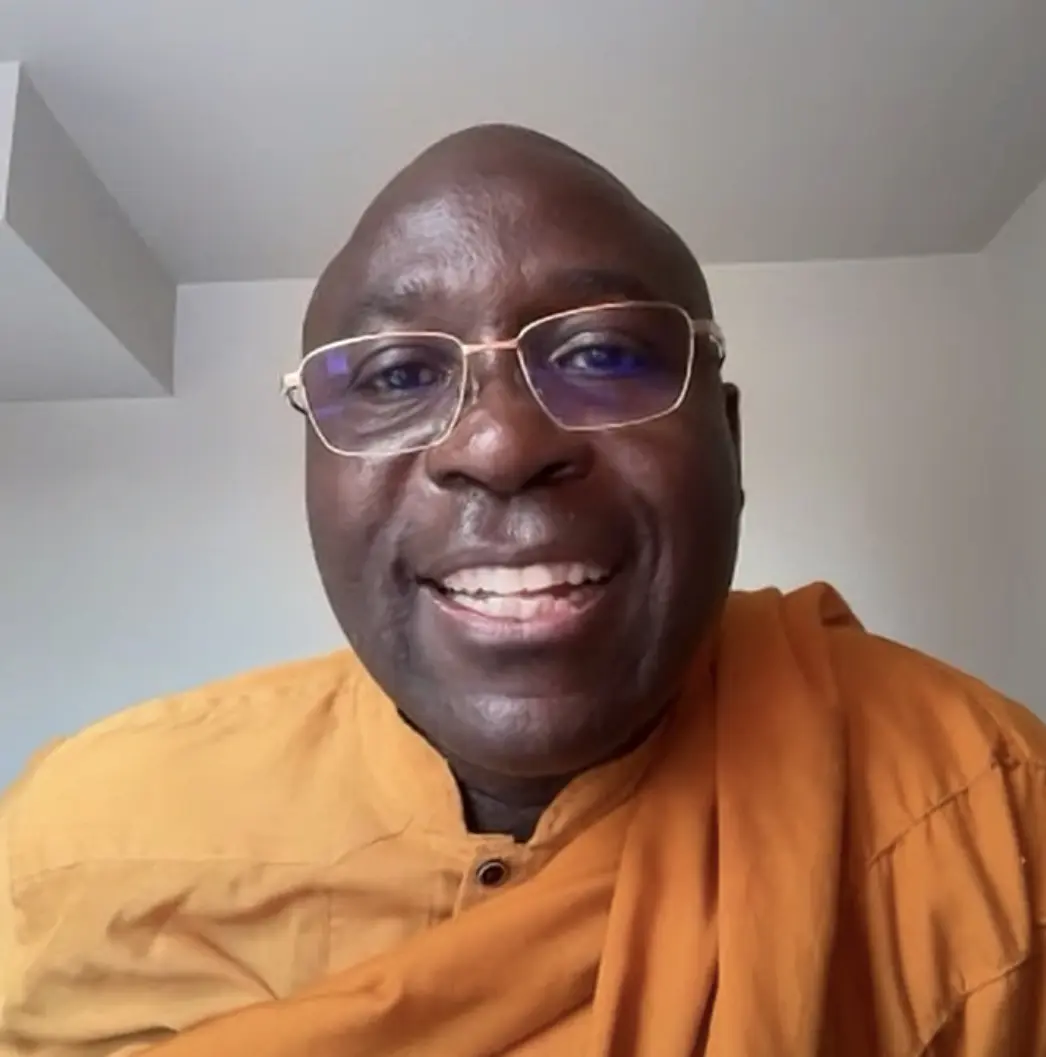
Because Bhante Buddharakkhita, the founder and abbot of UBC, is an ordained monk whose monastic vows preclude him from personally soliciting funds, an ad-hoc grassroots committee of international practitioners has stepped forward to manage the campaign. Their mission goes beyond land acquisition; it is about preserving an ecological anchor that sustains local schools, orphanages, and surrounding communities.
Chronology: From a Roman Catholic Childhood in Uganda to Global Monkhood
To understand the magnitude of the Uganda Buddhist Centre’s current campaign, one must trace the extraordinary, improbable path of its founder.
Early Life and Awakening (1960s–1990)
Born Steven Kaboggoza into a devout Roman Catholic family in Uganda, Bhante Buddharakkhita grew up navigating a nation marked by political turbulence and deep spiritual traditions. His introduction to Buddhism occurred thousands of miles away in 1990 while he was studying business in India. There, sharing a hostel with two Thai Buddhist monks, he was first exposed to the peaceful demeanor, philosophy, and meditative practices of the Theravada tradition. Years later, following a fateful meeting with His Holiness the Dalai Lama—after which he famously thought, "I’m hooked now"—his spiritual trajectory was irrevocably altered.
Ordination and Rigorous Training (2002–2005)
After years of personal study and deep immersion in the philosophy, Kaboggoza took formal monastic vows. He was ordained in 2002 by the revered Sayadaw U Silananda at the Tathagata Meditation Center in San Jose, California, entering history as one of the first generation of African Buddhist monks.
Following his ordination, he spent eight intensive years training under the guidance of Venerable Henepola Gunaratana—author of the international bestseller Mindfulness in Plain English—at the Bhavana Society in West Virginia. This rigorous monastic grounding prepared him for a daunting return to his homeland.
Returning Home and Overcoming Hostility (2005)
In 2005, Bhante Buddharakkhita returned to Uganda with a singular vision: to plant the seeds of the dhamma in African soil. Establishing the Uganda Buddhist Centre in Bulega-Garuga was not without physical peril. In the early years, local communities—unfamiliar with Buddhist robes, shaven heads, and monastic traditions—frequently misunderstood his presence. He faced severe hostility, including an incident where he was shot at, narrowly escaping a bullet.
Rather than retreating, this hostility shaped his philosophy. He pioneered what he terms "Afro-Dhamma"—a compassionate synthesis of traditional Buddhist meditative practices, African communal values, and holistic healing designed to address the psychological and physical wounds of a continent recovering from decades of conflict. Over the next two decades, UBC evolved from a modest meditation space into a multifaceted community anchor, incorporating the Buddhist Peace School (spanning preschool and primary levels), the African Buddhist High School, clean water infrastructure, and regional medical services.
Supporting Data: Financial Realities and Ecological Stakes
The ongoing capital campaign is underpinned by precise financial metrics and acute environmental vulnerabilities. The stakes involve not only spiritual architecture, but also regional environmental health.
The Financial Breakdown
- Asking Price: $1.75 million for the 13-acre wetland parcel.
- Total Campaign Goal: $2 million (inclusive of legal fees, taxes, and initial property stabilization).
- Current Funds Raised: $781,888 (including $760,000 in generous anonymous matching pledges).
- Critical Deadlines:
- Phase 1 Deposit: September 15 (requiring half of the total property valuation).
- Phase 2 Final Balance: November 15 (requiring the remaining $875,000, legal fees, and tax allocations).
The Ecological Imperative
The target land is situated directly on the shores of Lake Nalubaale (internationally known as Lake Victoria)—the legendary source of the River Nile. Ecologists and campaign organizers have underscored the fragility of this specific wetland. If the Uganda Buddhist Centre fails to acquire the property, the land faces immediate commercial pressure.
Proposals from private developers have previously floated the construction of a lakeside resort or a military installation on the site. Environmental impact assessments indicate that either project would introduce catastrophic noise, artificial light, and waste pollution into the fragile aquatic ecosystem. Such degradation would directly threaten the food and water security of nearby schools, the UBC orphanage, and surrounding rural villages that rely on the pristine wetland for their daily survival.
Official Responses: Voices from the Global and Local Community
The campaign has elicited profound responses from international Buddhist leaders, interfaith figures, and local community beneficiaries who have witnessed UBC’s twenty-year trajectory firsthand.
Campaign organizers, operating through the official GoFundMe platform and allied international dharma networks, emphasize that the acquisition is a "stretch gift" moment for the global Buddhist community.
"As a monk, Bhante Buddharakkhita does not ask for money for himself," noted a joint statement from the international organizing committee. "His life has been entirely dedicated to giving—offering education, health care, shelter, and the priceless gift of the dhamma to anyone who crosses his threshold. Now, it is our turn to protect his life’s work, his monastic home, and the sacred waters of Lake Victoria."
In recent video addresses released for the 20th-anniversary campaign, Bhante Buddharakkhita articulated the vision behind the proposed retreat center. He noted that while UBC has spent two decades serving the immediate educational and physical needs of local Ugandans, the addition of a dedicated retreat sanctuary will allow practitioners from across Africa and the wider world to engage in deep, uninterrupted meditative practice—bridging traditional Eastern forms with the vibrant, healing spirit of African culture.
Local community leaders in Entebbe and Bulega-Garuga have similarly voiced strong support for the center, pointing to its consistent track record of providing non-discriminatory schooling and clean drinking water to families regardless of their religious backgrounds.
Implications: What This Means for the Future of Global Buddhism
The outcome of the Uganda Buddhist Centre’s land acquisition campaign carries profound implications that stretch far beyond the borders of Uganda.
1. The Maturation of "Afro-Dhamma"
For decades, Buddhism has been viewed through a predominantly Asian or Western lens. The establishment of the first dedicated African Buddhist retreat center marks a critical milestone in the decentralization and localization of the tradition. By rooting Buddhist practice deeply within the socio-cultural fabric of Africa, UBC demonstrates how the dhamma can adapt to address contemporary post-colonial challenges, poverty, trauma, and environmental degradation.
2. Ecological Stewardship as Spiritual Practice
In an era defined by climate anxiety and ecological collapse, UBC’s campaign reframes environmental conservation not merely as a political or scientific necessity, but as an intrinsic extension of Buddhist ethics (ahimsa or non-harming). By purchasing the land to keep it pristine, UBC is actively modeling a form of "engaged Buddhism" that protects shared natural resources—specifically, the headwaters of the Nile—from corporate exploitation.
3. A Test of Global Solidarity
Ultimately, the campaign serves as an urgent litmus test for the global sangha (community of practitioners). With deadlines looming in September and November, the ability of international Buddhists to rally behind an African-led monastery highlights whether global dharma networks can transcend geographic and cultural boundaries to support marginalized pioneering institutions.
As the Uganda Buddhist Centre looks toward its next twenty years, the security of these 13 acres on Lake Victoria will determine whether its pioneering light continues to burn brighter—offering sanctuary, education, and ecological healing to generations yet unborn.
How to Support the Campaign
Members of the wider public and the global dharma community wishing to contribute to the Uganda Buddhist Centre’s land expansion fund can do so by visiting their official GoFundMe campaign page. Organizers invite contributions at any level—describing donations as a meaningful "stretch gift"—and encourage those wishing to utilize donor-advised funds (DAFs) or ACH transfers to reach out directly through the campaign portal.
