

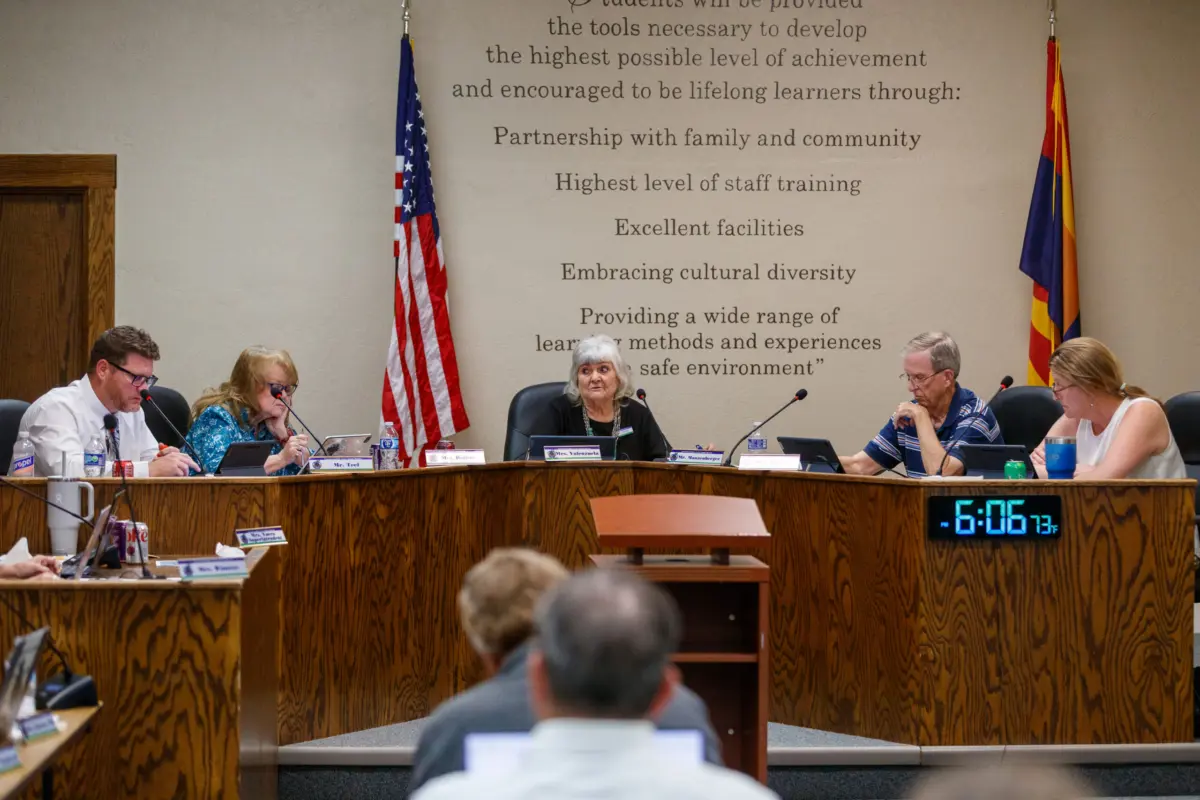
COTTONWOOD, AZ — The Cottonwood-Oak Creek School District (COCSD) Governing Board is entering a pivotal autumn as it manages a series of interconnected challenges and opportunities. During its legislative session on Wednesday, August 5, the board addressed three critical pillars of district operations: the launch of a public informational campaign for a voter-approved $30 million capital bond, a unexpectedly positive preliminary student enrollment outlook, and the formal adoption of a systemic behavioral intervention framework designed to modernize student discipline.
As the district prepares for the upcoming academic year and the high-stakes general election in November, administration officials are moving swiftly to engage community stakeholders, stabilize operational budgets, and implement evidence-based pedagogical strategies across all campuses.
Main Facts
The administrative and fiscal trajectory of COCSD for the next decade will be heavily influenced by several key developments ratified or discussed during the August 5 governing board meeting:
- Proposition 409 on the Ballot: The district’s proposed $30 million capital bond has officially been designated as Proposition 409 for the November general election. If approved by local taxpayers, the funds will be restricted to essential capital improvements, including critical upgrades to the district’s transportation facilities (the "bus barn"), water and sewage systems, campus security infrastructure, and HVAC (heating, ventilation, and air conditioning) systems.
- Encouraging Enrollment Projections: While school districts across the region continue to battle demographic shifts and enrollment volatility, COCSD’s initial student count has exceeded administration expectations. Rather than the projected decrease of 30 students, early registration indicators suggest a milder decline of approximately 19 students—a variance that could significantly protect the district’s state funding allocation if sustained.
- Adoption of PBIS Discipline Model: In an effort to reform campus climate and streamline behavioral interventions, the Governing Board approved the integration of a Positive Behavioral Interventions and Supports (PBIS) system. This framework will operate alongside existing disciplinary policies, establishing a standardized, data-driven point matrix to guide administrators in addressing student misconduct.
- Public Advocacy and Outreach: COCSD Superintendent Jessica Vocca announced a structured public outreach campaign to educate voters on the necessity of Proposition 409, utilizing community forums and partnering with the political action committee "Partners in Education" to distribute informational materials.
Chronology
The administrative timeline reveals a calculated sequence of actions designed to prepare the district for both fiscal audits and community-wide scrutiny:
May 6: Preliminary Bond Planning
The COCSD Governing Board convened to finalize the scope of the capital bond request, identifying urgent infrastructural deficits across district-owned properties that could not be covered by the general maintenance and operations (M&O) budget.
August 5: The Policy and Budget Alignment Meeting
The Governing Board met to formally approve the PBIS discipline policy, review the early enrollment ledger, and establish the communication timeline for Proposition 409. Chief Finance Officer Tammy Janssen confirmed that the non-bond operational budget remains stable and on target.
August 13: Public Campaign Launch
Superintendent Vocca initiated the district’s public engagement campaign with an informational presentation to the Rotary Club of the Verde Valley. The event, held at Calavera restaurant on South Main Street in Cottonwood, served as the launchpad for explaining the direct tax and operational impacts of Proposition 409 to local business leaders and civic advocates.
Late August: The Critical 10-Day Enrollment Recount
Following the opening days of school, administrators will execute the mandatory 10-day enrollment recount. This process filters out "ghost enrollment"—students who registered but subsequently relocated or failed to attend—allowing the district to establish a reliable baseline.
Late August & January: State Audits
CFO Tammy Janssen announced that budgeted state auditors will conduct on-site evaluations in August and January to verify the district’s financial reporting, compliance, and student accounting accuracy.
September to December: Budget Revisions
Based on the data collected during the first weeks of school and the finalized student counts, the district will draft preliminary budget revisions in September, with formal adoption of the adjusted budget typically occurring in December.
November: The General Election
Voters within the Cottonwood-Oak Creek School District boundaries will cast their ballots on Proposition 409, determining whether the district will secure the $30 million capital borrowing authority.
Supporting Data
The operational stability of COCSD relies heavily on quantitative metrics, spanning capital allocation plans, state-mandated enrollment funding formulas, and behavioral assessment structures.
The $30 Million Capital Bond Breakdown (Prop 409)
Because Arizona school finance laws strictly segregate maintenance and operations (M&O) funds from capital funds, COCSD cannot easily use classroom dollars to repair failing physical plants. The $30 million bond, if authorized, will target long-deferred maintenance projects:
| Project Area | Primary Focus |
|---|---|
| HVAC Systems | Replacement of aging air conditioning units across multiple campuses to ensure climate-controlled learning environments during extreme desert heat. |
| Water & Sewage | Modernization of aging subterranean plumbing and sanitation infrastructure to meet modern environmental and safety standards. |
| Transportation | Upgrades to the district’s central bus barn to support vehicle maintenance and guarantee safe student transit. |
| Campus Security | Enhanced perimeter fencing, surveillance systems, and controlled-entry vestibules at district schools. |
Enrollment Demographics and Funding Impact
In Arizona, school districts are funded primarily on a per-pupil basis through the Average Daily Membership (ADM) system, which measures student attendance over a 100-day period.
- Initial Projection: A projected loss of 30 students for the current academic year.
- Current Reality: A recorded deficit of only 19 students relative to the prior year’s baseline.
- Net Variance: An improvement of 11 students over initial budget projections.
While an 11-student variance may seem modest, in rural and semi-rural districts, even minor fluctuations can represent tens of thousands of dollars in state funding. The 10-day recount window remains the standard mechanism to correct for statistical anomalies before the state stabilizes funding levels.
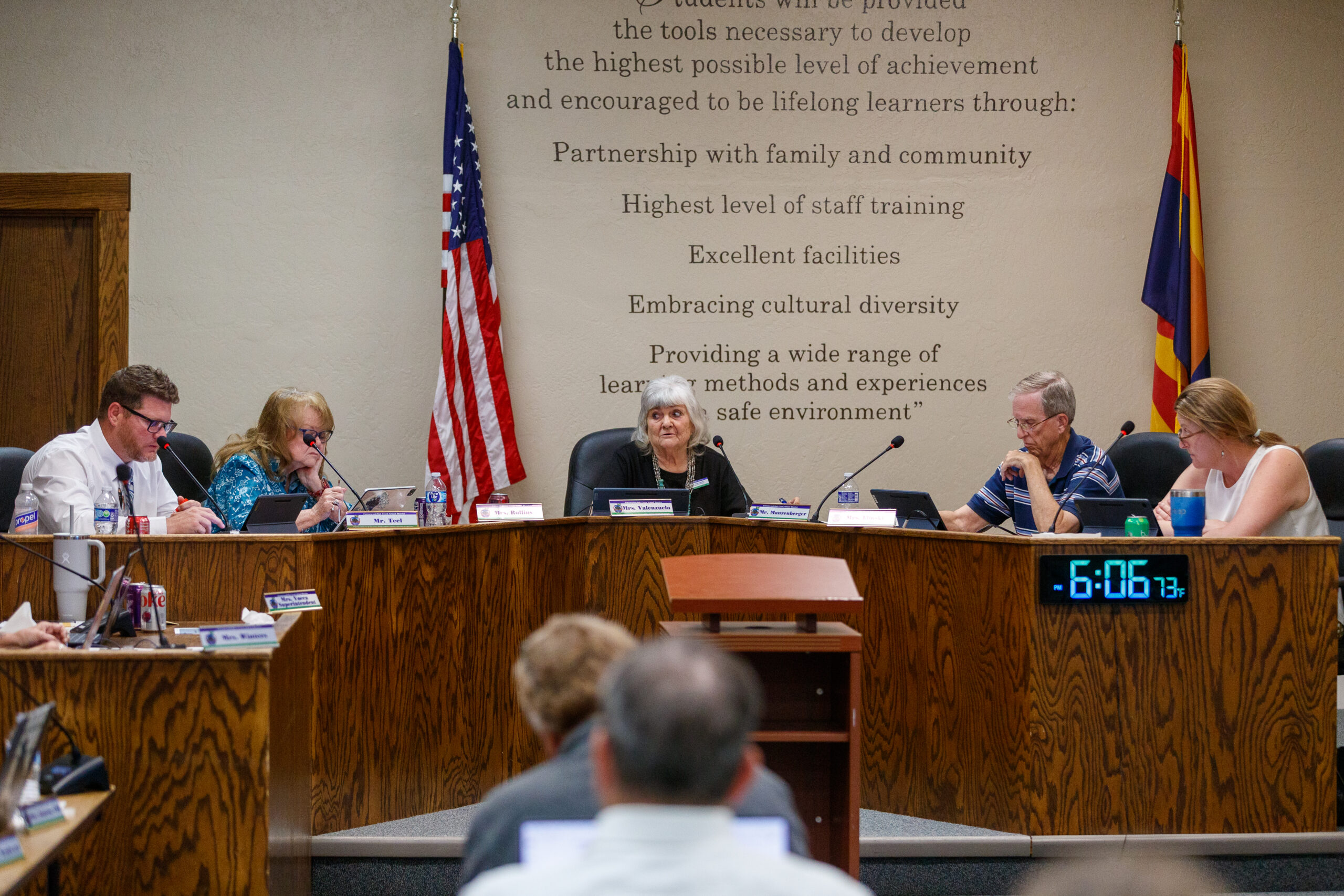
Expected Student Loss:  [██████████████████████████████ 30]
Actual Student Loss:    [███████████████████ 19]
                        ▲ Difference of 11 students (favorable)
Official Responses
District leadership has adopted a proactive communication posture, seeking to demystify school finance and educational psychology for a diverse public constituency.
On the Capital Bond Campaign (Prop 409)
Superintendent Jessica Vocca emphasized the necessity of using structured, transparent community dialogue to convey the importance of the bond:
"We have Partners in Education, an outside group that helps with the signs and getting those up, they are working on getting those up and also palm cards. I am currently organizing public events to ensure every resident understands how these capital dollars directly protect the community’s long-term investment in our school facilities."
On Fiscal Management and Budgetary Alignment
District Chief Finance Officer Tammy Janssen expressed cautious optimism regarding the district’s financial trajectory, noting that general operations are running smoothly:
"Enrollment continues to be our largest factor affecting district funding. We are looking at possibly being down about 19 students, but who knows what’s going to happen in the next 10 days… we projected to be down about 30 students, so we’re well under that at this point. The remaining portions of our budget are completely on track, and I will provide a more comprehensive, data-backed update on student enrollment in September."
On the Modernization of Discipline Policies
Addressing community and staff inquiries regarding the newly approved Positive Behavioral Interventions and Supports (PBIS) system, Student Support Services Director Trish Alley, Ph.D., clarified that the program does not represent a retreat from accountability:
"When we talk about PBIS, there is a misunderstanding quite often, especially with teachers, feeling like positive behavior supports feels like we’re going to get rid of discipline and we’re going to give kids stickers and treats every time they do something good. Really, it is teaching kids what they’re doing right. And what happens, especially in a developing mind, is that if you’re always, always telling a child what they’re doing wrong, that’s what’s always on their mind."
Dr. Alley further assured stakeholders that consequences for severe behavior remain firm:
"Discipline won’t go away. The district will utilize a standardized point matrix to assist principals in making consistent, objective decisions regarding suspensions or alternative disciplinary responses."
Implications
The policy decisions and financial campaigns currently underway at COCSD carry profound implications for the district’s operational viability, educational environment, and community relations.
The High Stakes of Proposition 409
The outcome of the November vote on Prop 409 will dictate COCSD’s facilities management strategy for years to come.
- If the Bond Passes: The district can immediately initiate critical infrastructure overhauls, shifting the burden of major capital expenditures away from its operational budget. This would allow the administration to preserve its maintenance funds for unexpected, day-to-day emergencies and focus resources directly on classroom instruction.
- If the Bond Fails: COCSD will be forced to address critical utility, HVAC, and safety failures using its limited operational funds, potentially leading to difficult choices regarding staffing levels, program offerings, and deferred maintenance.
Stabilizing the Student Base
The better-than-expected enrollment numbers point to a potential stabilization of the local demographic base. While a minor decline is still occurring, beating the projected deficit suggests that the Verde Valley may be retaining young families more effectively than neighboring regions. Maintaining a stable student count allows the district to plan long-term staffing and curriculum development with higher fiscal predictability.
A Shift in District Culture
The adoption of PBIS marks a significant evolution in COCSD’s approach to student management. By combining positive behavioral reinforcement with a standardized, objective disciplinary matrix, the district aims to reduce implicit bias in disciplinary actions and decrease out-of-school suspension rates.
This dual approach seeks to foster a more encouraging campus climate while maintaining clear, predictable boundaries for behavior. The success of this transition will depend heavily on teacher buy-in and clear communication with parents, a process slated to begin during upcoming Parent-Teacher Conferences.
