

By the Wellness & Holistic Health Desk
Published in partnership with Crystal Healing Insights
Introduction: The Continuing Journey of Energy Alignment
In the first installment of our exclusive Chakra Series, The Science Behind Crystal Chakra Healing, we explored the foundational physics, biofield interactions, and historical frameworks that underpin the practice of working with the body’s subtle energy centers. Readers were introduced to the concept that chakras—spinning wheels of energy aligned along the spinal column—are not merely esoteric concepts, but focal points that profoundly influence our physical, emotional, and psychological well-being.
However, once an individual understands the science, a vital, highly practical question inevitably arises: How do I accurately determine which specific chakra is in need of balancing?
Identifying an energetic blockage or overactivity is the crucial first step toward restoration. Fortunately, according to leading crystal practitioners and holistic educators, you do not need to possess innate mystical powers to diagnose your own energetic state. Through a combination of structured testing, physiological self-assessment, energetic tools, and intuitive development, anyone can learn to read their body’s subtle signals.
This guide explores the four primary methodologies used by professional practitioners to pinpoint imbalanced chakras, offering a roadmap to self-discovery and holistic wellness.
1. Taking a Structured Chakra Test: The Modern Diagnostic Approach
For beginners and seasoned practitioners alike, standardized chakra assessments serve as an accessible and remarkably reliable starting point. Much like a psychological self-evaluation or a wellness questionnaire, a well-designed chakra test measures your current behavioral patterns, emotional tendencies, and physical comfort levels against the baseline criteria of each of the seven primary energy centers.
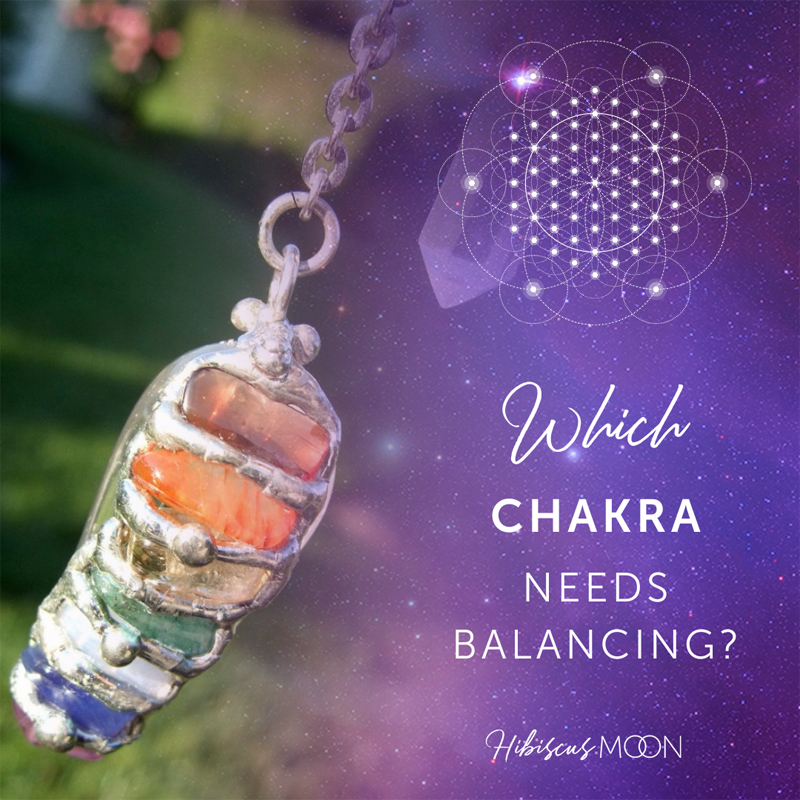
How Chakra Tests Work
When completed honestly and reflectively, these diagnostic quizzes highlight areas of depletion (underactive chakras) or congestion (overactive chakras). For instance, if a questionnaire reveals chronic feelings of instability, financial anxiety, and physical exhaustion, it will typically point toward a root (Muladhara) chakra imbalance.
- The Reliability Factor: While skeptics may dismiss online quizzes, holistic educators emphasize that these tools act as reflective mirrors. They prompt the conscious mind to acknowledge patterns that the ego might otherwise ignore.
- Actionable Next Steps: Once your test results highlight a specific vulnerable chakra, the remediation process begins. Practitioners recommend acquiring a high-vibration gemstone or crystal whose color and metaphysical properties correspond directly to that chakra (e.g., red jasper for the root, or amethyst for the crown) to help restore energetic flow.
2. Somatic and Emotional Indicators: Reading the Body’s Glaring Signals
The human body is an exquisite communication system. When energetic blockages persist within the subtle body, they eventually manifest in the physical and emotional realms. Pinpointing an imbalanced chakra often relies on recognizing a syndrome of interrelated symptoms rather than isolated incidents.
Recognizing Physical and Emotional Syndromes
To accurately trace an ailment back to its energetic root, practitioners look for clusters of symptoms. A single headache does not automatically indicate a third-eye imbalance, but chronic migraines paired with brain fog, sleep disturbances, and a lack of clear vision for the future certainly do.
- The Root Chakra (Survival and Grounding): Imbalances often present as lower back pain, foot and leg issues, chronic fatigue, and pervasive financial or security-based anxiety.
- The Heart Chakra (Love and Compassion): An imbalance here may manifest physically as upper back or chest tension, cardiovascular irregularities, and emotionally as grief, isolation, or an inability to set healthy boundaries.
- The Throat Chakra (Communication and Truth): Physical signs include chronic sore throats, thyroid imbalances, and neck stiffness, paired with emotional fears of public speaking or self-expression.
Recommended Literature for Deepening Study
For those wishing to master the diagnostic mapping of physical ailments to energetic blockages, master practitioners frequently recommend foundational texts:
- Vibrational Healing Through the Chakras by Joy Gardner
- The Crystal Healer by Philip Permutt
3. Energy Sensing: Developing Practical Somatic Awareness
Moving beyond subjective questionnaires and physical symptoms, advanced holistic practices involve direct energy sensing. While often perceived as an innate gift reserved for gifted healers, expert practitioners maintain that energy sensing is a trainable skill available to anyone willing to commit time, practice, and patience.
The Mechanics of Energy Sensing
Energy sensing allows a practitioner to evaluate whether a chakra is depleted (underactive), congested (overactive), or spinning smoothly in optimal equilibrium. Because these techniques require foundational knowledge, rigorous safety precautions, and interactive supervision, they are typically mastered in comprehensive certification programs, such as the Certified Crystal Practitioner Course.
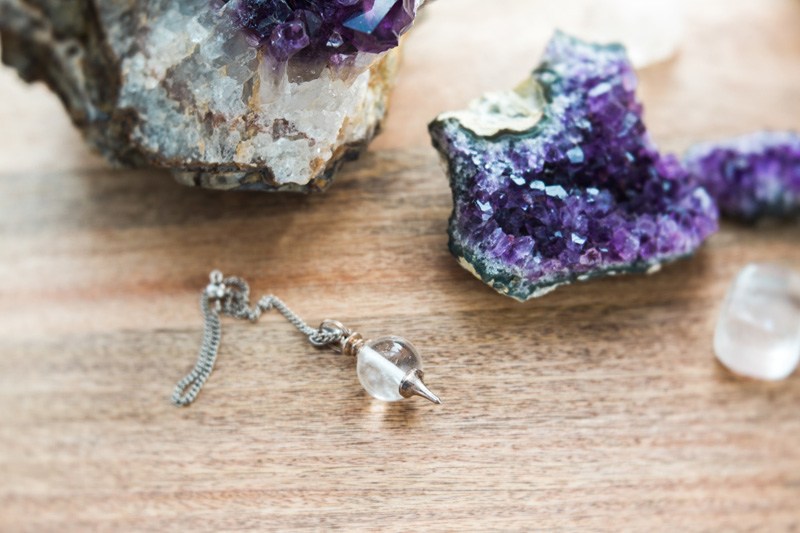
However, beginners can immediately adopt accessible tools to bridge the gap into energy sensing—most notably, the dowsing pendulum.
Working with a Pendulum for Chakra Diagnostics
A pendulum functions as an energetic amplifier, translating subtle biofield fluctuations into visible physical movement.
- Calibration: The user establishes a baseline by asking the pendulum to demonstrate "yes," "no," and neutral responses.
- Scanning: Holding the pendulum suspended a few inches above each chakra point (moving from the root up to the crown), the user observes the pendulum’s motion.
- Interpretation: A wide, vigorous, and erratic circle often indicates an overactive chakra, while a weak, sluggish, or stationary swing suggests an underactive or blocked center. A steady, moderate clockwise rotation typically signals a balanced chakra.
4. Tapping into Intuition: The Development of Clair-Senses
Intuition is the internal guidance system that registers subtle frequency shifts, inner promptings, and energetic measurements. Far from being a vague concept, intuition operates through specialized sensory faculties known as "clair-senses" (clear-senses).
The Spectrum of Clair-Senses
Individuals vary widely in how they naturally perceive energetic data. Common intuitive channels include:
- Clairvoyance (Clear-seeing): Receiving visual impressions, colors, or symbols regarding a chakra’s state during meditation or quiet reflection.
- Clairaudience (Clear-hearing): Perceiving inner auditory messages, tones, or intuitive words that guide the healer toward the source of an imbalance.
- Clairsentience (Clear-feeling): Experiencing physical sensations or emotional shifts in one’s own body that mirror the energetic condition of another person’s chakra.
- Claircognizance (Clear-knowing): An absolute, unshakeable inner certainty regarding an energetic diagnosis without requiring logical proof.
The Muscle Analogy of Intuition
Holistic educators frequently compare intuition to skeletal muscle. If neglected and left inactive, intuitive faculties atrophy. However, when consistently exercised through meditation, mindfulness, and practical application, intuitive accuracy expands exponentially. Many alumni of professional crystal healing academies report discovering latent intuitive capabilities that they subsequently refined into powerful diagnostic tools.
The Chakra Balancing Combo: Achieving Energetic Consensus
For those who find themselves uncertain after employing a single diagnostic method, master practitioners recommend a multi-tiered approach known as the Chakra Balancing Combo.

Protocol for Consensus-Based Diagnosis
- Method Triangulation: Utilize two or three distinct diagnostic strategies (e.g., take an online chakra test, cross-reference your physical/emotional symptoms, and perform a pendulum scan).
- Conflict Resolution: If the methods yield contradictory results—such as a test indicating an overactive solar plexus while a pendulum suggests depletion—introduce a third method (such as intuitive meditation).
- The Majority Rule: Go with the consensus of the majority of your chosen diagnostic tools.
Over time, consistent practice replaces the need for cumbersome diagnostic checklists. Practitioners develop a refined, intuitive baseline where they "just know" the state of their energetic field without conscious calculation.
Implications and Future Outlook
As the wellness industry increasingly bridges the gap between ancient metaphysical traditions and modern somatic awareness, understanding chakra health is shifting from a fringe practice to an accepted pillar of holistic self-care. By learning how to identify energetic imbalances through testing, symptom analysis, pendulums, and intuition, individuals are empowered to take an active role in their personal healing journeys.
In the next installment of our comprehensive Chakra Series, we will examine the precise mechanisms of action required when applying healing crystals to realign and harmonize these vital energy centers.
What are your experiences with chakra balancing? Have you utilized pendulums or intuitive sensing in your wellness routine? Share your insights in the comments below.
