

By Global Wellness & Sustainability Desk
Published: October 2023
Main Facts: The Hidden Footprint of the Crystal Industry
The global metaphysical market has experienced an unprecedented boom over the last decade. From boutique wellness shops in Los Angeles to holistic healing influencers on TikTok and Instagram, crystals have transitioned from a niche counterculture hobby into a multi-billion-dollar mainstream industry. Consumers buy quartz, amethyst, citrine, and jade in search of positive energy, emotional grounding, and spiritual alignment.
However, beneath the polished facets and aesthetic social media flat-lays lies a largely unregulated, opaque supply chain. The fundamental conflict facing the modern crystal community is stark: consumers purchase these geological specimens to connect with the earth’s natural energy, yet the extraction process often inflicts severe harm upon both local ecosystems and vulnerable human populations.
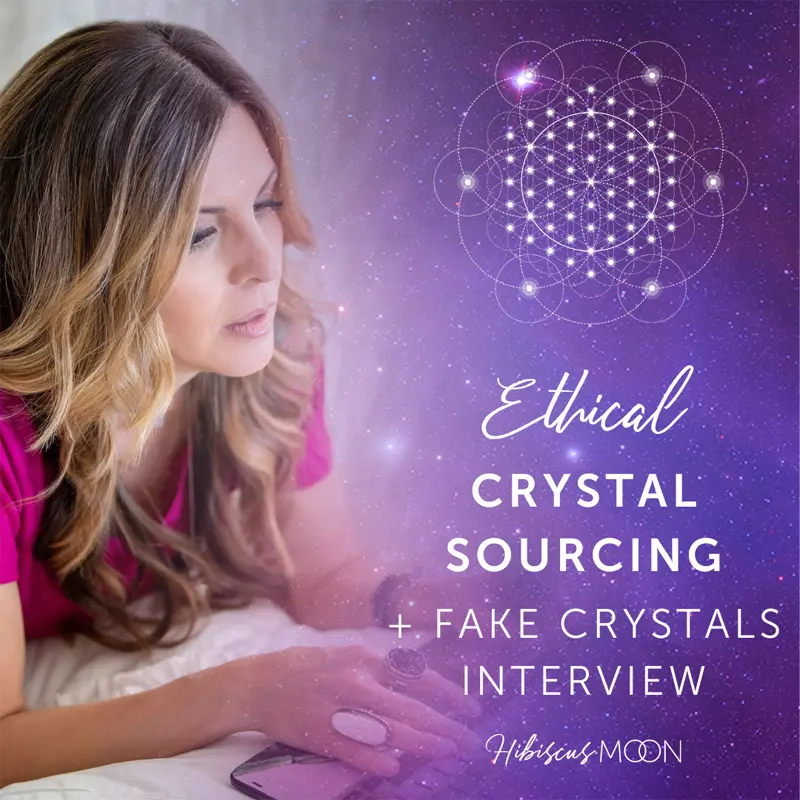
In an effort to bring transparency to this controversial topic, prominent crystal educator Hibiscus Moon recently sat down for a candid, deep-dive live interview with Barbie—widely known in digital spaces as "Cold Brew Barbie." The conversation tackled what many in the wellness community regard as an "inconvenient truth": the dark reality behind how crystals are mined, transported, and brought to market.
While major diamond and precious metal industries face rigorous scrutiny regarding conflict-free and ethical standards, the gemstone and mineral trade largely operates in the shadows. Artisanal mining operations, hazardous working conditions, child labor, and severe environmental degradation are rampant in several key source countries. The conversation between Hibiscus Moon and Cold Brew Barbie serves as a timely reminder that true holistic living requires looking beyond the retail shelf and examining the entire lifecycle of spiritual tools.
Chronology: From Earth to Retail Shelf
Understanding how a crystal travels from a dark, subterranean cavern to a decorative bowl on a coffee table helps illuminate where ethical breakdowns occur. The timeline of a crystal’s journey reveals a complex web of intermediaries.
Phase 1: Exploration and Extraction (The Source)
The journey begins in the earth, often in developing nations across South America, Africa, Asia, and Madagascar. Artisanal and small-scale miners (ASMs)—driven by poverty and a lack of alternative economic opportunities—use rudimentary tools like pickaxes, hammers, and occasionally unmanaged explosives to extract minerals from remote hillsides and deep shafts. Unlike industrial mining, these operations rarely adhere to occupational health or environmental protection standards.
Phase 2: Local Processing and Aggregation
Once extracted, raw minerals are sold to local middlemen or traders for pennies on the dollar. These stones are then transported to regional processing hubs—often in countries like India, China, or Brazil—where low-wage laborers cut, tumble, carve, and polish the rough stones into recognizable geometric shapes, spheres, and points. This phase frequently involves exposure to toxic silica dust, heavy machinery without safety guards, and chemical treatments (such as artificial irradiation or heat treatment to alter stone colors).
Phase 3: Global Export and Wholesale
After processing, the minerals are packaged and shipped across international borders to massive wholesale hubs. At this stage, the stones change hands multiple times. With every transaction, the original source of the mineral becomes harder to trace. Wholesalers market the products as "natural" and "healing," completely severing the consumer from the labor conditions under which the items were produced.
Phase 4: The Retail Marketplace
The final destination is the metaphysical shop, online crystal boutique, or craft fair. By the time the crystal reaches the end consumer, its price has been marked up exponentially, yet very little of that financial return trickles back down to the miners or local communities who bore the physical risks of extraction.
Supporting Data: The Economics and Ethics of Gemstone Mining
To fully grasp the magnitude of the ethical crisis in the crystal trade, one must examine the economic and operational realities documented by human rights organizations and environmental watchdogs.
- Economic Disparity: According to trade estimates, artisanal miners often receive less than 1% of the final retail value of the crystals they unearth. Middlemen and international exporters capture the vast majority of the profit margins.
- Environmental Degradation: Unregulated mining can lead to severe soil erosion, deforestation, and water contamination. The use of heavy machinery and chemical solvents in non-industrial settings frequently destroys local habitats and poisons community water supplies.
- Labor Vulnerabilities: In regions marked by extreme poverty, the International Labour Organization (ILO) notes that informal mining sectors frequently rely on child labor and informal labor arrangements. Workers lack contracts, health insurance, or compensation for workplace injuries.
- The Scale of the Market: The global market for healing crystals and gemstones is valued in the billions of dollars, yet regulatory oversight remains virtually non-existent compared to traditional commodities like gold or diamonds, which are subject to mechanisms like the Kimberley Process.
Official Responses: Industry Insiders and Educators Speak Out
The conversation between Hibiscus Moon and Cold Brew Barbie highlights a growing movement within the spiritual community demanding accountability. For years, the prevailing sentiment in the crystal community was purely energetic—focusing on how to cleanse a crystal’s energy rather than questioning its physical history.
During their live broadcast, both educators emphasized that ignorance is no longer an excuse. "We’re gonna talk about this even though you might think it’s an inconvenient truth, it’s always good to be educated," Hibiscus Moon noted during the session, underscoring the necessity of transparency.
Industry experts and ethical mineral dealers argue that supply chain transparency is achievable, but it requires a fundamental shift in consumer behavior. Rather than accepting vague labels like "ethically sourced" at face value—a term frequently used as a marketing buzzword without verifiable proof—buyers must begin asking rigorous questions:
- Where exactly was this mineral mined?
- What are the working conditions of the miners involved?
- Does the supplier have a direct relationship with the mines or fair-trade cooperatives?
While large-scale certification bodies for crystals are still in their infancy, a small subset of dealers is pioneering direct-trade models. These dealers work exclusively with specific cooperatives or family-owned mines where fair wages and safe working conditions can be personally verified.
Implications: The Future of Conscious Consumerism
The shifting narrative around ethical crystal sourcing carries profound implications for both the wellness industry and the spiritual consumer base.
1. The Redefinition of "High Vibration"
For decades, spiritual practitioners argued that crystals possess inherent high vibrational energies that promote healing, peace, and love. Critics, however, point out a severe cognitive dissonance: how can a stone associated with peace and healing be considered "high vibration" if its extraction involved human exploitation, child labor, or ecological destruction? This realization is forcing a philosophical evolution within the metaphysical community. True holistic wellness now demands that spiritual practices align with ethical integrity in the physical world.
2. Market Pressures and Traceability
As consumers become more socially and environmentally conscious, demand for verifiable transparency will increase. Retailers who fail to audit their supply chains risk facing consumer backlash and loss of brand credibility. In response, progressive crystal brands are beginning to invest in supply chain mapping, partnering directly with transparent wholesalers, and educating their customer bases on the realities of mining.
3. The Rise of Alternative Practices
For some purists, the complex ethics of the global crystal trade have prompted a re-evaluation of how they practice spirituality. Some practitioners are choosing to limit their purchases, opting instead to source locally found stones, work with secondhand crystals, or focus more on non-material spiritual practices such as meditation, breathwork, and working with local plant allies whose footprints can be more easily managed.
Conclusion
The dialogue initiated by Hibiscus Moon and Cold Brew Barbie marks a critical turning point for the crystal and wellness community. By dragging the dark realities of the mineral trade out into the open, they challenge consumers to look beyond the surface beauty of polished gems. Ethical crystal sourcing may currently be complex, opaque, and difficult to navigate, but ignoring the issue is no longer an option for anyone claiming to practice conscious, Earth-centered living.
What are your thoughts on ethical crystal sourcing? Have your purchasing habits changed after learning more about the industry’s supply chain? Let us know in the comments below.
