


As global health initiatives increasingly target sugar consumption as a primary driver of chronic illness, millions of consumers have pivoted toward non-nutritive, artificial sweeteners to satisfy their sweet tooth without the caloric payload. Among these sugar substitutes, sucralose—widely recognized by its most popular brand name, Splenda—has risen to become a household staple. Found in everything from diet sodas and protein powders to sugar-free chewing gum and baked goods, it promises the best of both worlds: intense sweetness with zero calories.
Yet, as consumer adoption surges, so too does public skepticism. A simple web search reveals a barrage of conflicting headlines questioning the safety of the popular yellow packets. Are these concerns rooted in legitimate science, or are they merely internet alarmism? To separate clinical fact from digital fiction, this deep dive examines the chemical makeup of sucralose, recent landmark research regarding gut health and glycemic response, regulatory safety baselines, and how alternative sweeteners compare in the modern marketplace.
What Is Sucralose, Exactly?
To understand the controversy, one must first understand the substance. Sucralose is a high-intensity, non-nutritive sweetener that is chemically classified as a chlorinated form of sucrose, or standard table sugar. Developed in the late 20th century, the manufacturing process begins with regular cane sugar, but selectively replaces three specific hydroxyl hydrogen-oxygen groups on the sucrose molecule with chlorine atoms.
This structural alteration yields dramatic results:

- Intense Sweetness: Sucralose is approximately 600 times sweeter than regular table sugar. Because it packs such an intense flavor profile, manufacturers need only minute quantities to achieve the desired sweetness in commercial products.
- Zero Calorie Profile: Because the human body does not recognize or break down its chemically altered structure, sucralose passes through the gastrointestinal tract largely unmetabolized. Consequently, it contributes zero calories to the diet.
Despite starting its life as natural sugar, the incorporation of chlorine atoms changes how the human body interacts with the compound, prompting researchers to study its long-term physiological impacts closely.
Chronology of Controversy: From Regulatory Approval to Modern Scrutiny
The safety profile of sucralose has been evaluated over several decades, marked by a specific timeline of regulatory clearances and subsequent scientific reassessments:
- 1990s–2000s (Regulatory Green Light): Following extensive pre-market safety evaluations—comprising more than a hundred animal and human clinical studies—the U.S. Food and Drug Administration (FDA) approved sucralose as a general-purpose sweetener for food and beverages. International bodies, including the European Food Safety Authority (EFSA), soon followed, establishing acceptable daily intake (ADI) levels.
- 2016 (The Rodent Study Wave): A high-profile study conducted on rodents by the Ramazzini Institute suggested a potential link between high-dose sucralose consumption and carcinogenesis (cancer development). This sparked widespread public panic and intense academic debate.
- 2022–2025 (The Gut Microbiome Era): A series of landmark clinical trials shifted the focus of scientific concern away from cancer and toward metabolic health. Researchers began publishing peer-reviewed data demonstrating that non-nutritive sweeteners are not entirely inert, noting shifts in human gut microbiome composition and measurable impairments in glycemic responses.
- 2023 (WHO Guidelines): The World Health Organization (WHO) issued a definitive global advisory recommending against the long-term use of non-sugar sweeteners for weight control, urging populations to shift toward naturally occurring sugars (like fruit) or unsweetened beverages instead.
- 2025–2026 (Refined Metabolic Insights): Recent clinical literature continues to investigate how specific subpopulations—particularly those with prediabetes, obesity, or type 2 diabetes—process sucralose, revealing nuanced impacts on insulin sensitivity.
Supporting Data: Acceptable Daily Intakes and Human Metrics
Before evaluating potential health risks, it is vital to examine what toxicologists and regulatory agencies deem safe consumption thresholds.
Regulatory authorities have established an Acceptable Daily Intake (ADI), which represents the amount of a substance that can be safely consumed on a daily basis over a lifetime without appreciable health risk:

- The FDA ADI: Set at 5 milligrams per kilogram (mg/kg) of body weight per day.
- The EFSA ADI: Set at a more permissive 15 mg/kg of body weight per day.
Packet Consumption Breakdown
To put these numbers into perspective, it is necessary to account for the fact that commercial tabletop sweeteners (like Splenda packets) are not pure sucralose. Pure sucralose is far too sweet to measure out in a kitchen setting; therefore, brands mix it with massive quantities of bulking agents—typically dextrose and maltodextrin—making up roughly 99% of the packet’s volume.
Using standardized adult body weights, the approximate number of commercial packets required to reach the maximum daily ADI limits breaks down as follows:
| Population Baseline Weight | Packets to Reach FDA ADI (5 mg/kg) | Packets to Reach EFSA ADI (15 mg/kg) |
|---|---|---|
| FDA Reference Adult (132 lbs / 60 kg) | ~22.5 packets | ~67.6 packets |
| Average American Adult (185.4 lbs / 84.1 kg) | ~31.6 packets | ~94.8 packets |
While these figures suggest that an individual must consume an extraordinarily high volume of artificial sweetener to violate regulatory safety thresholds, emerging clinical studies question whether sub-ADI quantities might still exert physiological effects.
Official Responses and Scientific Findings on Health Risks
The debate surrounding sucralose generally concentrates on two major areas of physiological concern: gut microbiome disruption and metabolic/glycemic responses.
1. Gut Bacteria and Glycemic Disruption
A landmark human clinical trial published in the journal Cell demonstrated that non-nutritive sweeteners—including sucralose—are far from biologically passive. In the study, participants consumed doses of artificial sweeteners well below the FDA’s daily safety limits for two weeks.
The results indicated that subjects consuming saccharin or sucralose experienced significant impairments in their glycemic responses (how efficiently the body clears glucose from the bloodstream). Furthermore, analysis of their stool and oral microbiomes revealed measurable alterations in microbial populations. Subsequent studies published in 2025 corroborated these findings, reporting reductions in insulin sensitivity and gut bacterial diversity among healthy, lean individuals following moderate, short-term intake.
2. Cancer Risk Re-evaluation
Much of the public anxiety regarding sucralose causing cancer stems from the aforementioned 2016 rodent study. However, independent toxicologists and regulatory agencies swiftly pushed back on those conclusions, citing severe methodological flaws, unacceptably high dosing regimens that did not mirror human diets, and misinterpretation of tumor rates.
Subsequent consensus statements from organizations like the National Cancer Institute confirm that robust human epidemiological data do not support a direct link between dietary sucralose consumption and cancer development in healthy populations. However, researchers note that drastic shifts in gut flora induced by heavy sweetener use could theoretically interfere with the efficacy of certain clinical therapies, such as cancer immunotherapies.
3. Splenda vs. Pure Sucralose: The Filler Problem
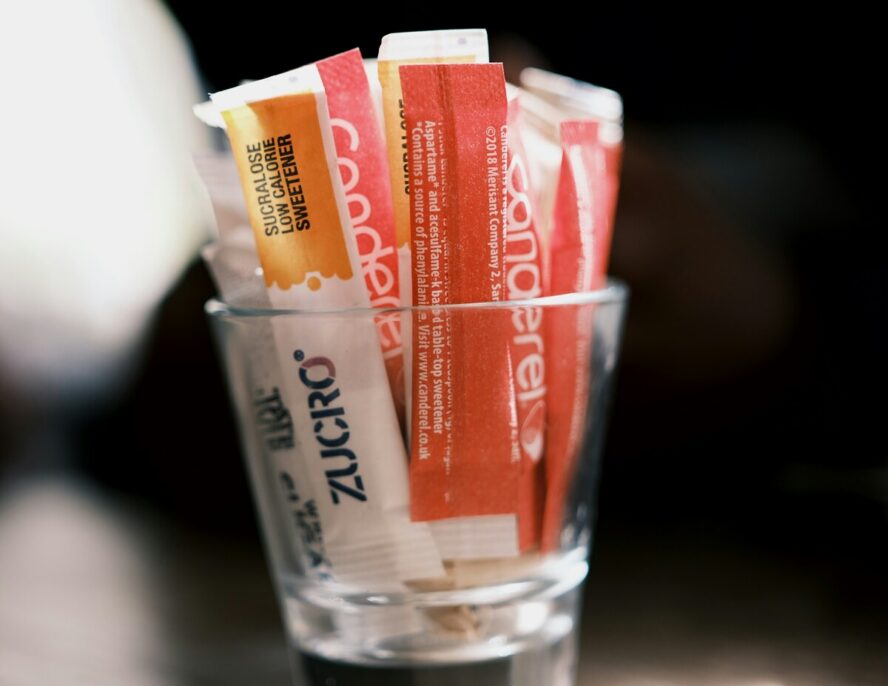
Consumers frequently conflate pure sucralose with commercial brand-name products like Splenda. As noted, a single Splenda packet is roughly 99% bulking agents (dextrose and maltodextrin) and only 1% active sucralose.
This distinction carries clinical relevance:
- Glycemic Impact: While pure sucralose does not raise blood sugar, the dextrose and maltodextrin used as fillers are rapidly digested carbohydrates that can trigger minor glycemic and insulin responses in large quantities.
- Microbiome Feeding: While sucralose itself resists human digestion, the maltodextrin and carbohydrate fillers provide a food source for resident gut bacteria, which may indirectly influence digestive comfort and microbial balance.
Implications for Lifestyle, Baking, and Daily Consumption
For the average healthy adult, consuming sucralose in modest amounts is widely considered safe by major food safety authorities. However, real-world application requires careful consideration of individual health profiles, cooking methods, and alternative options.
The Baking Caveat: Heat Stability
If you plan to use sucralose to cut calories in home baking, temperature is a critical factor. Research indicates that when exposed to sustained high baking temperatures (exceeding roughly 248°F / 120°C), sucralose can begin to break down, potentially forming chlorinated organic compounds known as propanols.
Furthermore, because artificial sweeteners lack the bulk, moisture-retention properties, and structural integrity of real sugar, baked goods utilizing pure sucralose often suffer from poor texture and rapid drying. Culinary experts recommend limiting sucralose to a 50-50 blend with real sugar, or utilizing commercial baking blends designed to handle thermal degradation.
Population-Specific Guidance
- Individuals with Diabetes or Insulin Resistance: Because studies show mixed glycemic responses—with a subset of the population experiencing notable insulin spikes—those managing metabolic disorders should monitor their personal blood sugar responses closely when introducing artificial sweeteners.
- Pregnant and Nursing Individuals: While regulatory bodies maintain that sucralose is safe within the ADI, many integrative health practitioners and dietitians advise minimizing all non-nutritive sweeteners during pregnancy due to the scarcity of long-term developmental tracking data.
Sweetener Alternatives, Ranked
Consumers looking to step away from sucralose have access to an expanding array of alternative sweeteners, each with unique physiological profiles:
- Stevia: A plant-derived, zero-calorie natural sweetener extracted from the leaves of Stevia rebaudiana. Generally well-tolerated, though some users report a lingering bitter or metallic aftertaste.
- Monk Fruit (Luo Han Guo): A natural, zero-calorie sweetener derived from small, round Asian melons. It does not typically impact blood sugar and lacks the bitter aftertaste often associated with stevia, though it can be more expensive.
- Erythritol & Allulose: Rare sugars and sugar alcohols that offer a closer approximation to the mouthfeel and texture of real sugar without the high glycemic index. However, excessive consumption of certain sugar alcohols can cause mild gastrointestinal distress.
- Raw Honey and Pure Maple Syrup: Nutritive sweeteners that contain trace minerals and antioxidants, but must be consumed with caution as they carry high fructose/glucose loads and impact blood sugar identically to table sugar.
Frequently Asked Questions (FAQ)
Is sucralose inherently bad for you?
No. For the majority of healthy adults, moderate consumption of sucralose does not pose acute health risks. Concerns generally revolve around emerging data regarding gut microbiome shifts and the chemical fillers found in commercial tabletop packets.
Can sucralose cause weight gain?
Directly, no—because it contains zero calories, it cannot convert into stored body fat. However, recent studies suggest that chronic artificial sweetener use may alter appetite regulation and insulin pathways in ways that do not reliably support long-term weight management.

What are the most common side effects of sucralose?
When consumed in high volumes, or by individuals sensitive to sugar alcohols and maltodextrin fillers, side effects may include mild gastrointestinal distress, bloating, gas, or headaches.
Disclaimer: When making any significant lifestyle, dietary, or health changes, always consult your primary care physician or a registered dietitian. The views and opinions expressed in this article are those of the reporting writers and do not necessarily reflect the official policy or position of regulatory or health institutions.
