

Main Facts: The Intersection of History, Architecture, and Modern Hospitality in the Scottish Capital
To visit Edinburgh is to step inside a living architectural museum. The Scottish capital is a masterclass in urban contrasting design, where the medieval labyrinth of the Old Town dramatically meets the symmetrical, neoclassical grandeur of the Georgian New Town. Yet, beyond the iconic silhouette of Edinburgh Castle, the dramatic precipice of Arthur’s Seat, and the bustling cobblestone corridors, the true heartbeat of the city resides in its residential character.
For travelers seeking a deeper, more immersive connection to the destination, bypassing traditional corporate hotels in favor of private architectural lodgings has become the gold standard. Whether planning an extended Scottish expedition that ventures onward into the mist-shrouded Highlands and the rugged Cairngorms, or simply settling in for a brisk weekend city break, renting a historically significant home unlocks a side of Edinburgh that transient tourism rarely reveals.
From 17th-century dovecotes tucked away in secret walled gardens to sun-drenched Georgian drawing rooms and industrial-chic warehouses, staying in an exceptionally designed local property means waking up to the tactile reality of the city. It means tasting morning tattie scones baked fresh from local ingredients, tracing centuries-old stone masonry with your fingertips, and engaging with a destination defined just as much by its craft and soul as by its sightseeing landmarks.
Chronology: A Journey Through Edinburgh’s Architectural Eras
To fully appreciate the scope of Edinburgh’s vacation rental landscape, one must travel backward through the centuries. The city’s built environment tells a sequential story of ambition, defense, expansion, and modern reinvention.
The 17th Century: Defensive Roots and Quirky Verticals
During the 1600s, Edinburgh was constrained by its defensive walls, forcing the city to build upward. This era birthed the extraordinary multi-story tenements of the Old Town and unique utility structures like historical dovecotes.
- Key Example: Ord’s Loft (1624), originally constructed as the White Horse Coaching Inn by Laurence Ord, and the 16th-Century Dovecote Cottage in Bruntsfield, showcase the raw, defensive, and idiosyncratic building methods of early modern Scotland, characterized by thick stone walls, lime plaster, and clever spatial economy.
The 18th Century: The Rise of the Tenement and the Enlightenment
As the Enlightenment swept through Edinburgh, the city began to push its intellectual and physical boundaries. The Royal Mile and its surrounding closes saw the construction of sophisticated tenement apartments designed to house the burgeoning merchant and professional classes, combining dramatic vertical climbs with sweeping panoramic vistas.
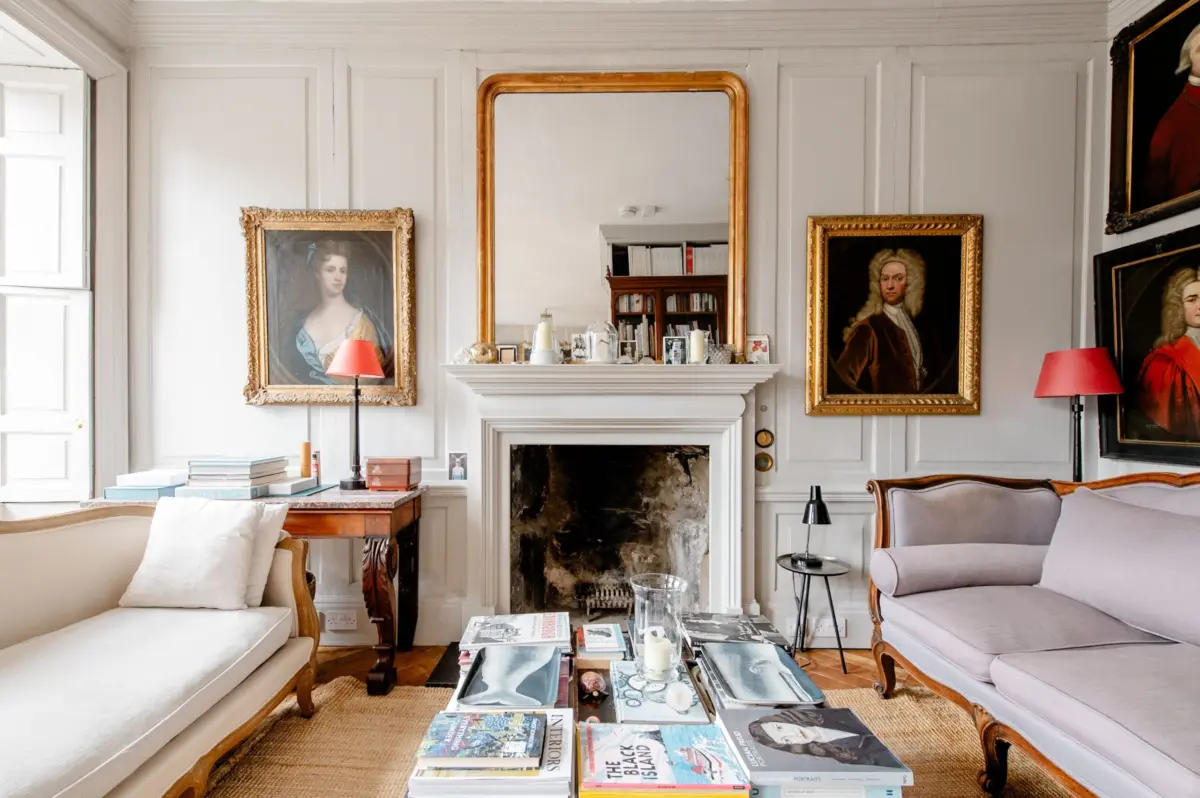
- Key Example: The Classic Apartment on Royal Mile places guests high up in an 18th-century tenement, offering a masterclass in period-appropriate joinery, period oil portraits, and sweeping south-facing views.
The 19th Century: The Neoclassical Grandeur of the New Town
To relieve overcrowding in the Old Town, the city engineered one of the most ambitious urban planning projects in European history: the creation of the New Town. Designed in a strict grid system of grand crescents, squares, and terraces, these Georgian townhomes prioritized symmetry, natural light, and soaring proportions.
- Key Example: The Laird’s Lodging and the Exceptional Gem in the Georgian New Town celebrate this era with soaring ceilings, floor-length sash windows, ornate crown moldings, and refined drawing rooms designed for high-society entertaining.
The Modern Era: Industrial Adaptive Reuse and Contemporary Comfort
Today, Edinburgh’s architectural narrative continues to evolve. Industrial spaces, former commercial yards, and historic coach houses are being thoughtfully rehabilitated, marrying raw historical skeletons with hyper-modern amenities, sustainable underfloor heating, and bespoke contemporary art curation.
- Key Example: The Hidden Warehouse in Stockbridge transforms industrial architecture into a family-friendly, design-forward sanctuary complete with high-end culinary tools and secure subterranean parking.
Supporting Data: Curated Architectural Accommodations in Edinburgh
A comprehensive review of the city’s premier design-forward stays reveals a diverse price spectrum, distinct neighborhood personalities, and specialized amenities tailored to modern travelers.

| Property Name | Neighborhood | Architectural Era / Style | Key Amenities | Starting Rate (USD) |
|---|---|---|---|---|
| The Laird’s Lodging | Historic Center | 19th-Century Georgian Townhome | Ensuite bathroom, fireplace, copper bathtub, daily housekeeping | $436 / night |
| Classic Apartment on Royal Mile | Old Town | 18th-Century Tenement Studio | Skyline views, self check-in, fully equipped kitchen, book collection | $348 / night |
| Historic Rock House | City Center (Calton Hill) | Quintessential Scottish Farmhouse Cottage | Private backyard, BBQ grill, wood-burning fireplaces, Aga cooker | $1,032 / night |
| Country Cottage Escape | Fife (20 mins by train) | 1829 Farmhouse Conversion | Sea views, clawfoot tub, pet-friendly, local welcome basket | $412 / night |
| Ord’s Loft | Old Town | 1624 Historic Coaching Inn Loft | Exposed rafters, volcanic rock island, drop-down movie screen | $658 / night |
| West End Georgian Apartment | West End | Georgian Ground-Floor Flat | High ceilings, central location, proximity to fine dining | $360 / night |
| The Butler’s Basement | New Town | Cozy Basement Apartment | Private courtyard entrance, range cooker, highly walkable | $263 / night |
| Old Town View Apartment | George IV Bridge | Sleek Central Studio | Quiet surroundings, minimalist decor, dedicated workspace | $417 / night |
| The Hidden Warehouse | Stockbridge | Industrial Warehouse Conversion | Underground parking, Le Creuset kitchenware, kid-friendly nursery | $340 / night |
| Georgian New Town Gem | New Town | Owner-Managed Flat | Dual-aspect sunlight, curated art, vintage furniture finds | $301 / night |
| 16th-Century Dovecote Cottage | Bruntsfield | Early Modern Tower/Cottage | Glass floor viewing ancient cavern, heated floors, walled garden | $320 / night |
Official Responses and Neighborhood Perspectives
The shift toward experiential, design-led short-term rentals has profoundly impacted how local communities, businesses, and tourism boards view urban development in Edinburgh.
Local hospitality coalitions and neighborhood associations emphasize that properties maintaining architectural integrity—such as those managed by owner-operators in the New Town and Stockbridge—contribute positively to the micro-economy. By encouraging visitors to live like locals, these stays disperse tourist foot traffic away from congested hotel districts and into residential neighborhoods.
"When visitors stay in a preserved Georgian crescent or an adaptive industrial warehouse, they aren’t just consuming a room; they are acting as temporary custodians of Edinburgh’s architectural heritage," notes a regional urban planning advocate. "The reverence guests show toward original sash windows, stone fireplaces, and antique joinery demonstrates a growing demand for travel that respects local identity rather than overriding it."
Furthermore, neighborhood culinary anchors have embraced this influx of culturally curious travelers. Establishments like The Palmerston in the West End—famed for its exceptional set lunches and morning pastries—report that guests staying in nearby residential flats are significantly more likely to engage with neighborhood institutions, independent bakeries, and local craft markets than those confined to traditional tourist hubs.
Implications: The Future of Experiential Travel in Scotland
The burgeoning popularity of architecturally significant vacation rentals in Edinburgh signals a broader paradigm shift in global tourism. Travelers are increasingly rejecting homogenized, standardized hospitality in search of authenticity, narrative depth, and aesthetic inspiration.
1. Preservation Through Adaptive Reuse
As historical properties face the ongoing challenges of maintenance and energy efficiency, the short-term rental market provides a viable economic model for private owners to fund meticulous restorations. Features like original lime plaster, restored sash windows, and bespoke joinery are protected and celebrated rather than stripped away for modern drywall.
2. Economic Dispersion Across Neighborhoods
By spotlighting properties outside the immediate hotel corridors—ranging from the leafy crescents of Stockbridge and the walled gardens of Bruntsfield to rural escapes in nearby Fife—this travel trend encourages a balanced distribution of tourism revenue. Visitors explore local grocers, independent bookstores, neighborhood bistros, and corner cafes, enriching the community fabric.
3. Elevated Standards of Interior Design
The standard for vacation rentals has undeniably shifted. Guests paying premium rates now expect a synthesis of historical gravitas and uncompromising modern luxury—exemplified by underfloor heating beneath ancient stone floors, copper soaking tubs paired with working fireplaces, and kitchens stocked with professional-grade culinary gear.
Ultimately, experiencing Edinburgh through its most inspired homes transforms a standard vacation into an intimate cultural dialogue. It proves that the best way to understand a city with a complex, beautiful history is to sleep within its very architecture, waking up each morning to the timeless rhythm of Scottish life.
